Caffeine and Her Period: What Changes, and What Doesn’t
She’s on her third coffee at four in the afternoon, and tonight she’ll lie awake and put it down to hormones. Or the opposite happened: she quit caffeine on Monday because a video told her it makes PMS worse, and by Wednesday she had a headache and a very short fuse.
The question of caffeine and her period is one of the few areas around the cycle where the folk advice and the research point in noticeably different directions, and the gap is worth knowing about before anyone starts throwing out the coffee.
What caffeine and her period actually do to each other
Start with the claim you’ve probably heard, which is that caffeine hits harder in the second half of her cycle because her body clears it more slowly. It’s a tidy story. The measurements don’t really support it.
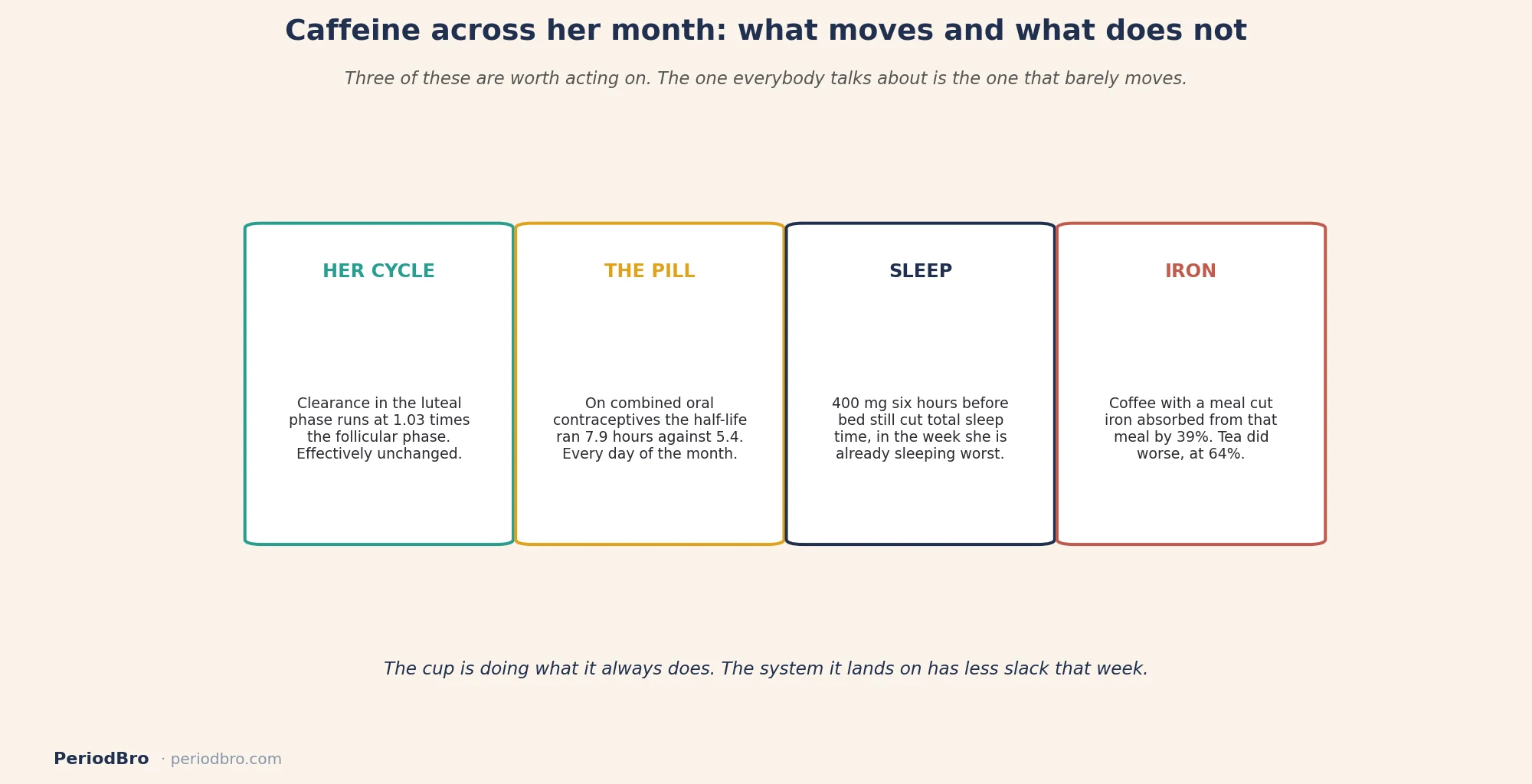
When researchers tracked CYP1A2, the liver enzyme that does most of the work on caffeine, across the menstrual cycle in healthy women, the ratio of luteal-phase to follicular-phase clearance came out at 1.03, with a confidence interval running from 0.95 to 1.12. In plain terms, that’s no meaningful difference, and the authors concluded that dosing adjustments by cycle phase aren’t needed for drugs handled by that enzyme.
Older work did find slightly slower clearance in the late luteal phase, close to the onset of bleeding, so the effect isn’t zero. It’s just small enough that it can’t carry the weight people put on it. If the same latte feels different in the week before her period, the explanation is almost certainly not her liver.
What does change is everything the caffeine lands on: her sleep that week, her iron, her headache threshold. The drink is doing the same thing it always does, to a system with less slack in it than usual.

The pill moves this far more than her cycle does
If she’s on a combined hormonal contraceptive, the caffeine question changes shape completely, and this is the part that gets left out of the cycle-phase discussion.
In a study of women using low-dose estrogen-containing oral contraceptives, caffeine’s elimination half-life ran 7.88 hours against 5.37 hours in controls, with plasma clearance cut from 1.75 to 1.05 ml/min/kg. That’s roughly half again as long in her system, and it holds every day of the month, not just one week of it.
Synthetic estrogen and caffeine get processed by the same enzyme, so they compete for it. A woman on the pill who says coffee keeps her up is describing pharmacology rather than sensitivity, and her four o’clock cup is behaving like someone else’s two o’clock cup.
If she’s recently started or stopped a method, this shifts underneath her without announcement. What birth control does to her cycle covers the rest of that picture.
The sleep math nobody runs
Caffeine’s real cost around her period is paid at night, and the numbers here are less forgiving than most people assume.
In a home-based trial, 400 mg of caffeine taken six hours before bed still measurably cut total sleep time compared with placebo. That’s a two o’clock coffee showing up in an eight o’clock bedtime, in people who reported no problem with it.
Now stack that on the week she’s already sleeping worst. Sleep quality drops for a lot of women in the days before bleeding starts, which is covered in how her sleep changes through the month, and for some it tips into genuine period insomnia. Same subtraction, smaller starting number, much bigger hole.
This is also where the brain fog and fatigue loop closes: bad night, bigger coffee, worse night. It’s hard to see from inside, because each individual cup is defensible.
Iron is where the timing genuinely matters
The most concrete item here has nothing to do with how much she drinks.
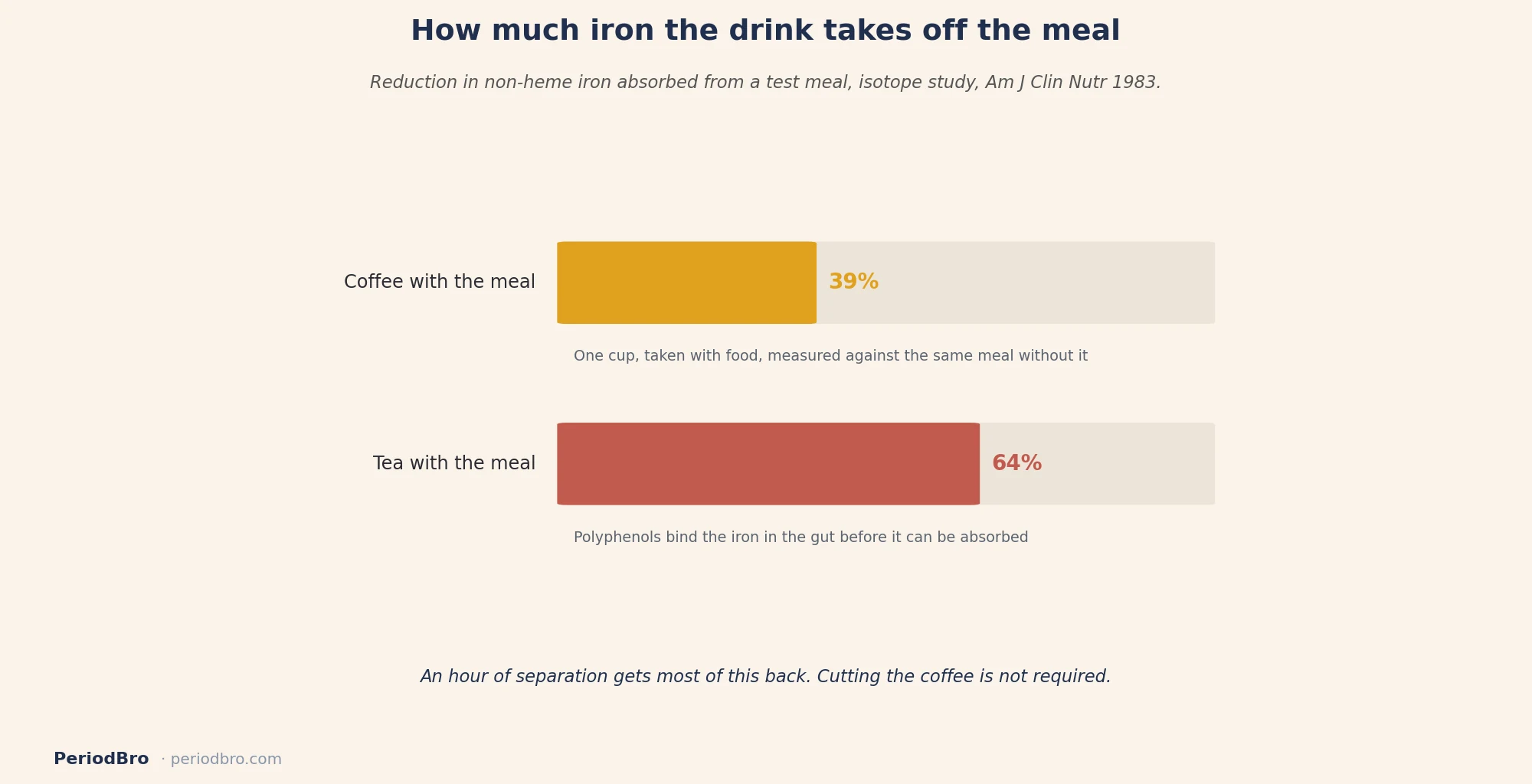
Coffee taken with a meal cut iron absorption from that meal by 39 percent in a classic isotope study. Tea did worse, at 64 percent. The polyphenols bind non-heme iron in the gut, which is the form found in plants, fortified cereals and most supplements.
Now put that next to a heavy period. Losing iron monthly and then blocking a third to two thirds of what comes back in is a slow, quiet arithmetic problem, and it presents as tiredness rather than as anything obviously period-related. Iron deficiency and heavy periods goes through what that actually looks like, and how to help with heavy bleeding covers the rest.
The fix is an hour of separation. Coffee and tea away from the iron-heavy meal and away from a supplement, rather than alongside it. She keeps the coffee and moves it off the top of her dinner during the week she’s bleeding.

PMS, cramps and sore breasts: what the evidence actually says
“Cut the caffeine” is standard advice for premenstrual symptoms. It has less behind it than its confidence suggests.
A prospective analysis nested in the Nurses’ Health Study II compared over 1,200 women who went on to a clinician-diagnosed case of PMS against 2,426 who didn’t, and found caffeine intake was not associated with developing PMS. The authors went further and said current advice to reduce caffeine may not help prevent it.
That’s a specific claim, and it’s narrower than “caffeine is fine.” It says caffeine intake doesn’t predict developing PMS across a population. It leaves open whether one particular person’s existing symptoms respond to her own coffee, which only she can answer, and only by trying it across a couple of cycles rather than a couple of days.
Same story with sore breasts, where the caffeine link has been repeated for decades on evidence that never got strong. And cramps aren’t in the caffeine story at all in any convincing way, which is why what actually works on cramps is a different list entirely. If what she’s dealing with is severe enough that the coffee question feels beside the point, the line between PMS and PMDD is the more useful reading.
Two places the drink genuinely stacks
Anxiety is the first. Caffeine is a stimulant and does stimulant things: faster heart rate, more alertness, a lower threshold for the physical sensations that anxiety uses as raw material. There’s no cycle-specific mechanism needed here. If she already runs wound-up in the premenstrual week, which is common enough that period anxiety is its own topic, a large coffee is just adding to a number that’s already high.
Migraine is the second, and it cuts both ways, which is what makes it tricky. Caffeine appears as an active ingredient in plenty of combination headache tablets because it genuinely helps. It’s also a classic trigger, particularly on withdrawal, which means an abrupt cut lands as a headache within a day or two. For someone who already gets menstrual migraines in the days around bleeding, going cold turkey the week before her period is the single worst timing available.
What’s actually worth doing
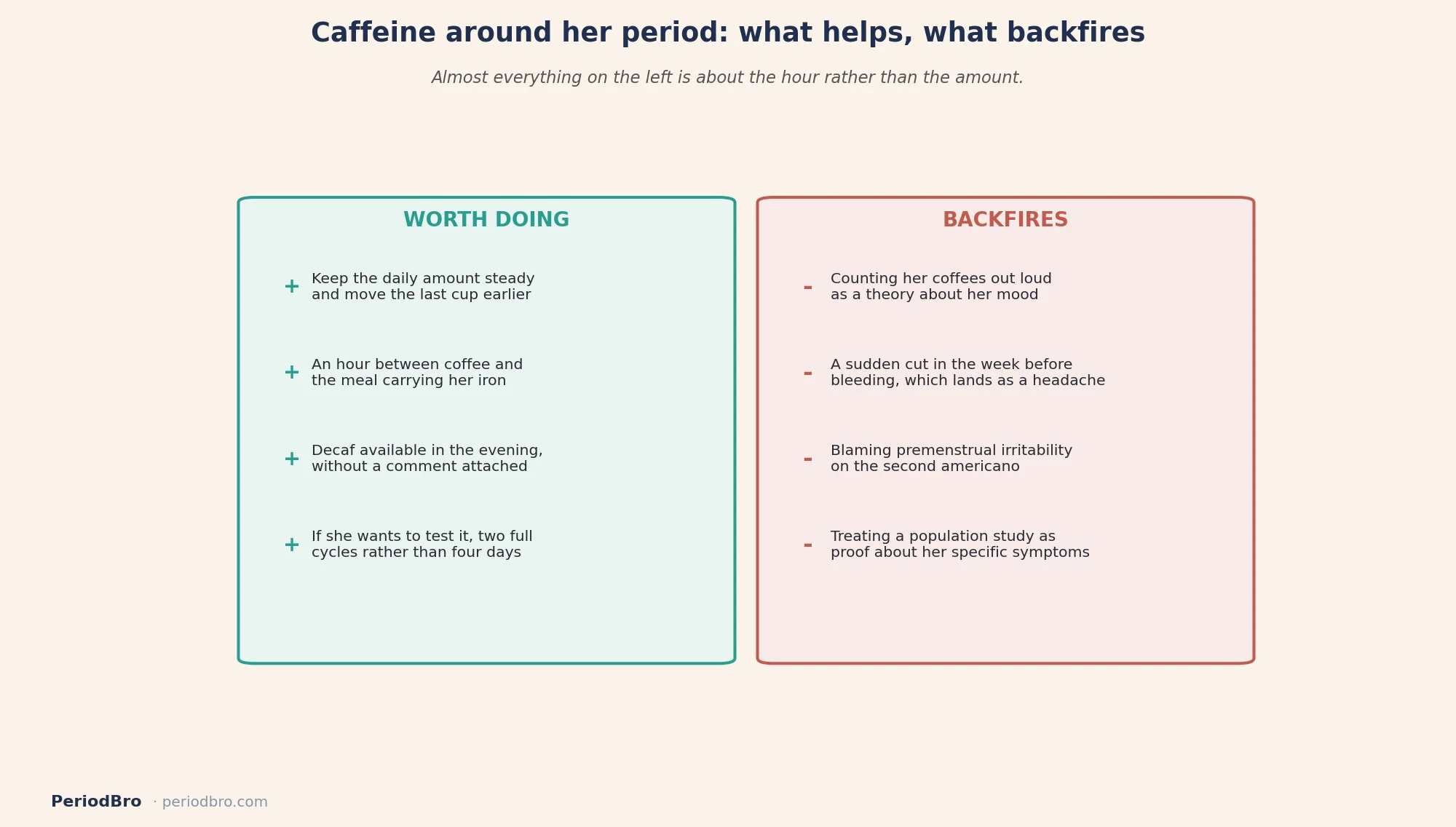
Keep the amount steady and move the hour. A stable daily intake with the last cup earlier beats a heroic cut followed by a rebound, because the rebound lands as a headache and a bad mood and gets blamed on her hormones.
Put an hour between coffee and any meal that’s carrying her iron. That’s the one with real numbers behind it.
If she wants to test whether caffeine affects her own symptoms, the test is two full cycles with a consistent change, not four days of white-knuckling it. Anything shorter is measuring withdrawal, not caffeine.
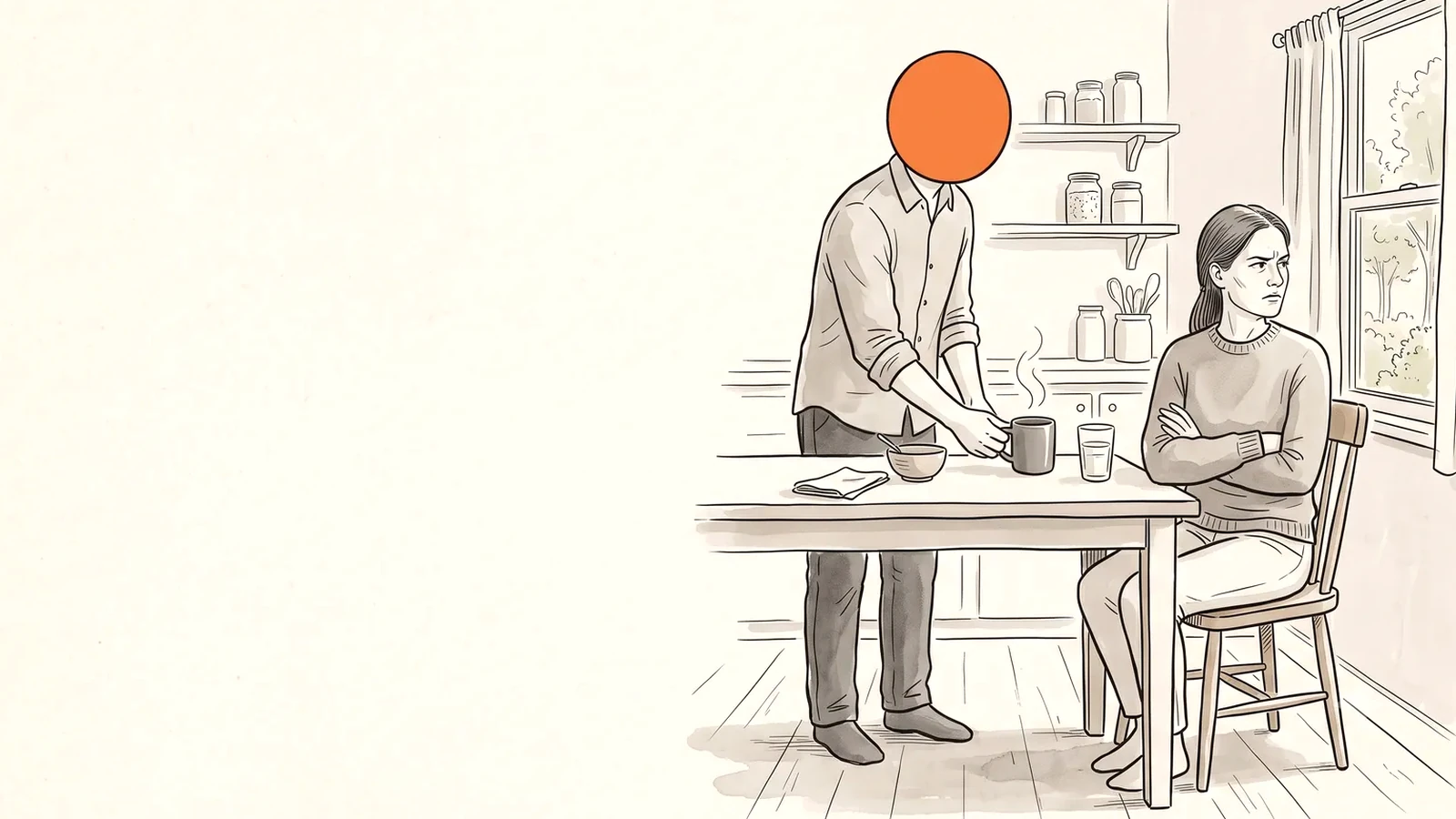
And the part that’s on you: don’t announce any of this. Counting her coffees out loud, or telling her the reason she’s irritable is the second americano, converts a piece of information into an accusation. The move is to make the decaf available in the evening without commentary, the same way the drink question works better when it’s an option on the table rather than a policy.
The short version
The short answer on caffeine and her period: her cycle barely changes how she handles it, and hormonal birth control changes it a lot. The week before she bleeds, caffeine’s ordinary costs land on a system already short on sleep and possibly short on iron, which is why the same cup feels different without any special biology being involved.
Steady intake, an earlier last cup, and an hour between coffee and the meal carrying her iron. If you want the wider map of what shifts week to week, the menstrual cycle explained for men is the place to start.

PeriodBro logs sleep, energy and symptoms against her actual dates, which is the only way to tell whether a change made a difference or the month just went differently. Try it free.
This article is general information, not medical advice. Persistent fatigue, a headache that’s different from her usual pattern, or heavy bleeding that’s affecting daily life are worth a doctor’s appointment rather than a change to her coffee.