How Sleep Changes Through Her Cycle: A Partner’s Quiet Guide
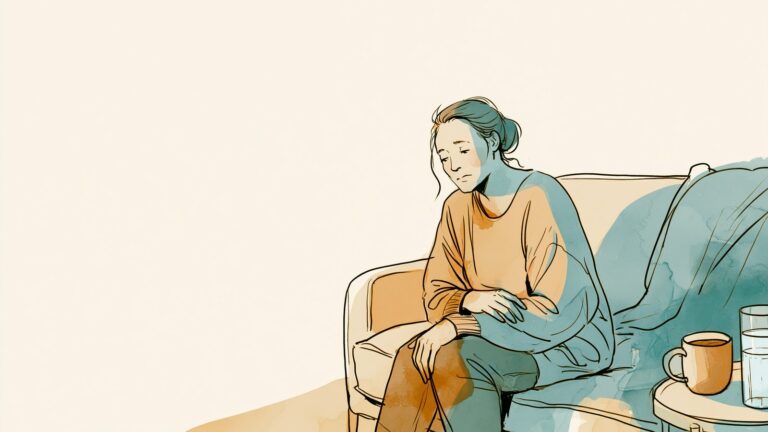
I noticed it before she said anything. Two nights in a row she was up at 3:47 AM, staring at the ceiling. Not anxious, not crying. Just awake, while the rest of the night went on without her. I asked the next morning if something was on her mind. She said no, she just couldn’t sleep. It would pass. It did, four days later, the same week her period started.
For a while I didn’t connect those two facts – her restless nights, and where she was in her cycle. That’s the gap I’m writing this for: a plain look at how sleep changes through her cycle, so a bad night reads as what it is instead of a problem to solve.
Her sleep isn’t broken. It’s cycling. And once you can see the pattern, you stop reading every restless night as a relationship problem, a work problem, or something you need to fix. You read it as Wednesday in the cycle. That alone changes how the morning goes.
How sleep changes through her cycle, night by night
Sleep across the menstrual cycle isn’t one story. It’s four. Estrogen and progesterone don’t just drive mood and energy across the month, they quietly rewrite how the body falls asleep, how deep it goes, and how often it wakes. Roughly one in three women of reproductive age reports sleep disturbed by the cycle in some way, and more than that report it in the week before their period (PMC, Sleep and Women’s Health).
The shifts aren’t dramatic in any single night. They’re the difference between a glass of wine helping her sleep and a glass of wine wrecking it. Between needing the room at 19°C and needing it at 17. Between waking once and waking three times. Small, recurring, and almost always invisible to the partner who didn’t grow up tracking this.
For the long version of the four phases see our menstrual cycle phases guide. For sleep specifically, here’s what to expect.

Follicular phase: when her sleep is mostly fine
The first half of the cycle, after her period ends, is the easy stretch. Estrogen is rising. Progesterone is low. Core body temperature is at its lowest point of the month, which is the body’s natural setup for falling asleep. Sleep onset is faster. Deep sleep holds. She wakes feeling more rested.
If your partner sleeps well anywhere in the cycle, it’s usually here. This is also the window where her energy is highest, her mood most even, her tolerance for late nights highest. You’ll notice she’s more available, more flexible about sleep timing, less wrecked by a missed hour. That’s not personality. That’s biology giving her a pass.
What to do as a partner: nothing different. Don’t pathologize the good week. Just notice it exists, and remember it exists, because the contrast becomes the map.
Ovulation: a subtle shift you can almost miss
Around day 14, give or take a few days, ovulation hits. Estrogen peaks then drops. Progesterone starts to climb. Core body temperature rises by 0.3 to 0.7 °C and stays elevated for the rest of the cycle (PMC, Temperature regulation in women).
Half a degree sounds like nothing. In sleep terms, it’s a lot. Falling asleep requires the body to drop its core temperature by about 1 °C. If the starting point is already higher, the drop takes longer and feels harder. She may notice it as “I’m too warm tonight” or “I can’t get comfortable.” She may not notice it at all and just toss for twenty minutes longer than usual.
This is also when you might catch the first night with vivid or strange dreams. Some research suggests dream intensity and recall both fluctuate with the cycle, especially in the second half (PMC, Nightmares Fluctuate Across the Menstrual Cycle).
What to do as a partner: notice the room temperature. If she’s pushing the duvet off and you’re pulling it on, she’s not being dramatic, she’s running 0.4 °C hotter than she was last week. The fix is a thinner blanket on her side or the thermostat down two clicks. Tiny gesture, real signal.
Luteal phase: where the night actually gets harder
The two weeks before her period are where sleep takes the hit, and where most partners notice something is “off” without knowing why. Progesterone is high. Core body temperature stays elevated. The natural pre-sleep cooling that helps the brain shut down is muted, because progesterone blunts the nighttime drop that melatonin normally produces (Restorative Medicine, Progesterone & Sleep Regulation).
In sleep-study language: more awakenings per hour, less slow-wave sleep, more arousals, and a subjective sense that the night was “lighter” even when total sleep time looks normal on paper (PMC, Menstrual Cycle-Related Variation in Physiological Sleep). She slept seven hours. She’ll tell you she slept four. Both can be true.
Then, in the late luteal phase, the last three to five days before her period, sleep quality often drops further. This is the window where PMS symptoms cluster, where mood gets heavier, and where the bad night and the bad morning start feeding each other. Women with severe PMS report disturbed dreams, daytime sleepiness, decreased alertness, and concentration that comes and goes (PMC, Sleep Quality in Severe PMS). For broader context on the hormones driving this stretch, see our week-by-week hormone map.
If you’ve ever wondered why she snapped at you over something small in the second half of the month, sleep is half the answer. Tired brain plus rising irritability plus a body that won’t cool down is not a relationship problem. It’s a Wednesday in the cycle. The other half of the answer is what the luteal phase is actually doing.

Menstrual phase: pain shows up at night
When her period starts, two things hit at once. Progesterone drops, which should make sleep easier. And cramps arrive, which makes it harder.
For partners whose girlfriend or wife has even moderate cramps, the first one to three nights of the period are often the worst sleep of the month. Pain fragments sleep. Fragmented sleep amplifies pain. Studies of women with primary dysmenorrhea show measurably higher nocturnal body temperatures and disrupted sleep architecture during the first days of menstruation (Am J Physiol-Endocrinology). The cramping isn’t the only thing keeping her awake. The pain raises her core temperature, which works against the cooling her body needs to fall asleep, which prolongs the wakefulness, which makes the pain feel sharper.
By day three or four, most of that eases. Estrogen starts climbing back up. The cycle resets. The window of decent sleep opens again.
What you actually do
You’re not going to fix her sleep. Sleep across the cycle is biology doing its thing, and even the most attentive partner can’t make progesterone drop on command. What you can do is stop adding load and start removing it.
A short list, ordered by how much they matter:
Keep the bedroom cooler than you think you need to. The single most useful sleep variable in the second half of her cycle is room temperature. If you sleep hot together, get a second-zone duvet or two separate blankets. This sounds small. It is not.
Notice the patterns without announcing them. “You haven’t slept well in a few nights” lands better than “You’re in the late luteal, of course you’re tired.” Save the cycle-science vocabulary for when she asks. The point is that you noticed, not that you have a chart.
In the days before her period, take more of the morning. If she’s sleeping lighter and waking earlier or worse, do the alarm, do the coffee, do the dog, do the small things she’d otherwise drag herself through. This buys her an extra 20 minutes of rest and signals that you’re tracking the week even when she isn’t.
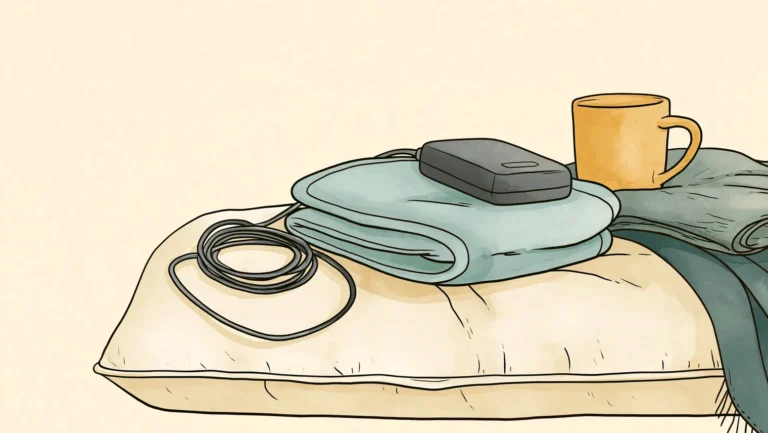
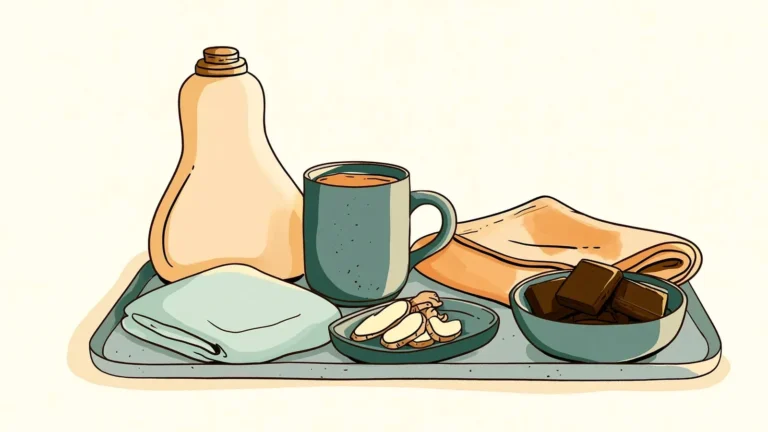
When cramps hit at night, the practical stack that helps most people is heat (a hot water bottle or heating pad on the lower abdomen), an over-the-counter NSAID taken before the pain peaks, and a slightly cooler bedroom for the rest of the body. The heat sounds counterintuitive given the temperature science above. Localized heat on the abdomen reduces cramp pain. Whole-body warmth makes sleep harder. Both can be true.
Don’t take the bad mood from a bad night personally. The morning after a 3 AM wakeup is rarely her best version. If she’s short with you, she’s short with the day, not with you specifically. The right response is coffee and quiet, not a conversation.
When to push for help
Most cycle-related sleep changes are normal, expected, and manageable with small adjustments. But not all sleep problems are cyclical. If she’s reporting insomnia that doesn’t track the cycle, if it lasts more than a few weeks at a stretch, or if it’s tied to anxiety, low mood, or daytime function falling apart, that’s beyond what a thinner blanket fixes. A primary care doctor or a sleep specialist is the right next step. The same is true if her cramps are severe enough to keep her up multiple nights every month – that’s worth a conversation with a gynecologist, not a heating pad.
The goal of paying attention to the pattern is not to diagnose her. It’s to know when the pattern breaks. You can’t see that without watching the pattern in the first place.
The quiet upgrade
The reason this matters isn’t sleep, really. It’s that when you can see her week before she names it, you stop interpreting her body’s noise as something about you. The late-luteal restlessness is not her pulling away. The first-night-of-period exhaustion is not her being difficult. The follicular-phase good week is not her finally getting over whatever was bothering her three weeks ago.
It’s a cycle. Knowing what week it is – quietly, without announcing it – is most of the work.
You build that quietness slowly. One observation at a time. One small adjustment at a time. And eventually, when she says “I didn’t sleep well,” you already know what to do, because you already knew it was coming.
Sleep is one of many things the cycle touches; the whole map lives in our complete menstrual cycle guide for men.