Sore Breasts Before Her Period: Why It Happens (and How to Help)
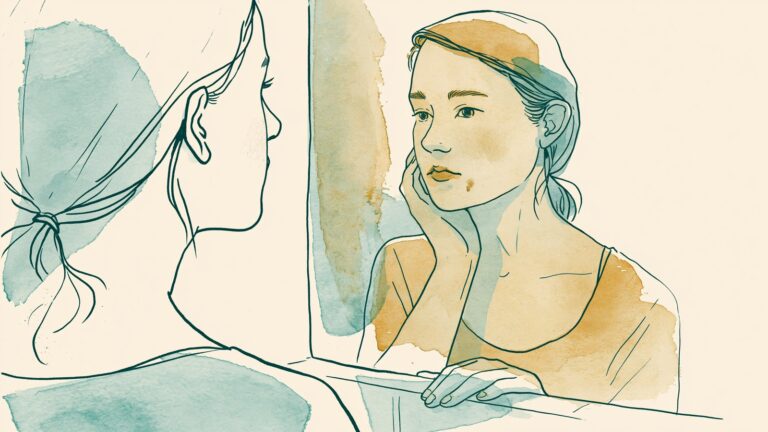
I went to hug her the way I always do, arms around the middle, and she pulled back with a small wince. Not angry. Just protecting something. It took me a second to clock it: her period was a few days out. The hug wasn’t the problem. The pressure was.
If you’ve ever had a partner flinch at a hug, brush off a hand on her chest, or start sleeping on her back when she’s a side-sleeper, you’ve probably run into this. Sore breasts before her period are one of the most common premenstrual symptoms there is, and one of the easiest for a partner to misread as “she’s pulling away from me.” She isn’t. She’s sore. Here’s what’s actually happening, and how to be useful instead of confused.
Why she gets sore breasts before her period
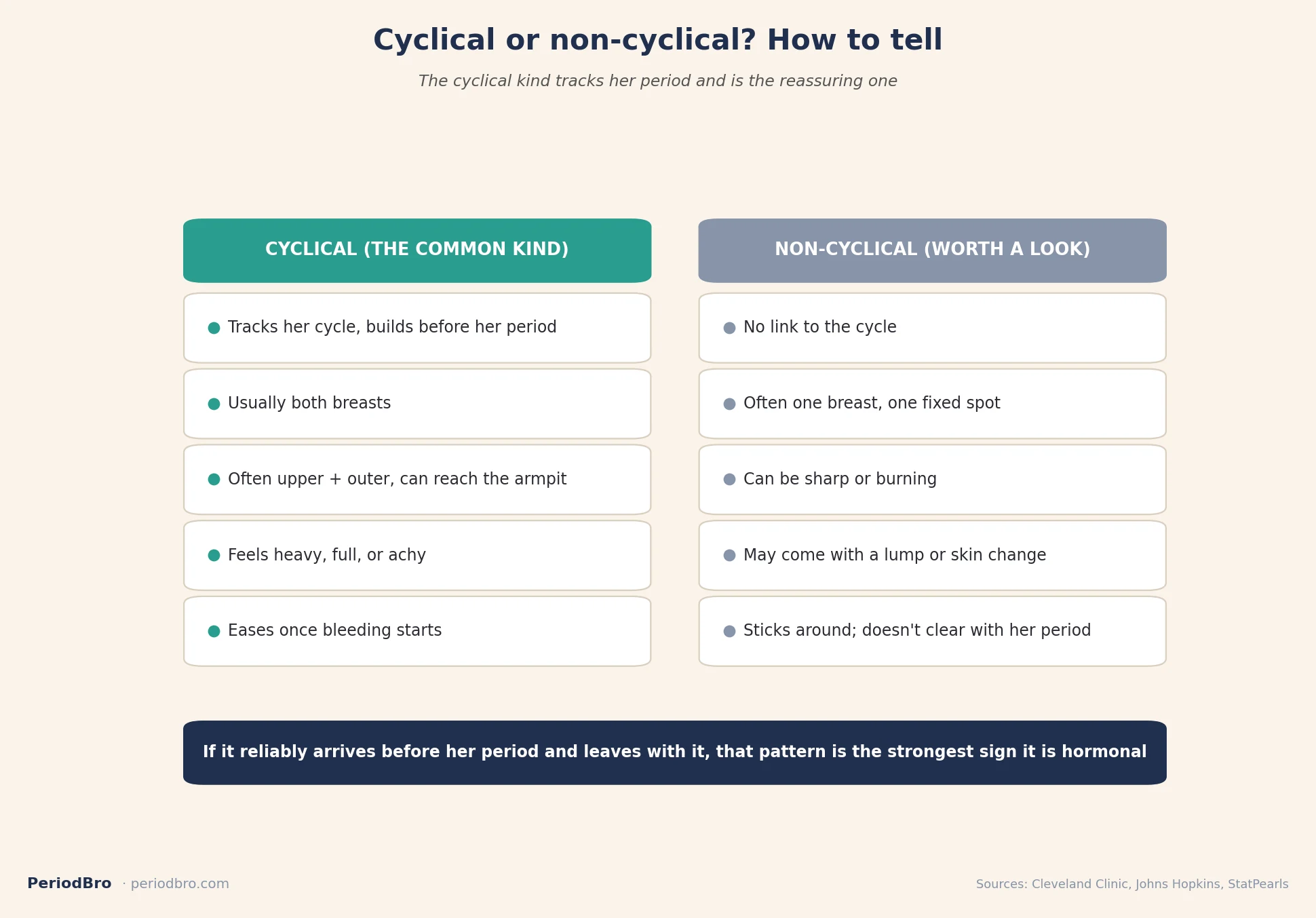
The clinical name is cyclical mastalgia, which is a fancy way of saying “breast pain that tracks with the cycle.” It shows up in the back half of the cycle, the luteal phase, in the roughly one to two weeks before bleeding starts, and it usually fades once her period arrives. Both breasts are typically involved, the ache often sits in the upper and outer part, and it can radiate toward the armpit. Some women describe it as heaviness or fullness. Others say it feels bruised.
It’s driven by hormones, not by anything either of you did. After ovulation, estrogen and progesterone both rise through the luteal phase, and that hormonal shift causes real, physical changes in breast tissue: the glands swell, fluid builds up, and everything gets more sensitive (Cleveland Clinic). When those hormones drop off right before her period, the swelling settles and the soreness eases. If you’ve read our breakdown of what’s happening in the luteal phase, this is the same machinery, just showing up in a different place.
The thing to hold onto: this is a normal, hormone-driven process. It’s the same reason her mood and energy shift on a schedule. Her body is responding to a chemical tide, and the tenderness is part of the package.
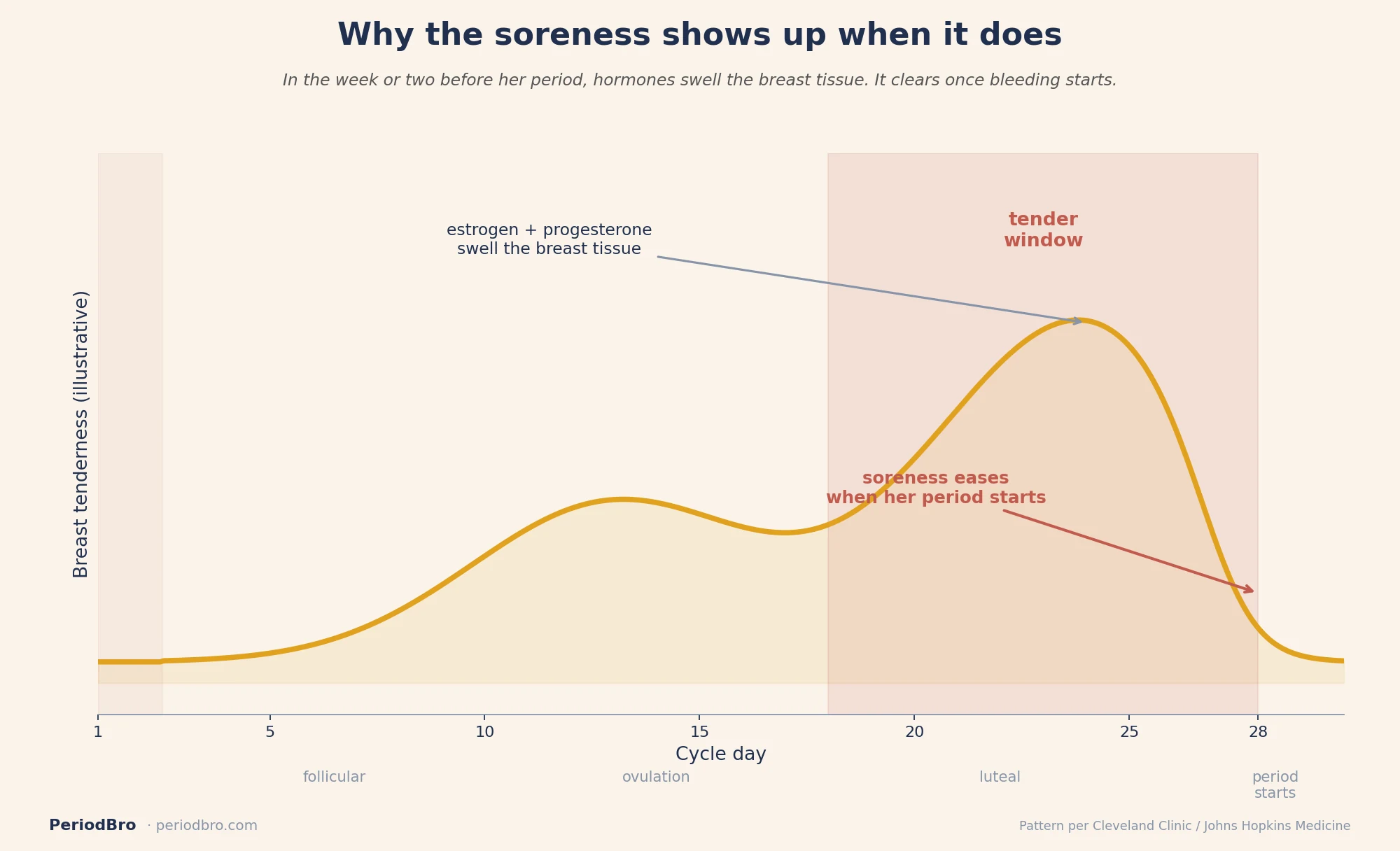
It also explains why the timing feels so predictable once you start paying attention. The soreness doesn’t show up at random. It clusters in the days before her period and clears out when bleeding starts, which is the same window the bloating, the cravings, and the short fuse tend to land in. When you stop treating each symptom as a separate mystery and start seeing them as one hormonal wave, the whole week gets a lot less confusing to be around.
How common is it, and is this the worrying kind
Common enough that it’s almost the default. In one population study of women, about 68 percent reported some cyclical breast change, and roughly 22 percent had it bad enough to count as moderate-to-severe cyclical mastalgia (PubMed). Cyclic breast pain is the single most common type of breast pain, affecting close to two-thirds of women who deal with breast pain at all (StatPearls / NCBI). So if your partner gets sore breasts before her period, she’s in very ordinary company.
There are two broad flavors of breast pain, and it’s worth knowing the difference so you don’t quietly catastrophize. Cyclical pain tracks the calendar: it builds in the luteal phase, hits both breasts, and lets go when bleeding starts. Non-cyclical pain doesn’t follow the cycle at all, often sits in one specific spot, and has other causes (Johns Hopkins Medicine). The cyclical kind is the one we’re talking about here, and it’s the reassuring kind. The pattern itself, the fact that it reliably arrives before her period and leaves with it, is the strongest sign it’s hormonal and not something to panic about.
This often travels with the rest of the premenstrual bundle, the bloating, the fatigue, the flu-ish heaviness we covered in why she feels sick before her period. Sore breasts are rarely the only thing going on that week.
The one rule: don’t make it about her body
Before any practical help, one hard rule. Do not comment on her body. Not “wow, they’re bigger,” not “you seem swollen,” not a joke, not a compliment you think is flattering. When she’s tender and self-conscious, even a kind remark about her chest lands as you noticing her body when she least wants it noticed.
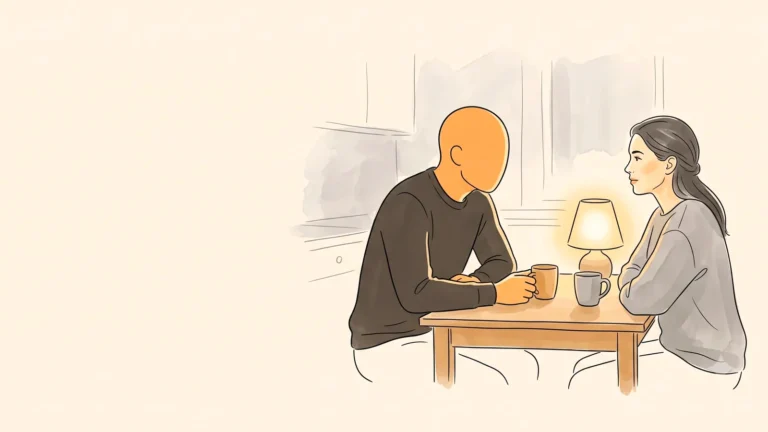
The “noticed thing” here is not a body part. It’s a behavior: she winced, she shifted how she sleeps, she pulled your hand away. Respond to the behavior, not the body. The move is simple. Ask once, quietly: “Are you sore this week? Tell me how to hug you.” Then let her run it. That single question does more than a week of guessing, because it tells her you clocked the discomfort without making her appearance the topic.
How to actually help when her breasts are sore
You can’t dissolve the soreness, but you can stop adding to it and make the week easier. A few things that genuinely land:
Adjust the physical affection, don’t withdraw it. The instinct when she flinches is to back off entirely, which can read as rejection on top of discomfort. Instead, recalibrate. Lighter hugs, an arm around the shoulder instead of a squeeze around the chest, hand-holding, sitting close. Closeness without compression.
Take the load off her. Standard support tools apply. Carry the heavy bag, drive, handle the logistics so she isn’t bracing through a packed day while her body is already taxed. Tenderness has a way of making everything else feel heavier, and the less she has to white-knuckle through, the better the week goes.
Mind the workout and the sleep. High-impact movement can make sore breasts worse, so if she usually runs or trains, don’t be the guy who nudges her to “just push through.” A supportive sports bra or a lower-impact session that week is a kindness, not a cop-out. Same with sleep: if she’s a side-sleeper who’s suddenly stacking pillows, that’s the soreness talking, not restlessness at you.
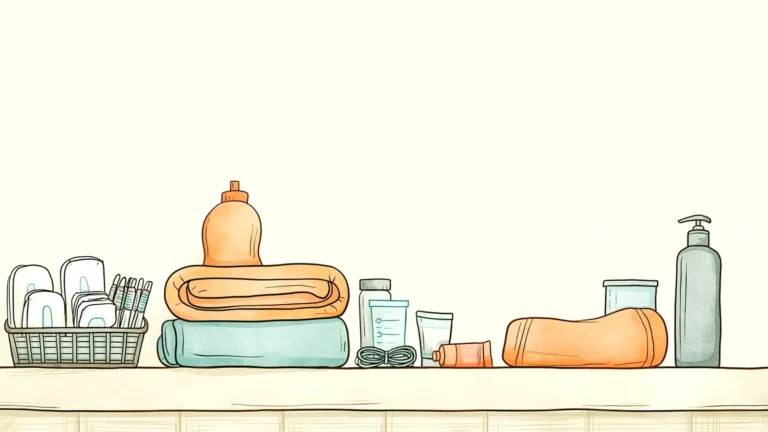
Keep the relief options stocked. A well-fitting, supportive bra during the day genuinely reduces movement and ache, and a soft or no-underwire bra for sleeping helps some women. Over-the-counter pain relievers and a warm or cool compress can take the edge off (Cleveland Clinic). The same low-effort prep we lay out in the pain-relief buyer’s guide works here: have the stuff on hand before she needs it.
Go easy on the salt and caffeine, together. The evidence on caffeine is genuinely mixed, so don’t lecture her about her coffee. But some studies link caffeine and a high-salt week to worse symptoms, and cutting back is harmless to try. Make it a “we” thing, not a “you” instruction: keep some lower-salt options in the fridge for that week.
None of this is heroic. It’s just paying attention and not making her ask.

When sore breasts are worth a doctor’s look
Cyclical breast tenderness is usually nothing to worry about, and here’s the part worth saying plainly because it’s the fear underneath the question: breast pain on its own is rarely a sign of breast cancer. Fewer than 1 in 10 people diagnosed with breast cancer report pain as a symptom, and pain is far more often hormonal (American Cancer Society). The cyclical, both-sides, comes-and-goes-with-her-period pattern is the textbook benign one.
That said, some things are worth a doctor’s attention, and a good partner knows the flags without sounding the alarm. It’s worth her checking in with a clinician if there’s a new lump, breast pain that sticks around longer than a couple of weeks or doesn’t follow the cycle, nipple discharge, or any change in the skin, shape, or texture of one breast (Mayo Clinic). Pain that’s stuck in one fixed spot and isn’t tied to her period is also worth a look.
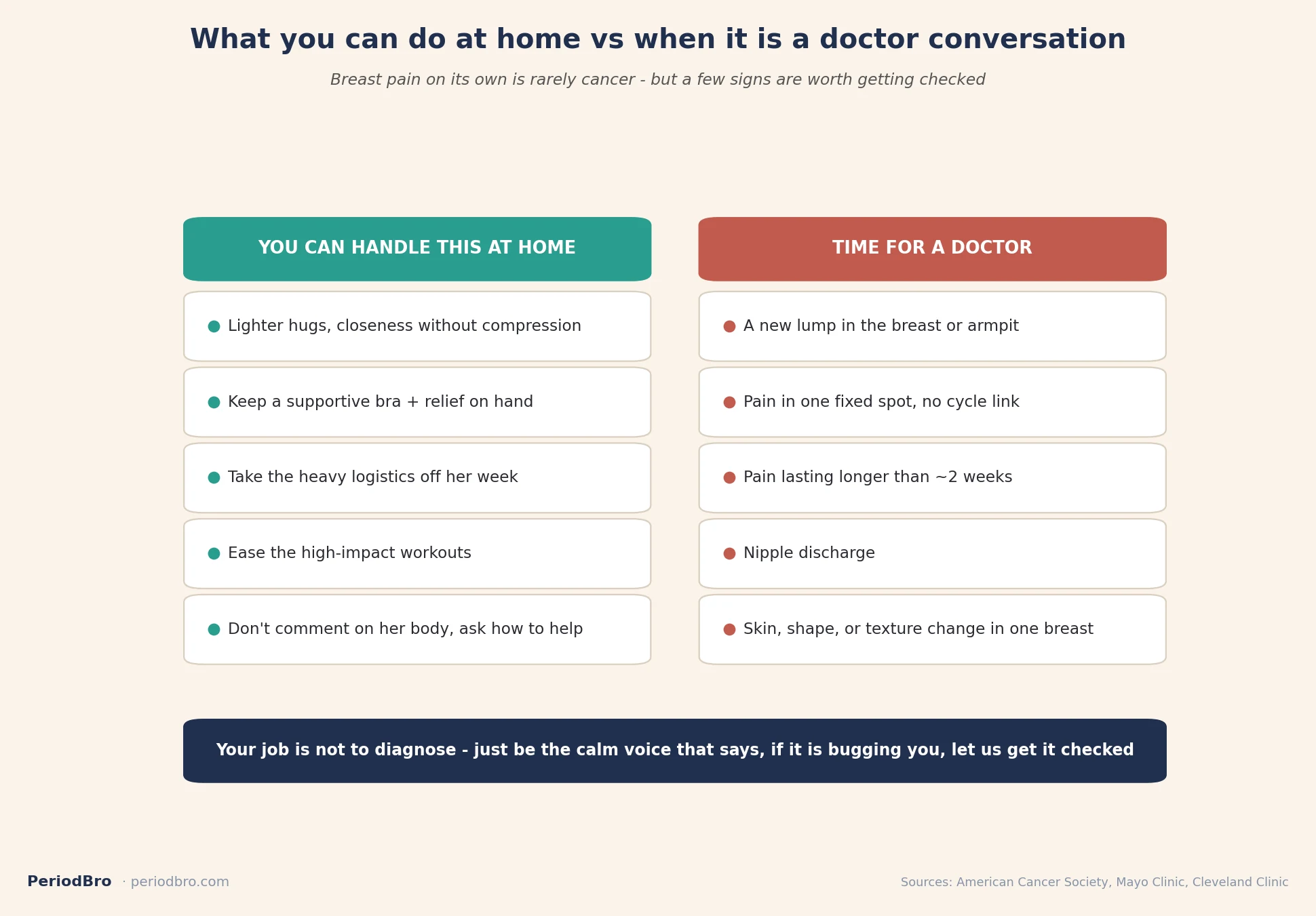
Your job isn’t to diagnose anything. It’s to be the calm voice if she’s the one worrying: “It’s probably just the cycle, but if it’s bugging you, let’s get it checked, I’ll come with you.” That removes the friction that keeps people from booking the appointment, without you turning a normal symptom into a scare.
The one thing to do this month
Next time her period is roughly a week out, watch for the flinch instead of waiting to be told. Ask the one quiet question, “How do you want to be hugged this week?”, and then adjust. That’s the whole skill: notice the pattern, respond to the behavior, leave her body out of it.
This is exactly the kind of thing PeriodBro is built to help you stay ahead of, a quiet heads-up that the tender week is coming so you can recalibrate before she has to pull away. The goal was never to track her. It’s to stop being surprised by something that happens every single month.
This article is general information, not medical advice. Sore breasts before a period are usually hormonal and benign, but any new lump, persistent or one-sided pain, nipple discharge, or change in the skin or shape of a breast should be evaluated by a healthcare professional. When in doubt, she should talk to her doctor.