Yeast Infection Before Period: Why It Happens and What Helps
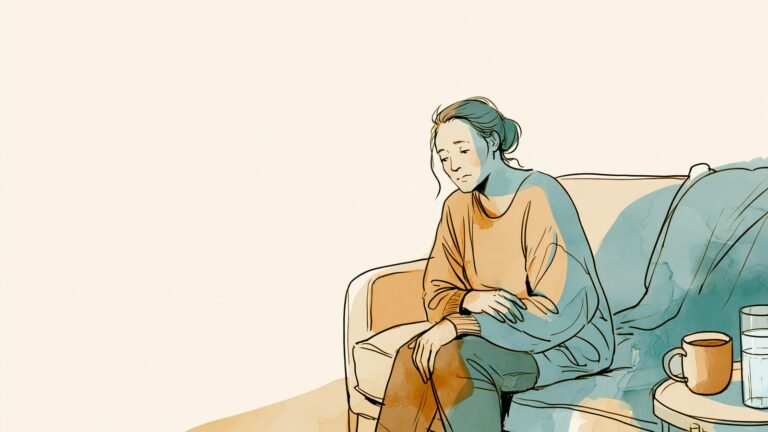
A friend of mine once asked me, half joking, whether he was “giving” his girlfriend yeast infections. They kept showing up a few days before her period, month after month, and he’d decided it had to be something he was doing. It wasn’t. A yeast infection before her period is a pretty well-known pattern, and once you know why it happens, it gets a lot less confusing for both of you.
This piece covers why the days before a period are prime time for yeast, how to tell it apart from the other things that cause itching and discharge, what helps, and when it’s worth a doctor’s visit instead of another tube of cream from the pharmacy.
Yeast infection before period: why it’s so common
Yeast infections are common in general. The CDC estimates that about 75% of women will have at least one vaginal yeast infection, and 40 to 45% will have two or more (CDC). The fungus behind most of them, Candida, lives in the vagina of many healthy people without causing trouble. Problems start when something tips the balance and it overgrows.
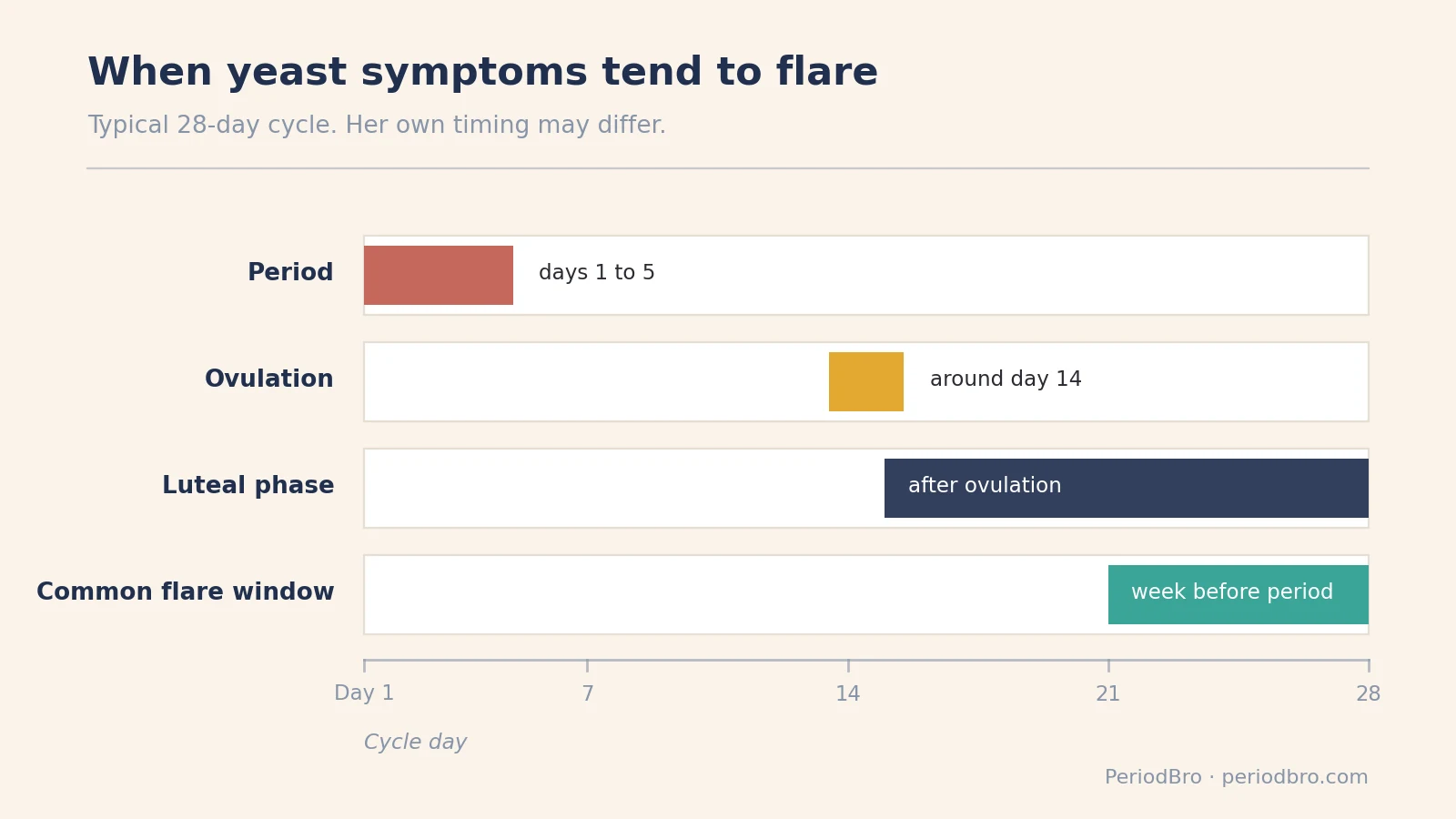
Hormones are one of those things. Cleveland Clinic lists hormonal changes, including the ones from the menstrual cycle and birth control pills, among the usual triggers, alongside antibiotics, pregnancy and unmanaged diabetes (Cleveland Clinic). The second half of the cycle, after ovulation and before the period, is when many people notice symptoms. That stretch is called the luteal phase, and our explainer on the luteal phase covers what else is happening in her body then.
The likely mechanism has to do with estrogen. Estrogen helps the cells lining the vagina store glycogen, a type of sugar, and Candida can feed on it. One study found that yeast samples taken from women all used glycogen as food, and that infections were strongly linked to estrogen use in older women (Dennerstein and Ellis, 2001). Researchers also think hormone shifts change local immune activity. The details aren’t fully settled, but the timing pattern is something gynecologists see all the time, and there’s a name for it when it repeats every month: cyclic vulvovaginitis.
What it feels like, and what it isn’t
The classic symptoms are itching and burning around the vagina and vulva, soreness, pain during sex, burning when urine touches irritated skin, and a thick white discharge that’s often compared to cottage cheese (CDC). Redness, swelling and small cracks in the skin are common too.
None of those symptoms is unique to yeast, though. Bacterial vaginosis, trichomoniasis, irritation from soaps or pads, and even normal discharge changes across the cycle can look similar. The usual giveaways for something else are a fishy smell, green or yellow discharge, or symptoms that don’t respond to antifungal treatment.
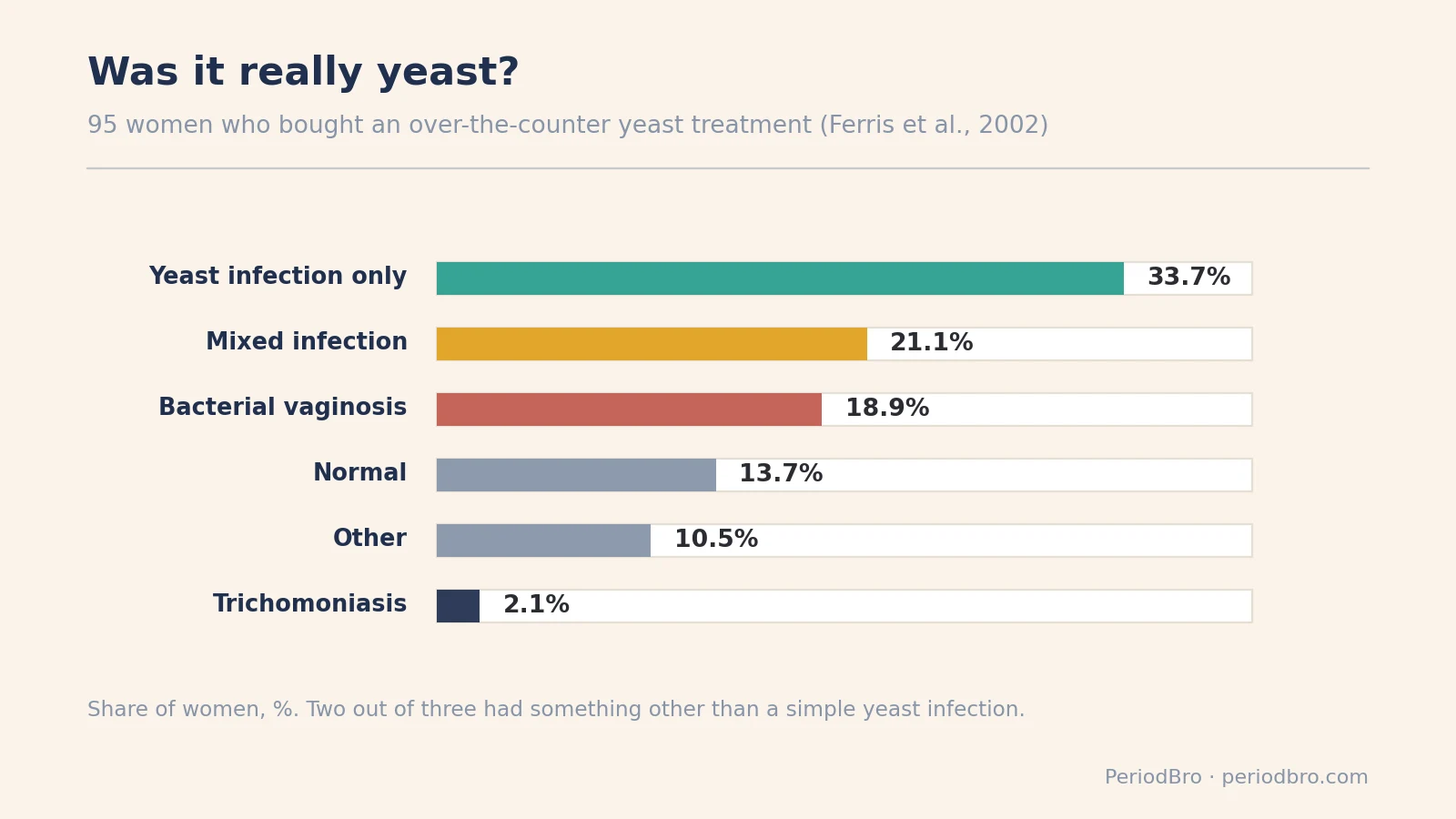
Self-diagnosis is harder than most people think. In a study of 95 women who bought an over-the-counter yeast treatment, only about a third actually had a yeast infection alone. The rest had bacterial vaginosis, a mix of infections, something else entirely, or nothing at all. Women who’d had a yeast infection diagnosed by a doctor before were no better at guessing (Ferris et al., 2002).
“I know what this is” is how the wrong cream ends up being used for months. Normal discharge also changes texture through the month, which our guide to cervical mucus changes walks through.

Other things that stack the odds
Hormones rarely act alone. A round of antibiotics can wipe out the protective bacteria that normally keep yeast in check, which is why some people get an infection like clockwork after treatment for a sinus or urinary infection. Unmanaged diabetes raises sugar levels in body fluids, and pregnancy and hormonal birth control shift estrogen in ways that can also tip things (Cleveland Clinic).
When two of these line up, the week before her period can be the moment it finally boils over. Antibiotics in week three of her cycle, for example, are a classic combination. If she recently started, stopped or switched birth control and the infections began around the same time, that’s useful to mention to a doctor too. Our guide to birth control and her cycle explains how different methods change her hormone levels across the month.
None of this means she’s doing anything wrong. Most of these triggers are things nobody would choose, and they’re good to know mainly so the pattern makes sense.
Is it something you’re doing?
This is what my friend really wanted to know. A yeast infection isn’t considered a sexually transmitted infection. The CDC notes that uncomplicated yeast infections are not usually picked up through sex, and that treating male partners hasn’t been shown to prevent them coming back (CDC). Some men do get an itchy rash on the penis, called balanitis, and that’s worth treating for your own comfort.
Sex can still make things worse in the moment. Friction on already irritated skin hurts, and some lubricants, condoms with spermicide or flavored products can aggravate it. If sex starts hurting for her regularly, why sex hurts her covers the wider list of causes. During a flare, most people just want a break, and that’s an easy thing to offer without making it a big deal.
What usually helps
For a typical yeast infection, over-the-counter antifungal creams or suppositories work for most people, and doctors can prescribe an oral pill instead (Cleveland Clinic). Treatment usually clears things up within a few days to two weeks.
Some everyday habits reduce irritation, even if they don’t prevent every infection:
- Plain water or a mild unscented cleanser on the outside only. No douching, no scented sprays or wipes.
- Breathable cotton underwear, and getting out of sweaty gym clothes or wet swimwear quickly.
- Unscented pads and tampons, changed regularly.
- If antibiotics tend to set off an infection for her, mentioning that pattern to whoever prescribes them.
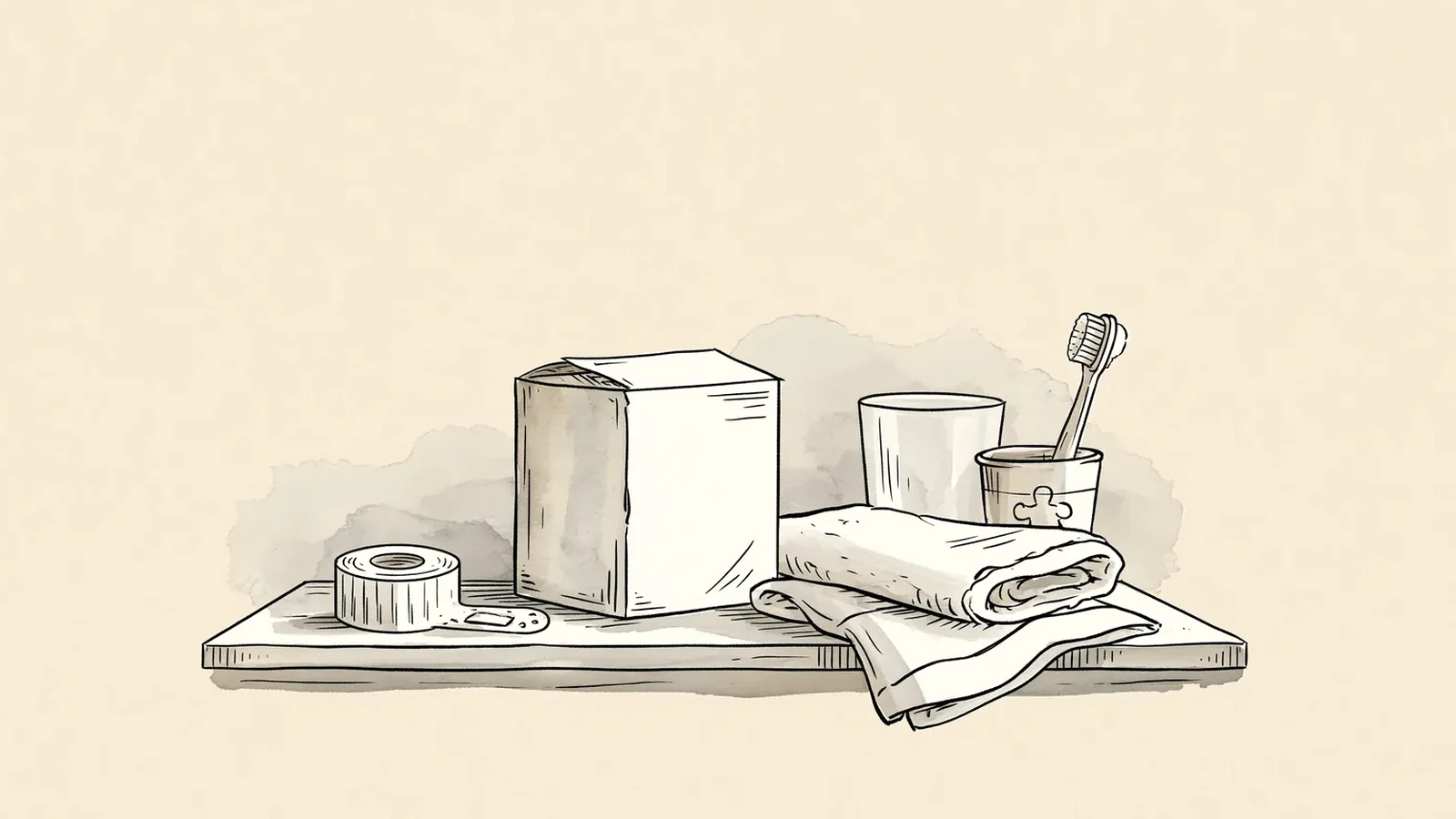
Your part here is mostly practical. Pick up the cream without commentary if she asks, keep the bathroom stocked with unscented basics, and don’t treat itching as a topic for jokes. If it’s a regular thing, a quiet “want me to grab anything on the way home?” goes further than a lot of questions. Our guide to period products for partners has a shopping list that covers the basics.
Tracking the pattern helps more than guessing
If the infections seem to arrive on schedule, a simple log is one of the most useful things she can bring to a doctor. Write down the day symptoms start, where she is in her cycle, what she tried, and whether it worked. After two or three months the pattern either shows up clearly or it doesn’t, and both answers help.
Most period tracking apps let you add notes or symptoms to a day. If you share cycle info as a couple, that log is also how you stop being surprised by it. Our guide on tracking her cycle with consent covers how to do that in a way she’s comfortable with.

When it’s time to see a doctor
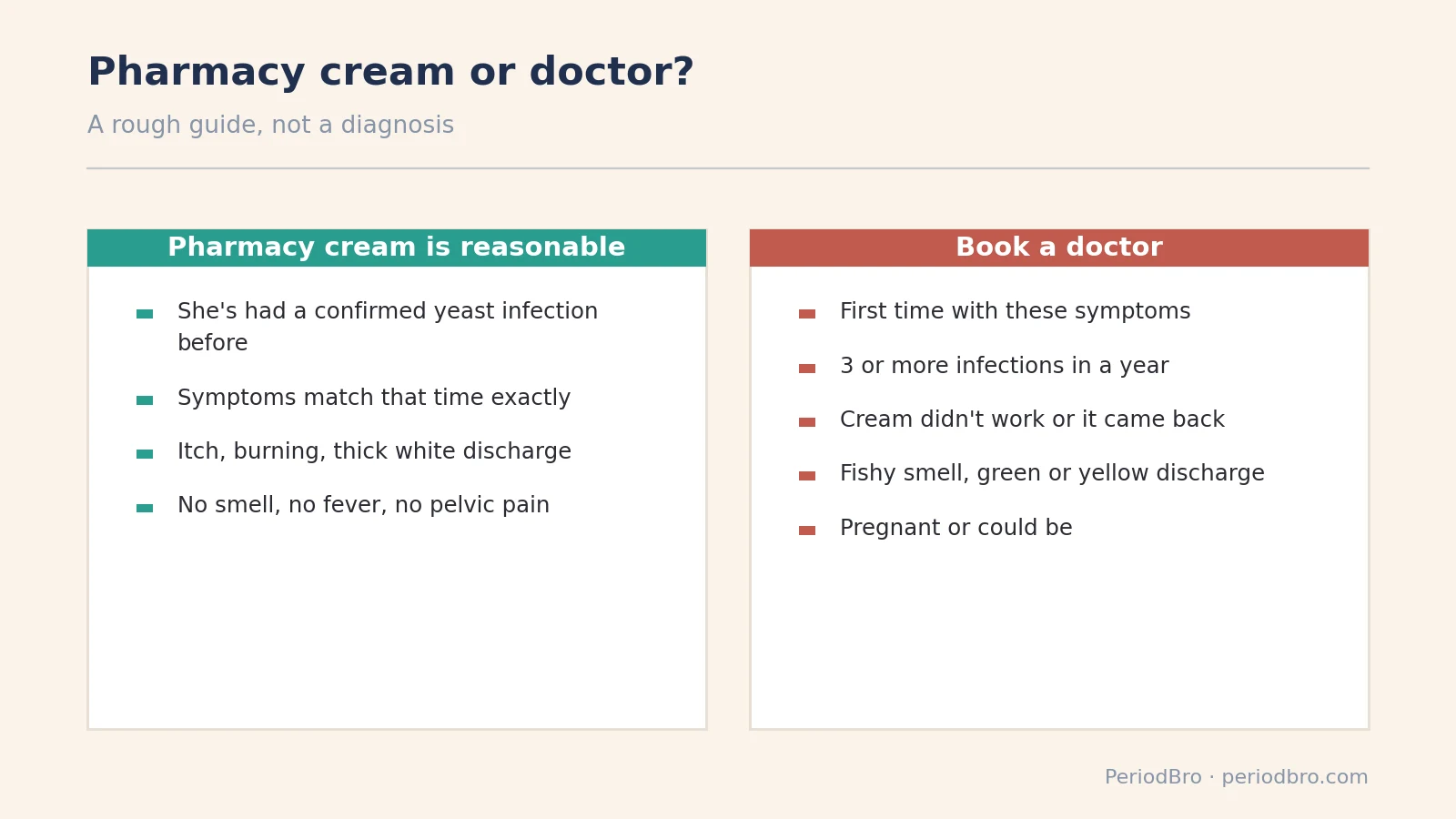
Over-the-counter treatment makes sense for someone who’s had a confirmed yeast infection before and recognizes the symptoms. A visit is a better call when:
- It’s her first time with these symptoms.
- She’s had three or more infections in a year. The CDC calls that recurrent, and it’s a reason to look for underlying causes like diabetes (CDC).
- The treatment didn’t work, or symptoms came straight back.
- There’s a strong smell, green or yellow discharge, fever, or pelvic pain.
- She’s pregnant or could be.
For recurrent infections, doctors often confirm the diagnosis with a swab and culture, then use a longer course of treatment followed by a maintenance dose. ACOG’s overview of vaginitis explains the main types and how they’re told apart.
What changed for my friend
He told her what he’d read, a little sheepishly, and she said she’d assumed it was just bad luck. She started noting the days in her tracking app. Three months later she had a neat little record showing every flare landing in the same week before her period, and she took it to her doctor. The swab confirmed yeast, she got a proper plan, and the monthly itch-and-argue routine stopped. He also stopped asking if it was his fault.
Plenty of things that seem random in her cycle turn out to follow a calendar once someone writes them down. For more on how the whole cycle fits together, read menstrual cycle phases explained for men.
I built PeriodBro so partners can see where she is in her cycle and what tends to come with each phase. If that sounds useful, you can try it free here.
PeriodBro provides educational information and is not a substitute for professional medical advice. Always consult a qualified healthcare provider for personal medical decisions.