How to Support Her Through a Heavy Period
If your partner spends a couple of days a month effectively planning her life around the nearest bathroom, changing protection constantly, dodging pale trousers, and waking up to check the sheets, she may be dealing with a genuinely heavy period. It is common, it is exhausting, and the useful thing you can do is not hover. It is to make the practical side easier and gently back her toward getting it checked if it is wearing her down.
Most guys have no reference point for what counts as heavy, so it is easy to either wave it off or quietly panic. Here is a grounded read on what heavy actually means, how to help, and when it is worth a doctor.
What actually counts as a heavy period
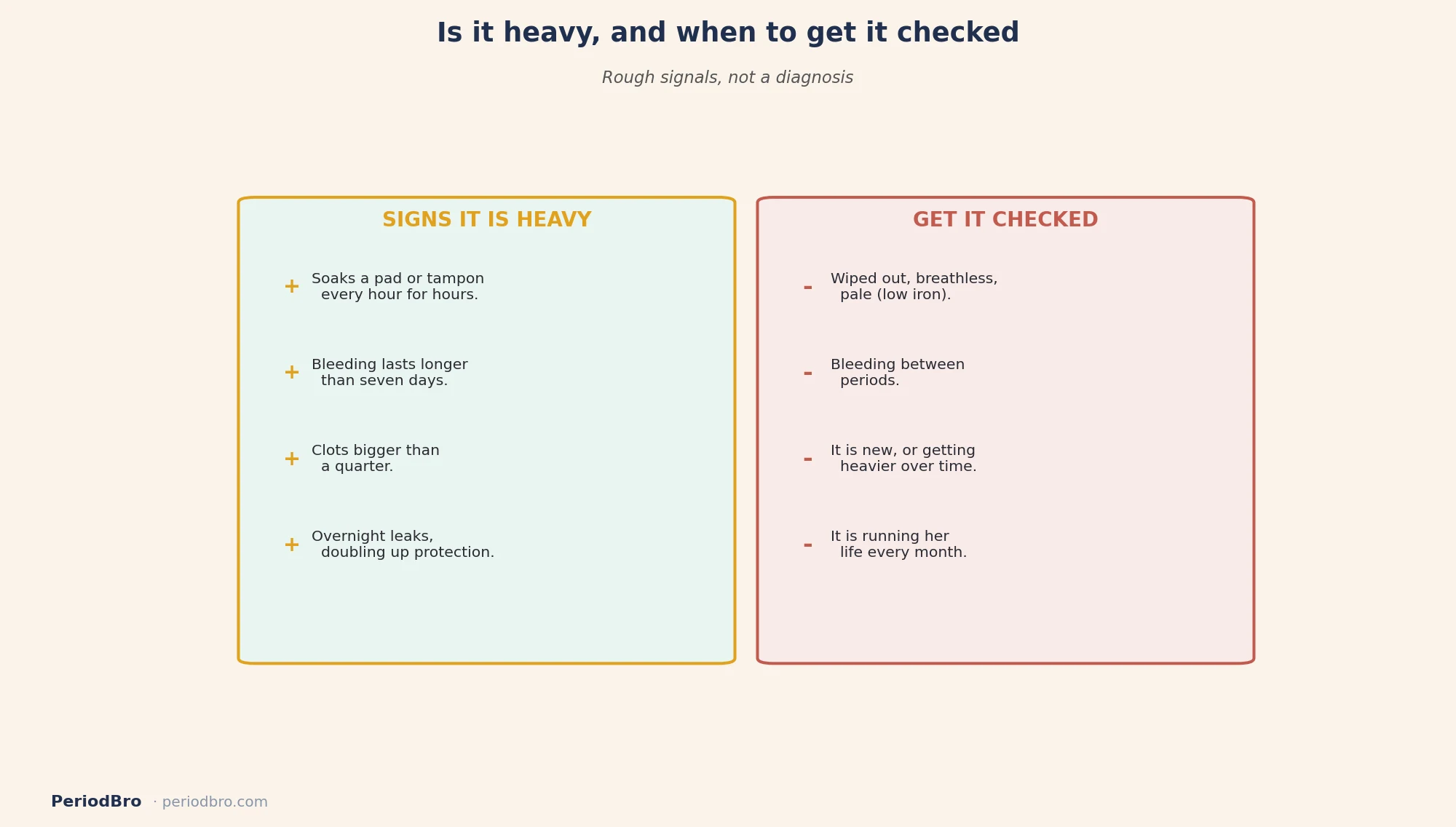
There are some rough, well-established markers. Health authorities flag a period as heavy if she is soaking through a pad or tampon every hour for several hours in a row, needs to double up on protection, is passing clots bigger than a quarter, or is bleeding for longer than seven days (CDC on heavy menstrual bleeding). Getting up in the night to change, or flooding through onto clothes and bedding, is part of the same picture.
The medical name is menorrhagia, and the definition that matters most is not really about millilitres. It is heavy when it interferes with her life, her sleep, her work, or how she feels day to day (ACOG on heavy menstrual bleeding). So if she is organising her days around bleeding and it is grinding her down, that counts, regardless of what a chart says. You do not need to measure anything. You need to notice that it is a real load she is carrying.

How to help with heavy periods without making it a thing
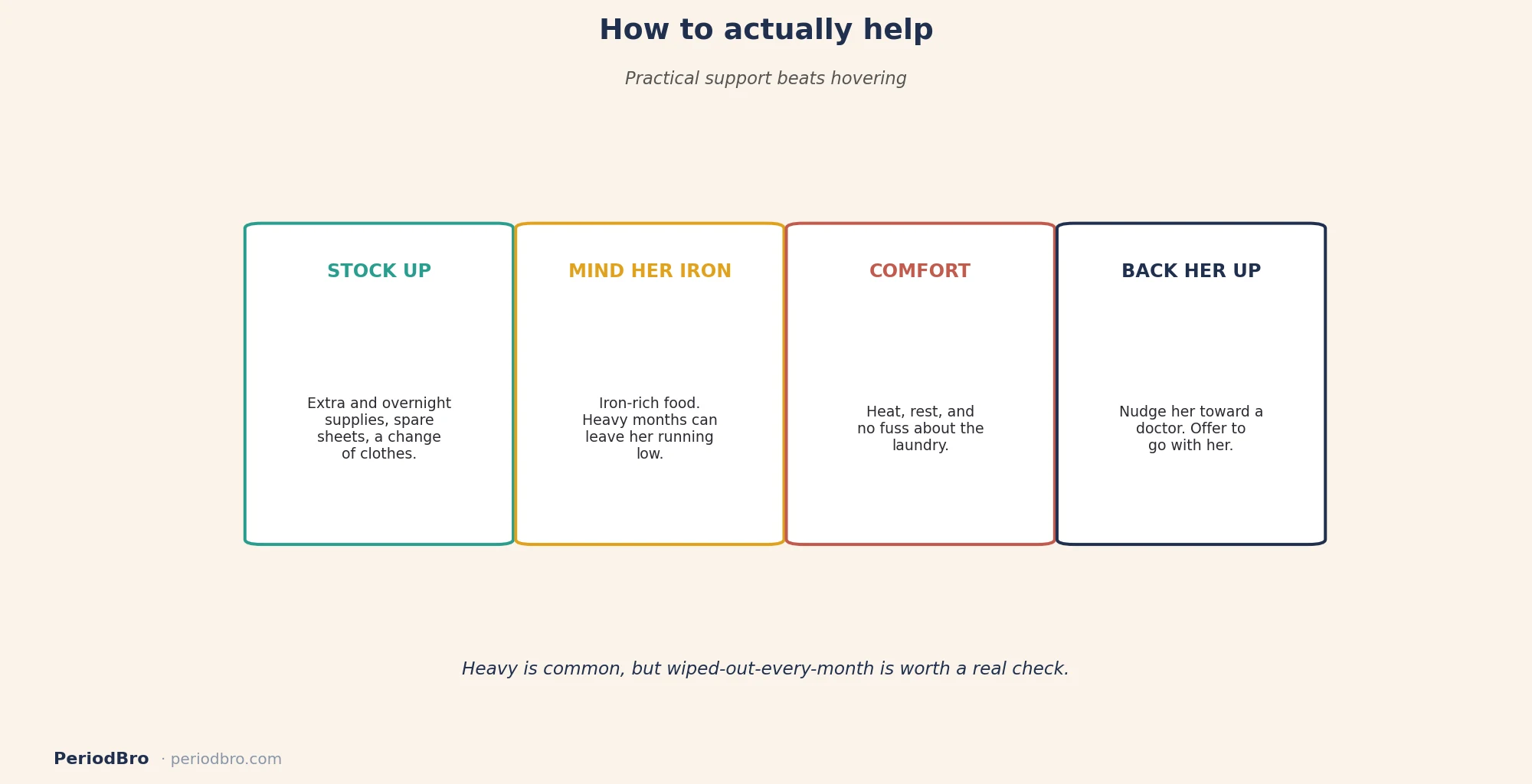
Start with logistics, because that is where a heavy period actually bites. Keep the supplies stocked and then some, including overnight and higher-absorbency options, so she is never rationing or making an emergency run. A spare set of supplies in her bag, the car, and the bathroom she uses removes a whole category of stress. Quietly having clean sheets and a change of clothes on hand for a bad night means a leak is a shrug, not a crisis.
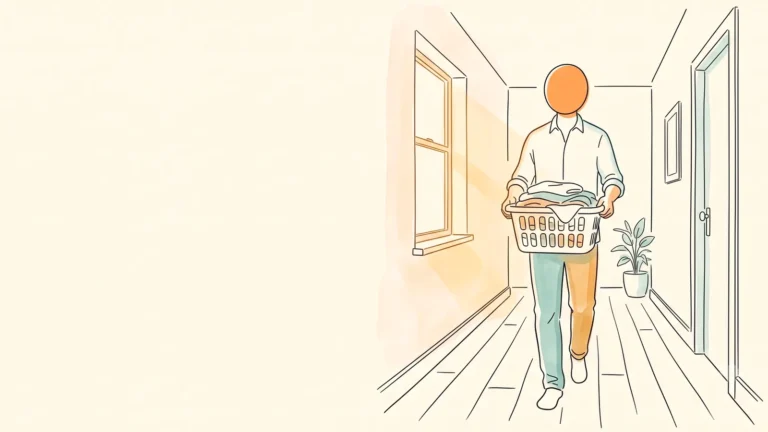
Then take the friction off the rest of her day. This is the same principle as any good support during her period: do the practical thing without being asked and without commentary. Run the laundry, handle the errands, keep the evening low-key. If you want the fuller playbook on showing up when you cannot fix the underlying problem, we wrote it up in how to support her when you cannot fix the pain.
It also helps to know the products exist that are built for heavy flow, without pushing any of them on her. Higher-absorbency and overnight pads, period underwear worn as backup, and menstrual cups or discs, which hold more than a tampon and need changing less often, are all things people reach for when bleeding is heavy. She will have her own preferences, and it is her call, but being the partner who quietly restocks and knows the overnight options are a thing beats being the one who is baffled by the whole subject. Noticing which days are her heaviest, so the extra supplies are ready and the plans are gentle, turns a monthly scramble into something you are both a step ahead of.
The part people miss: iron
Now the part most partners never connect. Losing a lot of blood month after month can leave her low on iron, and that iron-deficiency anemia is what turns a heavy period into weeks of feeling wiped out, breathless on the stairs, foggy, and pale (CDC on heavy menstrual bleeding). So if she is heavy and also unusually tired all the time, those two things are probably related, and it is not her being lazy or dramatic.
You cannot diagnose or fix that at home, but you can help around the edges. Iron-rich food in the mix, red meat, beans, lentils, leafy greens, makes it easier for her to keep her tank topped up, and pairing it with vitamin C helps absorption. It is a good reason to be the one who cooks that week. If tiredness is the standout symptom for her, it is worth understanding why periods can be so draining so you are not misreading exhaustion as mood. And for easy wins in the kitchen, here is a list of the food worth having in before her period.

When a heavy period needs a doctor
This is the most valuable thing you can do, because a lot of people quietly put up with heavy bleeding for years assuming it is just their normal. It often does not have to be. It is worth her seeing a doctor if she is regularly soaking through protection every hour or two, passing large clots, bleeding longer than a week, bleeding between periods, or if the heaviness is new or getting worse over time (Cleveland Clinic on menorrhagia). The signs of anemia, constant fatigue, breathlessness, looking pale, are their own reason to get seen (ACOG on heavy menstrual bleeding).
There are real, effective treatments, from medication to other options, so a visit is not a scary escalation, it is how she stops losing days every month. Your job is not to push. It is to say you have noticed it seems heavy and rough, that it might be worth a check, and to offer to help book it or come along. Framing it as looking out for her, not as something being wrong with her, makes it far easier to hear. If you are not sure where ordinary lands versus worth-checking, our guide to telling normal period symptoms from a red flag lays out the line.
It can help to know what a visit actually involves, so it feels less daunting to her. A doctor will usually ask about her cycle and how heavy it is, may check her iron levels with a simple blood test, and can talk through causes and treatment, which range from tablets taken during her period to hormonal options and, less often, small procedures (Cleveland Clinic on menorrhagia). None of that requires her to have a diagnosis in mind before she walks in. It is a conversation, and the worst case is she learns her heavy period is nothing to worry about, which is worth knowing on its own.
Common questions
Is a heavy period dangerous? Usually it is more draining than dangerous, but the anemia it can cause is worth taking seriously, and heavy bleeding can occasionally signal something that needs treating. That is exactly why a check-up is the sensible move rather than a reason to worry in silence.
She says it is normal for her. Do I drop it? You can raise it once, kindly, then respect her call. Sometimes “normal for me” is true, and sometimes it is just what she has never questioned. Planting the idea that it could be lighter, without nagging, is a fair thing to do.
What do I actually say? Keep it simple and non-clinical. Something like, “your periods look really heavy and they seem to knock you flat, has a doctor ever looked at that?” Offer, then let her lead.
The short version: heavy periods are common, the practical help is stocking up and taking the load off, the hidden cost is often iron, and the highest-value thing you can do is gently help her get it looked at if it is running her life. Keeping half an eye on when that week lands means you are ready with the supplies and the softer evening before she asks, which is the whole point of being a better partner through her cycle.
This article is general information, not medical advice. Heavy menstrual bleeding, bleeding between periods, or symptoms of anemia such as ongoing fatigue and breathlessness are worth discussing with a healthcare professional.