Period Back Pain: Why Her Lower Back Aches Before and During Her Period (and How to Help)
The first time my partner told me her back hurt, I almost missed it. I was braced for the stomach stuff, the cramps, the heating pad on her belly. But she was pressing the heel of her hand into her lower back, the way you do after a long drive. I asked if she’d slept on it funny. She hadn’t. It was day one of her period, and the ache had moved somewhere I wasn’t watching for.
If you’ve ever wondered why she rubs her lower back instead of her stomach during her period, you’re not missing something obvious. Period back pain is real, it’s common, and most guides aimed at partners never mention it. Here’s what’s actually happening, how to tell ordinary period back pain from something that needs a doctor, and what you can do that genuinely helps.
Why period back pain happens
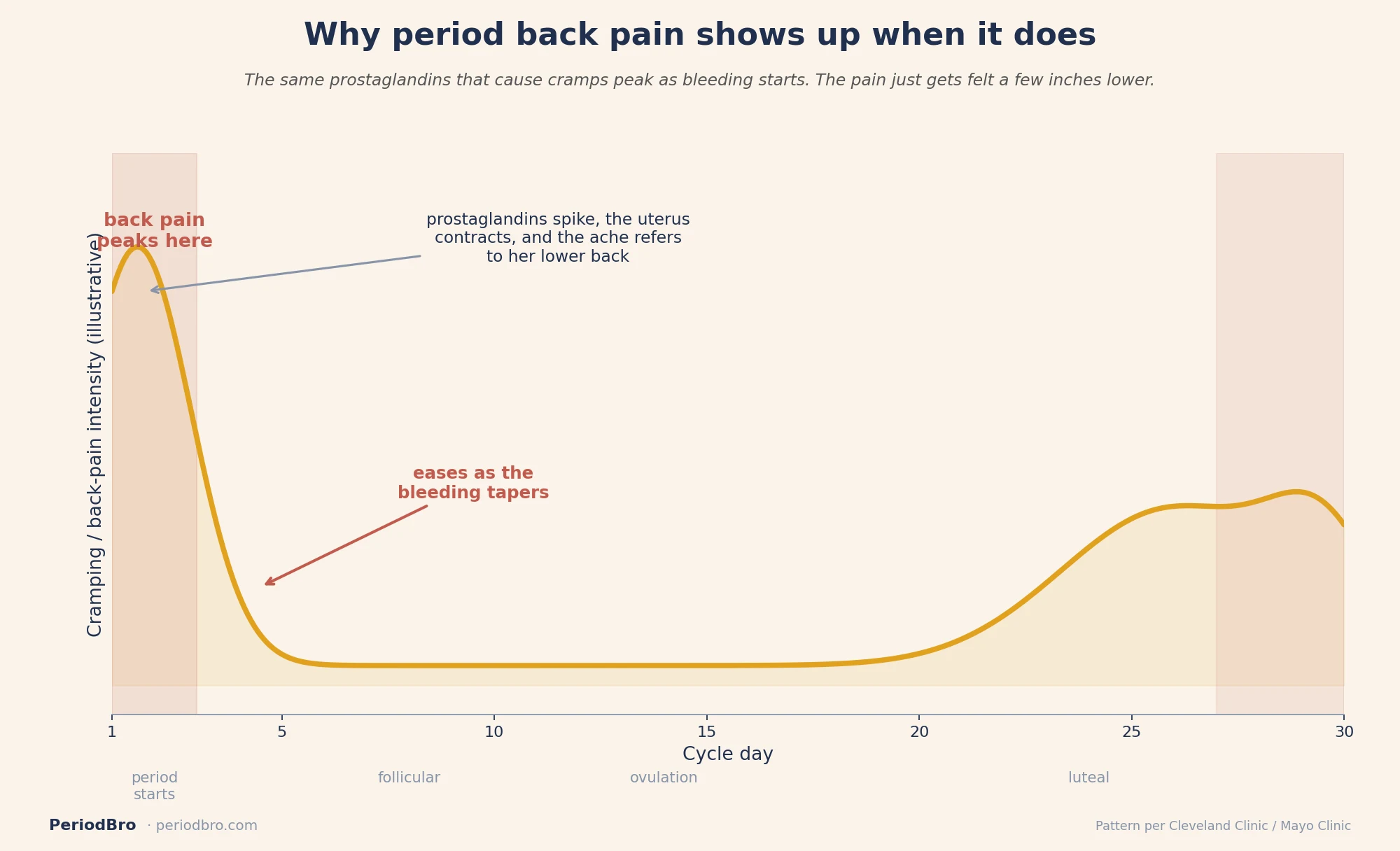
The short version: it’s the same machinery that causes cramps, just felt in a different place. During her period, the lining of her uterus releases chemicals called prostaglandins, which make the uterine muscle squeeze and contract so the lining can shed. Higher prostaglandin levels mean stronger contractions, and stronger contractions mean more pain.
That pain doesn’t always stay put. The uterus sits low in the pelvis, close to the nerves that serve the lower back, so the brain often reads the signal as coming from the back rather than the front. Doctors call this referred pain. The Cleveland Clinic lists low back pain as one of the standard symptoms of dysmenorrhea, the medical word for painful periods. Mayo Clinic describes the cramping pain as something that commonly radiates into the lower back and thighs. So when she’s holding her back, she may be feeling the exact same event you’d call “cramps,” routed through different wiring.
This usually tracks the back half of her cycle. If you want the map of why her body shifts in the days before bleeding even starts, the luteal phase is where most of it happens. The back pain itself tends to peak in the first day or two of bleeding, when prostaglandins are highest, then ease off.
How common is it, really
Common enough that it’s the rule, not the exception. Dysmenorrhea is one of the most frequent gynecological complaints there is, and the Cleveland Clinic notes that up to 90% of people who menstruate experience it at some point in their reproductive years. Lower back pain is one of its core features, not a rare add-on.
So if she gets it, she’s in the majority. That matters for how you respond, because the worst move is to treat her back pain as something exotic or exaggerated. It isn’t. It’s a predictable part of the same hormonal event that drives the cramps, the fatigue, and sometimes the flu-like wipeout you might already know as period flu. Believing her is the baseline, not the favor.
Ordinary period back pain versus something more
Most period back pain is what doctors call primary dysmenorrhea: it’s tied to the cycle, it shows up around bleeding, and it eases when her period winds down. It responds to heat and anti-inflammatories. That’s the normal kind, even when it’s genuinely rough.
But back pain can also be a flag for something underneath, and this is worth knowing because it’s exactly the kind of thing that gets brushed off for years. With endometriosis, pain often starts days before bleeding, lingers after it ends, and can be deep or stabbing rather than a dull ache. With adenomyosis, periods are often heavy and the cramping and back pain are severe enough to interfere with daily life. A useful tell with both: ordinary over-the-counter painkillers tend to take the edge off primary dysmenorrhea, but often barely touch the pain of these conditions.
You don’t need to diagnose anything. You just need to notice patterns and take them seriously, because the average diagnostic delay for conditions like endometriosis runs into years, and a partner who pays attention can shorten that. If her back pain is escalating year over year, lasts well beyond her period, or stops responding to the things that used to help, that’s information worth writing down, not waving off.

What actually helps period back pain
Start with heat, because the evidence is genuinely good. In a randomized controlled trial comparing a heat patch to ibuprofen for period pain, the heat patch worked about as well as the drug, with no meaningful difference in relief (study here). For back pain specifically, the practical move is simple: get the heat onto her lower back, not just her stomach. A heating pad she can lean against, a hot water bottle wedged behind her on the couch, a warm bath. Heat relaxes the muscle and calms the contractions doing the damage.
Anti-inflammatories help because of how they work. NSAIDs like ibuprofen and naproxen lower the prostaglandins driving the whole thing, which is why they tend to beat plain acetaminophen for cramps and the back pain that comes with them. The timing trick most people miss: they work better taken at the first sign of pain, or even just before her period if she knows her pattern, rather than waiting until she’s already in it. She knows her own body and her own meds, so your job is to make it easy, not to play doctor. If you want a fuller rundown of what’s worth keeping in the cabinet, the pain relief buyer’s guide covers it.
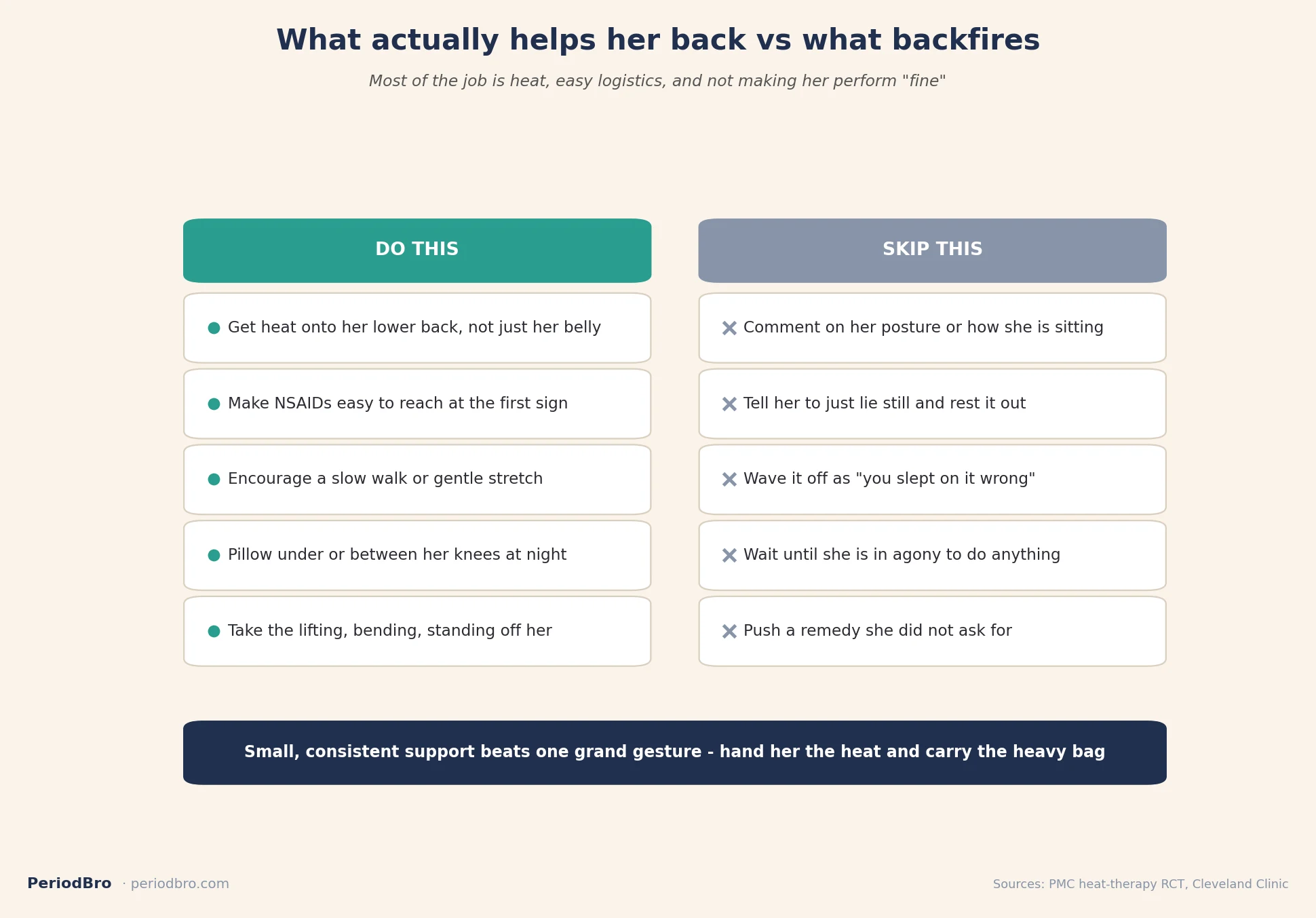
Gentle movement beats lying rigid. Counterintuitive when your back hurts, but light walking and easy stretching loosen the lower back and can ease the ache more than total stillness. Nobody’s asking her to do a workout. A slow walk, a few minutes of stretching, changing position now and then. A warm shower with the water aimed at her lower back is a two-for-one.
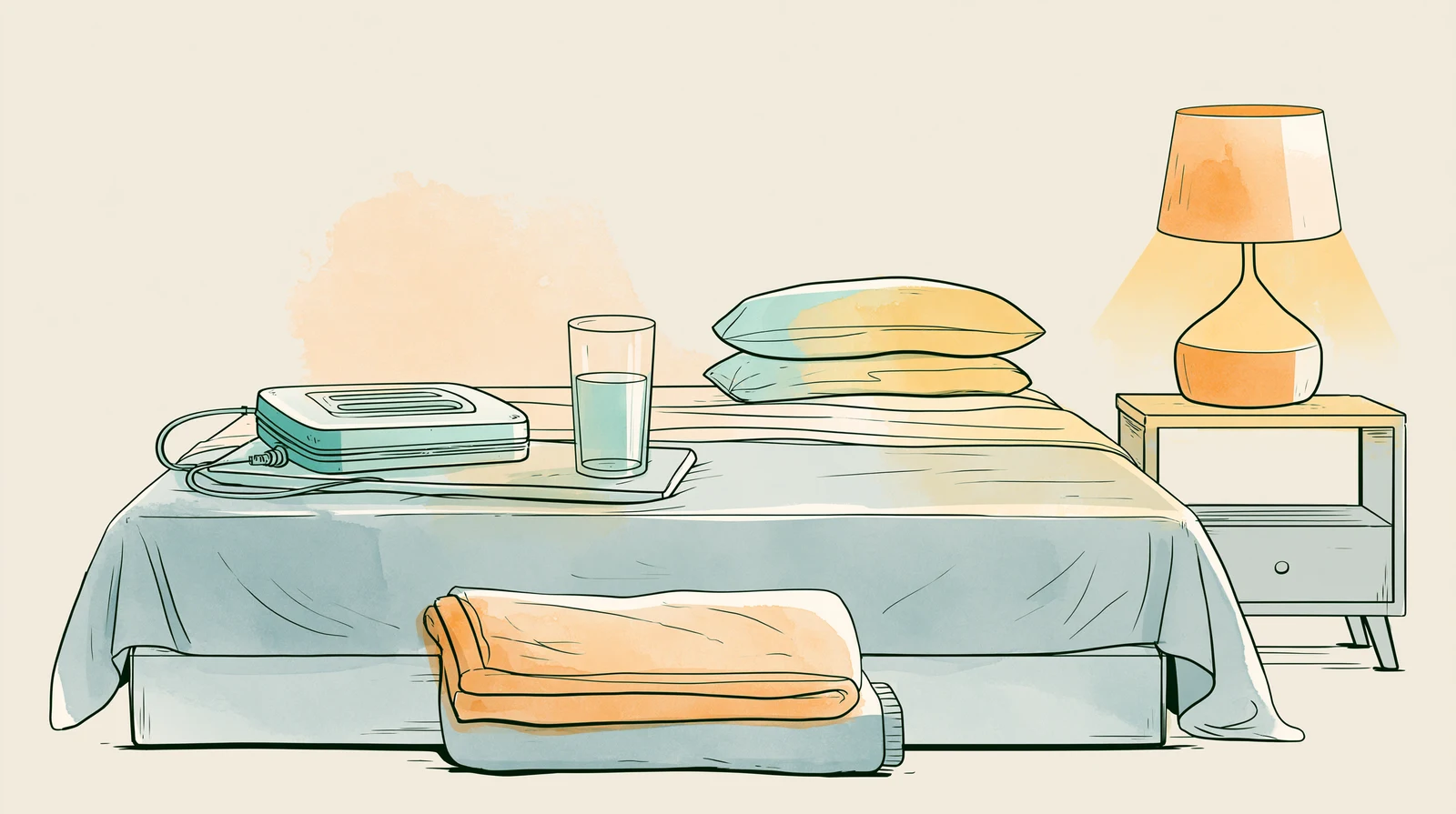
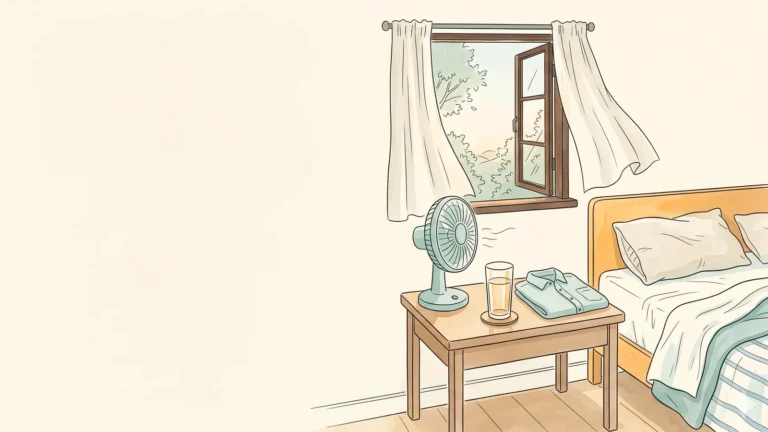
Sleep is where back pain often gets loudest, because lying still all night lets it stiffen up. You can’t fix that for her, but you can make the setup easier: an extra pillow under or between her knees takes strain off the lower back, and having the heating pad and water already on her side of the bed means she’s not getting up at 2am to hunt for relief. Little logistics, big difference on a bad night.
And then there’s the part that isn’t a product: take things off her plate. Period back pain makes bending, lifting, and standing for long stretches miserable. The dishes, the grocery run, the thing that needs carrying up the stairs, quietly handle it. For more on the difference between fixing and showing up, the cramps playbook goes deeper, and the principle holds here: small, consistent support beats one grand gesture.
One thing to skip: commenting on how she’s standing, sitting, or carrying herself. “You’re hunching” is not the help you think it is. Hand her the heating pad and take the heavy bag. Respond to what she needs, not to how her body looks while she’s hurting.
When her back pain is worth a doctor’s look
Most period back pain is uncomfortable but ordinary. A few patterns, though, are worth a medical conversation, and one is worth treating as urgent.
The urgent one: lower back or side pain that’s strongly one-sided, especially with a fever, chills, or pain or burning when she pees, can point to a kidney infection rather than her period. The Cleveland Clinic flags that combination, one-sided flank pain plus fever plus urinary symptoms, as a reason to be seen promptly, because untreated kidney infections can get serious fast. If that’s the picture, this isn’t a heating-pad situation. It’s a call-the-doctor-today situation.
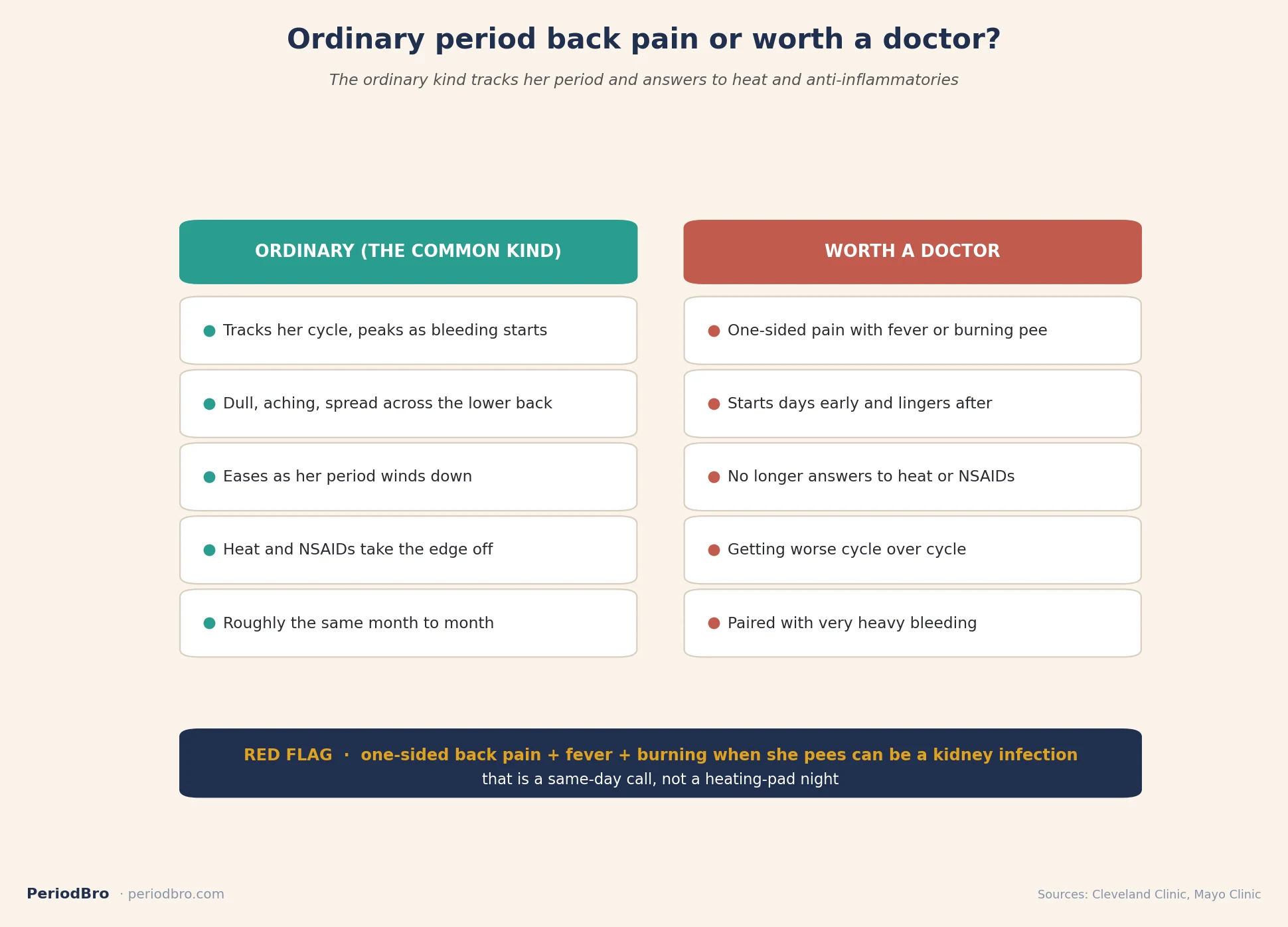
Beyond that, a few softer flags are worth raising with her: period pain, including back pain, that regularly stops her from working, sleeping, or living her normal life; pain that no longer responds to NSAIDs or heat the way it used to; pain that shows up well outside her period or keeps escalating cycle over cycle; or back pain paired with very heavy bleeding. None of these mean something is definitely wrong. They mean it’s worth a doctor ruling things out rather than her white-knuckling it for another year. Mayo Clinic’s own guidance is to see someone if cramps disrupt daily life or keep getting worse. You can be the person who gently says, “this seems like more than a normal month, want me to help you book something?”
If you remember one thing
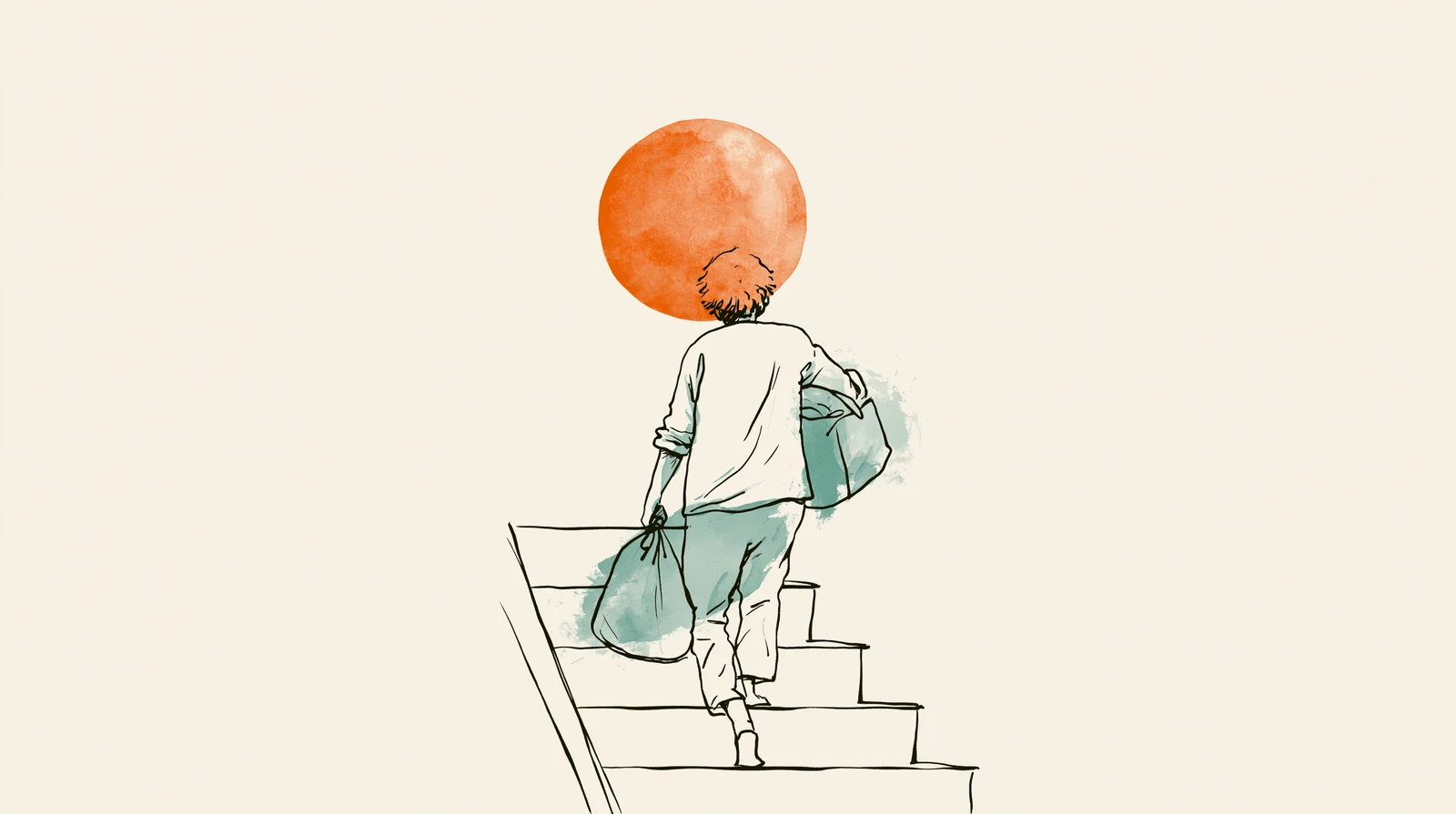
When she reaches for her lower back during her period, she’s not making it up and she didn’t sleep wrong. It’s the same hormonal event as cramps, felt a few inches lower. Get heat onto her back, make the anti-inflammatories and the quiet easy to reach, take the heavy stuff off her hands, and keep half an eye on the patterns that mean it’s time to see someone. That’s most of the job, and it’s more than most partners ever figure out.

This article is for general information and isn’t medical advice. Period back pain is common, but pain that’s severe, one-sided with fever, unresponsive to usual measures, or escalating over time is worth a conversation with a healthcare provider. Always defer to her and her doctor on what’s right for her body.