Period Chills: Why She Feels Cold and Shivery Around Her Period (and How to Help)
She’s under a blanket in a warm room, hands tucked into her sleeves, and you’re sitting two feet away perfectly comfortable. She’s not being dramatic. Right before and during her period, a lot of women genuinely run cold, sometimes to the point of shivering. It’s one of those symptoms nobody warns you about, and it’s easy to wave off until you understand what’s actually going on.
Period chills don’t get the airtime that cramps or mood changes do, but they’re common, they have real mechanisms behind them, and there’s a simple version of “how to help” that takes almost no effort. There’s also one version that’s worth taking seriously fast. Let’s walk through both.
What period chills actually are
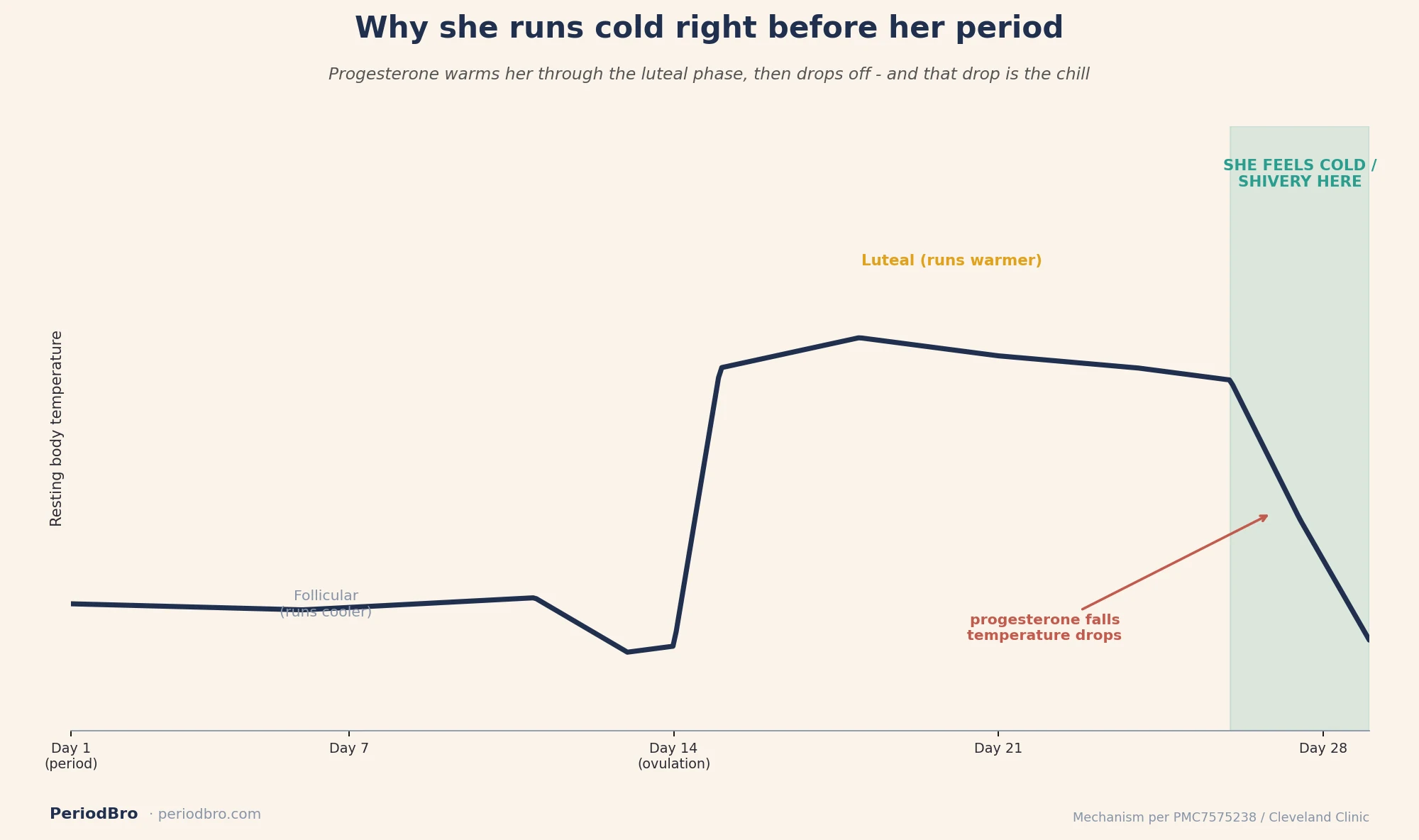
Her body temperature isn’t a flat line across the month. It moves with her hormones. After ovulation, progesterone rises and nudges her resting body temperature up by roughly half a degree, so through the second half of her cycle she’s actually running a little warm. Then, a day or two before her period starts, progesterone falls off a cliff and that temperature drops back down (PMC review on temperature regulation across the cycle).
That drop is the part you feel as a partner. Going from “slightly warm” to “back to baseline” over a day or two can leave her feeling suddenly, oddly cold, even when nothing in the room has changed. It’s the same hormone swing that drives so much of the luteal phase, just showing up as temperature instead of mood or energy.
So the first thing to know is that “she’s cold” isn’t a preference or a mood. It’s a measurable shift in how her body is regulating heat, timed to the calendar.
The other things that leave her shivering
The hormone drop is the baseline, but a few other drivers can stack on top of it.
The big one is prostaglandins. These are the chemical messengers her uterus releases to contract and shed its lining. They’re behind cramps, and when they spill into wider circulation they can trigger flu-like symptoms: body aches, a low-grade fever, and yes, chills. Cleveland Clinic calls this cluster “period flu,” and feeling cold or shivery is one of the classic signs (Cleveland Clinic on period flu). If she says she feels like she’s coming down with something right before her period every month, this is usually why.
The second driver is iron. Periods mean blood loss, and blood loss means losing iron. If she bleeds heavily, or her iron stores are already low, she can drift into iron-deficiency anemia, and one of its quieter symptoms is feeling cold, especially cold hands and feet (Cleveland Clinic on iron-deficiency anemia). Iron helps her blood carry oxygen and hold onto heat, so when it runs low, her body has a harder time keeping her extremities warm. Mayo Clinic lists cold hands and feet right alongside fatigue as a marker of low iron (Mayo Clinic on iron-deficiency anemia).
That’s worth flagging because it rarely travels alone. If she’s cold and wiped out and lightheaded around her period, that trio can point to low iron rather than three separate coincidences. It’s the same thread that runs through period fatigue.
The third, smaller driver is pain itself. Strong cramps set off the body’s stress response, and that can come with clamminess, shivering, and feeling chilled. It usually passes as the pain eases.
Most of the time these drivers overlap. The hormone drop sets the stage, prostaglandins add a flu-ish edge, and if her iron is low, the cold sits on top of all of it. That’s why the same woman can feel a little chilly one month and genuinely shivery the next. It’s not that she’s inconsistent. It’s that the mix underneath keeps changing, and her body is doing its best to keep up.

Why this is easy to miss as a partner
Chills are almost invisible from the outside. Cramps make her curl up. A migraine sends her to a dark room. But feeling cold just looks like someone who grabbed a hoodie. You can sit through an entire evening not realizing she’s quietly miserable because the “signal” is so undramatic.
It’s also the kind of thing she may not mention, because it sounds like nothing. “I’m cold” doesn’t feel worth making a fuss over, so she just endures it. That’s exactly why knowing the pattern matters. If you notice she’s bundling up the same few days every month, you don’t need her to explain it. You already know what week it is.
This is the flip side of the night sweats some women get around their period. Same underlying thermostat, pushed in opposite directions on different days. Her body is running the temperature dial up and down, and she’s just along for the ride.
And this is not rare. Flu-like symptoms around the period, including feeling cold and shivery, are a recognized part of PMS for a lot of women, not some unusual reaction (Cleveland Clinic on period flu). So if she runs cold every cycle, she’s not imagining it and she’s not an outlier. She’s having a normal response to a normal hormonal event, and the fact that it’s normal doesn’t make it any more comfortable.
How to help when she’s cold
None of this requires heroics. Warmth is cheap and it works.
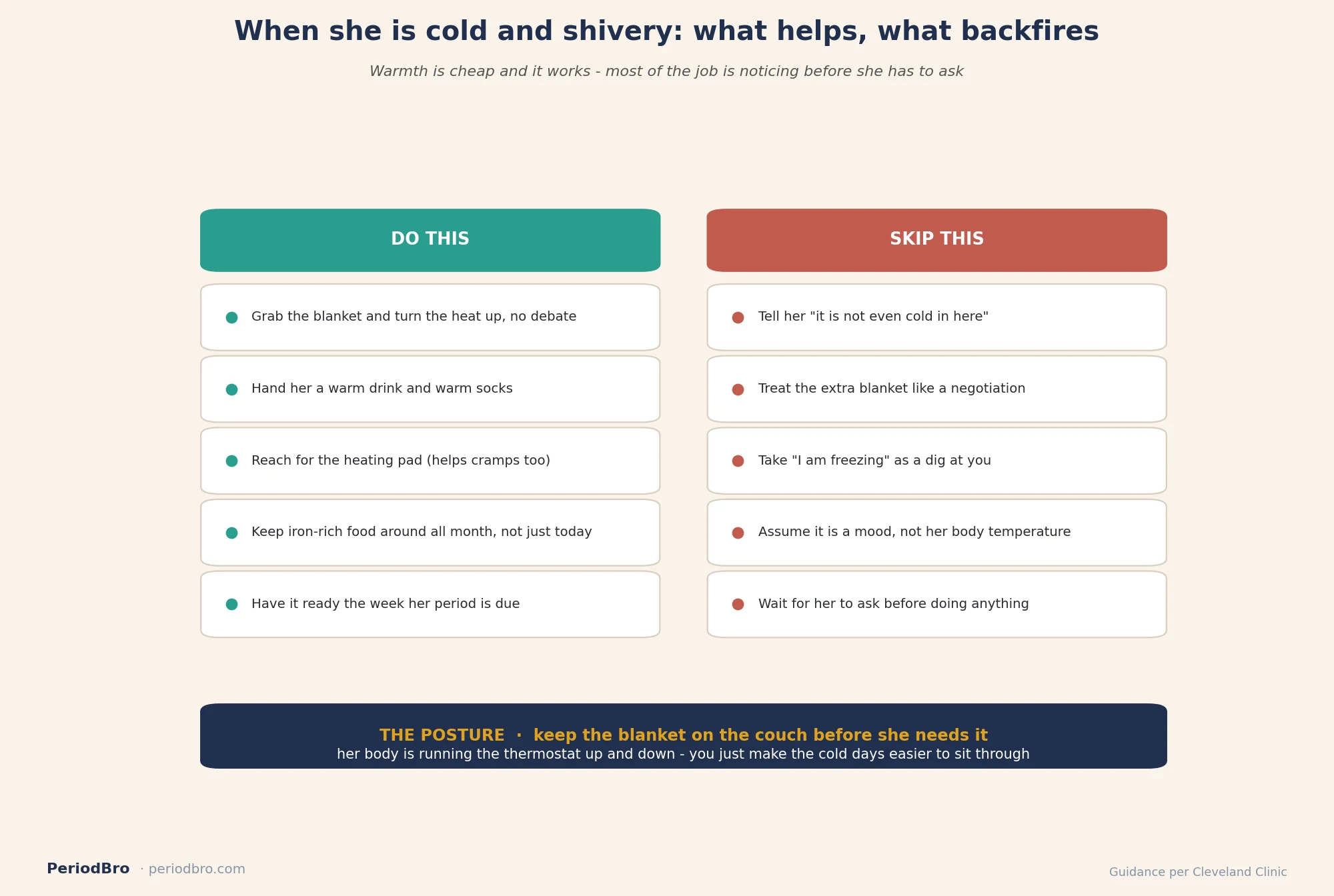
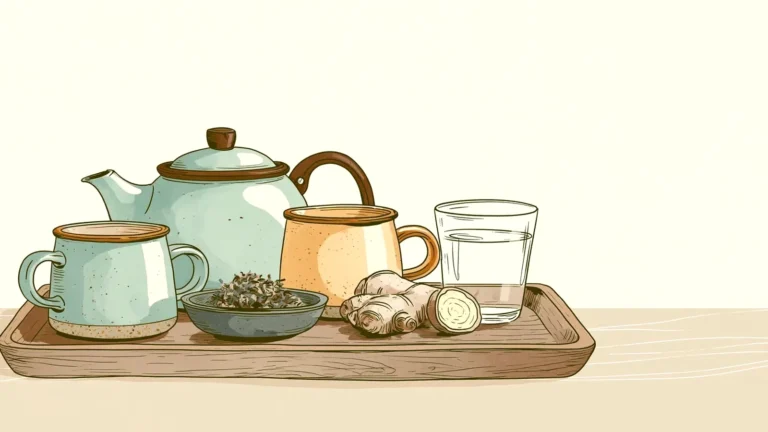
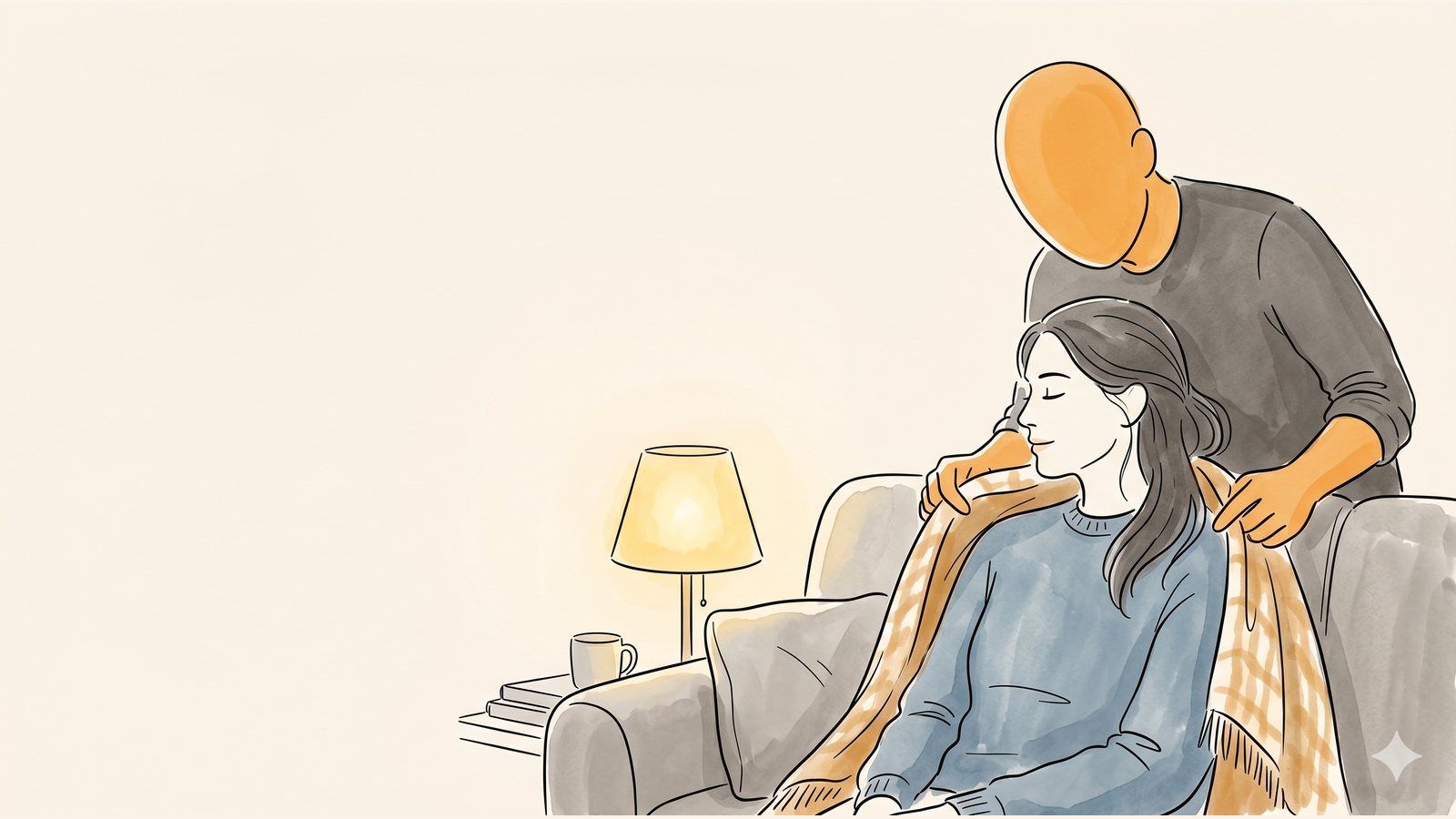
Start with the obvious and do it without being asked. Get her a blanket, turn the heat up a notch, hand her warm socks. A warm drink helps more than it should, partly for the heat and partly because it’s a small signal that you noticed. A heating pad or hot water bottle does double duty if she’s also got cramps, since heat is one of the more reliable things for cramp relief too.
Feed the iron angle over the long run, not just in the moment. If she runs cold and tired every cycle, iron-rich food across the month, red meat, beans, lentils, leafy greens, plus vitamin C to help absorption, is a low-effort way to support her. It won’t fix a real deficiency, but it helps, and it’s the kind of quiet care that adds up.
A few things to skip. Don’t tell her it’s not that cold in here, because to her body it is. Don’t treat the extra blanket or the cranked thermostat as a negotiation. And don’t take “I’m freezing” as a comment on you or the apartment. It’s physiology, not a complaint about your thermostat settings.
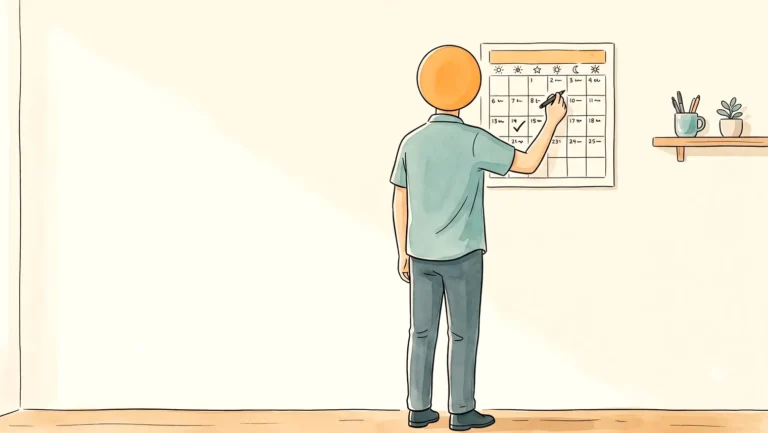
The move that lands best is anticipating it. If you know her period’s about to start, having the blanket already on the couch and something warm ready means she doesn’t have to ask. That small bit of foresight tells her you’re paying attention to her whole cycle, not just the loud parts of it.

When period chills are worth a doctor’s look
Most period chills are ordinary, the hormone-and-prostaglandin kind that come and go with her cycle. But there’s a line, and it’s worth knowing where it is, because on the far side of it “chills” stops being a comfort problem and becomes a medical one.
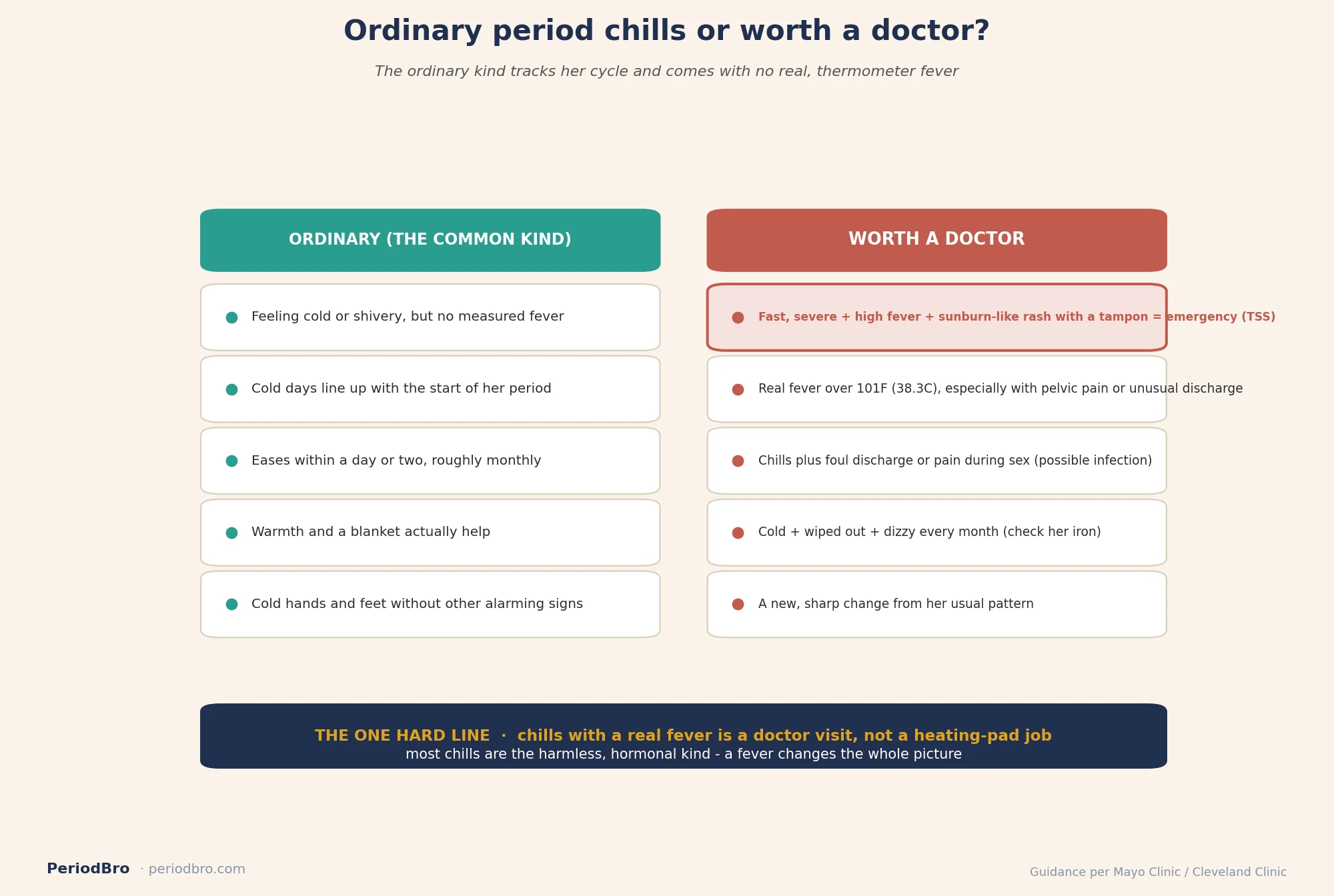
The clearest red flag is chills with an actual fever. A real, thermometer-confirmed fever, especially above 101°F (38.3°C), is not typical PMS. Paired with pelvic pain, unusual discharge, or pain during sex, it can signal pelvic inflammatory disease, an infection that needs prompt treatment (Mayo Clinic on pelvic inflammatory disease). This is a same-week call to her doctor, not a wait-and-see.
The rarer but more urgent one is toxic shock syndrome. It’s uncommon, but it’s linked to tampon use and it moves fast. Sudden high fever, vomiting or diarrhea, and a sunburn-like rash, especially during her period while using tampons, is a medical emergency. If a mild off feeling turns severe quickly, get help right away (Mayo Clinic on toxic shock syndrome). You don’t need to memorize the whole picture. Just remember that fast, severe, and feverish during a period with tampons means go now.
And if she’s cold and drained every single month to the point that it’s wearing her down, that’s worth a doctor’s visit too, mostly to check her iron. It’s a simple blood test and often a simple fix.
If you remember one thing
Feeling cold around her period is real, it’s driven by a genuine drop in her body temperature plus prostaglandins and sometimes low iron, and the fix is mostly warmth and a bit of anticipation. Keep the blanket handy the week her period’s due, watch for the cold-plus-tired-plus-dizzy combination that hints at low iron, and know the one hard line: chills with a real fever is a doctor’s job, not a heating-pad job.
Tracking her cycle so you can see the cold days coming is exactly the kind of quiet advantage PeriodBro is built for. When you know what week it is, showing up gets a lot simpler.
This article is general information, not medical advice. If you’re worried about her symptoms, or she is, the right move is always to talk to a doctor.