Period Night Sweats: Why She Wakes Up Hot and Sweaty Around Her Period (and How to Help)
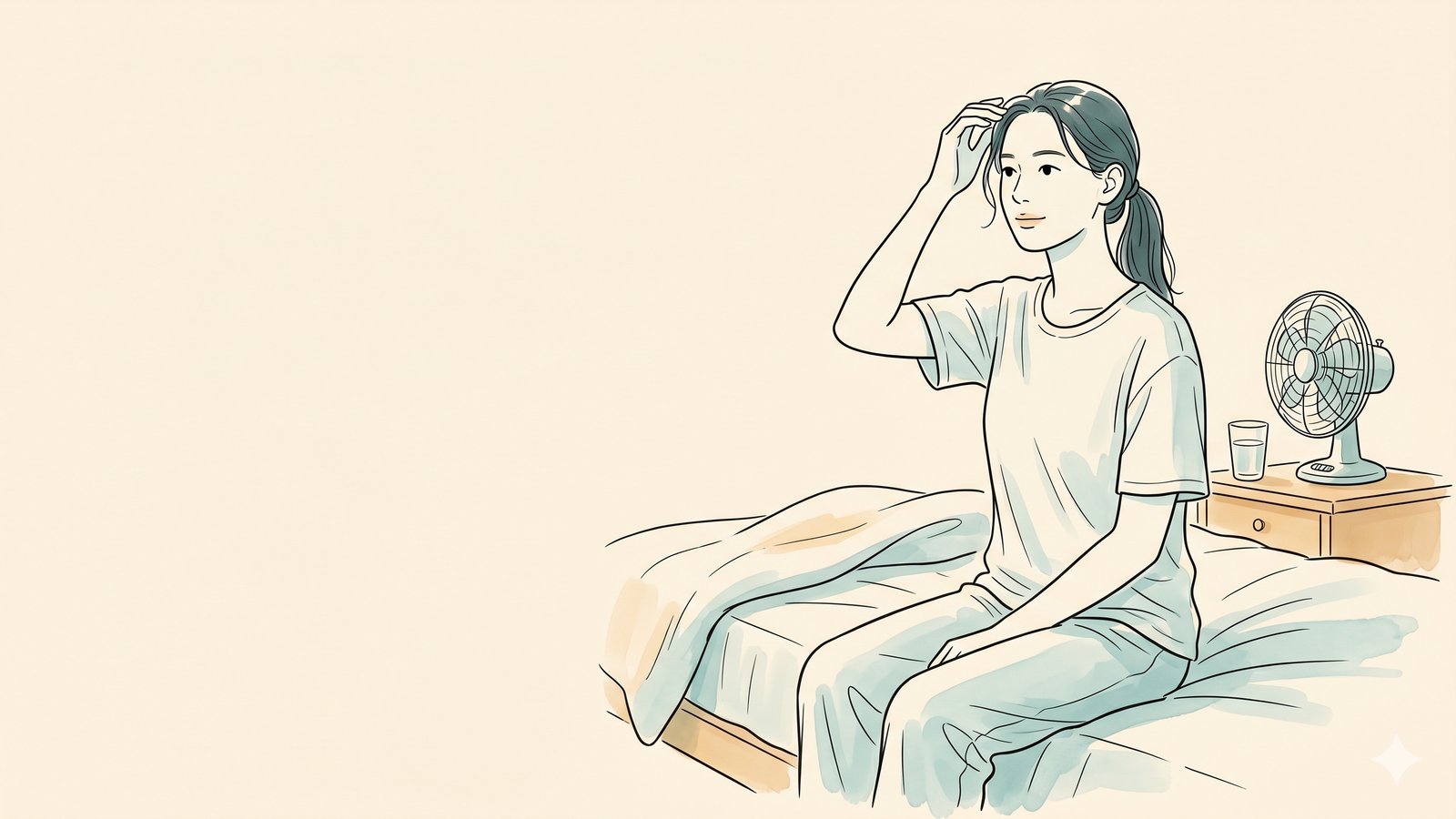
The first time it happened, I thought I’d left the heating on. I woke up around 3 a.m. to her flipping the blanket off her side, then back on, then off again. Her hair was stuck to her neck and the back of her shirt was damp. She wasn’t sick. She didn’t have a fever. A few days later her period started, and I finally connected the two.
If you’ve ever shared a bed with someone the week before her period, you might know this scene. She runs hot at night, kicks off the covers, maybe gets up to change a shirt or open a window, and by morning she’s wrung out from a night of broken sleep. It’s called period night sweats, and it’s a real, common, hormone-driven thing. Here’s what’s actually going on, and what you can do that helps instead of hovering.

What period night sweats actually are
Two hormone shifts stack up in the back half of her cycle, and together they turn the thermostat up at night.
The first is heat. In the week or so before her period, which is the late luteal phase, progesterone is high. Progesterone nudges her core body temperature up by roughly 0.3 to 0.7°C and makes it harder for her body to shed heat while she sleeps (Physiological Reports, 2020). So she’s already running warmer at night and can’t cool down as easily. That’s why the luteal phase is when sleep tends to fall apart in the first place, something we get into in our piece on how her sleep changes through the cycle.
The second is the drop. Right before and at the start of her period, both estrogen and progesterone fall off a cliff. That sudden hormone withdrawal rattles the hypothalamus, the part of the brain that runs her internal thermostat. When the thermostat gets confused, it can fire off a flush: blood vessels near the skin dilate fast, she feels a wave of heat, and she sweats to cool back down (Cleveland Clinic). It’s the same basic mechanism behind menopausal hot flashes, just milder and tied to her cycle instead of the end of it. Researchers have documented menopausal-style hot flashes and sweats in women decades away from menopause, driven by these monthly hormone swings (Fertility and Sterility).
She’s hot because her body really is running hotter, and she sweats because her hormones briefly scramble the dial that’s supposed to keep her cool. None of it is in her head, and none of it is something she’s doing wrong.

How common this is, and why it deserves to be taken seriously
This is not a rare quirk. In a prospective study that tracked women across their cycles, 83.4% of women with PMS reported at least one episode of sweats and chills per cycle, averaging around five to six episodes, compared with far fewer in women without cycle-related symptoms (Fertility and Sterility). So if the person you love is soaking through a shirt the night before her period, she’s in very large company.

What’s easy to miss as a partner is that a night sweat isn’t just an annoyance she’ll laugh off in the morning. It wrecks sleep. She wakes up, peels off a damp shirt, flips the pillow, lies awake cooling down, and does it again an hour later. That broken sleep then feeds straight into the next day’s period fatigue, the brain fog, and the short fuse. So when you help her sleep cooler, you’re not just solving a laundry problem, you’re protecting the whole next day.

Period night sweats versus something else
Most of the time, the pattern is the giveaway. Ordinary period night sweats show up in the days right before or at the start of her period, ease off once she’s bleeding properly, and follow roughly the same rhythm month to month. They come without a fever, and without the sick, run-down feeling of an actual bug.
A couple of things are worth telling apart. One is the period flu, that full-body achy, run-down, slightly feverish feeling some women get around their period. Sweats can ride along with it, but period flu is more of a whole-system malaise than a thermostat blip. The other is plain illness: an actual fever from a cold or infection will usually come with other signs, like a sore throat, body aches that don’t track her cycle, or a temperature you can measure.
The thing to watch for is night sweats that don’t follow her cycle at all. Drenching sweats that soak the sheets several nights a week, show up at random times of the month, or come with things like unexplained weight loss, a lingering fever, or a persistent cough are a different conversation, and we’ll get to that below (Mayo Clinic).

What actually helps when she gets period night sweats
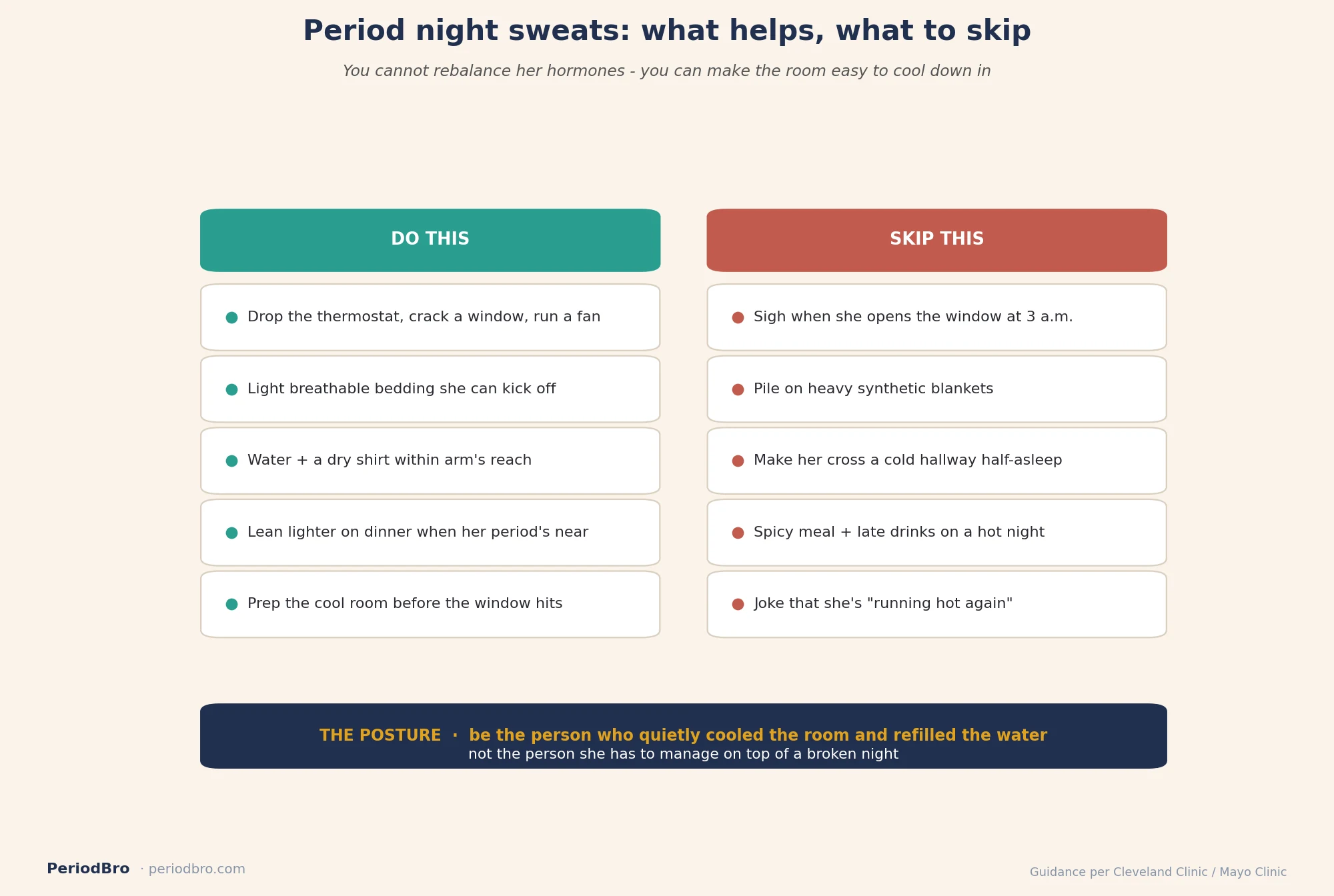
You can’t rebalance her hormones. What you can do is strip away everything that makes a hot night worse, and most of it is stuff you control without making it a whole production.
Start with the room. A cooler bedroom is the single highest-leverage move, because her body is fighting to dump heat and a warm room makes that nearly impossible. Drop the thermostat a degree or two before bed, crack a window, or run a fan on her side. Swap heavy bedding for lighter, breathable layers she can kick off without uncovering you, and if your sheets are synthetic, cotton or linen breathe a lot better.
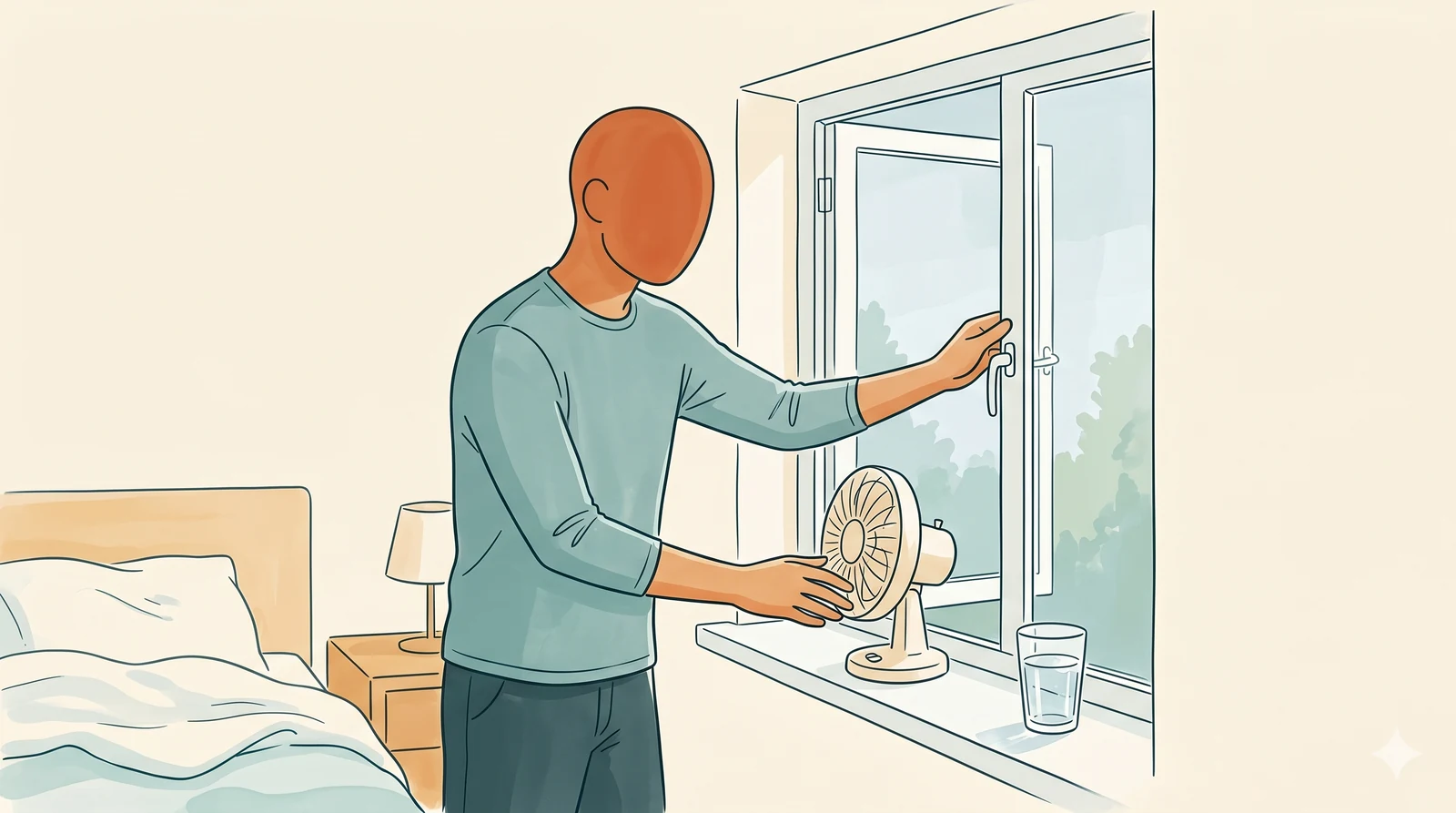
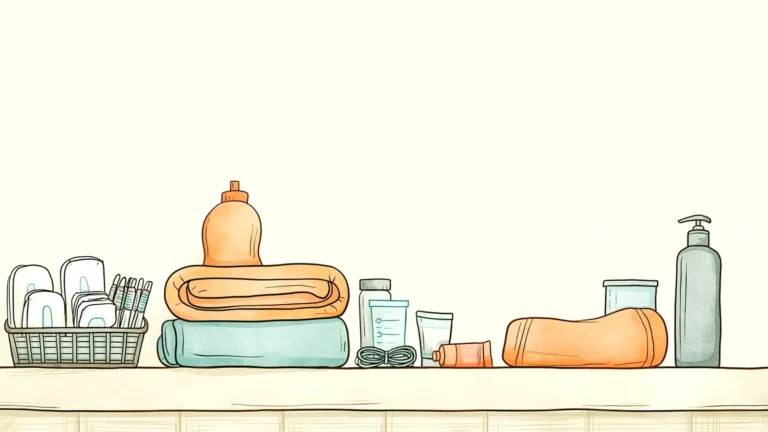
Then make recovery easy. Keep a glass of water on her nightstand so she doesn’t have to fully wake up and walk to the kitchen. A clean, dry shirt within arm’s reach means a 3 a.m. change takes thirty seconds instead of a trip down a cold hallway. Moisture-wicking or loose cotton sleepwear beats a heavy old hoodie, because it pulls damp off the skin instead of trapping it. None of this requires a conversation in the moment. You just quietly set it up so the fixes are already there.
A few evening habits also tip the odds. A big spicy meal, a couple of drinks, or a hot bath right before bed all push her core temperature up at exactly the wrong time, and alcohol in particular is a known trigger for the flushing-and-sweating reflex. You don’t need to police any of this. But if you’re the one cooking on a night when her period’s a day or two out, leaning lighter and cooler, and steering the nightcap to earlier in the evening, quietly stacks the deck in her favor. A lukewarm, not scalding, shower before bed helps her drift off already a little cooler rather than heated up.
What doesn’t help is making her self-conscious about it. Don’t sigh when she opens the window, don’t make a thing of the damp sheets, and don’t joke that she’s “running hot again” in a way that lands as a complaint. She already feels gross and sleep-deprived. The move is to be the person who quietly cooled the room and refilled the water, not the person she has to manage on top of everything else. Because these sweats track her cycle, you can see them coming: when her period’s a few days out, that’s your cue to prep the room before she even notices. If you track her cycle together, you’ll see that window coming every month.
When her period night sweats are worth a doctor’s look
Cycle-linked night sweats that come and go with her period are, by and large, a normal part of how some bodies run. But a few patterns are worth flagging, gently, and worth a doctor’s visit rather than waiting it out.

It’s worth a conversation if her night sweats happen regularly, several nights a week, and leave her exhausted; if they soak the bedding and clearly don’t track her cycle; or if they come alongside unexplained weight loss, a fever that won’t quit, a persistent cough, or a racing heart (Mayo Clinic). Night sweats that aren’t tied to her period can point to things a doctor would want to check, like a thyroid that’s running fast, an infection, or a medication side effect, and a simple set of tests usually sorts out which it is.
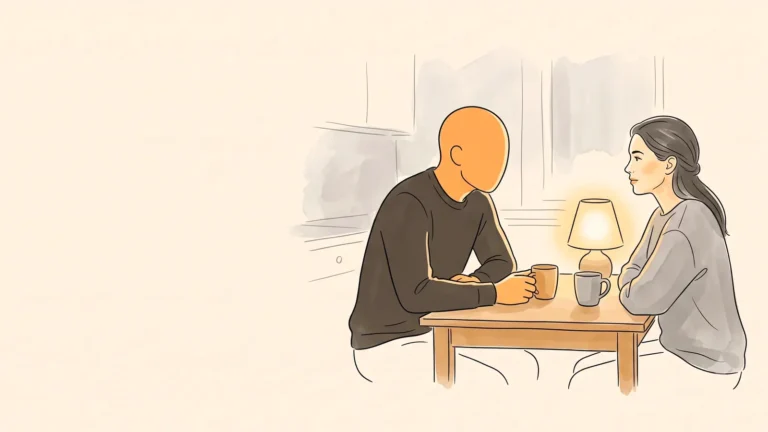
You’re not there to diagnose her, and you definitely don’t want to turn one sweaty night into a health scare. The useful role is lighter than that: if you’ve noticed a pattern that seems off, you can say so once, calmly, and offer to help her book the appointment. Then let her drive.

If you remember one thing, make it this: a cooler room and a glass of water within reach do more on a bad night than any amount of worrying out loud. Set the room up before her period arrives, and let her sleep. PeriodBro helps you see that window coming so the fan’s already on and the water’s already poured, no guessing required.
This article is for general education, not medical advice. If you’re worried about her symptoms, or hers don’t fit the usual pattern, talk to a healthcare professional.