Period Rage: Why She Gets Irritable and Snappy Before Her Period (and How to Help)
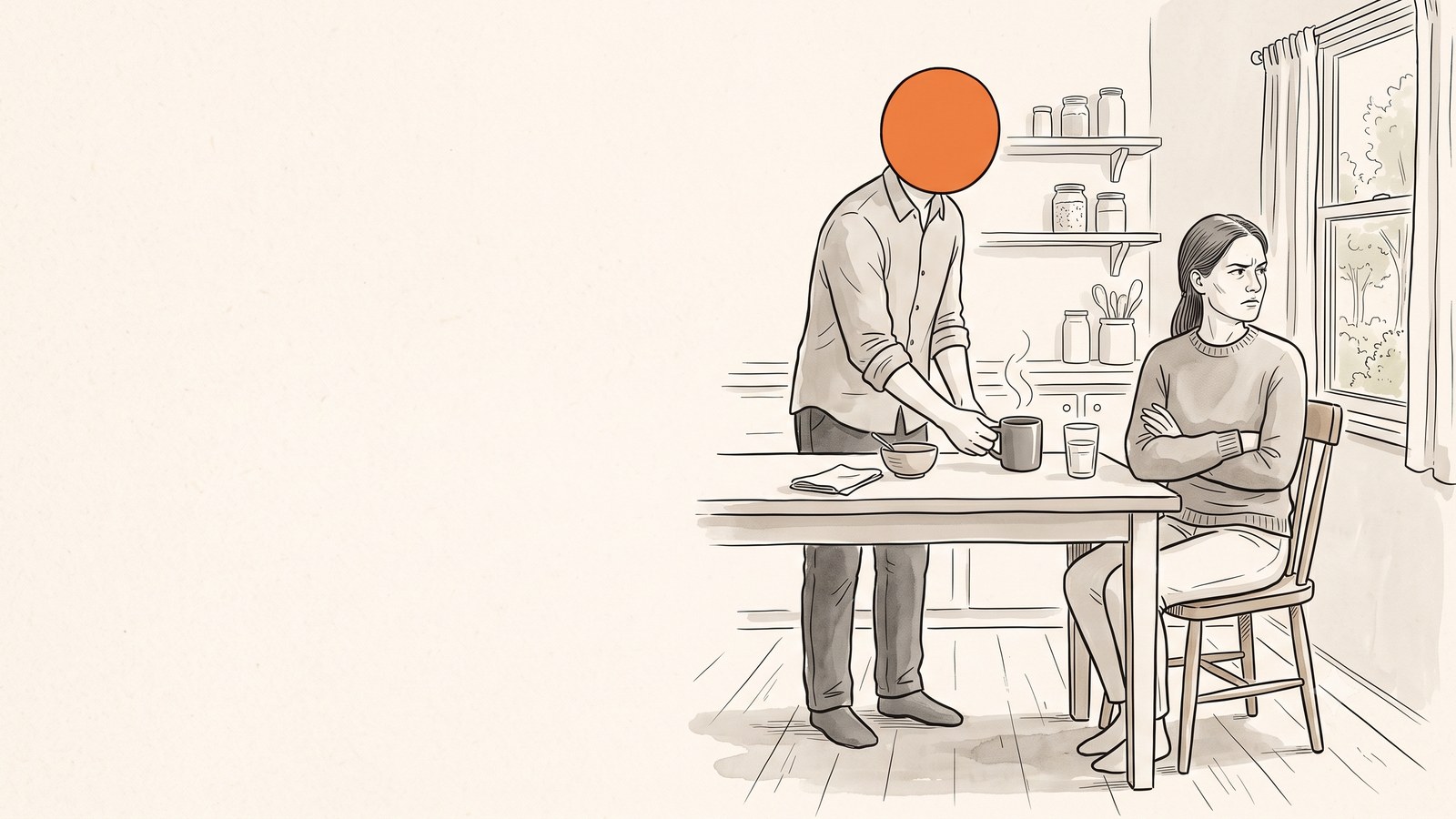
The dishwasher was loaded “wrong.” That was the whole thing. I’d put a bowl where a plate apparently goes, and for about ninety seconds it was the biggest problem in the house. Then it passed, and she looked almost as surprised by it as I was. A few days later her period started, and the dishwasher was just a dishwasher again.
If you’ve lived through a version of that, you’re not imagining it, and neither is she. The short fuse that shows up in the week before a period has a name people use online, “period rage,” and it has a real mechanism behind it. It isn’t a character flaw, and it usually isn’t about you. Here’s what’s actually going on, and what you can do that helps instead of pours gas on it.
What people mean by “period rage”
“Period rage” isn’t a medical diagnosis. It’s the everyday word for the irritability, short temper, and sudden flares of frustration that can come with premenstrual syndrome, or PMS. Irritability is one of the most commonly reported PMS symptoms, and it tends to land in the back half of the cycle.
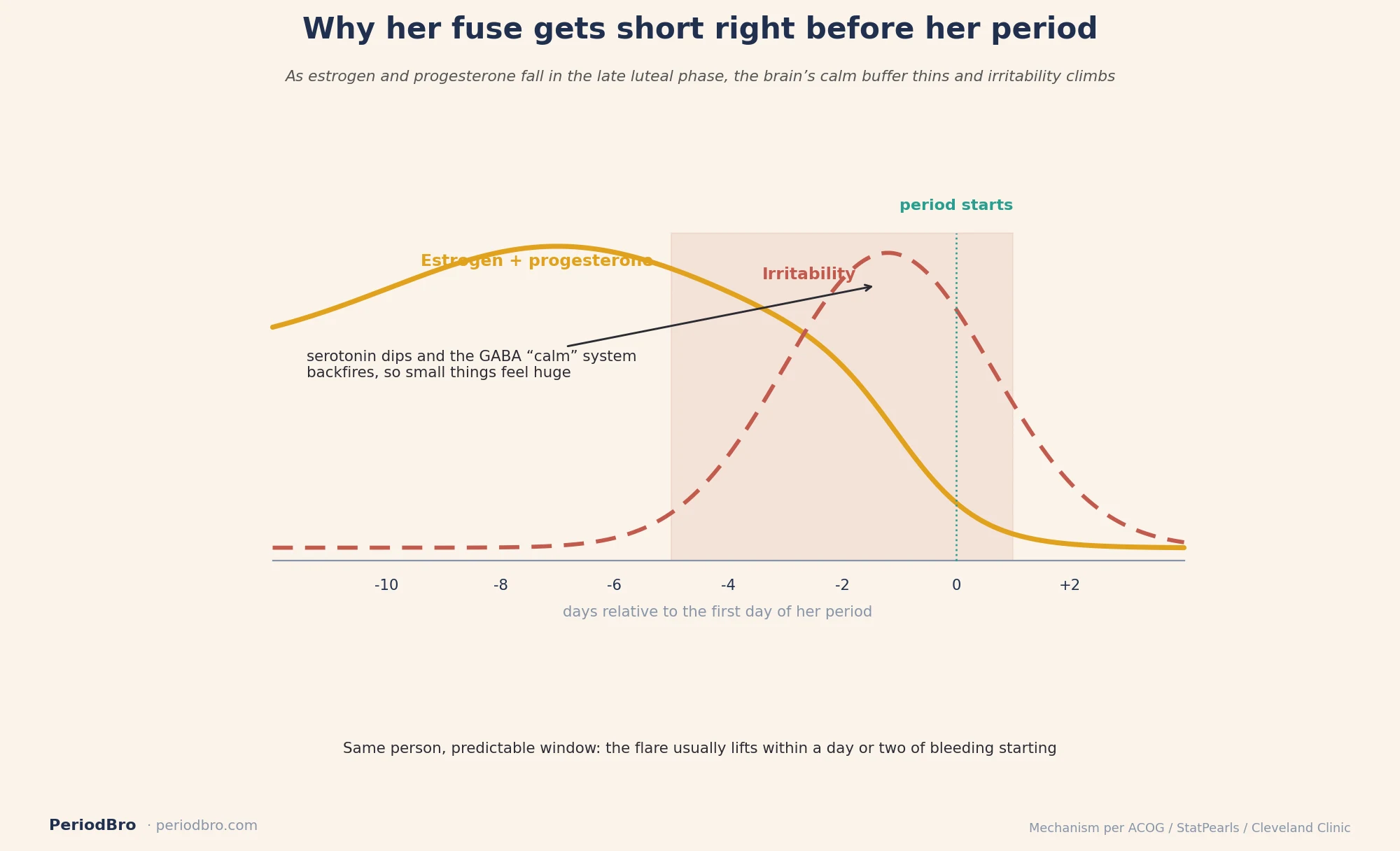
The timing is the tell. These flares usually show up in the luteal phase, the roughly two-week stretch between ovulation and the start of bleeding, and they tend to ease once the period begins. The American College of Obstetricians and Gynecologists lists mood swings, irritability, and feeling tense or anxious among the core emotional symptoms of PMS, alongside the physical stuff like bloating and breast tenderness. If you want the full map of where this falls in the month, here’s the luteal phase explained for men.
The important part: this is a pattern, not her personality. Same person, predictable window.

What’s actually happening in her brain
After ovulation, two hormones climb and then fall off a cliff in the days before her period. Estrogen and progesterone both drop sharply in the late luteal phase, and that drop is what kicks off most PMS symptoms, per the StatPearls clinical reference on PMS.
There are two threads worth understanding, because they explain why irritability specifically spikes.
First, serotonin. This is the brain chemical tied to mood stability, and it has a calming, inhibitory effect on aggression and irritability. The falling hormones in the luteal phase appear to drag serotonin activity down with them, and people who get hit hardest by PMS tend to show lower serotonin function. Less serotonin, shorter fuse. That’s also why doctors sometimes use SSRIs, which raise serotonin, to treat severe premenstrual mood symptoms, as Cleveland Clinic notes.
Second, a progesterone byproduct called allopregnanolone. Normally it works on the brain’s GABA system, the same calming circuitry that anti-anxiety meds and alcohol act on. But research on premenstrual mood disorders suggests that in sensitive brains, the rapid swing in allopregnanolone around the late luteal phase backfires, reducing that calming effect and leaving the brain more reactive instead, according to a 2023 review in Frontiers in Psychiatry. The result is a nervous system that’s running with the brakes worn thin, right when life keeps tapping the pedal.
So when a loaded dishwasher becomes a five-alarm event, it’s not that she’s decided the dishwasher matters. It’s that the part of her brain that normally files small annoyances under “small” is, for a few days, less able to do that.
Worth saying plainly: this isn’t “all in her head” in the dismissive sense. It’s in her head in the literal, neurochemical sense, which is the opposite. The same stressors that bounce off her in week two can feel genuinely unbearable in week four, because the buffer that usually absorbs them has thinned out. She’s not overreacting on purpose. She’s reacting through a nervous system that’s temporarily turned up.
Is period rage normal, or a sign something’s wrong?
Mostly, normal. Emotional symptoms like irritability and mood swings are among the most common premenstrual complaints, and the Mayo Clinic describes PMS as something that affects an estimated three in four menstruating people at some point, usually in a manageable form.
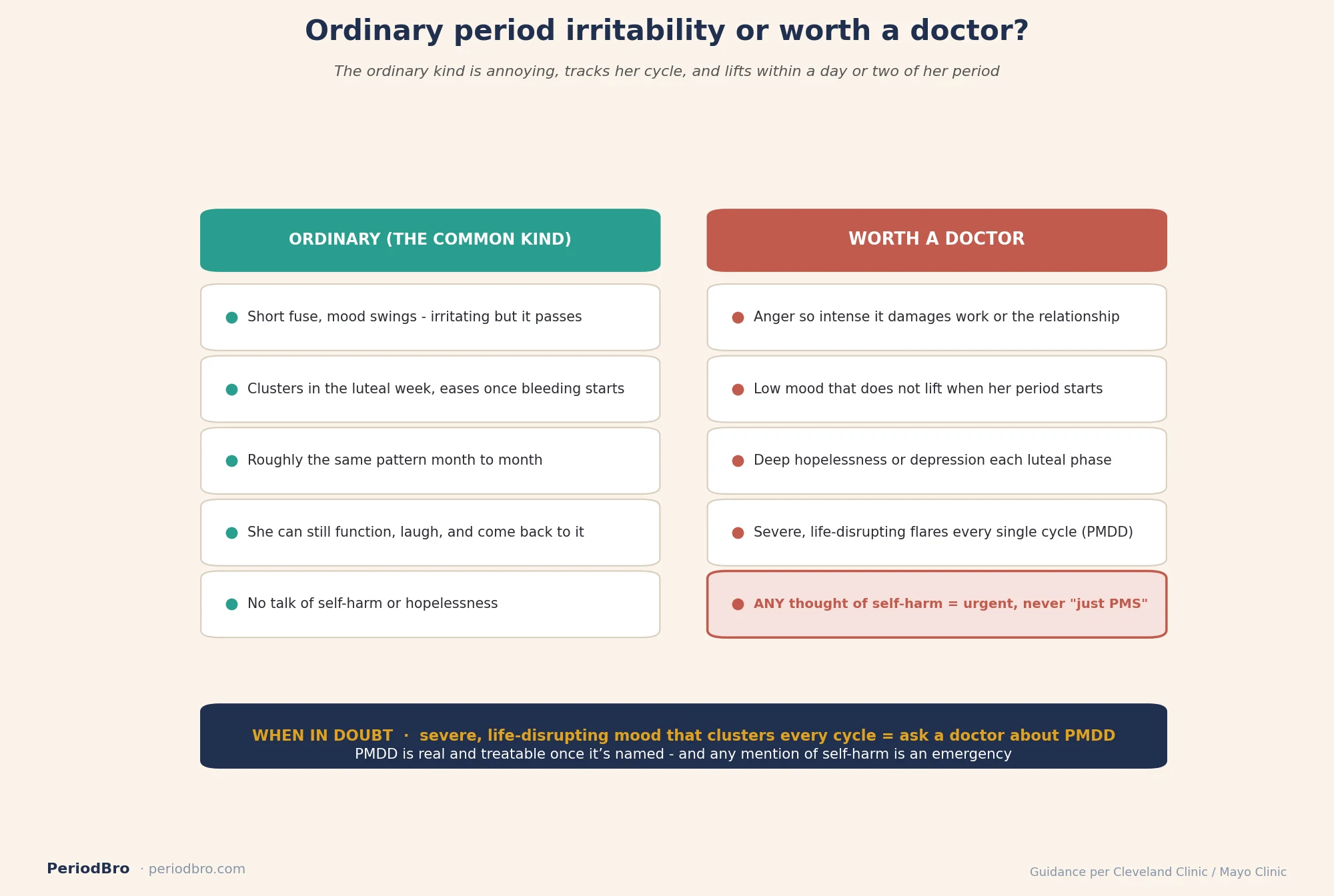
The line to watch is impact. Ordinary PMS irritability is annoying but it passes, and it doesn’t blow up her life. When the anger is so intense it’s damaging her relationships, her work, or how she sees herself, and it clusters hard in the luteal phase every cycle, that points toward premenstrual dysphoric disorder, or PMDD, a more severe condition we cover in PMS vs PMDD: the difference every partner should know.
It also helps to know what ordinary looks like, so you’re not quietly catastrophizing a normal hard week. A normal premenstrual flare is real, it’s uncomfortable for both of you, and then it lifts within a day or two of bleeding starting. She can usually still function, still laugh, still come back and say “sorry, that was a lot” once the fog clears. That self-awareness on the other side is a good sign, not a bad one.
For the broader picture of how the whole month moves her mood, how hormones drive her mood walks through the full arc.

What actually helps (and what makes it worse)
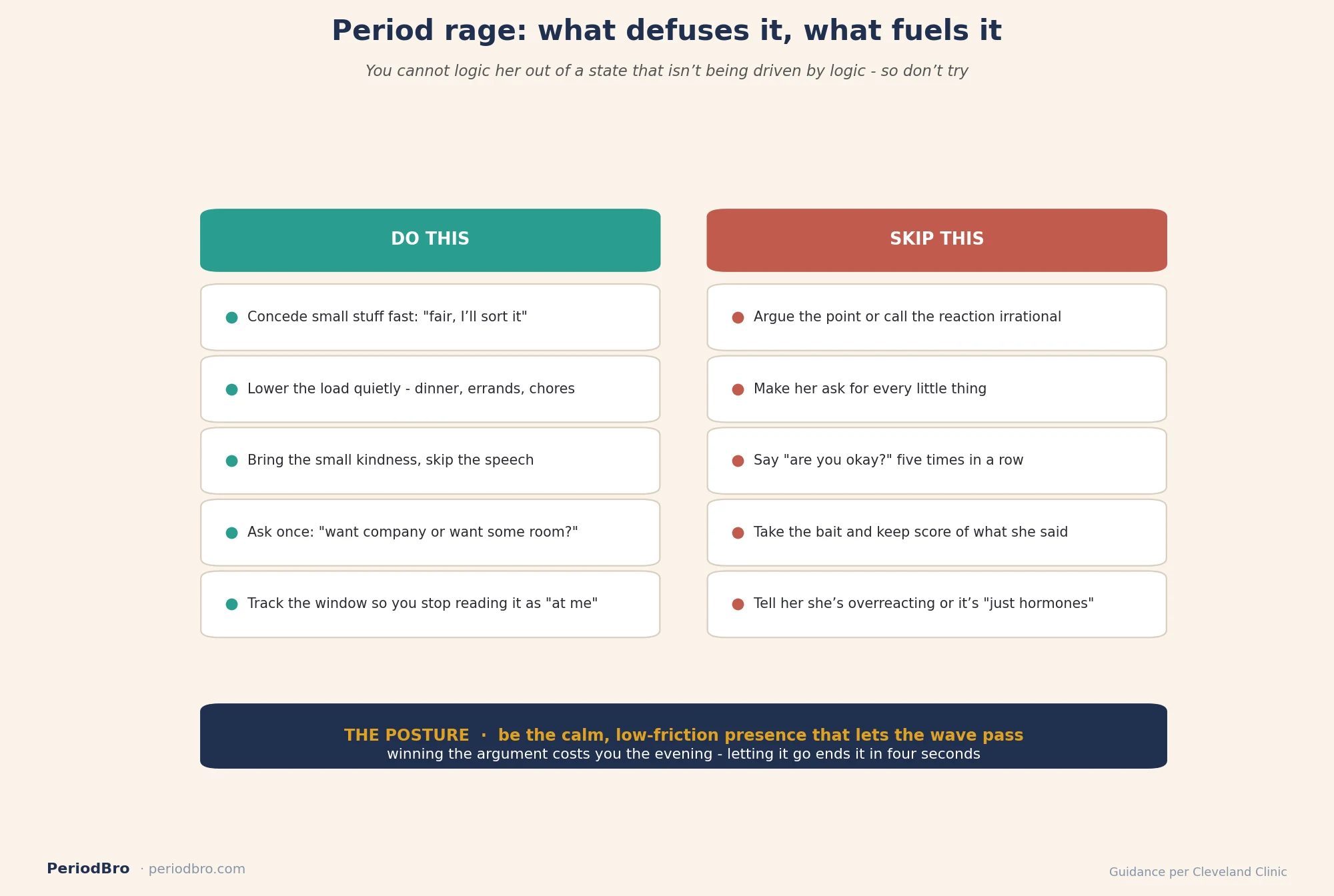
Here’s the trap. When someone snaps at you, every instinct says to defend yourself, argue the point, or explain why the dishwasher thing is irrational. In this window, that’s exactly the move that turns a flare into a fight. You can’t logic someone out of a state that isn’t being driven by logic.
What works better is boring and a little counterintuitive.
Don’t argue the feeling. You don’t have to agree that the dishwasher was a crisis. You just don’t have to litigate it. “Yeah, that’s fair, I’ll sort it” ends it in four seconds. Winning the dishwasher debate costs you the whole evening.
Lower the load, quietly. Irritability gets worse when she’s tired, hungry, and overstretched. The most useful thing you can do is remove friction without announcing it. Handle the dinner. Take the thing off her plate before she has to ask. Cleveland Clinic flags sleep, steady blood sugar, and lower stress as things that genuinely take the edge off premenstrual irritability, so the unglamorous stuff actually moves the needle.
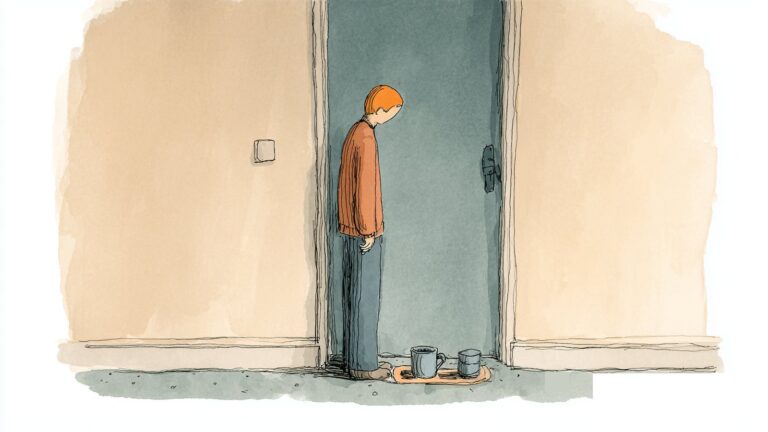
Bring the small kindness instead of the speech. A cup of tea set down without commentary says more than “are you okay?” said three times. This is the same principle behind showing up when you can’t fix her pain: presence beats problem-solving.
Give her room without disappearing. Some people want space when they’re flared, some want closeness. Ask once, plainly, then respect the answer. “Want company or want me to give you a bit?” is a complete sentence.
Don’t take the bait, and don’t keep score. If something sharp gets said and it clearly isn’t really about you, let it land soft. You can come back to it later when the window’s passed, if it still matters. Usually it won’t.
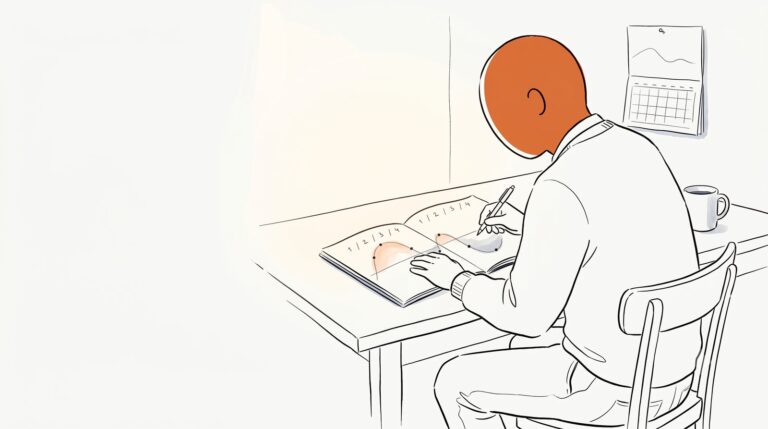
And the thing nobody tells you: track the timing. When you know the irritable window is coming, you stop reading it as “she’s mad at me” and start reading it as “this is Tuesday of the hard week.” That reframe alone defuses most of the conflict, because you stop reacting to the spark.
When period rage is worth a doctor’s look
Most of this is normal cycle weather. But a few patterns deserve a real conversation with a clinician, and it helps if you know them.
Talk to a doctor if the anger or low mood is severe enough to wreck relationships or work every cycle, if it lasts well beyond the first day or two of her period instead of lifting, or if it comes with deep hopelessness or depression. Those can be signs of PMDD, which is treatable once it’s correctly named, as Cleveland Clinic explains.
One thing that is never “just PMS”: any talk of self-harm or not wanting to be here. PMDD can carry real risk during the luteal window. If that comes up, treat it as urgent, not as something to wait out until her period starts. Help her reach a doctor or a crisis line, and stay with it.
The one thing to remember
She isn’t choosing to be angry at you, and she’s often as thrown by the flare as you are. For a few days a month, her brain’s volume knob on small irritations is jammed up, for reasons that are chemical and predictable. Your job isn’t to fix her mood or win the argument. It’s to be the calm, low-friction presence that lets the wave pass without becoming a flood.
So this cycle, try one move: when the snap comes, don’t defend. Just lower the load and let it go. Then notice when it lifts, because it will, and that pattern is the whole point. The more you can see the rhythm coming, the less either of you gets blindsided by it. An app like PeriodBro exists to put that window on your radar a few days ahead, so the hard week stops feeling like an ambush.
This article is for general information and isn’t a substitute for medical advice. If premenstrual mood changes are severe, persistent, or include any thoughts of self-harm, please talk to a qualified healthcare provider, and treat any mention of self-harm as urgent.