Why Are Her Period Cramps Worse Some Months?
One month her cramps barely register and she is out doing her thing. The next she is folded up on the sofa with a heat pad, wiped out by the same body on the same cycle. If you have ever wondered why her period cramps are worse some months and wanted to know whether it means something is wrong, the short answer is that cramp intensity naturally rises and falls, and a handful of everyday things nudge it up or down. Knowing which ones helps you read the month and actually be useful.
I used to assume a bad month meant she had done something differently, or that I had missed a sign. What it usually means is more ordinary than that, and once I understood the levers it stopped feeling like weather I could only wait out.
It starts with prostaglandins
Cramps are not random pain. They come from the uterus squeezing to shed its lining, and those contractions are driven by hormone-like chemicals called prostaglandins. The more prostaglandins her body makes that cycle, the harder the uterus contracts and the more it briefly pinches off its own blood supply, which is what the pain actually is (dysmenorrhea, ACOG). Higher prostaglandins also explain why bad cramp months often come with more nausea, loose stools, or headaches, since those chemicals affect the gut and blood vessels too (menstrual cramps, Mayo Clinic).
Here is the key part: her prostaglandin levels are not fixed. They shift from cycle to cycle based on a mix of her body’s own variation and a set of outside factors, which is exactly why the same person gets a rough month and then an easy one. So a worse month is usually a higher-prostaglandin month, not a sign that something has gone wrong.
Why are her period cramps worse some months?
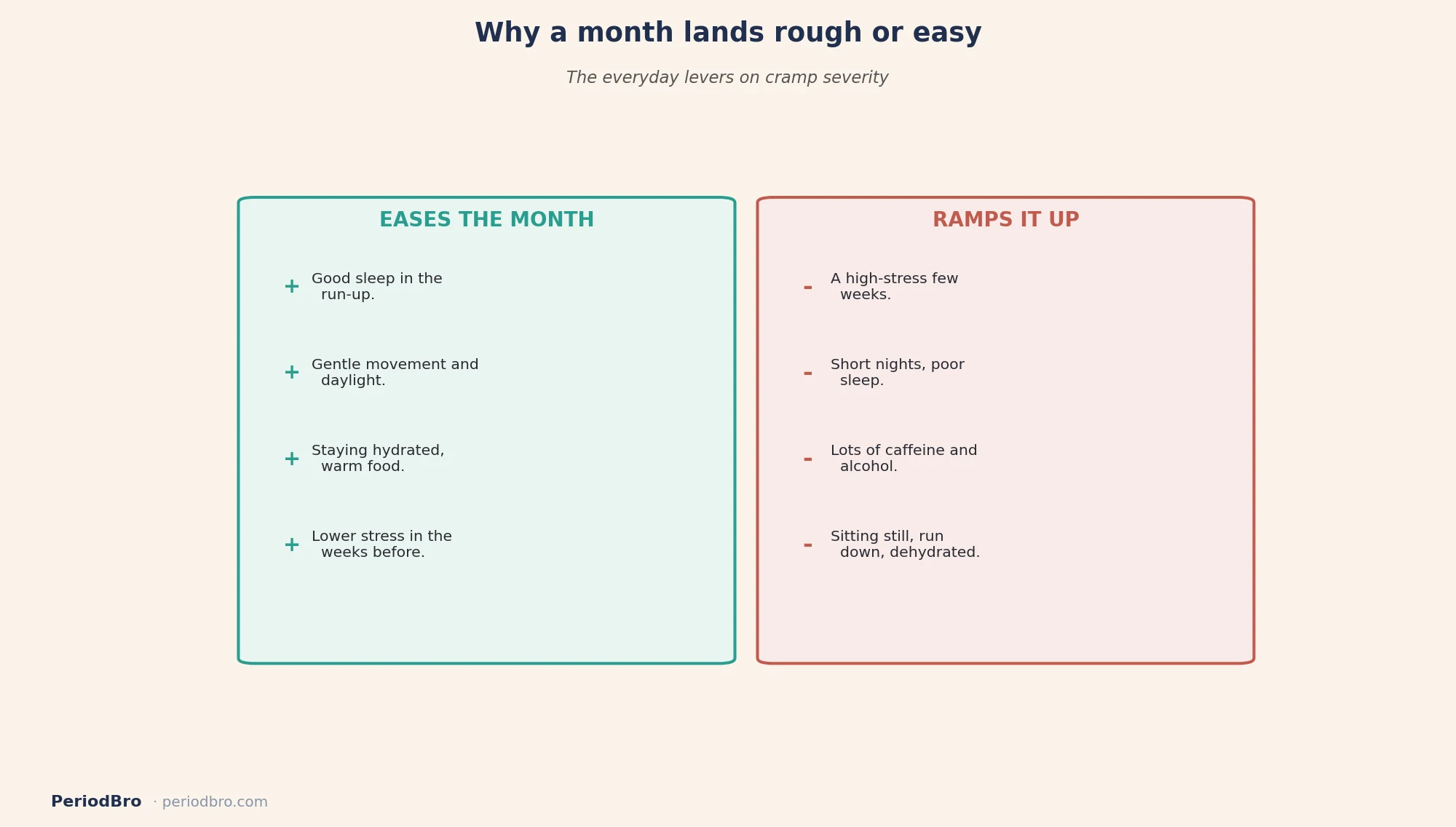
Past that baseline variation, the everyday stuff genuinely moves the needle. Stress is a big one, and not in a vague way. A population study found that women under high stress were more than twice as likely to have painful periods as women with low stress, and the effect was strongest when the stress landed earlier in the cycle (stress and dysmenorrhoea, prospective study, PubMed). So a brutal month at work three weeks ago can quietly set up a worse period now.
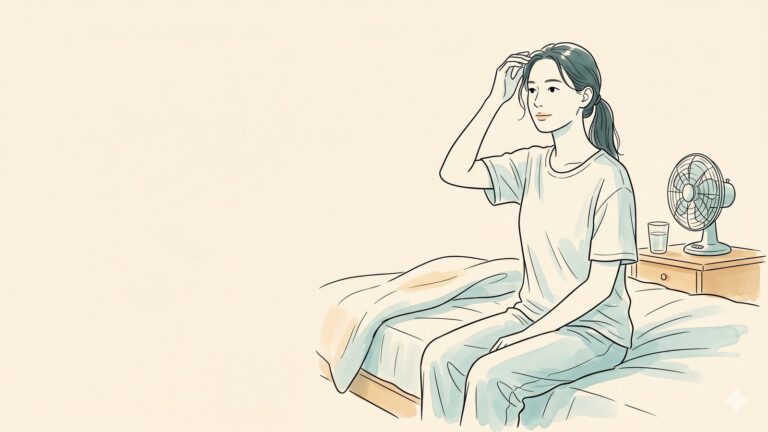
Sleep pulls in the same direction. Running short on rest raises the body’s stress and inflammation, and poor sleep quality tracks with more severe period symptoms (menstrual pain and sleep review, PMC). On top of those, the usual suspects matter: how much she has been moving, how hydrated she is, and how much caffeine or alcohol has been in the mix. A month heavy on stress, short on sleep, low on movement, and high on caffeine is simply more likely to be a bad cramp month than a calm, rested, active one.
Stress and sleep are the two you can actually help with
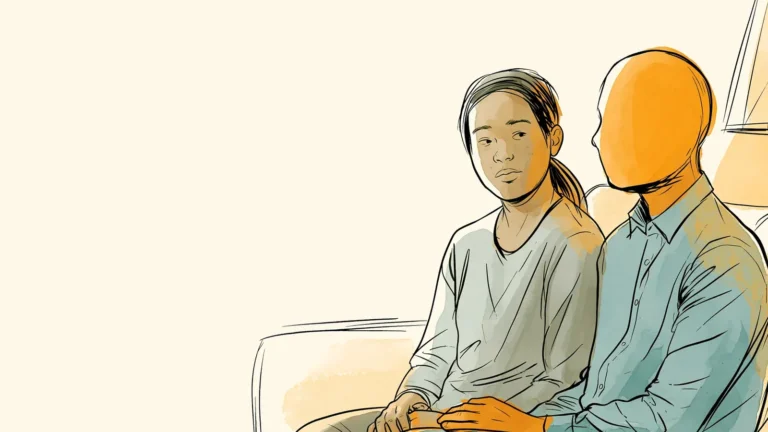
Of everything on that list, stress and sleep are the two where a partner makes a real difference, and they are also the two that feed each other. The useful move is not to lecture her about self-care during a bad month. It is to quietly take load off in the weeks around her period so the pressure and the short nights do not stack up in the first place. Handling more of the day-to-day, protecting her sleep, and keeping the home calm in her pre-period stretch is not fussing. It is lowering the exact inputs that turn prostaglandins up.
It also reframes how you see a rough month. Instead of “why is she like this,” it becomes “she has had a stressful, under-slept few weeks and now her body is charging her for it.” That is a far more accurate and far more sympathetic read, and it points you at something to do rather than just riding it out. If you want the wider picture of how her cycle and mood interact, how her hormones drive her mood covers the emotional side of the same machinery.

What actually helps on a worse month
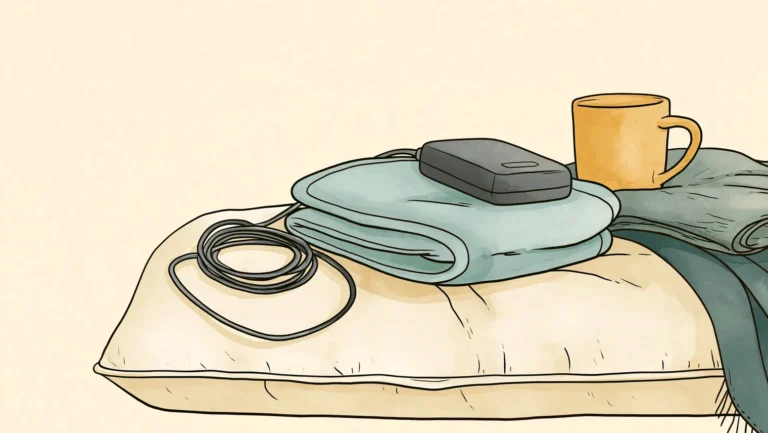
When a bad one lands, the response is the same toolkit that works for any cramp, leaned on a bit harder. Heat on her lower belly is the standout, easy to have ready before she asks. Gentle movement helps more than it sounds like it would, water and warm food sit easier than salt and sugar, and a painkiller taken early, before the pain peaks, works better than one taken once she is already floored. None of it erases a high-prostaglandin month, but together it takes the top off. We went through the full list in what actually helps with her cramps.
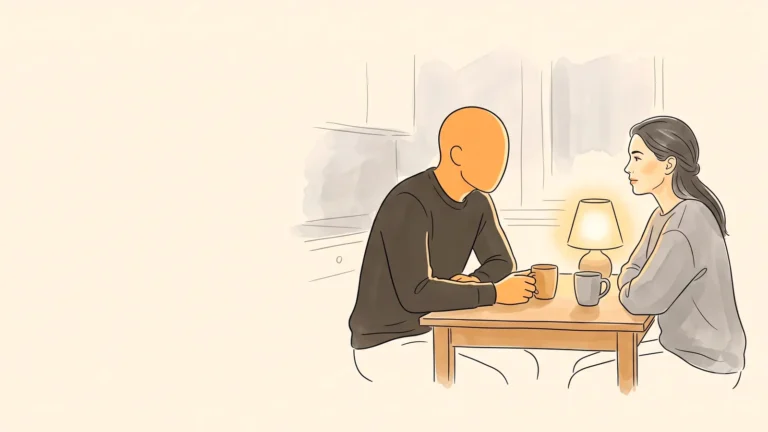
The other half is not making the month harder. Skip the urge to quiz her on what she did differently or to treat the bad period as a puzzle to solve out loud. On a rough month she does not need analysis, she needs the heat pad warm, the lights low, and a bit less on her plate. Being the person who quietly makes those the default is worth more than any clever theory about why this month is worse.
When a worse month is a pattern, not a fluke
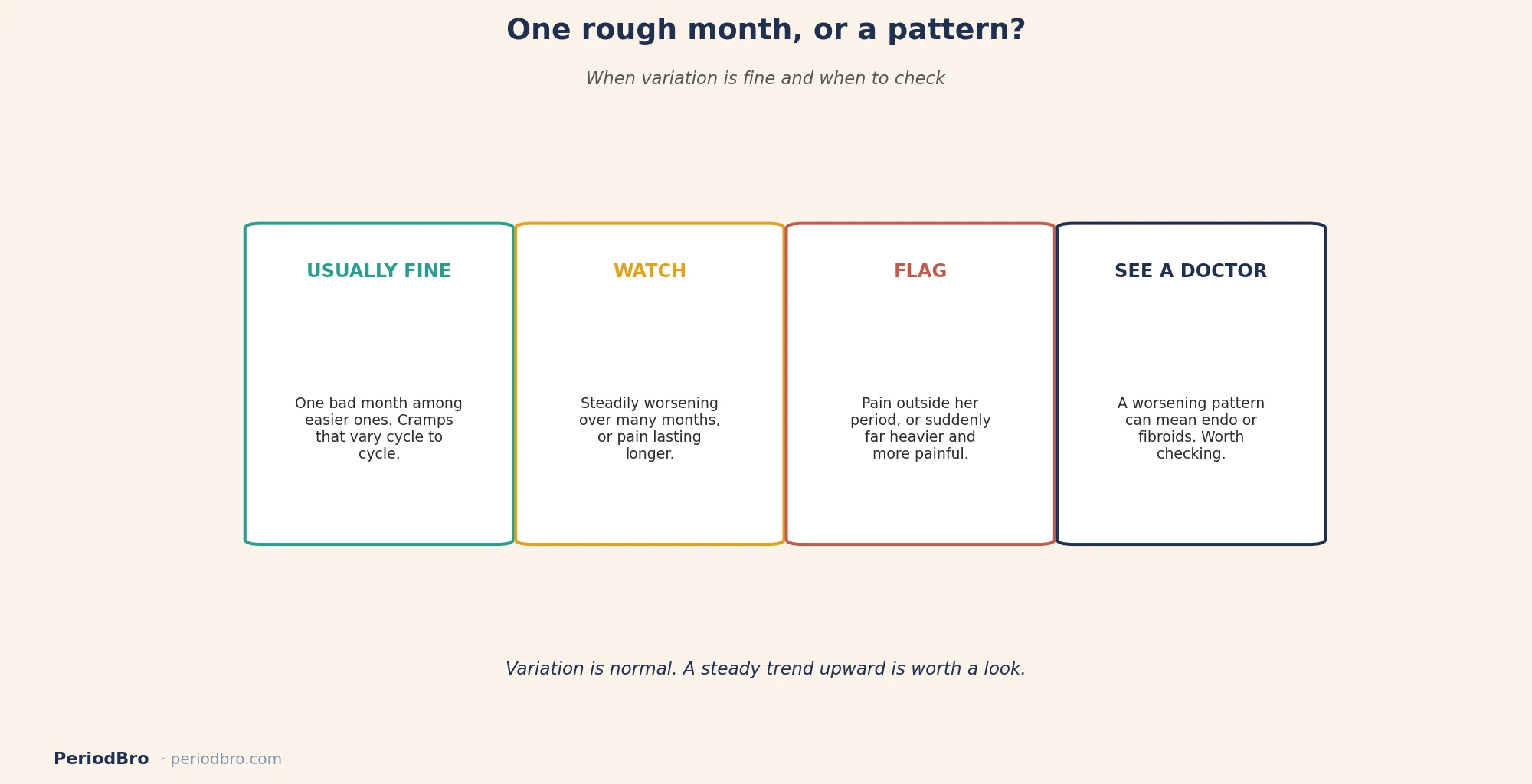
Normal cramps vary, but there is a line worth watching. A single rough month among easier ones is almost always just variation. What is worth attention is a trend: cramps that are steadily getting worse over many cycles, pain that has started lasting longer or showing up outside her period, or periods that suddenly turn far more painful and heavy than her usual. Those patterns can point to something like endometriosis, fibroids, or adenomyosis rather than ordinary cramping (dysmenorrhea causes, Cleveland Clinic), and they are worth raising with a doctor rather than absorbing month after month. We drew that line in more detail in when her period pain is more than cramps.
Common questions
Can her diet really make cramps worse some months? Indirectly, yes. There is no single magic food, but months heavy on alcohol, lots of caffeine, and salty processed food tend to come with more bloating and can leave cramps feeling worse, while staying hydrated and eating warmer, gentler meals helps her feel better. It is a nudge, not a switch.
Does a worse month mean her period will be heavier too? Often they travel together, because higher prostaglandins can mean stronger contractions and a heavier flow in the same cycle. Not always, though. Some months are crampy without being heavy and the other way around, so treat them as related but not locked together.
She is on the pill, so why do her cramps still change? Hormonal birth control usually lowers cramps overall by thinning the lining and cutting prostaglandins, but it does not flatten every month to identical, and stress, sleep, and the rest still play in. If her cramps are getting worse on the pill rather than better, that is worth mentioning to her doctor.
The honest picture is that her cramps ride a dial, not a switch, and stress, sleep, movement, and her body’s own month-to-month variation all turn it. A worse month is usually a higher-prostaglandin month, not a red flag, and the same calm, prepared support helps whichever kind of month it turns out to be. When you keep half an eye on where she is in her cycle, you can see the rough stretch coming and take a little off her plate before it arrives, which is often the difference between a bad month and a slightly-less-bad one. For the bigger arc, being a better partner through her whole cycle ties it together.
This article is general information, not medical advice. Cramps that are steadily worsening, unusually severe, or that show up outside her period are worth raising with a healthcare professional.