Alcohol and Her Period: Why the Same Two Drinks Land Differently
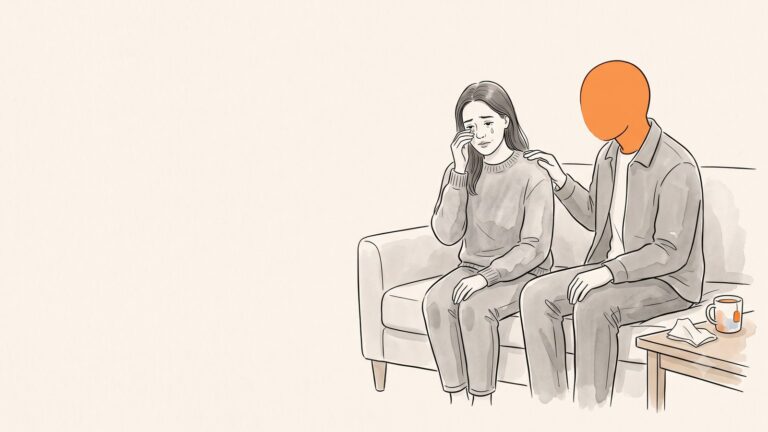
You both had the same two glasses of wine. You’re fine. She’s got a headache, she slept badly, and by Sunday afternoon she’s flat in a way that doesn’t match what either of you drank. Alcohol and her period interact in a few unglamorous ways that rarely get mentioned, and the week of the month it lands in changes the bill quite a lot.
A mate of mine spent about a year convinced his girlfriend’s mood crashed on a random schedule. Turned out the crashes clustered. Not on her period itself, but on the Sunday after whichever Friday they’d gone out hard, and those Fridays kept landing in the same stretch of her cycle because that’s when their friends did things. He wasn’t wrong that something was going on. He was just watching the wrong variable.
The same drink, a smaller tank
Start with the part that has nothing to do with her cycle at all, because it’s the part most guys have never been told.
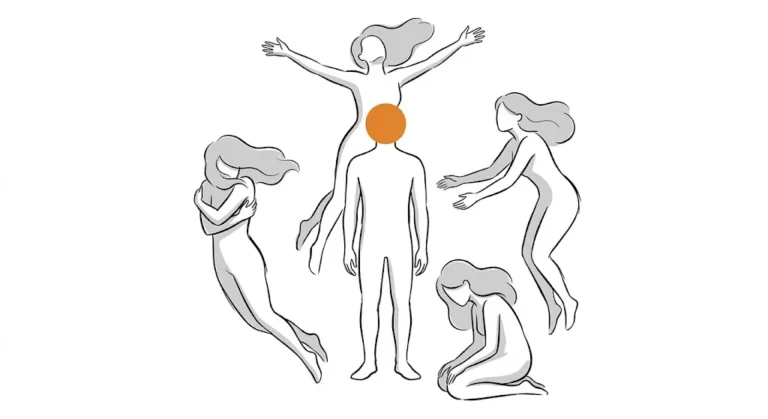
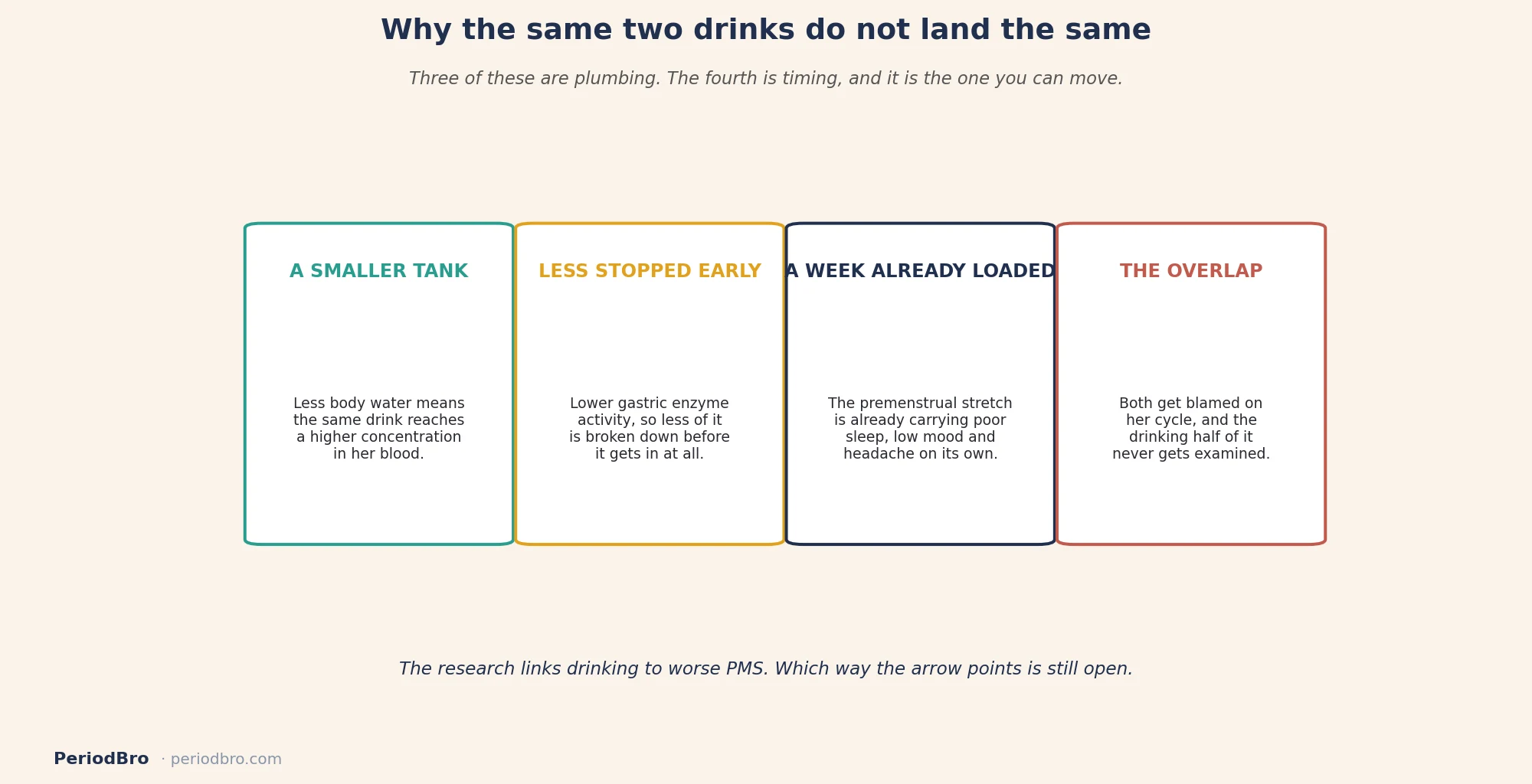
Alcohol distributes through body water. Women generally carry a smaller proportion of it, so the same amount of alcohol reaches a higher concentration in the blood. The National Institute on Alcohol Abuse and Alcoholism describes it as dropping the same measure into a smaller pail of water. On top of that, less alcohol gets broken down in the stomach before it enters circulation, because the enzyme doing that first pass is less active. Two mechanisms, both pointing the same direction.
Matching you drink for drink was never an even contest, and it isn’t a tolerance thing or a willpower thing. It’s plumbing. Worth knowing before you get to the cycle part, because a fair bit of what looks cycle-related is just this.

What alcohol and her period do to each other
The evidence here is worth being precise about, because it says a bit less than the headlines built on it.
A systematic review and meta-analysis in BMJ Open pulled together 19 eligible studies on drinking and premenstrual syndrome. Any alcohol intake came with a moderately raised risk of PMS, an odds ratio of 1.45. Heavy drinking pushed it further, to 1.79. That’s a real signal across a lot of data, and the authors were direct that it’s an association.
Which is the honest caveat. The arrow’s direction hasn’t been established. Drinking might make premenstrual symptoms worse, plausibly through effects on sex hormones and on the serotonin and GABA systems. Or people with rough premenstrual weeks might drink more to get through them. Both stories fit the same numbers, and the second one is not a character flaw, it’s self-medication with the most available substance in the house.
A separate systematic review of whether women drink more in particular cycle phases found 16 studies and no consistent answer at all. Some pointed one way, some the other. So if you read somewhere that women drink more in the luteal phase as an established fact, that’s further ahead of the research than the research is.
What you’re left with is modest and useful: drinking and bad premenstrual weeks travel together, the effect gets bigger with heavier drinking, and the cheapest experiment available is to change the drinking and see what happens to the week.
The week it lands worst
Even without the causal question settled, there’s a timing argument that stands on its own.
The stretch before her period already tends to bring broken sleep, a lower mood floor, and for some people headache. Those are the same three things alcohol reliably makes worse. Two glasses on a Tuesday in the follicular phase costs her a Wednesday morning. The same two glasses in the premenstrual week land on top of a system that’s already running short, and the recovery takes longer.
Sleep is the clearest example. Alcohol helps people fall asleep and then wrecks the second half of the night, which is exactly the half that’s already unreliable in that week. The piece on period insomnia covers why that week is bad for sleep to begin with. Stack a nightcap on it and you get a next day that neither of you can explain.
Headaches are the other one worth flagging. If she gets menstrual migraines, alcohol is a common enough trigger that the combination of a known cycle-timed migraine window and a night out is worth naming out loud once, then leaving alone.
What’s actually worth doing
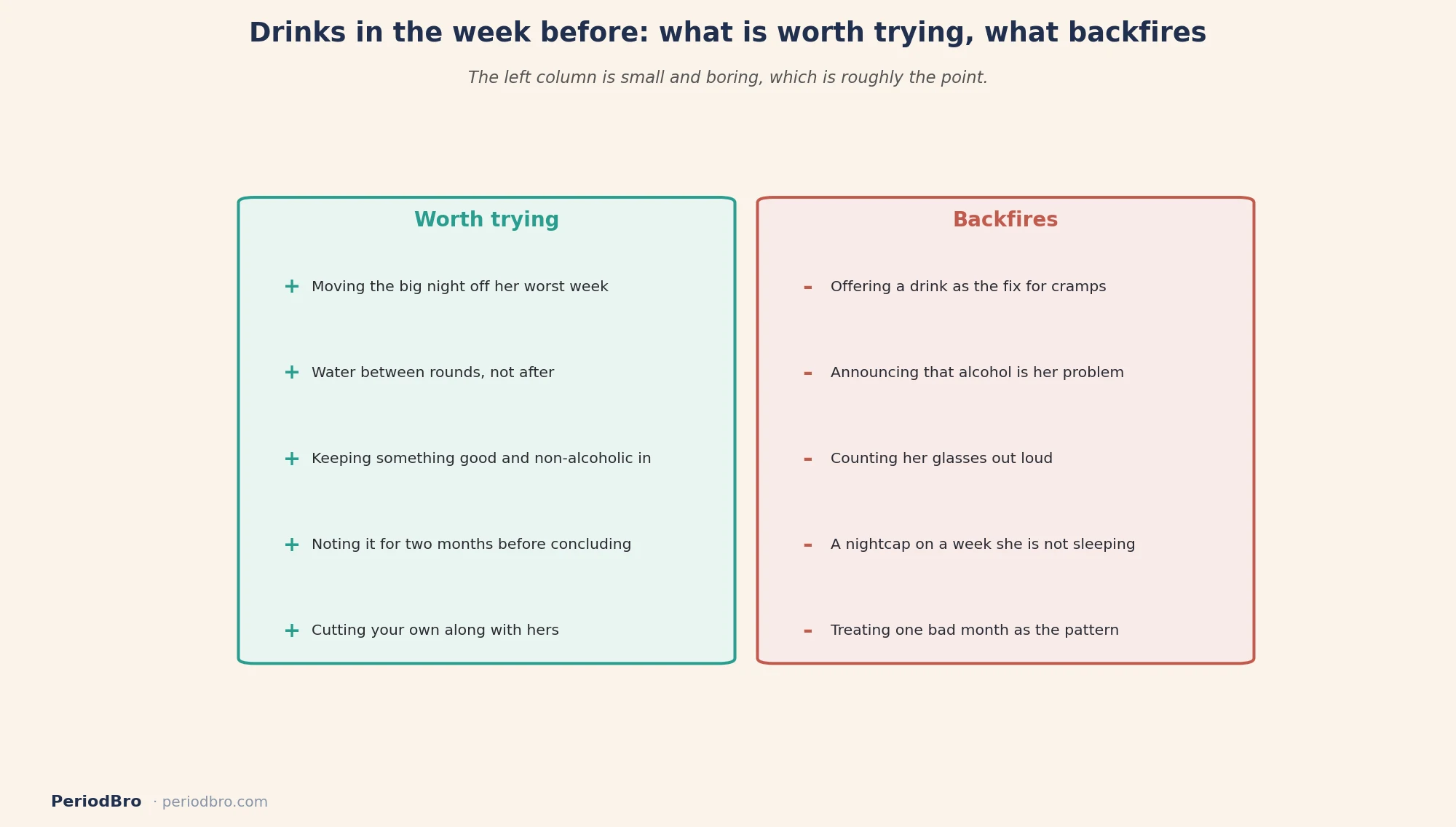
Move the big night, not the whole month. If there’s a choice of weekends for the thing that involves a lot of drinking, put it in the half of her cycle where she’s got more in the tank. She doesn’t have to make that call, and you don’t have to announce why you’re suggesting the other Saturday. Planning around her cycle gets into how to do that without it becoming a whole system.
Have something decent in that isn’t alcohol. Not as a substitute presented with a speech, just as a thing that exists in the fridge. The drinks piece covers what’s actually worth keeping around during the cramps end of it.
Water alongside rather than afterwards. Unglamorous, works, and it’s the one bit of hangover folklore with something behind it.
Cut your own. If you decide the household is having a lighter month, take the same deal. A partner who quietly drinks less alongside her is doing something, a partner who monitors her intake is doing something else entirely.
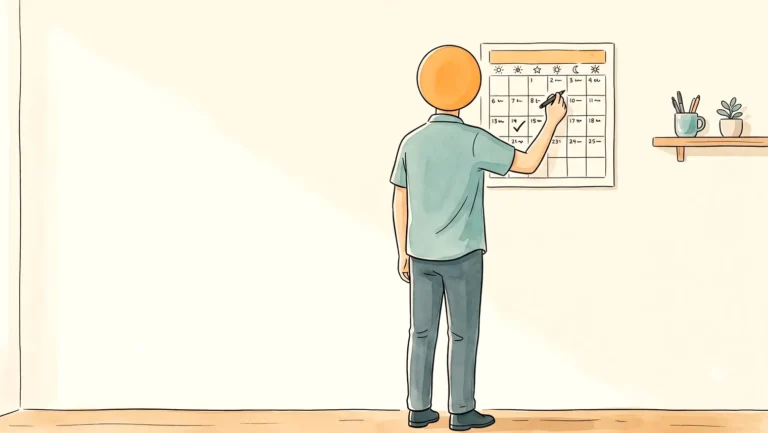
And if you’re going to test it, test it properly. Two cycles, noted as you go. One bad month proves nothing, because bad months happen for a dozen reasons.

And during the period itself
The premenstrual week gets all the attention, but the bleeding days have their own small set of interactions worth knowing.
Alcohol is a diuretic, and dehydration makes headaches and general grimness worse on days that already tend to produce both. It also doesn’t do anything useful for cramps. There’s a widely held belief that a drink relaxes the muscle causing them, and there’s nothing much behind it beyond a short stretch of not minding as much.
If she has heavy periods, there’s a second reason to keep an eye on the pattern. Heavy bleeding is the most common route to low iron, and iron deficiency produces exactly the fatigue and low mood that a heavy weekend also produces. Two things pointing at the same symptom makes it easy to blame the wrong one and to keep blaming it for months.
None of that adds up to a rule about not drinking on her period. It adds up to knowing that the days when she says she feels rough and it isn’t obvious why are days with more than one candidate in the frame.
The ways this goes wrong
Don’t hand her a drink as pain relief. Alcohol isn’t doing anything for cramps beyond blunting the edge for an hour, and it’s a bad trade against sleep. There’s a whole list of things that actually help with cramps, and this isn’t on it.
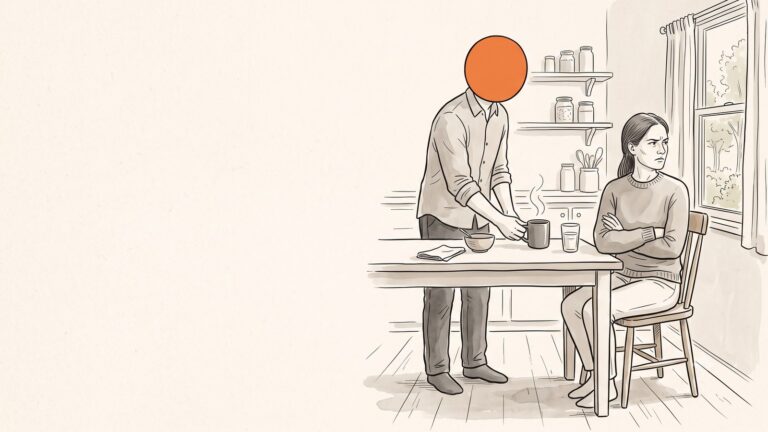
Don’t turn a research finding into an accusation. “There’s a study saying alcohol makes PMS worse” is, when delivered in the wrong week, functionally the same sentence as “your mood is your own fault”. If it comes up, it comes up as something you’re doing too, not something she needs to fix.
Don’t count her glasses. Nothing good has ever come from that, and the version of you keeping a tally is not the version she wants around when she feels rough. If you genuinely think the drinking has moved past a rough patch and into a problem, that’s a real conversation, and it’s a different one from this article. Say it plainly, once, when she’s feeling well, and don’t attach it to her cycle.
Don’t explain her own body to her while she’s in the middle of a bad week. Same rule as everything else in this territory. What to say when she has PMS is mostly about saying less.
The short version
The same drink hits her harder, and that’s biology rather than anything either of you is doing. On top of that, drinking and rough premenstrual weeks travel together in the data, even if which one is pulling is still unsettled. The practical move is small: shift the heavy night away from her worst stretch, keep water in the mix, and drop your own intake at the same time rather than managing hers.
Then watch two cycles before you decide anything. Most of what people believe about alcohol and her period is built on one memorable Sunday, and one Sunday is not a pattern.

PeriodBro keeps a simple private log of where she is in her cycle, which is the piece of information that makes a pattern visible instead of anecdotal. Try it free.
This article is general information, not medical advice. If drinking has become a concern for either of you, that’s worth raising with a doctor rather than a cycle app.