When the App Stops Making Sense: Tracking a Cycle in Perimenopause
The app says she is four days late. It said that last month too, and the month before, and both times it was wrong in the other direction. Period tracking in perimenopause fails in exactly this way, and the prediction is now a small daily source of stress in the house that neither of you has mentioned out loud.
We hit this in our house about a year ago. The forecast had been quietly accurate for years, then over one autumn it went from useful to actively annoying, and my first instinct was that the app had shipped a bad update. What had actually happened is that the thing it was built to do had stopped being possible.
The prediction is an average of a past that no longer exists
Every cycle app works the same way underneath. It takes her last several cycles, finds the pattern, and projects it forward. That is a reasonable bet when cycles are similar to each other, which is most of a person’s life.
Perimenopause is defined by them ceasing to be similar to each other. The transition usually starts somewhere in the mid-forties and runs four to eight years, and the whole signature of it is variability: cycles that shorten, then stretch, then skip. Feeding that into a model built on averages produces a confident number with nothing behind it.
The app is not broken and she is not doing anything wrong. The prediction engine is being asked for the one thing it structurally cannot deliver, and it answers anyway, because showing a date is what it does. We went through how much these forecasts are worth in the general case in do period tracker apps actually work, and perimenopause is where the honest answer gets uncomfortable.
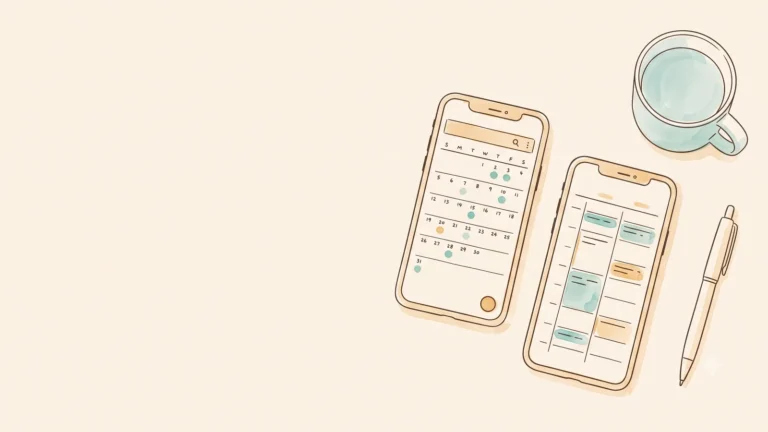
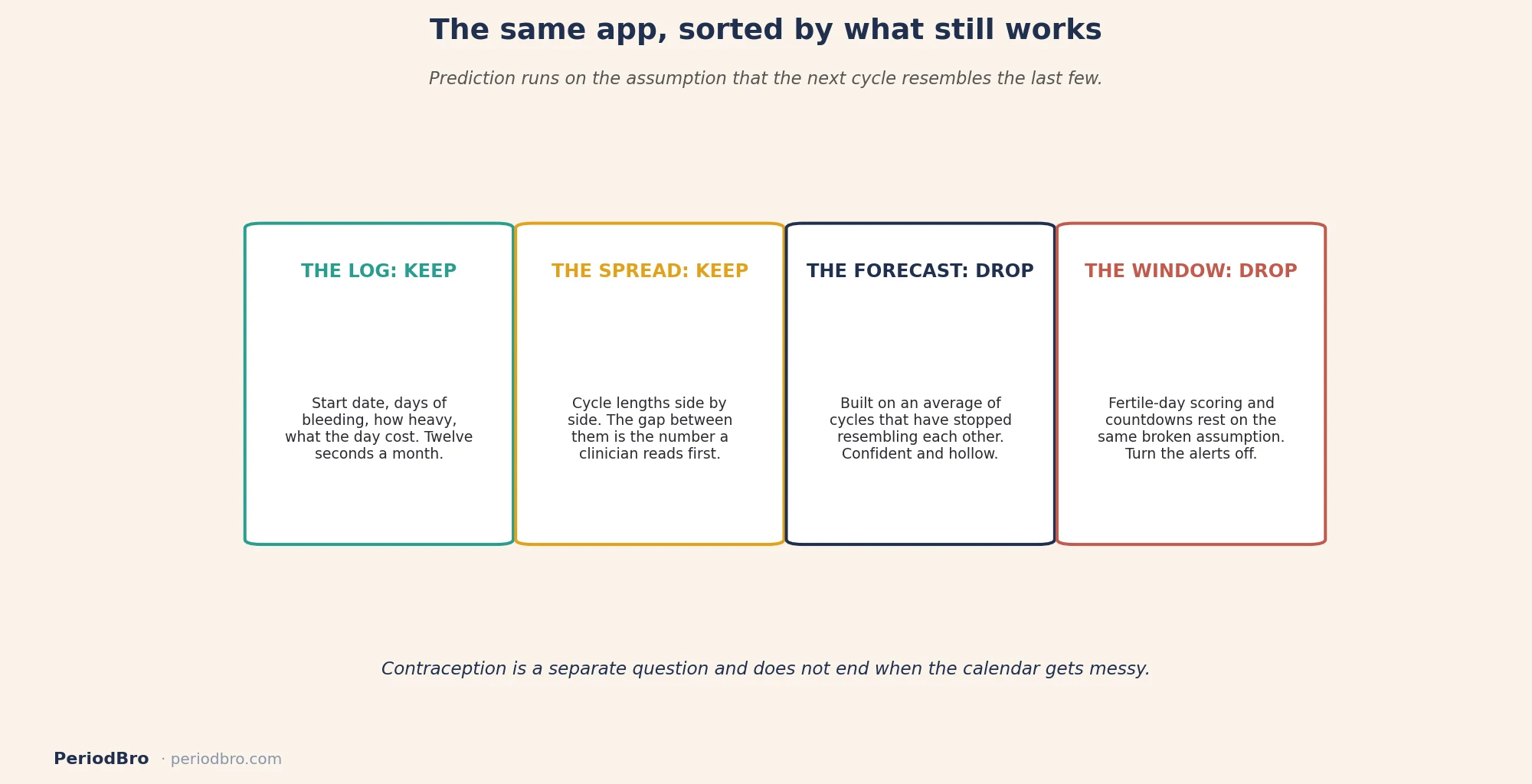
Most apps will let you hide the forecast, or at least stop sending the notification that announces it. Turning that off and keeping the log is the whole adjustment.

What period tracking in perimenopause is actually for
The purpose changes from forecast to record, and the record is worth considerably more than the forecast ever was.
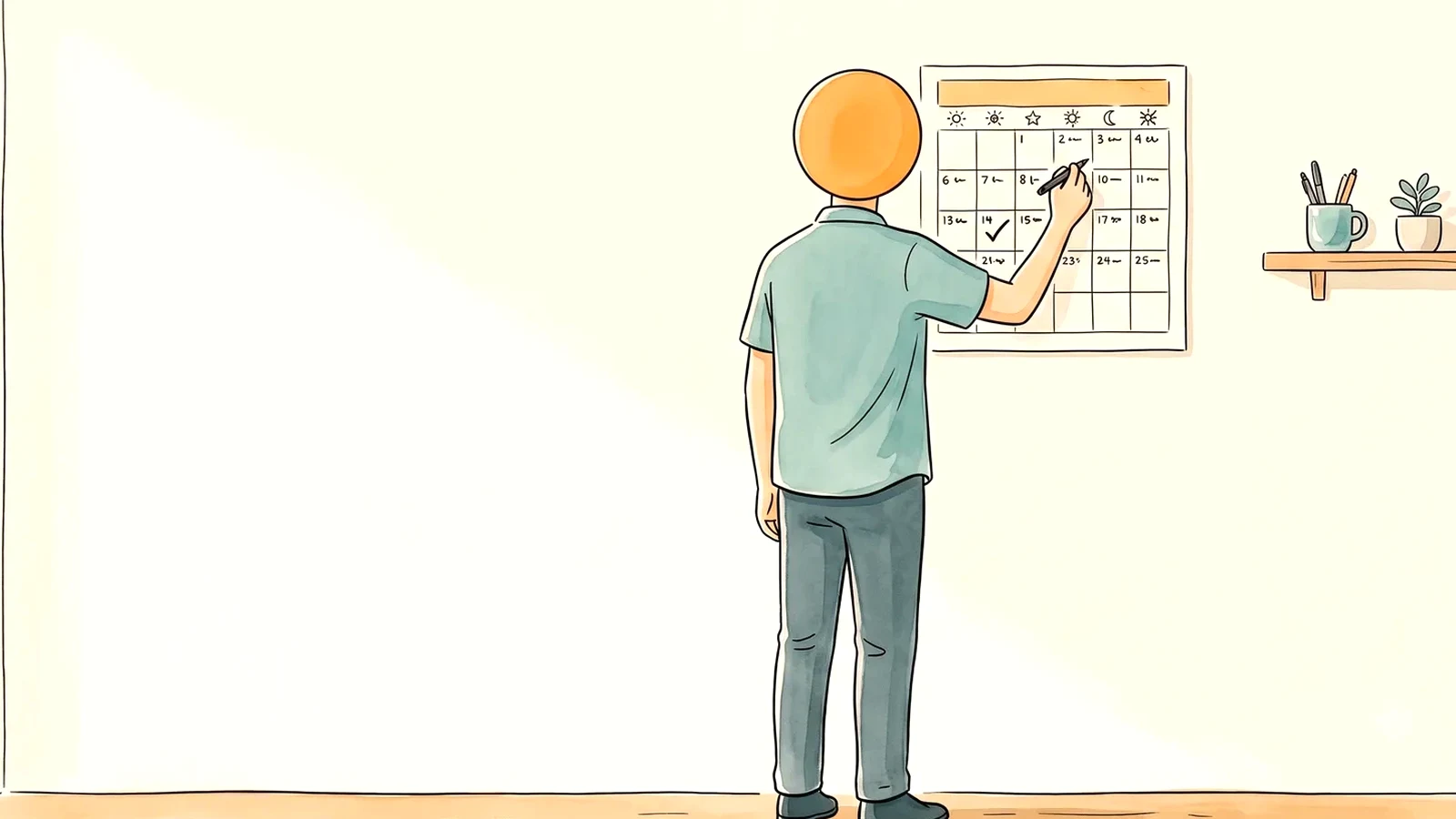
Nobody remembers their own cycles accurately. Ask anyone how long their last six were and you get a shrug and a guess, and in a transition where the whole diagnostic question is “how much has this changed,” a shrug is the least useful possible answer. Twelve seconds a month of logging turns “I think they have been all over the place lately” into a set of dates a clinician can read in ten seconds.
That matters because the appointment is short and the burden of proof lands on her. If her symptoms have been waved off before, a written record is the single strongest thing she can walk in with, which is the same lever we described in what to do when a doctor dismisses her pain.
Worth logging: the start date, how many days it ran, roughly how heavy, and anything that dragged the day sideways. Worth ignoring: the fertility scoring, the predicted window, the countdown. Those last ones are built on the assumption that has just stopped holding.
There is a second reason to keep it going, which is that symptoms in this stretch arrive without obvious connection to anything. Sleep goes first for many people, or the week before a period turns heavier than it used to be, and both get attributed to work or age because there is no record to argue with. Dates next to symptoms make the pattern visible or rule it out, and either answer is worth having.
The two numbers a clinician can actually use
There is a formal staging system for this, and it turns out to rest on two numbers a phone can capture with no effort at all.
It is called STRAW +10, and it is the standard framework for staging reproductive ageing, summarised by ASRM. The early transition is marked by a persistent difference of 7 days or more between consecutive cycle lengths. The late transition is marked by a stretch of 60 days or more with no period at all. Menopause itself is the anchor at the end: 12 full months with no bleeding, and it can only be named looking backwards.
Notice what that staging needs to work: two dates and some subtraction, with no hormone panel and no wearable anywhere in it. A blood test taken on one random day of a transition defined by hormones swinging is often less informative than her own calendar, which is the reverse of what most people assume they should be asking for.
This is also the answer to the question that eats couples alive, which is “how far along is she.” The honest answer is that the 12-month mark is the only clean line, and everything before it is a range. What she has instead is her own trajectory, and the log is what shows it.

The bleeding changes that are not just the transition
This is the part where “it is probably just perimenopause” becomes an expensive assumption, so it is worth being precise.
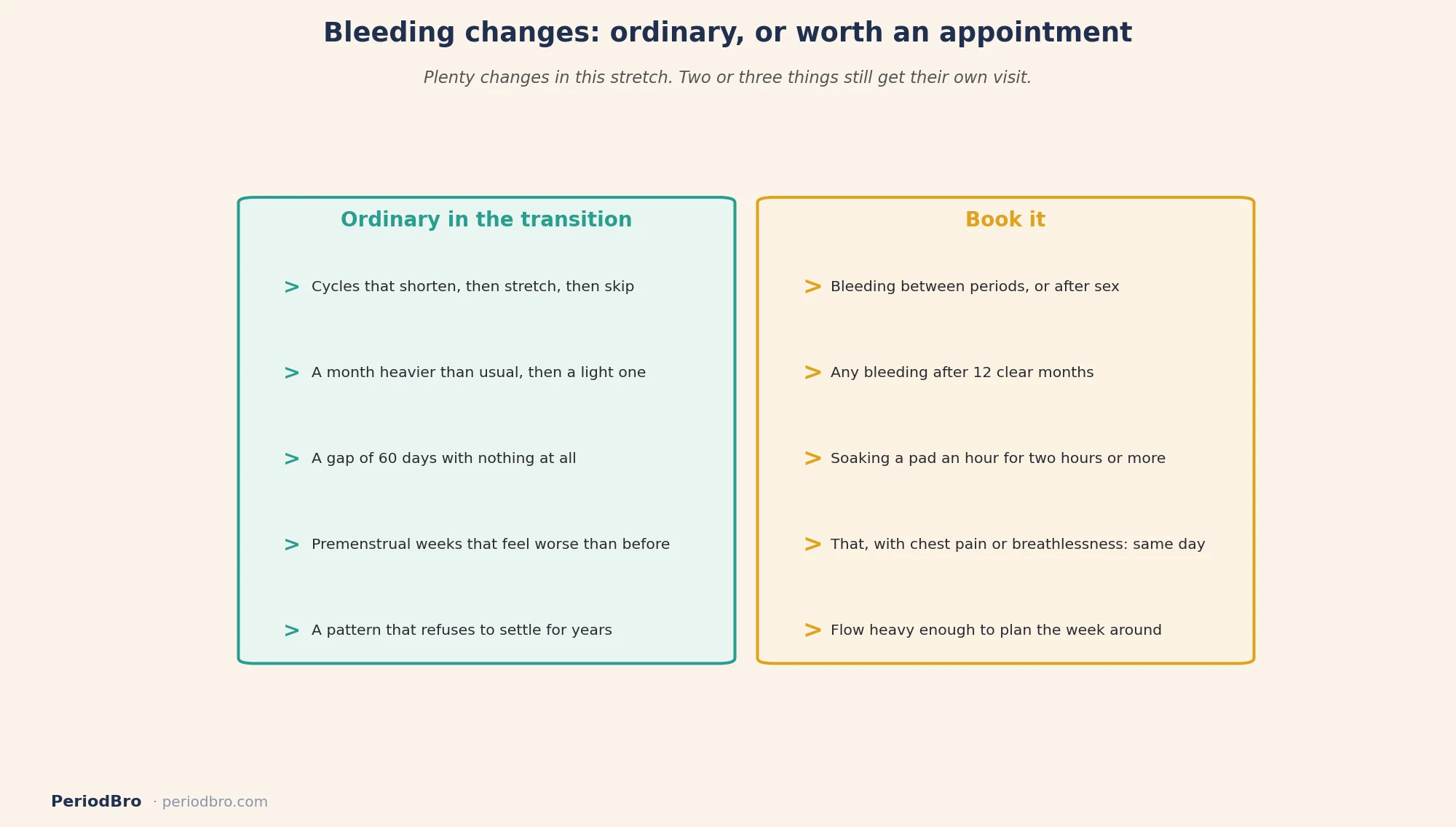
Irregular timing, heavier months, lighter months and skipped cycles are all ordinary in the transition. ACOG still says to raise bleeding changes with a clinician rather than absorbing them, because the same age band is when several other things start showing up and they present the same way.
The specifics worth having in your head. Bleeding between periods, bleeding after sex, or any bleeding at all once she has passed 12 months with none, all warrant an appointment rather than a wait. And ACOG names one emergency combination directly: changing a pad or tampon every hour for more than two hours in a row, together with chest pain, shortness of breath, or dizziness. That is same-day care.
The reason to keep the log through all this is that a heavier stretch of months is exactly when other explanations get overlooked. Fibroids turn up in the same decade and cause the same complaint. So does thyroid trouble, which is easy to check and easy to miss. And if the flow itself has become the daily problem, helping with heavy periods covers the practical side while the medical side gets sorted.
Contraception does not switch off when the calendar gets messy
This one catches people out, and the logic error is understandable: if the cycle has gone unpredictable, it feels like the system has already shut down.
It has not. Ovulation still happens through most of the transition, just not on a schedule anyone can name, which means pregnancy remains possible. Cleveland Clinic’s guidance on contraception in the forties and fifties is that it stays necessary until menopause is confirmed, and confirmation is that same 12-month mark looking backwards.
The practical consequence for a couple is that “we can probably stop bothering” is a decision with a real failure rate, and it should be a conversation with a clinician rather than an inference from a chaotic calendar.
What this changes for you
Three things, and the first one is the hardest.
Stop treating the calendar as a planning tool. If your habit has been to check the app before booking anything, that habit is now generating false confidence. Ask her instead. It is one sentence and it is more accurate than the software.
Do not announce her stage. The temptation to say “you’re definitely in perimenopause” the moment you have read a page about it is strong, and it lands badly for the same reason it always does: you have handed her a conclusion about her own body before she reached it. Notice, keep it, and let her name it. The relationship half of this is the whole subject of perimenopause for partners.
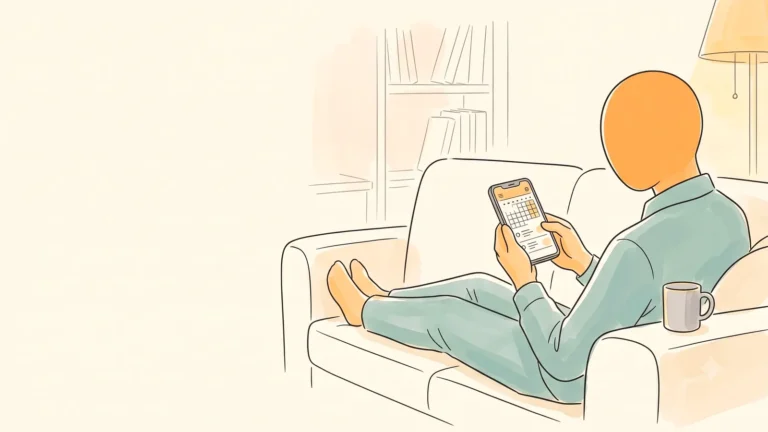
Keep the data hers. If she shares her tracker with you, that is her call to make and to unmake, and the ground rules are the same as they were fifteen years earlier: tracking with consent does not stop applying because the topic got more serious. If sharing is something you have not set up and she wants to, here is how that works.
The app is not going to tell either of you what happens next. What period tracking in perimenopause can still do, once you strip it back to a log, is turn a vague and stressful few years into something with dates on it, which is the only form of this that a doctor can act on.

PeriodBro reads her cycle as it actually is rather than as a forecast, which is the version that still helps when the pattern has gone. Try it free.
This article is general information, not medical advice. Bleeding changes in the forties and fifties belong with a clinician who knows her history.