Should You Track Your Partner’s Cycle? The Honest Answer
You are holding her phone to hand it back, and there it is on the screen: her cycle app. For half a second you wonder if you should peek, or set up your own quiet log so you finally stop getting blindsided. Stop right there. That half-second is the whole ethical question, and it deserves a better answer than a reflex.
The question “should I track my partner cycle” gets typed into search bars more than you’d think, usually by someone who cares and doesn’t want to be the guy who forgets, argues on the worst possible day, or plans a hiking weekend when she can barely stand up. Good instinct. The problem is that tracking can be an act of care or an act of surveillance, and the exact same spreadsheet can be either one depending on one thing: whether she knows.
What “tracking” actually means here
Tracking isn’t one thing. It runs on a spectrum. On one end, you and your partner share a calendar or an app on purpose, she knows what you see, and you use it to show up better. On the other end, you keep a secret log, screenshot her app, or reverse-engineer her cycle from her mood so you can “manage” her without her knowing. Same data, completely different act.
Most partners who ask the question are picturing something in the middle: a private note on their own phone, harmless, just so they remember. It feels considerate. But privacy researchers who study this stuff draw the line at consent, not intent. A 2023 review in the National Library of Medicine on period-tracking in a post-Roe America found that what makes cycle data feel safe or unsafe to the person it belongs to is control: who holds it, who can see it, and whether she chose to share it. Secret tracking takes that control away, even when your heart is in the right place.
Should I track my partner’s cycle? Start with consent
Here’s the honest answer to whether you should track your partner’s cycle: yes, if you do it with her, and no, if you do it behind her back. That’s the entire rule. Everything else is detail.
Early relationships are their own special case. When you barely know someone, quietly building a file on her body is a fast way to feel like a stranger who’s studying her. Even if your intentions are pure, tracking a new partner’s cycle before you’ve built the kind of trust where you can talk about periods openly tends to backfire. Let the closeness come first. The tracking, if it happens at all, should be a natural extension of a relationship where this stuff is already on the table, not a secret head start you give yourself.
Consent isn’t a one-time yes either. It’s “I’ve been thinking it would help me support you better if I knew roughly where you are in your cycle – would you be up for sharing that, and you can pull the plug anytime?” It’s specific, it’s revocable, and it puts her in charge of her own information. If saying it out loud makes you nervous, that nervousness is data. It usually means part of you already knows she might not be comfortable, which is exactly why you have to ask instead of assume.

When tracking is a good idea
Plenty of couples track together and it genuinely improves things. Cycle awareness helps you plan around low-energy days, stock the house before it’s needed, and stop reading a hormonal dip as a personal attack. We’ve written before about how cycle awareness for partners can make you a better one, and about what healthy cycle tracking looks like in a relationship. The green lights are simple: she’s on board, the data lives somewhere she controls, and you’re using it to add support, not to win arguments.
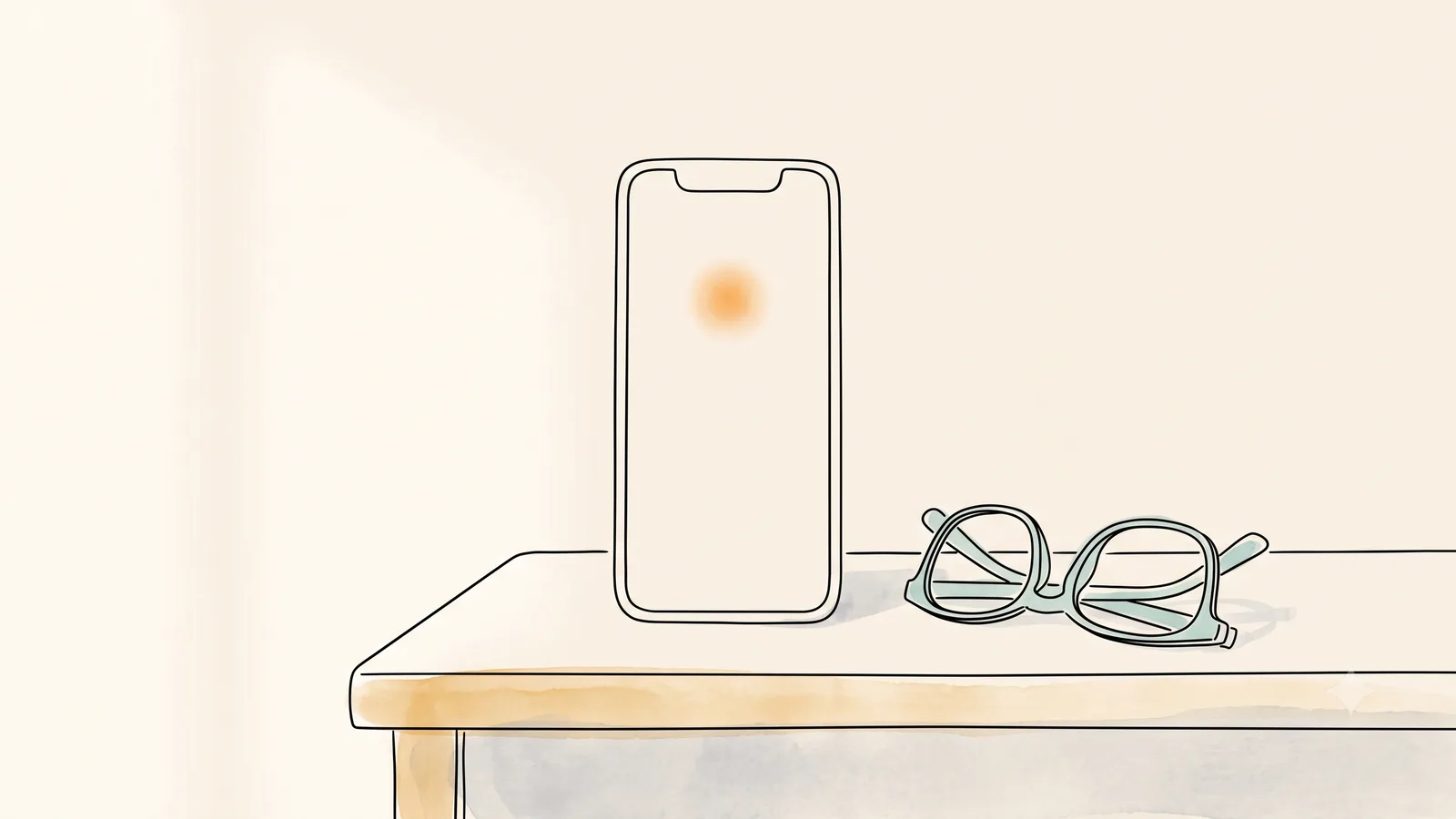
The tell that you’re on the right side of the line is that you’d be happy for her to see your notes. If a glance over your shoulder would make you slam the phone face down, you already have your answer.
It’s also worth being clear about what tracking is for. Done right, it’s a support tool: a heads-up that a low-energy stretch is coming so you can plan a quieter weekend, cover more of the housework, or just not schedule a big emotional conversation on a day she’s running on empty. It is not a mood decoder that lets you predict and defuse her feelings, and it’s not a scorecard. The couples who get value out of it treat the data like a weather forecast, useful for planning, never an excuse to say “well, it’s just your hormones.” That single phrase can undo months of goodwill, so if you ever feel it forming, put the app down and just ask her how she’s doing.

When you should not track her cycle
Don’t do it in secret. Don’t do it early in a relationship as a shortcut to figuring her out before she’s ready to share. And don’t treat it as a tool to pre-empt or “handle” her feelings, because that’s the fastest way to turn care into control. If you catch yourself thinking “I’ll just track it quietly so I know when to avoid her,” that’s not support, that’s dodging her, and she’ll feel it.
There’s also a real safety layer that has nothing to do with your relationship and everything to do with where this data can end up. Cycle data is unusually sensitive right now. In a scoping review of 23 popular women’s health apps, researchers found 87% shared user data and most allowed location tracking. Reporting from Stateline on data privacy after Dobbs notes that period-app records and location data have real legal exposure in the current climate. This is why, if you two do track, you should favor an app that stores data on the device rather than harvesting it. Her cycle is not just relationship information. It’s medical information, and it deserves to be handled like it.


How to bring it up without making it weird
Keep it short and give her the exit up front. Something like: “I want to be better at showing up for you, and I think it’d help me if I had a rough sense of your cycle. Totally your call, and you can switch it off whenever.” Then let her answer without selling her on it. If she says no, that’s a full sentence, and respecting it is the support. If she’s curious, offer to set it up on a shared app so you’re both looking at the same thing. If it helps to rehearse, our guide on how to talk to your partner about her period without making it weird covers the tone.
One honest note
I’ll be straight with you: the first time I wanted to track a partner’s cycle, my instinct was to just do it quietly and skip the awkward conversation. It felt easier. What I eventually understood is that the awkward conversation was the whole point. Asking her turned a thing I was doing about her into a thing we were doing together, and that difference is the entire relationship in miniature. The tracking was never the hard part. Being willing to be seen wanting to help was.
So should you track your partner’s cycle? If she’s in on it, it’s one of the most quietly considerate things you can do. If she isn’t, no app is worth what it costs. Ask first. Let her hold the keys. That’s the version that actually makes you the partner you’re trying to be.
This article is general information, not medical or legal advice. Cycle data is sensitive – when in doubt about privacy or the law where you live, talk to a qualified professional.