Period Hygiene for Teens: A Dad’s Guide to the Basics
A dad I know found a used pad wrapped in a whole roll of toilet paper behind the bathroom bin, and a second one in his 13-year-old’s school bag a day later. She wasn’t being gross. Nobody had told her what to do with it, and she was too embarrassed to ask. Period hygiene for teens is mostly small, practical stuff like this, and a dad can teach almost all of it without anyone going red.
Here’s what she actually needs to know, how often products get changed, what to skip, and how to bring it up so it sounds like normal life admin.

Period hygiene for teens: the basics that matter
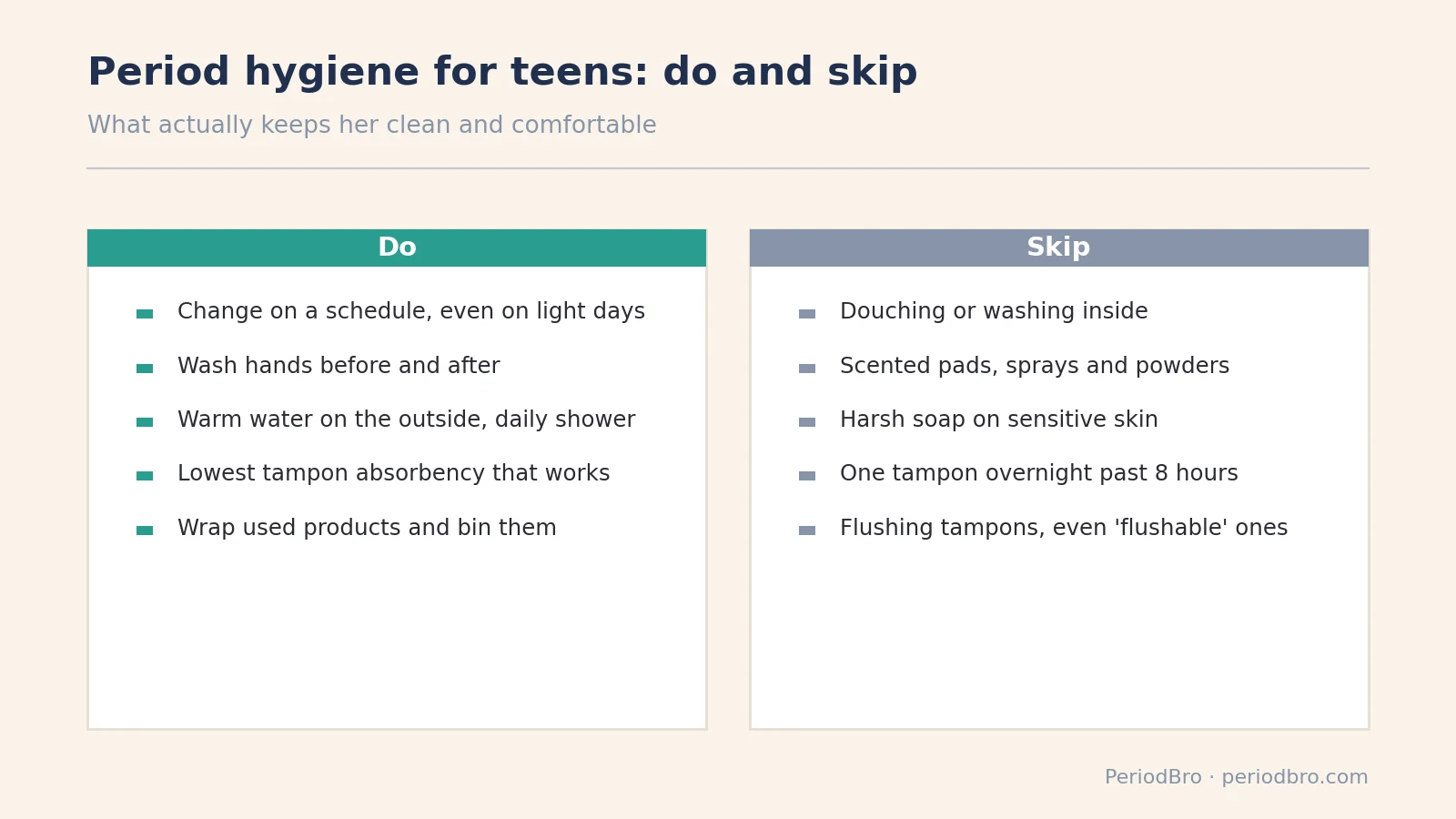
The list is shorter than most dads expect. Change products on a schedule, wash hands before and after, wash the outside with warm water, and get rid of used products properly. That covers most of what she needs.
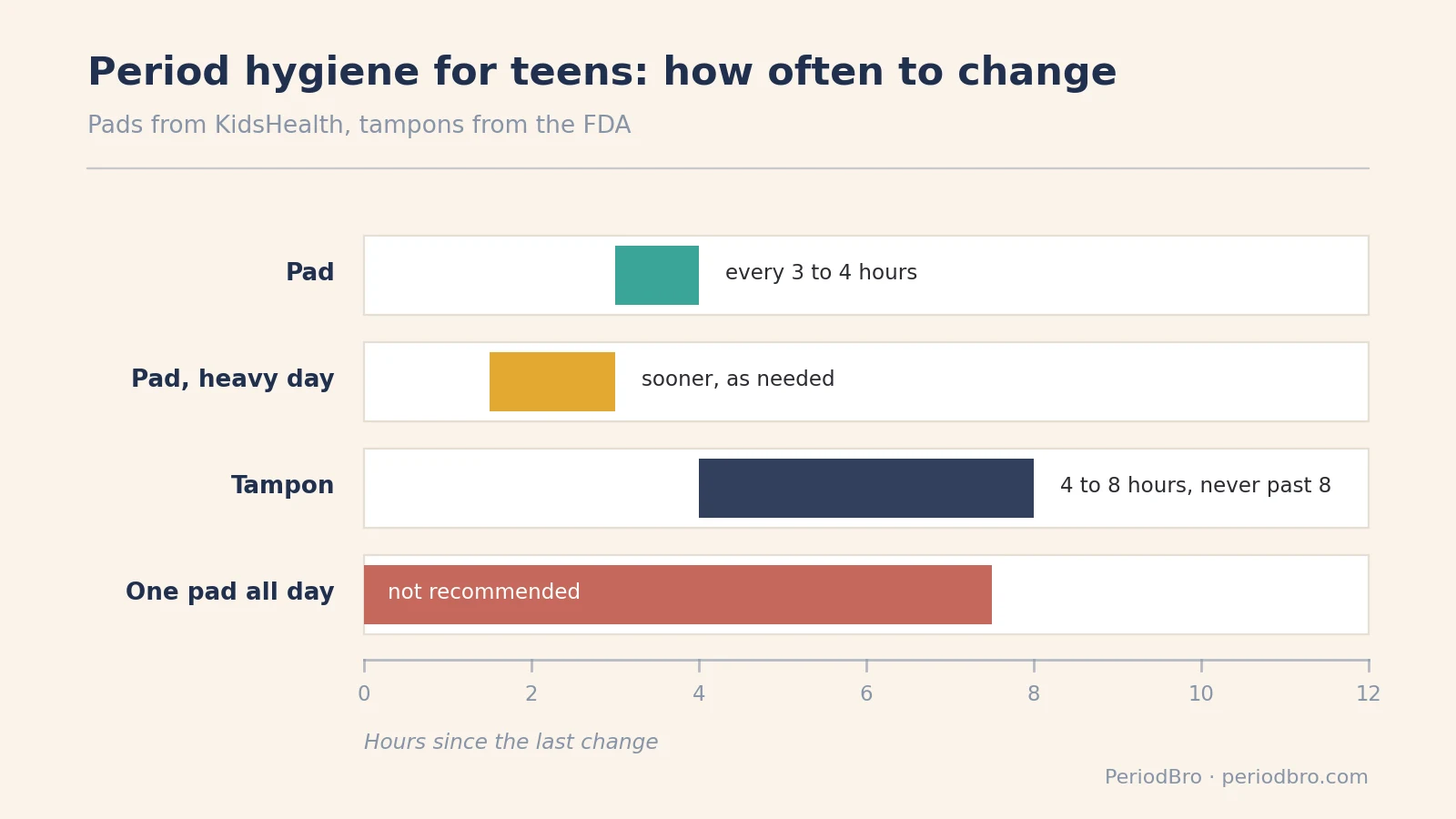
The schedule is the part teens get wrong most often, usually because a school day doesn’t leave much time and nobody wants to be seen heading to the bathroom with a bag. KidsHealth, the pediatric site run by Nemours, says pads should be changed every three to four hours, more often on heavy days, and that going a whole school day in one pad, liner or tampon isn’t a good idea even when the flow is light (KidsHealth). Blood builds up regardless of how much there is, and that’s what causes smell and leaks.
Tampons have a firmer rule. The FDA says to change them every four to eight hours and never leave one in for more than eight, to wear the lowest absorbency that works, and to use tampons only during the period itself (FDA). If she can go eight hours and the tampon still isn’t full, the absorbency is probably too high.
Washing: less than you’d think
Good intentions cause most of the trouble here. Teens worried about smell sometimes reach for scented wipes, sprays or harsh soap, or have heard about douching. The Office on Women’s Health is blunt about it: doctors recommend not douching, the vagina cleans itself through its own mucus, and douching is linked to infections like bacterial vaginosis and other problems (Office on Women’s Health). The same page advises skipping scented pads, tampons, powders and sprays.
What she needs is a daily shower and warm water on the outside. A mild, unscented soap is fine for the general area if it doesn’t irritate her, kept away from the inside. Some light smell during a period is normal. A strong fishy smell, itching, burning or unusual discharge is worth a doctor’s visit, since those usually point to an infection that’s easy to treat.
Acne that flares around her period comes from hormones. Our guide on teenage acne and periods explains why scrubbing harder doesn’t help.
Getting rid of used products
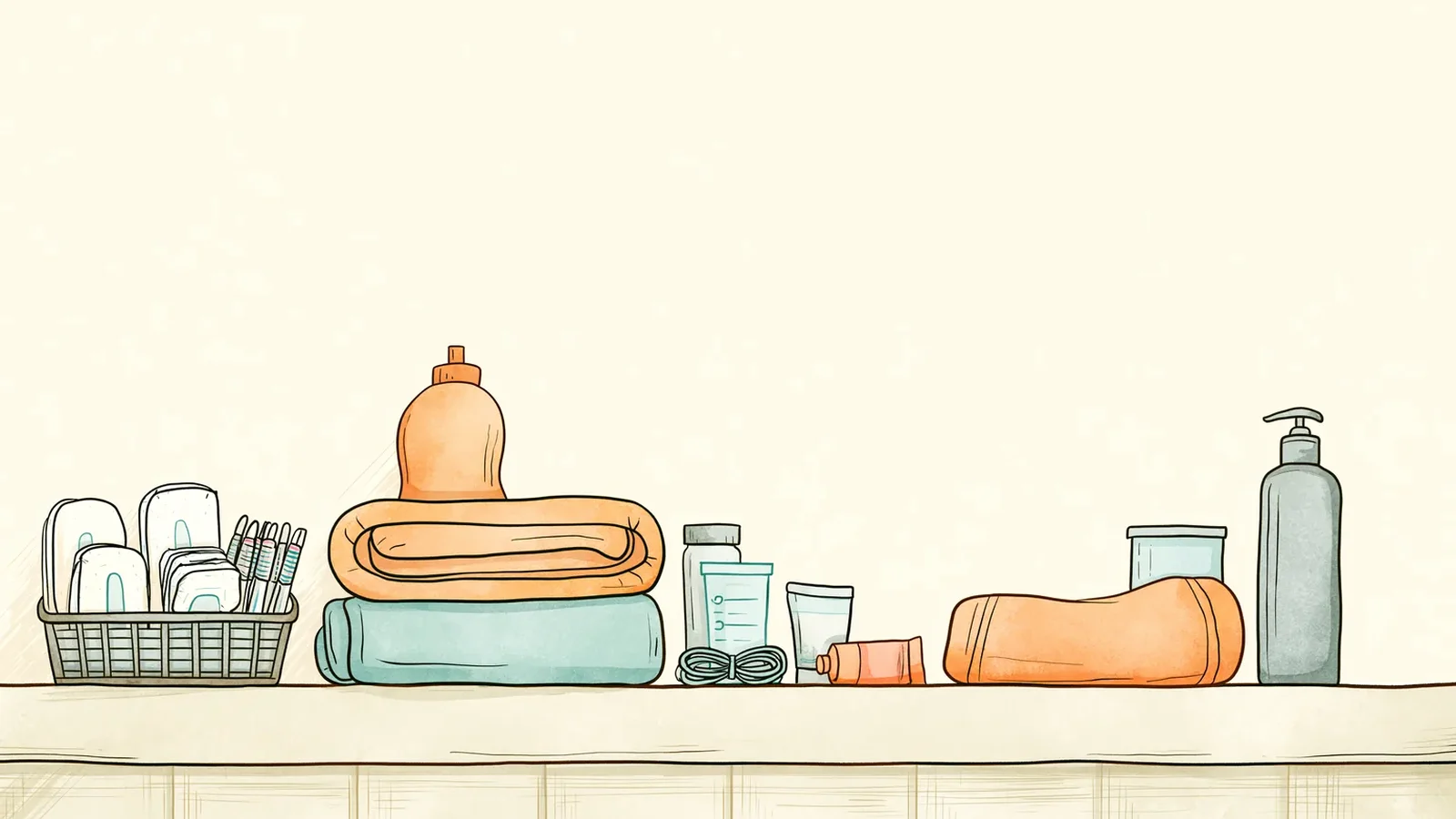
This one causes more awkward moments than anything else, so it’s worth just saying out loud. Used pads and tampons get wrapped (in their own wrapper, a little toilet paper, or a small disposal bag) and go in the bin. Tampons don’t get flushed, even the ones labeled flushable, because they clog pipes.
Two things make this easy at home. Put a small bin with a lid in every bathroom she uses, and empty it without comment. Keep a pack of disposal bags next to the products. If the bathroom has no bin, she’ll find her own solutions, and they usually end up behind radiators or in pockets.
At school, most girls’ bathrooms have sanitary bins in the stalls. If hers doesn’t, a few small bags in her kit solve the problem until she can get to one. Our guide to her period at school covers the rest of the school day.
Pads, tampons, cups and underwear for teens
Most girls start with pads. They’re easy, visible and don’t need any practice. Tampons are safe for teens once she wants to try them, and age isn’t the deciding factor. Boston Children’s Hospital’s Center for Young Women’s Health says a tampon can be used from the first period, recommends starting with slender or regular absorbency, and suggests alternating with pads, including a pad overnight, to lower the already small risk of toxic shock syndrome (Center for Young Women’s Health). If she asks you about it, our post on her first tampon is written for exactly that conversation.
Period underwear and cups are options too, especially for older teens or for sports. The hygiene rules are the same in spirit: change or empty on schedule, rinse and wash properly, and don’t stretch one product across a whole day because it’s convenient.
Toxic shock syndrome is rare, but it’s worth her knowing the signs, because the fix is fast medical care. The FDA lists sudden high fever, vomiting, diarrhea, fainting or dizziness and a sunburn-like rash during or just after a period (FDA). If that happens, the tampon comes out and she goes to urgent care or the ER. We wrote a full guide to toxic shock syndrome in teens.

A kit for her bag
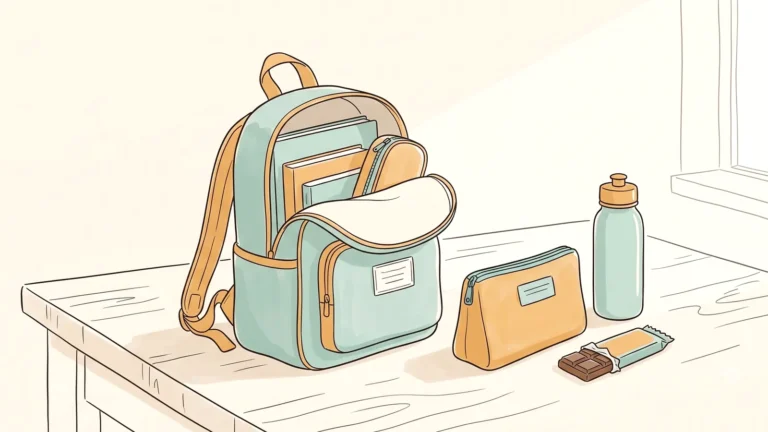
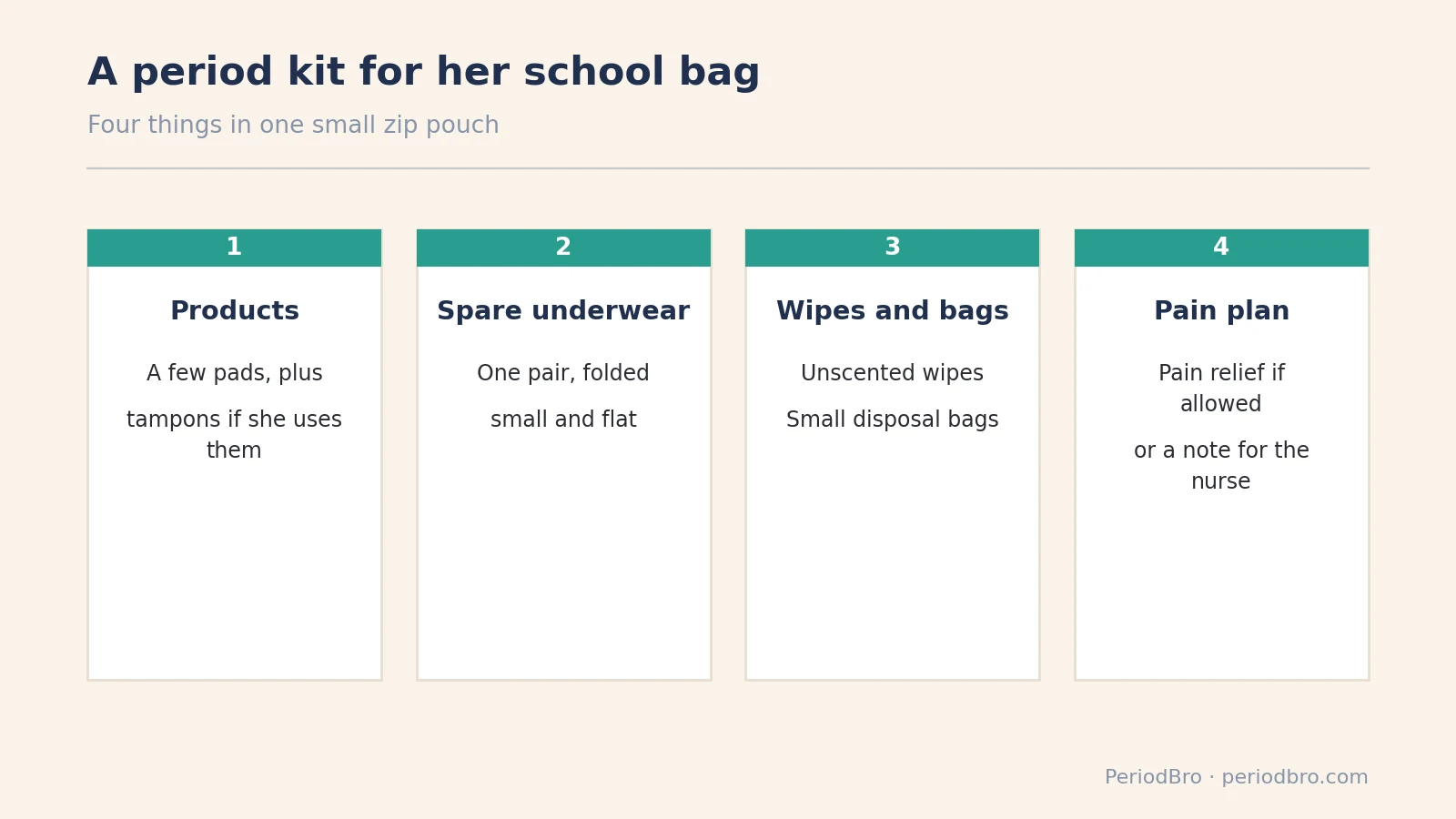
A small zip pouch she keeps in her school bag does more for hygiene than any talk. A good one has:
- A few pads, plus tampons if she uses them, in more than one size
- A spare pair of underwear
- Unscented wipes for her hands and a couple of small disposal bags
- Pain relief if her school allows it, or a note so the nurse can give it
Restock it without being asked. Checking the pouch once a month is an easy dad job, and she’ll notice that it’s always full. For a bigger list of what to keep at home, see what to stock before her first period.
Nights, sleepovers and sports
Overnight is where the schedule gets tricky, because eight hours of sleep runs right up against the eight-hour tampon limit. The simplest answer is a pad at night, which is what the Center for Young Women’s Health suggests anyway. Longer overnight pads exist for a reason, and a dark towel over the sheet takes the worry out of leaks. If a leak does happen, cold water gets blood out of fabric far better than hot, which is a handy thing for a dad to know and quietly pass on.
Sleepovers and school trips mean she’s managing everything without her own bathroom. A slightly bigger version of the bag kit, with enough products for the whole stay plus a couple of extras, takes care of most of it. Our post on her period away from home has a fuller checklist.
Sports add sweat and long stretches without a break. Changing right before practice or a game, and again straight after, keeps her comfortable. Some girls prefer tampons or period underwear for swimming and running, and that’s a fine choice to leave to her. More on that in her period and sports.
How to bring it up without it being weird
Keep it short, practical and matter-of-fact. Treat it like teaching her to look after a cut or brush her teeth. A few things that help:
- Talk while doing something else. Car rides and cooking work better than a sit-down chat.
- Use the real words. Pad, tampon, period. Our period terms for dads list helps if you’re rusty.
- Lead with the setup. “I put a bin and some bags in your bathroom” says more than ten minutes of explaining.
- Offer a backup person. An aunt, a family friend, the school nurse. She doesn’t have to pick you for every question.
- Leave the door open. “If anything’s off or you run out, just tell me and I’ll sort it” is enough.
Some things are medical, not hygiene, and deserve a doctor: soaking through a pad or tampon every hour or two, periods longer than about a week, clots bigger than a quarter, or pain that keeps her home from school. Our guide to heavy periods in teens goes through what counts as too much.
Most of period hygiene comes down to having the right stuff in the right place and a dad who doesn’t make it a big deal. For the wider picture of why your part matters, read about a father’s role in menstrual education.
I built PeriodBro to help parents and partners keep track of cycles and know what’s coming, so the kit is stocked before it’s needed. You can try it free here.
PeriodBro provides educational information and is not a substitute for professional medical advice. Always consult a qualified healthcare provider for personal medical decisions.