Jealousy Before Her Period: What’s Hormonal and What Helps
A friend of mine noticed a pattern that took him a year to see. Once a month or so, his girlfriend would get upset about a coworker who texted him about work. The rest of the month she’d joke about the same coworker. When he finally lined it up with her cycle, the hard nights almost always landed in the week before her period. If you’re seeing jealousy before her period, or feeling it yourself, this piece covers what the research actually says, why the feelings can be real even when the timing is hormonal, and what helps.
One thing up front: hormones can turn the volume up on insecurity. They don’t explain away controlling behavior, and they’re never a reason to dismiss what someone feels. We’ll cover both sides.
Jealousy before period: is it a real thing?
Often, though the pattern is messier than people assume. The emotional symptoms of PMS include irritability, anxiety, mood swings and feeling overwhelmed, and they ease within a few days after bleeding starts (ACOG). Anxiety and a shorter fuse make it harder to shrug off small things, like a late reply, a new name in someone’s phone, or a partner who seems distracted.
For people with PMDD, the severe form of PMS, one of the core symptoms listed in the DSM-5 criteria is “increased sensitivity to rejection,” alongside sudden sadness and mood swings (DSM-5 criteria via NCBI). Rejection sensitivity and jealousy aren’t the same thing, but they’re close cousins. If she reads a quiet evening as “he’s losing interest,” the jealous thought is often not far behind.
For the hormone side of this, our explainer on how hormones drive her mood walks through what estrogen and progesterone are doing across the month.
The twist: some research points to ovulation instead
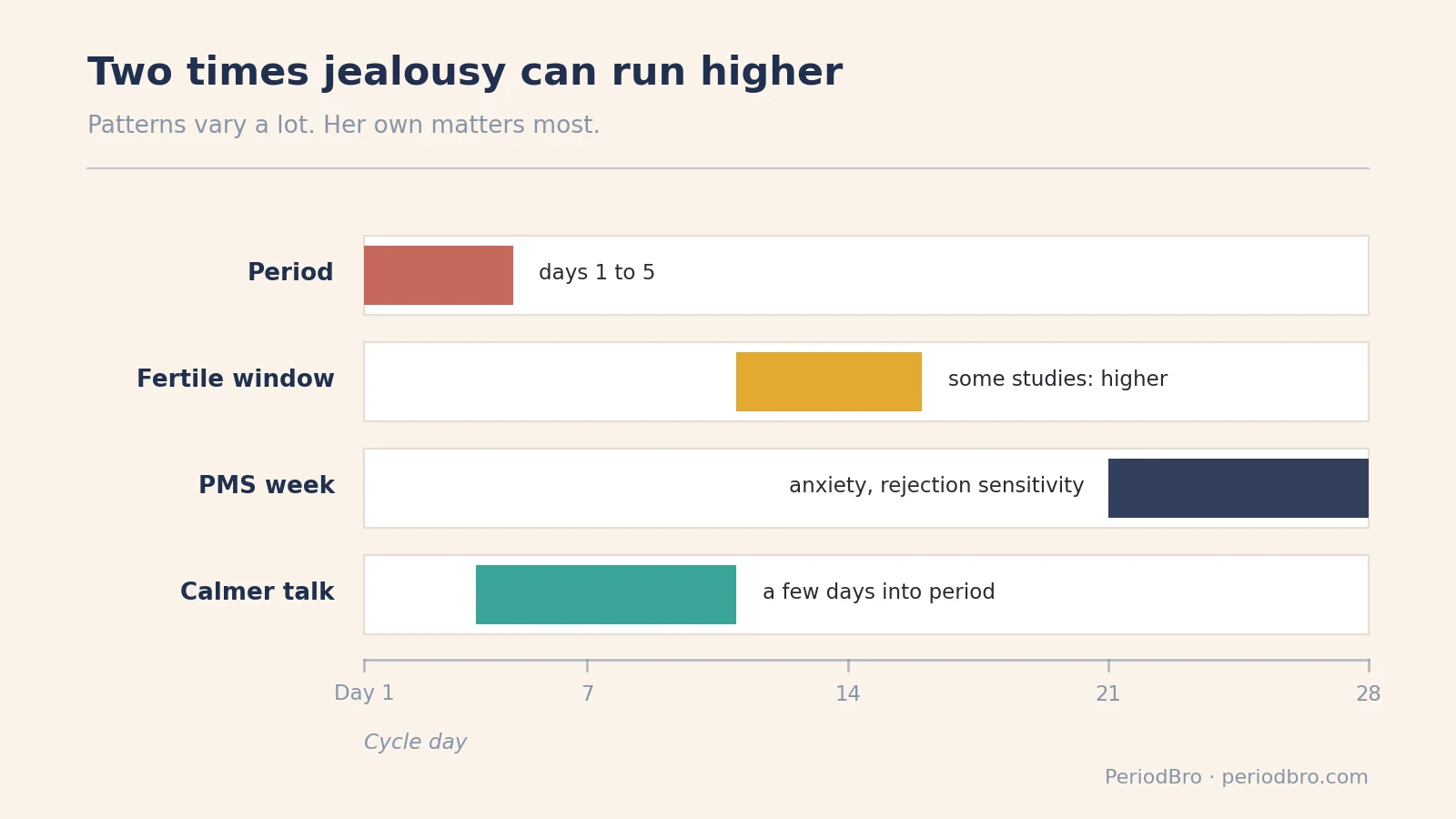
A 2012 study that tracked the same women across their cycles found self-reported jealousy was higher in the fertile phase, around ovulation, than in the non-fertile phases. The same study found that partnered women on the pill reported jealousy at levels similar to the fertile window (Cobey et al., Evolution and Human Behavior, 2012). Other small studies haven’t found much of a cycle effect at all.
The honest answer is that there may be two different patterns. One is a mid-cycle bump that some researchers tie to mating psychology. The other is the premenstrual week, when anxiety and rejection sensitivity make everything feel more fragile. Your partner might have one, both, or neither. That’s why her own pattern matters more than any study. Our guide to ovulation covers the mid-cycle part, and birth control and her cycle explains why the pill changes the picture.
What not to say
“You’re only jealous because of your period” is the worst possible line. Even if the timing lines up, it tells her the feeling doesn’t count, and it usually turns a jealous moment into a fight about respect. We’ve written about why blaming her hormones backfires every time.
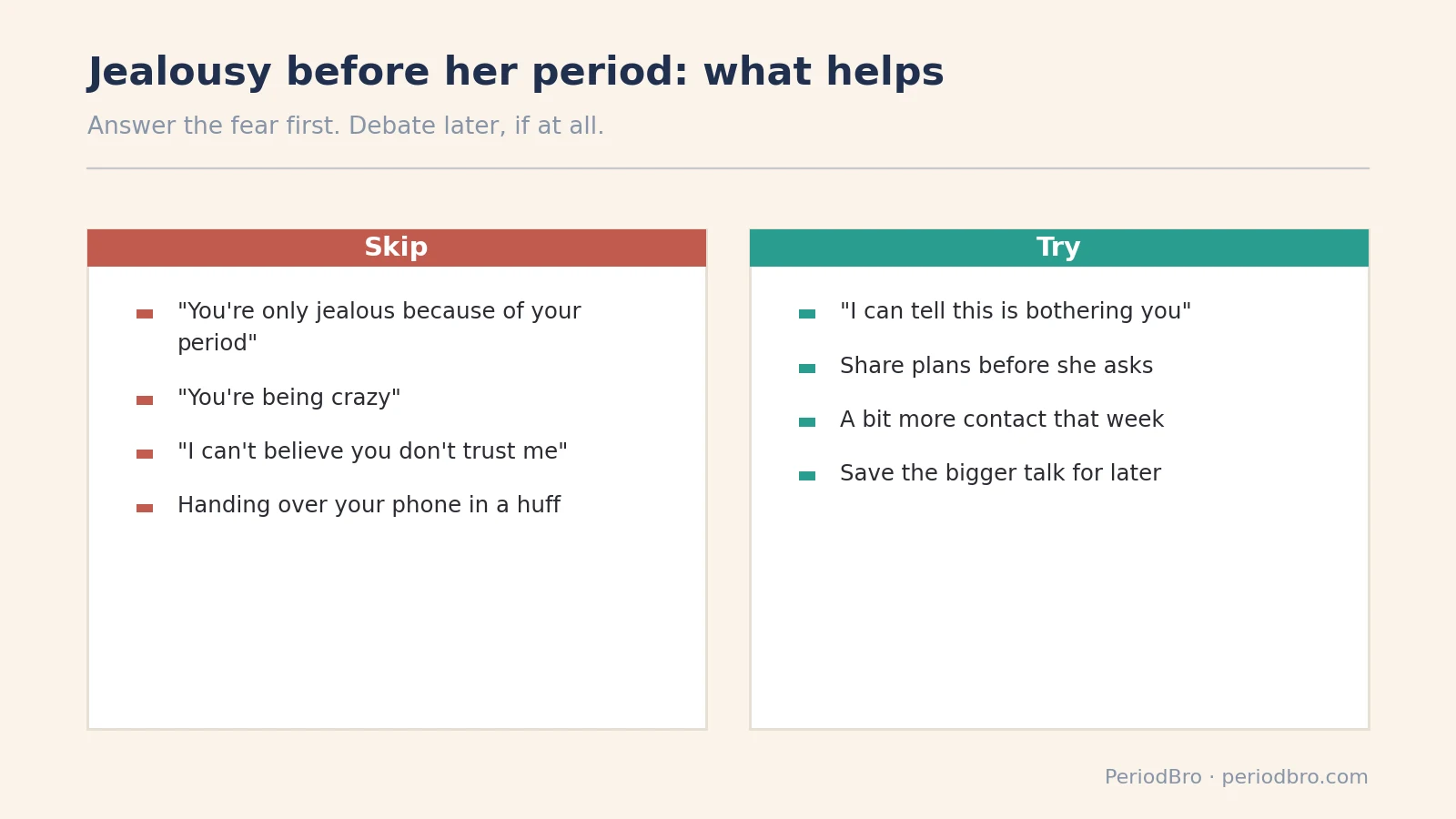
Other lines that tend to go badly:
- “You’re being crazy.” Even as a joke, it confirms her worst fear about how you see her.
- “I can’t believe you don’t trust me.” It shifts the conversation to your hurt before you’ve heard hers.
- Handing over your phone in a huff. It’s meant as openness, but it usually reads as a challenge.
Our list of the worst things to say on her period has more of these, with better options.

What usually helps in the moment
Jealousy usually runs on fear. What helps is anything that answers the fear calmly, without a debate about who’s right.
- Answer the feeling first. “I can tell this is bothering you. I’m not going anywhere.” That sentence does more than a list of facts about the coworker.
- Be boringly transparent. Share plans before she has to ask. Mention who you’re meeting. Small things, said early, remove a lot of fuel.
- Give a bit more contact that week. A text in the afternoon, an earlier night home. If you track her cycle together, you’ll know when that week is coming.
- Save the bigger talk. If something specific needs fixing, raise it a few days into her period, when you’re both calmer.
Our guide on what to say when she has PMS has more phrases that work, and when she’s emotional before her period covers the wider picture.
The feeling can be real even when the timing is hormonal
Researchers Jane Ussher and Janette Perz, who’ve studied premenstrual distress in couples, describe issues that simmer most of the month and come to the surface in the premenstrual week, when it’s harder to keep them down (Ussher and Perz, 2017). In that study, couple-based therapy helped, partly because women felt more supported when the partner was involved.
If the same worry keeps coming up, ask yourself honestly whether there’s something there. Maybe you do spend a lot of time texting someone. Maybe you’ve been distant for months. Hormones can make a small worry feel huge, but they rarely invent one.
And if it’s you who feels jealous before her period, because she’s quieter or pulls away, that’s worth noticing too. Our piece on when she pulls away covers how to tell space from distance.

Spotting the pattern together
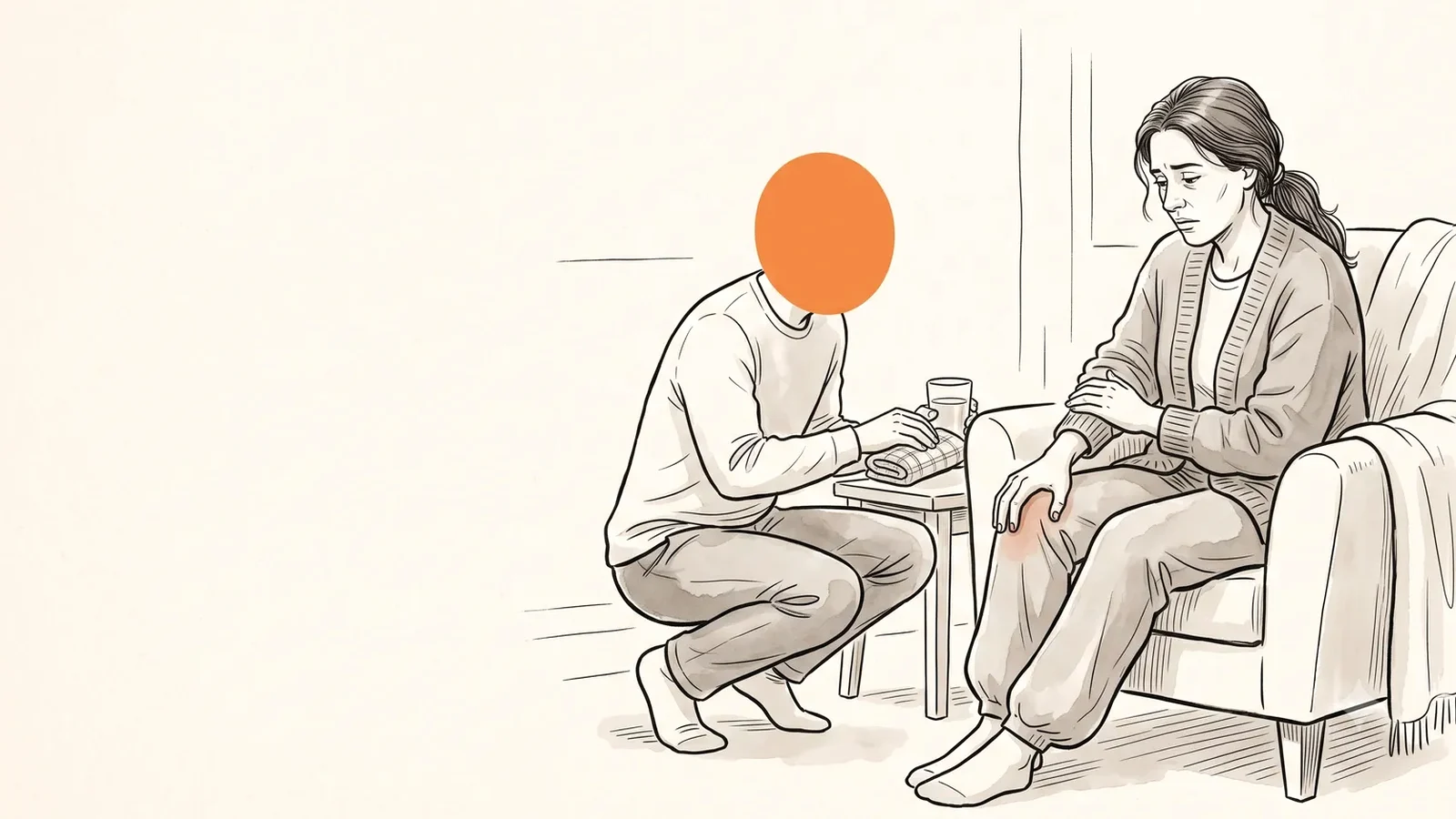
If you suspect the jealous nights cluster in one part of her cycle, the worst move is to announce it mid-argument. The useful move is to look at it together, on a calm day, and only if she wants to. A simple shared note works: the date of a rough night, what set it off, and where she was in her cycle. After two or three months, you’ll usually see whether there’s a pattern or not.
That log is for the two of you, not for scoring points. Some couples find the pattern is clear and plan around it, with more contact and fewer late nights in the hard week. Others find no pattern at all, which is useful too, because it points the conversation somewhere else. Our guide on tracking her cycle with consent covers how to set this up as a team thing, and is she mad at me or is it her period helps with the guessing game in the meantime.
When it’s more than a rough week
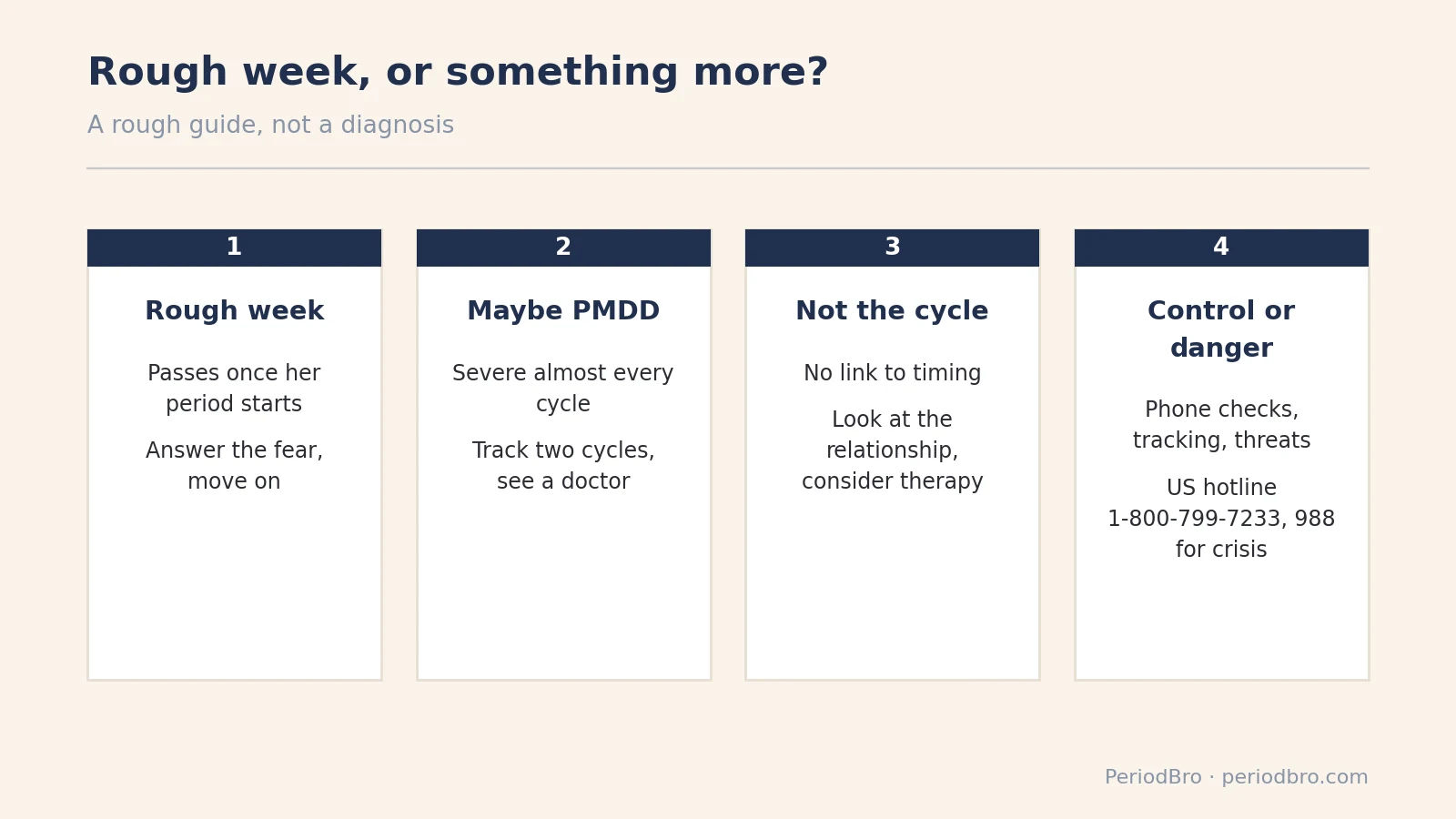
Ordinary premenstrual jealousy is uncomfortable and passes. A few patterns are worth taking more seriously:
- It’s severe every cycle. If the jealousy, despair or rage is intense, shows up almost every month, and lifts within a few days of her period, it could be PMDD. Cleveland Clinic estimates PMDD affects up to 10% of people who menstruate, and it’s treatable (Cleveland Clinic). Our guide on PMDD and relationships covers what that looks like for couples.
- It doesn’t follow the cycle at all. Then it probably isn’t about hormones. Anxiety, past betrayal, or something in the relationship may be the driver, and a therapist can help.
- It turns into control. Checking a phone without asking, tracking location, cutting someone off from friends, threats. No hormone explains that, from either partner. If you feel unsafe, the National Domestic Violence Hotline is at 1-800-799-7233 in the US.
- Any talk of self-harm. That’s urgent. Call or text 988 in the US.
What my friend changed
He didn’t bring up her cycle during a hard night. He waited until a calm weekend and said he’d noticed the coworker thing came up at certain times and wanted to know how it felt from her side. She said it wasn’t really about the coworker. It was that he often worked late without saying when he’d be home, and in the week before her period that silence felt like proof of something.
He started texting when he’d be late, every time, and a little more often in that week. The coworker stopped coming up. She still had rough days before her period, but they stopped turning into arguments about trust.
For the bigger picture on how knowing the cycle changes a relationship, read how cycle awareness changes a relationship. And if a heads-up before the harder days sounds useful, PeriodBro does that for partners. You can try it free here.
PeriodBro provides educational information and is not a substitute for professional medical or mental health advice. If you or your partner are in crisis, contact a healthcare provider or call or text 988 in the US.