How to Stop Taking It Personally When She Pulls Away
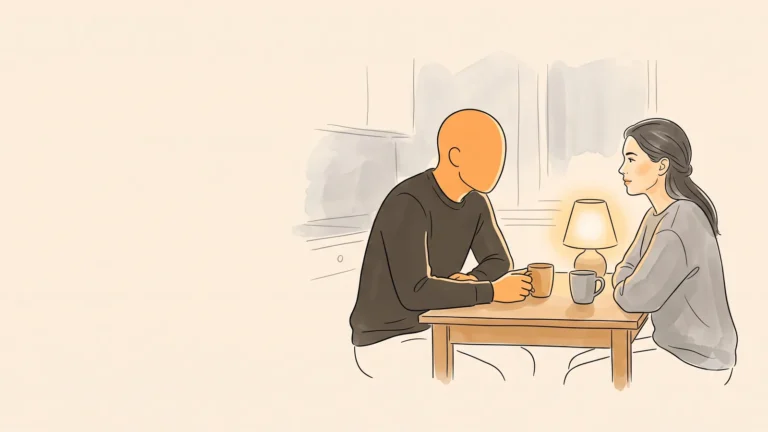
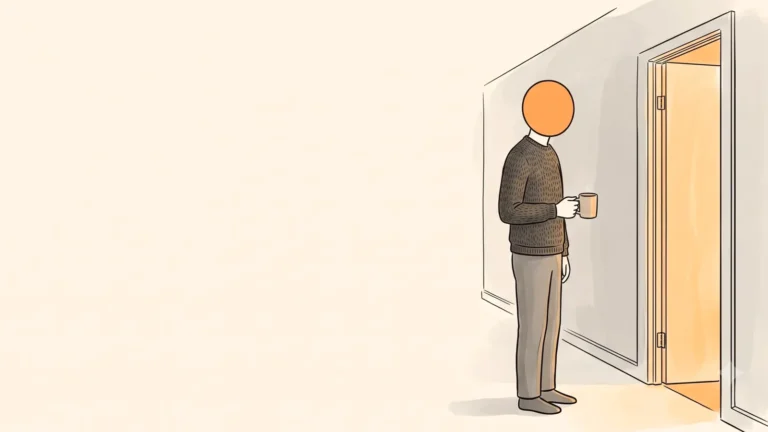
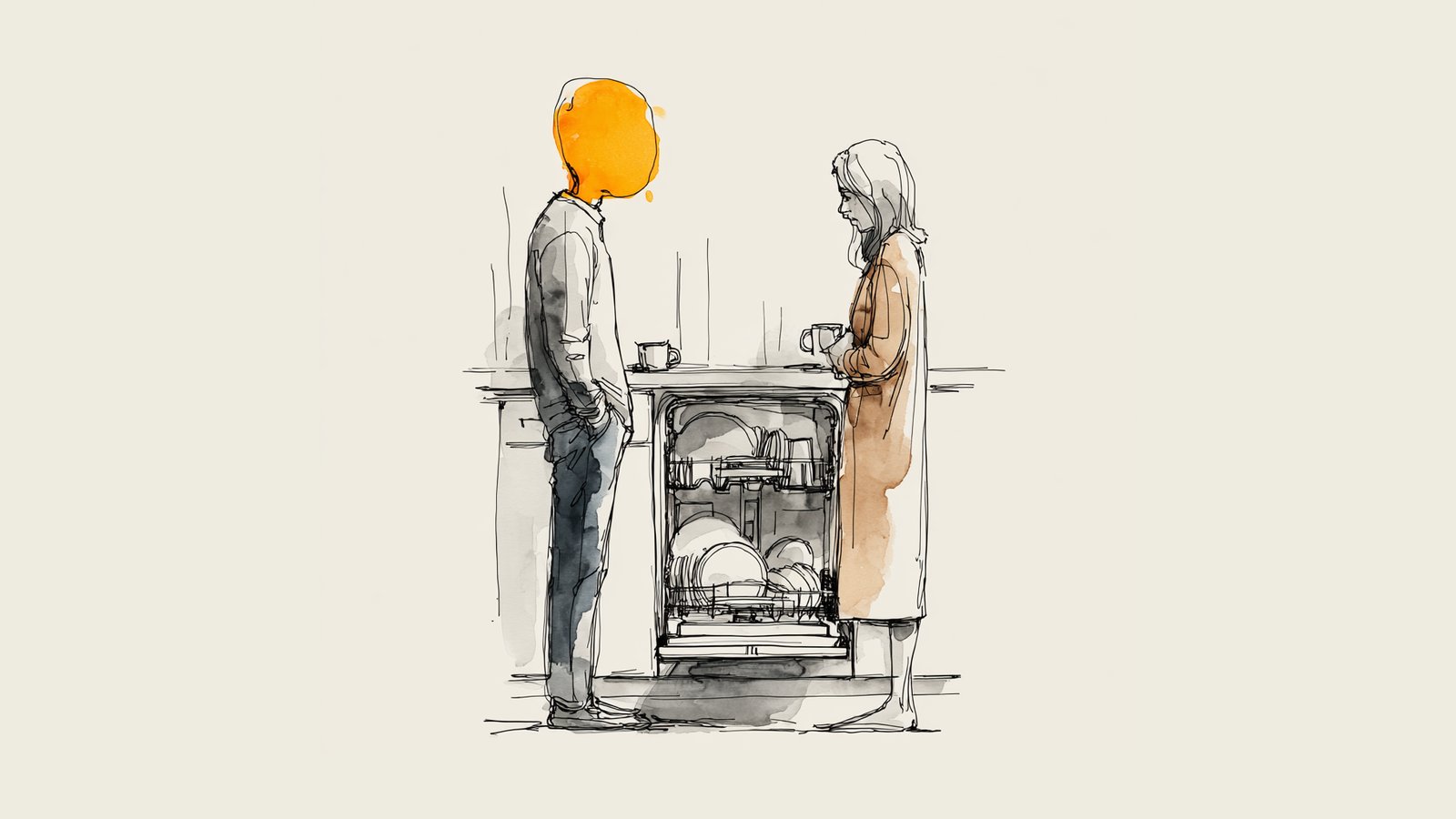
She answers in one word. The dinner you’d both been looking forward to gets quietly shelved. She’d rather be in the other room, door half-closed, and the easy back-and-forth you usually have has gone flat. Nothing got said. Nothing blew up. She just went somewhere you can’t follow, and your gut hands you a one-line verdict: I did something.
Most of the time, you didn’t.
I want to be careful here, because this is the exact spot where good partners get it wrong when she pulls away. Not because they don’t care – because they care a lot, and the caring curdles into a story about themselves. Her quiet becomes your guilt. Her distance becomes your interrogation. And the harder you press to fix the mood, the more she retreats, until the two of you are running a loop that has almost nothing to do with whatever actually started it.
This isn’t about giving her space. We’ve written about the mechanics of that already, and if you need the practical version – when to back off, how to do it without sulking – go read how to give her space without making things worse. This is about the harder, quieter thing: what’s going on in your own head while she’s pulled back, and how to keep it from making everything worse.
The story your brain writes when she goes quiet
Here’s the trap. Humans are meaning-making machines, and we’re especially fast to assume that someone else’s mood is a referendum on us. She’s withdrawn, therefore I caused it, therefore I have to find what I broke and fix it. It feels responsible. It’s actually a little self-centered, in the most ordinary human way – it puts you at the center of a weather system that often has nothing to do with you.
Because sometimes the withdrawal is hormonal, and predictable, and not personal at all. In the back half of the cycle – the luteal phase, the stretch after ovulation and before her period – progesterone climbs and then, in the last few days, both progesterone and estrogen fall off a cliff. That drop is what sets off the cluster of symptoms a lot of people lump under PMS. According to the Cleveland Clinic, mood shifts, irritability, and low energy tend to intensify exactly as those hormones decline in the late luteal phase.
And here’s the part almost no partner knows: “social withdrawal” isn’t me being poetic. It’s a clinical symptom. When doctors diagnose PMS, they work from a list of behavioral symptoms, and per the criteria summarized by the American Academy of Family Physicians, the official six include depression, angry outbursts, irritability, anxiety, confusion – and social withdrawal. Pulling away is on the chart. It’s a known feature of the terrain, not a signal flare aimed at you.
“It’s not personal” is not the same as “it doesn’t matter”
I need to thread a needle here, because this idea gets abused. “It’s just her hormones” is a phrase that has done real damage, used to wave away anything a woman feels. That’s not what I’m saying, and if you walk away with that, I’ve failed you.
Two things are true at once. Her withdrawal can have a biological driver, AND it can still be about something real – a hard week, a thing you actually did, a worry she hasn’t named yet. The hormones don’t invent feelings out of nothing. They turn the volume up on what’s already there and make solitude feel necessary. The American College of Obstetricians and Gynecologists notes that PMS symptoms are real, recur with the cycle, and for many people are significant enough to disrupt daily life. Clinical references put the share of women with PMS strong enough to interfere with daily functioning somewhere in the range of 13 to 18 percent, which means this is common, not rare or imagined.
So “don’t take it personally” doesn’t mean “ignore her.” It means: stop treating her quiet as a courtroom verdict on you, so that you’ve got the steadiness left over to actually show up. You can’t be useful to someone when half your energy is going to defending yourself against a charge nobody filed.
What taking it personally actually does
Let me show you the loop, because once you see it you can’t unsee it.
She pulls back. You read it as rejection. So you pursue – more questions, more “are we okay,” more attempts to talk it out right now. To her, in a state where she’s already running low and craving quiet, your pursuit doesn’t feel like love. It feels like pressure. So she withdraws harder. Which spikes your panic. Which makes you push more.
Therapists call this the pursue-withdraw pattern, and it’s not a small thing. The Gottman Institute, which has studied couples for decades, names this cycle as one of the most reliable predictors of long-term relationship distress. Not because the couple doesn’t love each other. Because the loop, run often enough, wears a groove.
Notice what’s driving your half of it: the belief that her mood is your fault and your job to fix immediately. Pull that belief out, and the pursuit loses its fuel. You’re not chasing anymore. You’re just present.

The reframe that actually works
The move isn’t to care less. It’s to change the question you’re asking yourself in the moment.
Stop asking “What did I do?” Start asking “What does she need, and can I give her room to have it?” The first question is about you. The second is about her. And the second one is answerable without a confession.
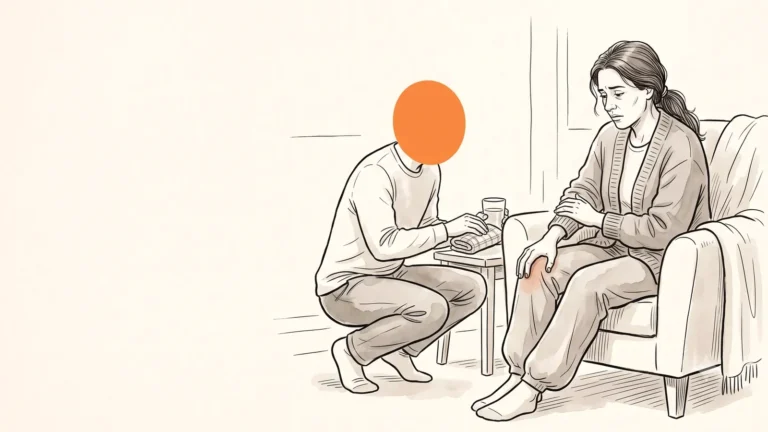
Here’s how I learned it, the slow way. Early on with my partner, I’d treat her quiet evenings like a problem I’d been assigned. I’d hover. I’d ask if she was mad, twice, three times, in a voice that I thought sounded caring and probably sounded needy. One night she finally said, not unkindly, “I’m not upset with you. I just have nothing left today and I need you to not need anything from me for a few hours.” That sentence rearranged something. Her pulling away wasn’t a door slammed in my face. It was her conserving fuel. The kindest thing I could do was let her, and stay reachable, instead of making her manage my anxiety on top of her own bad day.
That’s the whole skill, really. Letting her be low without making it a crisis about the relationship.
What to do when she pulls away (instead of chasing)
You’ll still feel the pull to take it personally. That feeling doesn’t vanish because you understood it. So you need somewhere to put it.
Self-soothe before you do anything else. The Gottman work and a useful Psychology Today piece on breaking the pursue-withdraw cycle both land on the same point: the power is in your response, not in forcing hers. When you feel the spike – the heat in your chest, the urge to demand reassurance – that’s your cue to regulate yourself, not to extract calm from her. Take a walk. Do the dishes. Text a friend. Sit with the discomfort for twenty minutes and watch it not kill you.
Then offer presence without a price tag. “I’m around if you want company, no pressure either way” is a complete sentence. It tells her you’re not going anywhere and you’re not going to make her perform okayness. That’s the opposite of the courtroom.
And separate the timing from the content. If there’s a real issue – something you genuinely need to talk about – the low-energy, late-luteal evening is the worst possible time to litigate it. Not because her feelings don’t count then, but because neither of you will be at your best. Knowing roughly where she is in her cycle helps you read the moment. If you track it together with her consent, the pattern stops being a mystery and starts being information. It’s also worth understanding what the luteal phase actually is so the mood underneath makes sense.
The one thing to take with you
Next time she goes quiet and your gut says I did something, try this: assume nothing, fix nothing, just stay. Say one warm, low-stakes line that gives her room – “I’m here, no rush” – and then actually give her the room. Don’t follow it up with three more check-ins. Let the silence be hers to break.
You’ll be amazed how often the distance closes on its own once you stop yanking on it. Her withdrawal was never the verdict you thought it was. It was weather. And the steadiest thing you can be, when the weather turns, is the person who doesn’t take the rain personally.
If you want help seeing the pattern before it catches you off guard, that’s exactly what PeriodBro is for – it turns the rhythm of her cycle into quiet, daily heads-ups, so you’re reading the moment instead of guessing at it.