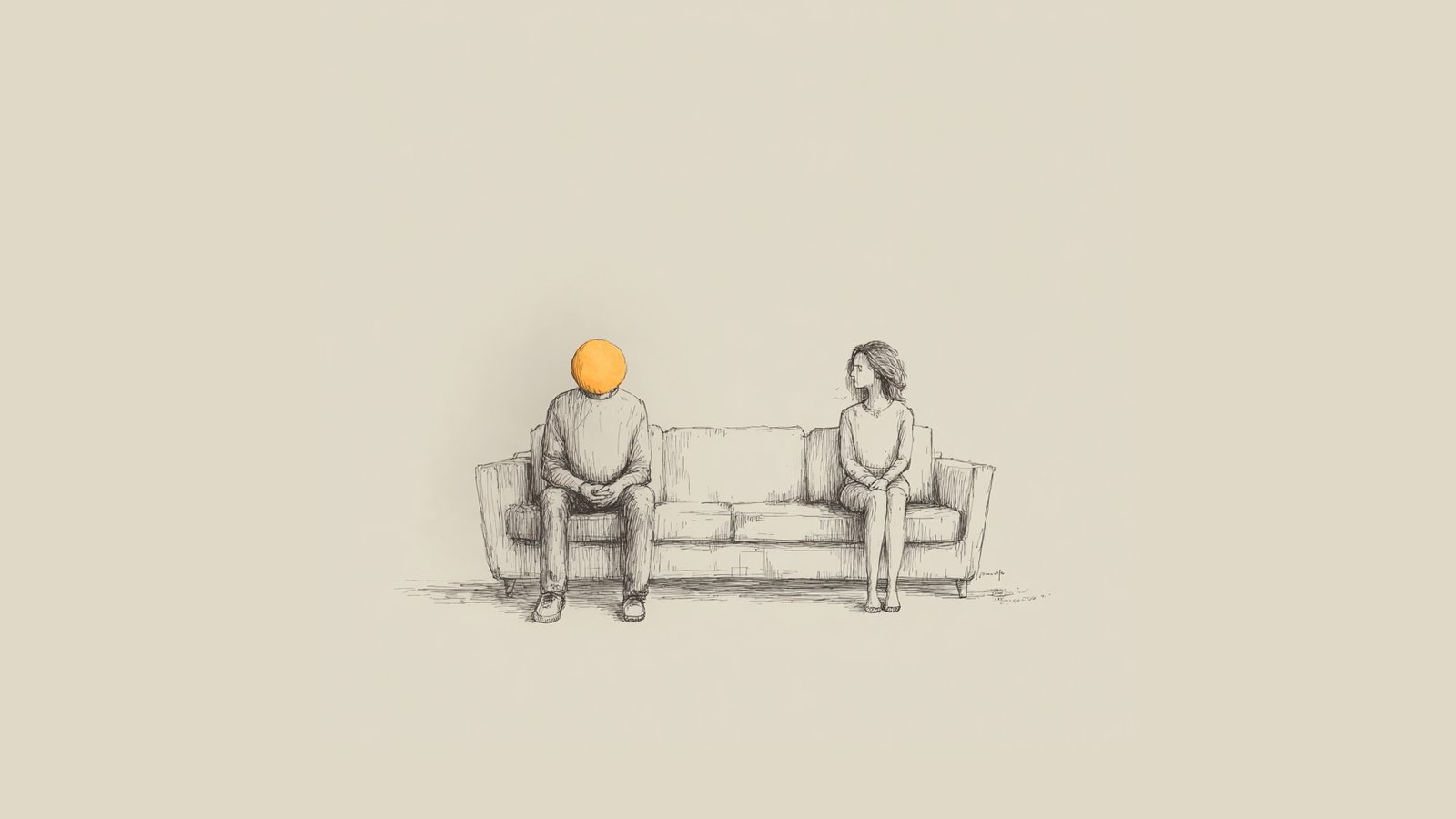
The Hidden Cause of Your Recurring Arguments: It’s Not About the Dishes
The hidden cause of your recurring arguments usually isn’t a million different problems — it’s three or four problems on a loop, clustered around a calendar pattern most couples never name. That’s the part nobody warns you about.
Tuesday night. You loaded the dishwasher wrong. She sighed. You said you’d do it later. She said “fine,” in the tone that means anything but. Within ten minutes, you weren’t talking about the dishwasher anymore. You were talking about the laundry from last week, the way you didn’t text back on Saturday, and somehow your mom got dragged into it too. You went to bed angry, and you both knew, even in the moment, that you’d had this fight before. Maybe three weeks ago. Maybe last month. Possibly every month.
That’s the part nobody warns you about. Most couples don’t have a million different problems. They have three or four, on a loop.
The Hidden Cause of Recurring Arguments: It’s Never About the Dishes
The Gottman Institute, which has been studying couples since the 1980s, found that about 69% of conflict in long-term relationships is “perpetual”. Perpetual means rooted in differences that won’t resolve, no matter how cleanly you load the bottom rack. The fight isn’t the disagreement on the surface. The fight is what the surface disagreement is standing in for: a need to feel chosen, an ask to be heard, a fear that the other person is drifting.
Once you see this, you can’t unsee it. The dishes aren’t the problem. The dishes are the fuse.
Three things usually sit underneath a recurring argument, and once you know what to look for, you start spotting them mid-fight.
The first is a need that hasn’t been named yet (often “I miss you” wearing the costume of “you never listen”). The second is a stress system that’s already running at 80% capacity from somewhere else, usually work or family or sleep. The third, in many partnerships, is a hormonal window where everything lands louder than it usually does. That last one isn’t an excuse for either of you. It’s a pattern. And patterns can be tracked.

The body knows before the mind does
Here’s where cycle science earns a seat at the table.
In the days before menstruation, called the luteal phase, progesterone is high and then falls. Estrogen is doing its own dance. What that translates to behaviorally is a body that’s more sensitive to emotional input than it is the rest of the month. A 2024 study tracking vagally mediated heart rate variability, a marker for how well the nervous system can self-soothe, found that this regulation capacity drops measurably in the luteal phase, primarily driven by rising progesterone. Translation: it’s harder to come down from a “fine” that didn’t actually mean fine.
A separate line of research found that during the mid-luteal phase, interpersonal anxiety and sensitivity to social feedback both go up. Tones get heard sharper. Sighs land heavier. The same eye-roll that wouldn’t register on day 10 of the cycle can ruin Tuesday on day 24.
This is not the same as PMDD. PMDD is a clinical mood disorder where roughly 3-8% of menstruating people experience severe affective symptoms, and it requires real medical support, not just a calmer partner. If you suspect PMDD – if the mood swings are extreme, last most cycles, and severely disrupt her life – the path is a clinician, not a calmer Wednesday. For the everyday “we always seem to fight in the third week” pattern most couples notice, though, the luteal window is real. The amygdala is part of the conversation. You can plan around it.
What “plan around it” looks like in practice is small. It’s not putting on kid gloves and treating her like she’s fragile, which she isn’t. It’s noticing that you’re heading into a week where her nervous system is going to be working harder than it usually does, and choosing your harder conversations for a different week. Save the difficult money chat for day 8, not day 24. Don’t pick the moment her boss has been brutal and her body is two days from bleeding to bring up your unresolved thing about her sister. None of this is rocket science. Most of it is just being a person who watches.
Two stress responses, one couch
The next layer underneath your recurring fight is rarely about hormones at all. It’s about the shape of how each of you handles pressure when you feel disconnected.
Researchers call this attachment style, but the jargon hides a simple idea: when one person feels like the closest person to them is pulling away, roughly half of people lean toward the conflict (asking for reassurance, pushing for the conversation, sometimes loudly) and half lean away (going quiet, working late, putting the AirPods in). The pursuit-withdraw pattern, one person pursuing connection while the other withdraws to manage their own overwhelm, shows up in nearly every long couple eventually. And it predicts relationship dissatisfaction independently of whether the original issue was solvable.
What’s painful is that both responses come from the same place. Both people are trying not to lose the relationship. They just do opposite things to protect it. The pursuer reads withdrawal as abandonment. The withdrawer reads pursuit as attack. Both are wrong. Both keep escalating.
The kicker, from a study on attachment and marital conflict, is that the avoidant partner’s withdrawal isn’t a lack of feeling. The body shows elevated stress markers during the silence. The withdrawer isn’t bored. They’re flooded. Knowing that one fact has saved more Tuesdays in my own house than I can count.
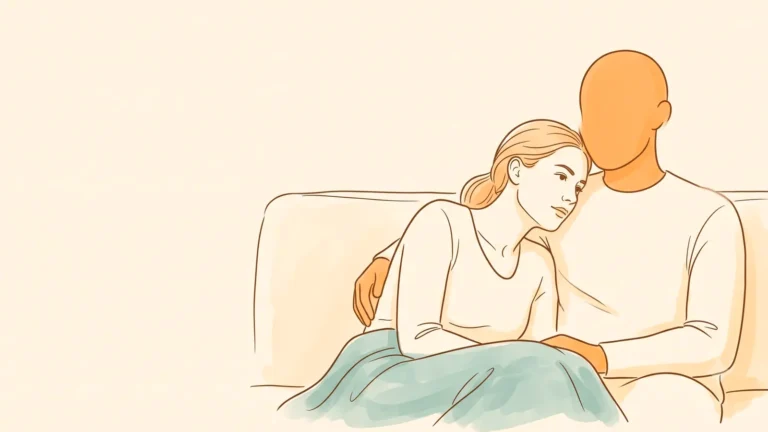
If you tend to be the one who goes quiet, the work is staying. Not winning, not engaging the fight on its surface terms. Just not leaving the room, literally or emotionally, while the storm passes. A hand on the small of the back. A “I’m here, I’m not going anywhere, I just need a minute to think.” Anything that signals presence beats the silence that reads as exit.
If you tend to be the one who chases, the work is softening the start. Loud doesn’t get you closer. Loud gets you both farther from the actual thing. The hardest part is that the chase often comes from a real, valid feeling of distance, and slowing the chase down can feel, in the moment, like giving up on being heard. It isn’t. It’s giving the conversation a better runway.

The question that breaks the loop
Gottman’s team studied thousands of couples and identified something called a repair attempt: a small move during conflict that signals “I’m still in this with you, even though we’re fighting.” A joke that lands. A “wait, can I try that again?” A hand on the shoulder. In stable, satisfied relationships, repair attempts succeed about 80% of the time. In relationships heading toward divorce, they fail consistently. Not because the repair attempts themselves are clumsier. Because the emotional climate underneath them is colder.
The single most useful question I’ve learned to ask, mid-fight, is not “why are you so upset?” It’s:
“What’s the thing underneath this?”
Said softly. Said with both feet on the floor. Said with the dishwasher closed and the phone face down. It works because it admits, on the record, that you both know the dishes aren’t the dishes. It moves the conversation out of prosecutor mode and into teammate mode.
It doesn’t always land. Some nights nobody is ready for that question, and you have to wait until morning. That’s fine. Repair is a practice, not a switch.
What you can actually do this week
Four moves, roughly in order of difficulty.
Notice the window. If you’re tracking her cycle with her permission and full transparency, the days before menstruation aren’t a danger zone. They’re a “be 10% more careful with starts and tones” zone. Same partner. More volume on her input. Adjust accordingly. If you’re not tracking yet, just paying attention to when the recurring fight tends to land in the month is a start. Patterns are easier to spot once you stop pretending they’re random.
Name the pattern, not the partner. When the same fight starts again, you don’t have to win it. You can step out of it. “I think we’re having the dishes fight again, and last time it wasn’t really about dishes” is a complete sentence. It feels weird the first time. It works.
Soften the start. Gottman’s longest-running finding is that the first three minutes of an argument predict the next three hours. If you start with a complaint about her rather than a description of what hurt, the conversation is already lost. “You always…” vs. “I felt small when…” is the whole game. This is true regardless of who you are or what kind of week you’ve had. The opening move is the move that matters most. For more on this, the calmer playbook for the hard week breaks it down further.
Ask one question, then shut up. “What’s the thing underneath this?” Then listen. Don’t pre-load the rebuttal. You’re not in court. You’re in a relationship, and the work isn’t fixing her, it’s showing up so the loop has somewhere safer to land.
You won’t eliminate the recurring fight. Most couples never do, and trying to is part of how it stays loud. But you can change how it ends. You can make the third time you have it different from the first. That’s what long relationships actually are: the same handful of problems, met by two people who keep getting a little better at meeting them.
It took me longer than it should have to figure out that the goal isn’t to never fight about the dishes again. The goal is to recognize the dishes for what they are, a flare in the dark, and to walk toward the actual thing.