How Partner Support Affects Period Experience: What the Research Actually Says
If you’ve ever wondered how partner support affects period experience — pain, mood, recovery, the whole stretch of days where she’s “off” — the short answer is: more than almost anyone teaches you. Most men were never told. The research has been quietly clear for a decade, but it never made it into the conversations dads, friends or schools have with men.
Here’s a number that should bother you: one survey of 500 men in central India (Rana et al., 2022) found that 82.4% of them didn’t have what researchers classify as “good” knowledge about menstruation. It’s one country, one sample — but every cross-cultural study finds the same general shape. The gap is real.
But here’s the part that should bother you more: even among men who do know the facts, it barely changes how they behave. The correlation between menstrual knowledge and positive beliefs about menstruation? r = 0.04. Essentially zero. Knowing that the luteal phase lasts 14 days doesn’t automatically make a man more empathetic during it.
So if knowledge alone isn’t enough, what actually changes how a partner responds — and how partner support affects period experience day-to-day? That’s what this article is about, and why we built PeriodBro’s Support Hints the way we did.
How Partner Support Affects Period Experience: The Research at a Glance
Three findings keep showing up across the studies: dismissive responses make pain feel worse and stretch recovery; engaged responses reduce stigma and protect intimacy; and timely, specific nudges change behavior far more than general “you should know this” education. Everything below unpacks those three. Skim if you want — but read the dismissal-vs-engagement section. That’s where most of the damage gets done.
The Knowledge Gap Is Worse Than You Think
The Rana et al. study broke male knowledge into three tiers. Of the 500 men surveyed, 41.4% scored “poor,” 41% scored “intermediate,” and only 17.6% scored “good.” Meanwhile, 81.2% held negative beliefs about menstruation — associating it primarily with irritability, uncleanliness, or something to be endured in silence.
One survey in one country isn’t the whole picture. But the consistent shape across studies is that most men were never taught, and most have absorbed some level of stigma without realizing it.
Where do men get their information? Researchers identified four main channels, and none of them are great:
Sex-affective partners — the dominant source. Men typically learn about menstruation only when it becomes a logistical barrier or an obstacle to sex. Accidental observation — seeing pads in the bathroom, without clinical or emotional context. Peer-level stigmatization — locker room talk that frames periods as gross or as an excuse for “crazy” behavior. Sanitized media — ads that emphasize secrecy and discretion, treating menstruation as something to hide.
None of these channels teach a man how to actually support someone. They teach him how to avoid the topic.
The Two Modes: Dismissal vs. Engagement
Qualitative research (García-Egea, 2025) identified a stark contrast in how partners respond during the premenstrual and menstrual phases. The researchers framed it as two opposing stances, and the difference between them predicts relationship satisfaction more than almost any other single factor.
The dismissive mode sounds like: “Calm down, it is what it is.” It attributes all legitimate frustration to the cycle phase. It treats menstruation as a temporary malfunction — something to wait out until she’s “back to herself.” It leads to emotional withdrawal, because why engage with someone who’s “just hormonal”?
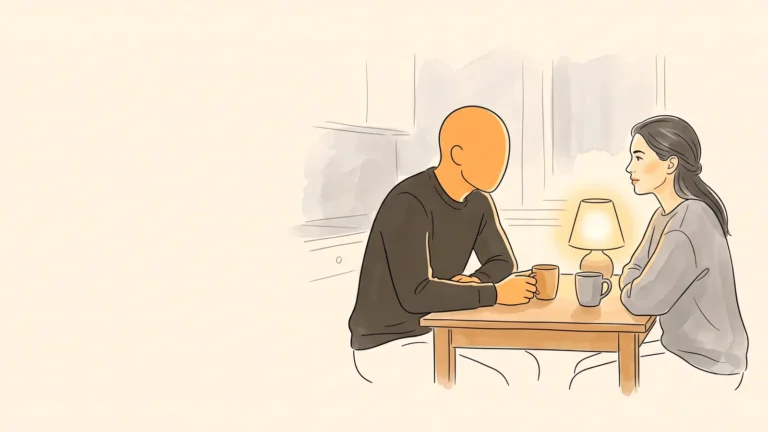
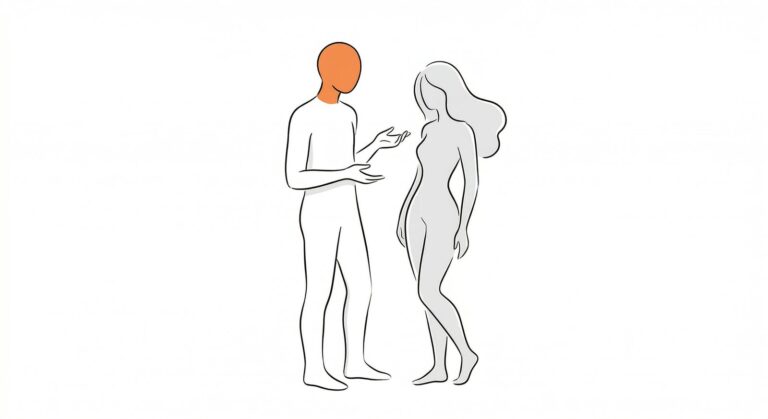
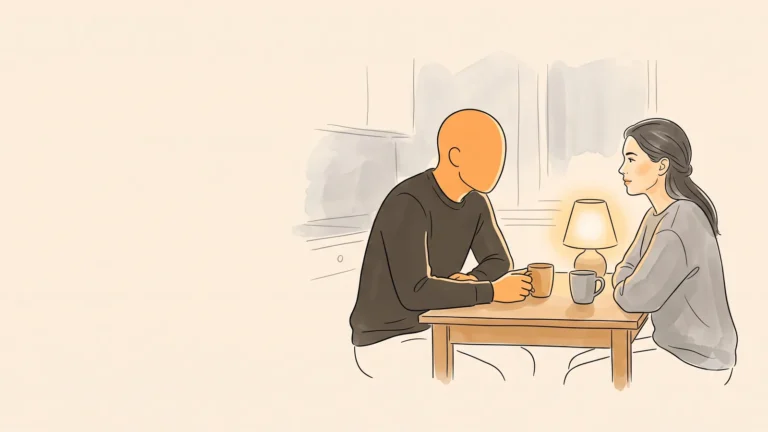
The engaged mode sounds like: “I don’t know exactly how this feels, but I want to learn how to help.” It validates emotions as legitimate responses to real stressors — regardless of the calendar date. It explicitly admits ignorance while staying present. It asks: “Tell me what you need.”
The researchers called this second stance “ignorant but eager,” and they found it was the single most effective posture a partner could adopt. Not expertise. Not medical knowledge. Just honest willingness to show up without pretending to have answers.
This is a crucial insight. It means you don’t need to become a gynecologist. You don’t need to memorize hormone charts. You need to stop dismissing and start asking.
Why Knowledge Doesn’t Equal Change
Remember that r = 0.04 correlation? Here’s what it means in practical terms: you can teach a man every fact about the menstrual cycle, and his deeply held beliefs — that periods make women irrational, that PMS is exaggerated, that the whole topic is “her problem” — will barely budge.
Researchers explain this through the concept of the “negative imaginary.” Men grow up absorbing cultural archetypes: the “hormonal” woman, the “menstrual monster,” the idea that menstruation is a temporary departure from a woman’s “normal” state. These archetypes are so deeply embedded that factual knowledge bounces off them. A man can know that progesterone peaks during the luteal phase and still roll his eyes when his partner gets upset on day 22.
What does shift behavior? Three things, according to the research:
Structured prompts at the right moment. Not a lecture during a calm Sunday morning. A specific suggestion — “she might appreciate a quieter evening tonight” — delivered when it’s actually relevant. This is what Support Hints in PeriodBro are designed to do: translate cycle data into timely, actionable nudges. This is how partner support affects period experience in practice — one well-timed nudge at a time.
Reframing menstruation as shared reality. As long as a man sees her cycle as “her problem,” he’ll disengage. When he sees it as something that affects their shared life — their plans, their intimacy, their communication rhythm — he has a reason to pay attention.
Replacing euphemisms with direct language. Research on stigma suggests that couples who use clinical, non-euphemistic language about menstruation (“you’re in your luteal phase” instead of “that time of the month”) report less stigma and more open communication. Language shapes perception. See also ACOG’s overview of dysmenorrhea for a baseline picture of what she may be physically managing.

The Practical Layer: What “Support” Actually Looks Like
Research on Menstrual Health and Hygiene (MHH) adds a practical dimension that most men never consider. Support isn’t just emotional — it’s logistical. Studies highlight three areas where partner involvement directly reduces stress:
Privacy. Ensuring she has secure, comfortable space for managing her cycle at home — without having to sneak around or feel self-conscious about products in shared spaces.
Cognitive load. Taking active responsibility for household logistics during high-discomfort phases. Not because she can’t — but because reducing the mental load during physical stress is measurably helpful.
Normalizing the conversation. When a man can casually mention her cycle in the same tone he’d discuss sleep or exercise — without awkwardness, without euphemisms — it signals that menstruation is a normal part of their shared life, not a shameful secret.
Why We Built Support Hints This Way
The research pointed us to a clear design principle: don’t educate — prompt.
Support Hints in PeriodBro don’t give you a lecture about progesterone. They give you a specific, actionable suggestion based on where she is in her cycle today. “She might be more tired than usual — consider handling dinner.” “Energy is rising — great time to plan something together.” “She may want space tonight — don’t take it personally.”
This approach maps directly to what the research says works: structured prompts, delivered at the right moment, framed as shared reality rather than “her problem.” It bypasses the knowledge-belief gap entirely. You don’t need to change your beliefs about menstruation to follow a simple hint. And over time, following those hints does change your beliefs — through experience, not lectures.
The r = 0.04 told us that information alone fails. So we didn’t build an encyclopedia. We built a daily nudge system grounded in the same behavioral science that makes habit-building apps work.
The Takeaway
Most men aren’t unsupportive because they’re bad partners. They’re unsupportive because nobody ever gave them the tools. The research is clear about how partner support affects period experience: knowledge matters less than behavior, and behavior responds to timely, specific prompts more than to general education.
Your response during her cycle isn’t a minor detail in your relationship — it’s a signal of whether you see her full reality or just the parts that are convenient. The difference between “calm down” and “tell me what you need” is the difference between a partner who dismisses and one who shows up.
That’s what Support Hints are for. Not to make you an expert. To make you present.
Sources: Rana et al. (2022), male menstrual health knowledge study, n=500, central India. García-Egea (2025), qualitative study on male perspectives and menstrual attitudes. Hennegan et al. (2021), WHO MHH definitional framework. ACOG patient FAQ on dysmenorrhea.