Period Bloating: Why She Feels Swollen Before Her Period (and How to Help)
A few years ago, on a slow Sunday morning, my partner came out of the bedroom after trying on half her closet and said nothing fit right. And I, being a man who thought he was being kind, told her she looked fine to me. She did not want fine. She wanted to not feel like her body had been quietly swapped out overnight. I had missed the whole thing. It was the back half of her cycle, she was bloated, and the last person who needed an opinion about her body in that moment was me.
That is the trap with period bloating. It is one of the most common things a woman deals with every single month, and it is one of the easiest things for a partner to handle badly. You can see that she is uncomfortable, you want to help, and the help you reach for first is usually the wrong one. So let’s actually understand what is going on under the surface, why it shows up when it does, and what you can do that lands as comfort instead of commentary.
What period bloating actually is
Period bloating is that swollen, puffy, full-in-the-belly feeling a lot of women get in the days before and at the start of their period. Two separate things are usually happening at once. The first is water retention: the body holds onto extra fluid, and cells across her midsection, hands, and legs swell slightly. The second is a slowed-down gut, which traps gas and leaves her feeling distended and constipated. Cleveland Clinic lists bloating among the most reported premenstrual symptoms, right alongside cramps and mood changes.
Here is the part worth sitting with: this is not her eating wrong, not a lack of willpower, and not something she is doing to herself. It is hormonal plumbing. Mayo Clinic ties premenstrual water retention directly to the hormone shifts of the cycle. The bloat is real, it is physical, and the scale genuinely can tick up a pound or two from water alone. None of that means anything is wrong with her body. It means her body is doing exactly what bodies on a cycle do.
Why it lands right before her period
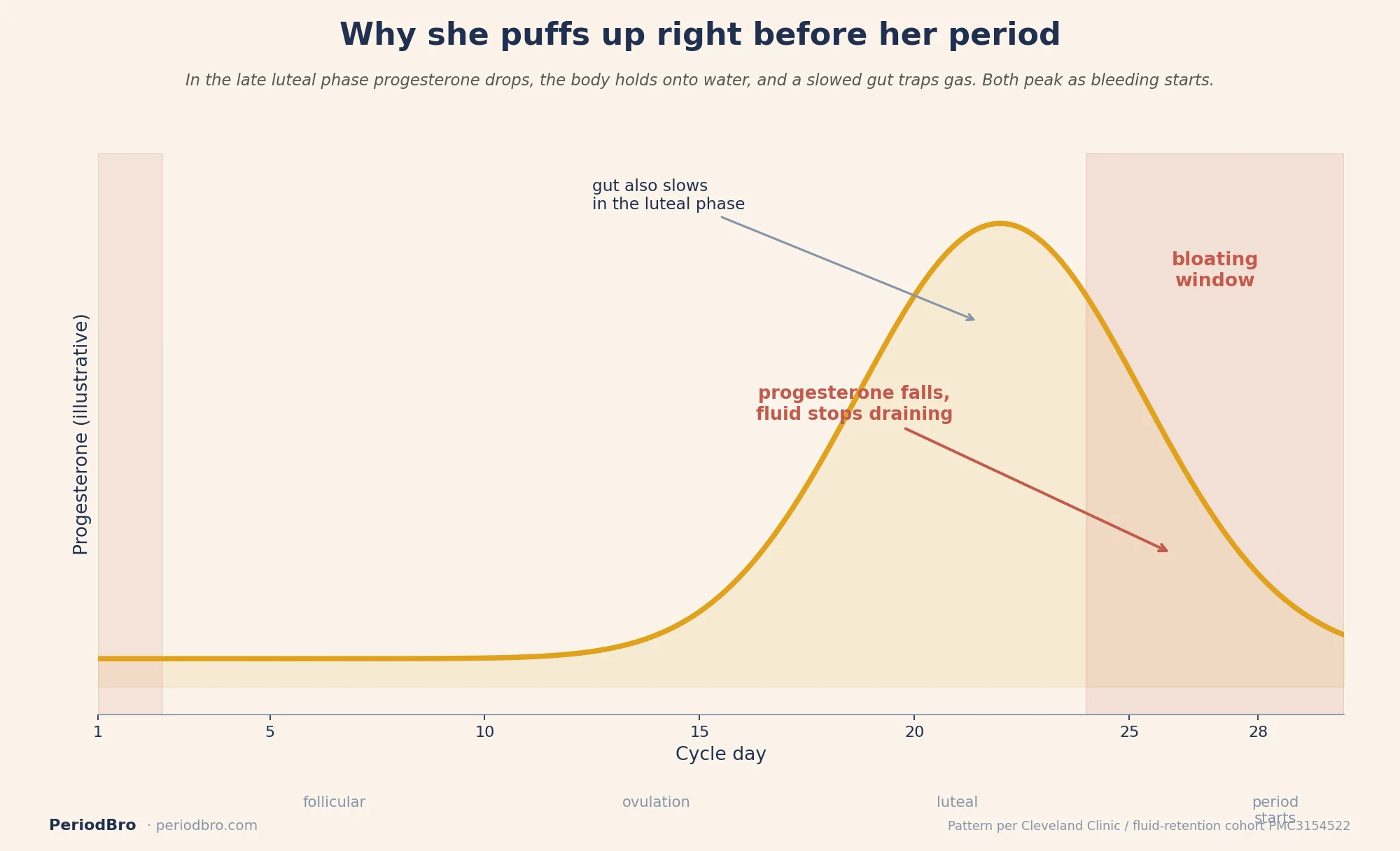
The timing is not random. In the second half of her cycle, the luteal phase, progesterone climbs and then falls off sharply in the last few days before bleeding starts. Progesterone is part of what helps the body shed excess salt and fluid, so when it drops, fluid stays put and the bloat sets in. A year-long prospective cohort study tracking fluid retention across the menstrual cycle found that the feeling of swelling actually peaks right around the first day of the period, not in the middle of the month.
If you want the bigger picture of what the luteal phase is doing to her whole system, I wrote a full breakdown in the luteal phase explained for men. The short version: this is the same stretch where energy dips, mood can get heavier, and now, on top of all that, she feels physically swollen. It is a lot to carry at once, and it is happening on a schedule you can actually learn.
Two kinds of bloat, and what each one needs
It helps to know that period bloating is rarely just one thing. Pulling the two apart tells you what might actually bring relief. On one side is water retention, driven by that progesterone drop. It shows up as tight rings, a puffy face, heavy legs, and a belly that feels full. On the other side is the gut slowdown. In the luteal phase, the same hormones slow how fast food moves through the intestines, which means more gas, more fullness, and constipation. A study of gut symptoms across the menstrual cycle documented exactly this slowed transit time in the luteal phase.
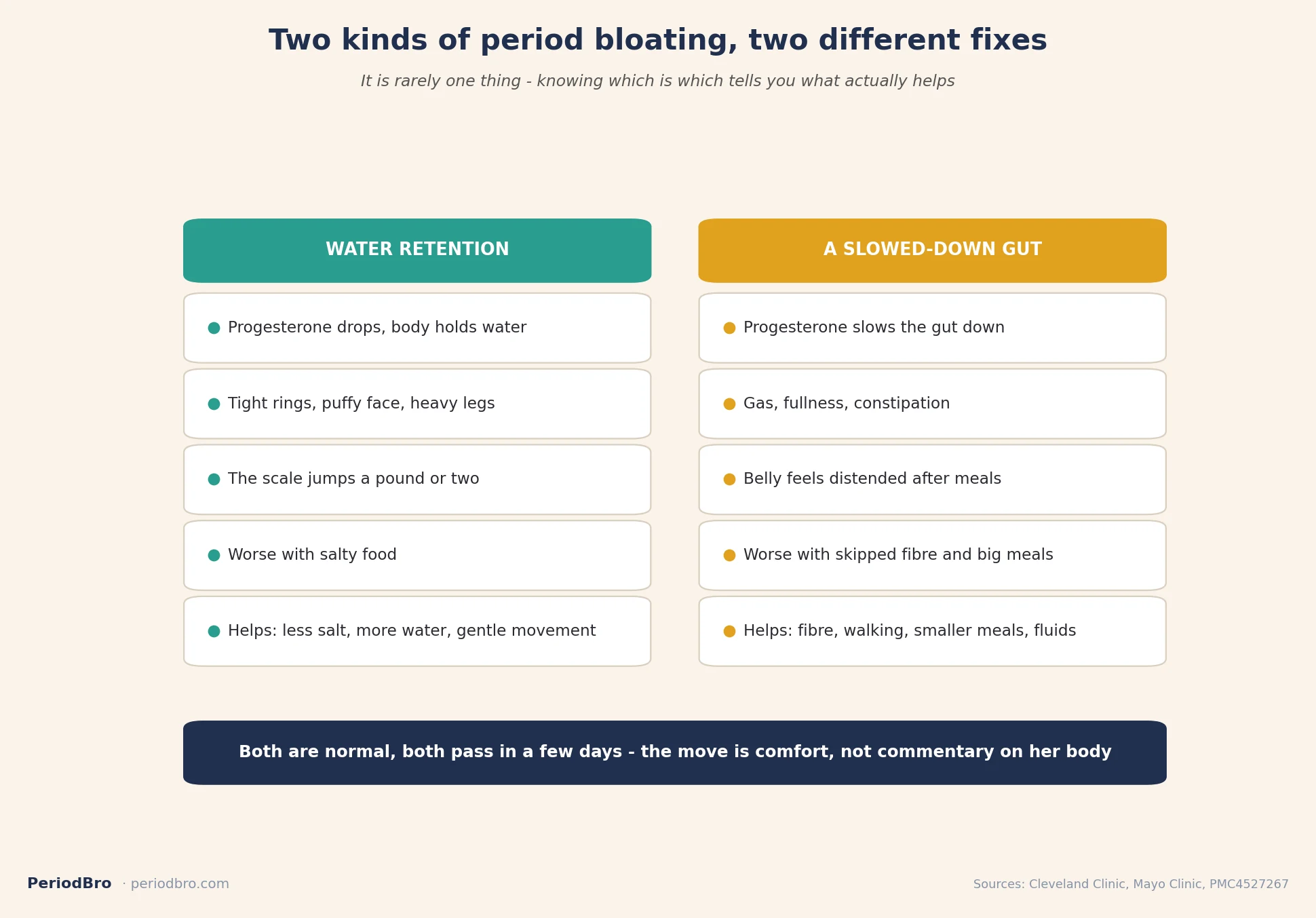
This is also where period bloating gets confused with something else. If she feels generally sick, achy, and rundown before her period, that is closer to what people call period flu, and I covered that separately in what period flu is and how to help. Bloating can travel with it, but the swollen, full-belly feeling is its own thing with its own simple levers.
What actually helps (and what to never say)
Start with the rule that would have saved me that Sunday morning: do not comment on her body. Not to reassure her, not to joke, not to point out that you can barely tell. When a woman feels bloated, any sentence about how her body looks, even a kind one, lands as a verdict she did not ask for. The goal is to make her more comfortable, not to grade the bloat.
Now the practical stuff, most of which you can quietly set up without making it a whole conversation. A few things genuinely take the edge off:
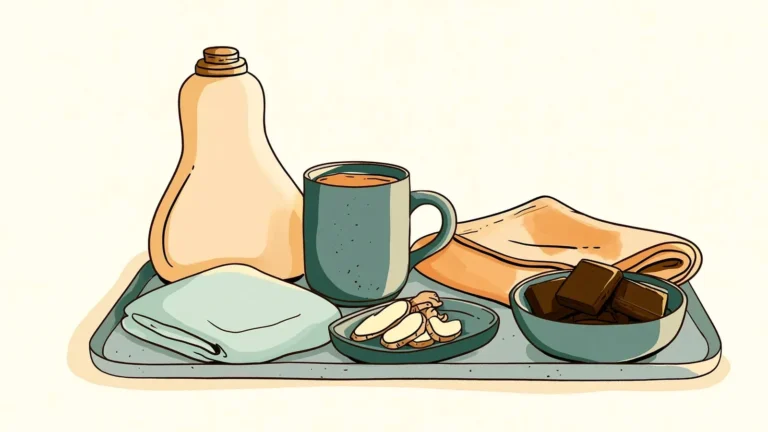
- Go easy on the salt. Salty food makes water retention worse, so this is a good week to cook something fresh instead of ordering the saltiest thing on the menu. If you are the one planning meals, you just made the call for both of you.
- Keep water around. It sounds backwards, but staying hydrated helps the body let go of retained fluid rather than clinging to it. A full glass by her side beats a lecture about drinking more.
- Make movement easy, not mandatory. A slow walk after dinner helps both the water and the gut. Offer to go with her. Do not turn it into a fitness plan.
- Mind the food that helps the gut. Fibre, smaller meals, and something warm can ease the constipation side. My guide to what to keep at home before her period covers the grocery side of this in detail.
- Lower the friction. Soft clothes within reach, the heating pad already out, the plans that can flex instead of plans that cannot. Comfort is mostly logistics.
A couple of small extras are worth knowing. Some women find magnesium helps with the bloat and the cramps that often travel with it, so it is not a strange thing for her to reach for. And gentle heat, a pad or a hot water bottle on the belly, can ease the gut-side discomfort even though it does nothing for water retention. You do not need to become a supplement expert overnight. You just need to know these are normal, reasonable things and not overreact when she uses them.
Notice that none of this is heroic. You are not fixing her body, because her body does not need fixing. You are removing small annoyances so the few uncomfortable days are a little easier. That is the whole job, and it is a job you can do well.

When bloating is worth a doctor’s look
Almost all period bloating is normal, cyclical, and gone within a few days. The pattern is the tell: it comes, it goes, it tracks with her cycle. The version worth paying attention to is the version that stops behaving like a cycle. Cleveland Clinic notes that bloating which is constant, rather than coming and going, is the kind to get checked.
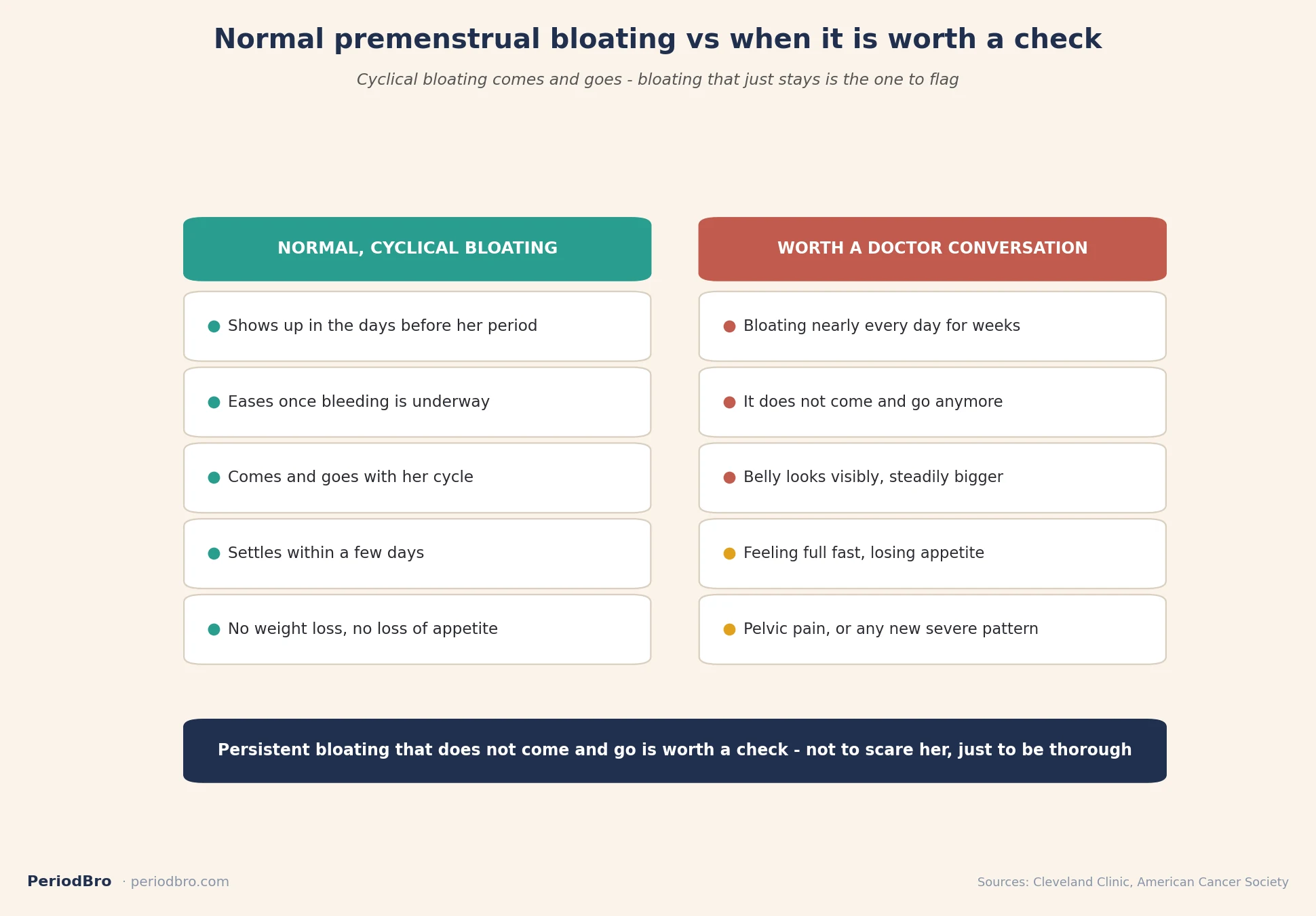
The reason clinicians take persistent bloating seriously is that, in rare cases, it can be one of the quieter early signs of something like ovarian cancer. The American Cancer Society flags bloating that is new, frequent, and persistent, especially when it comes with feeling full quickly, loss of appetite, or pelvic pain. I am not saying this to scare anyone, and the odds are overwhelmingly that her monthly bloat is just her monthly bloat. The point is simply this: if the bloating stops coming and going and just stays, for weeks, that is a reason to see a doctor and be thorough. You do not have to diagnose anything. You just have to notice the pattern and gently encourage the appointment.
The one thing to do this month
Learn the timing. Once you roughly know which week of her cycle she is in, the bloated, swollen, “nothing fits” days stop being a surprise you fumble and start being a window you can prepare for. That is most of what understanding her cycle gives you: not control, just a heads-up. If you want to see how the same hormone shifts move her mood and energy on the same schedule, I mapped that out in how hormones drive her mood all month.
You do not have to say a word about the bloat. You can just be the person who already has the soft clothes out, the salty takeout swapped for something fresh, and zero opinions about her body. That is what showing up looks like on the puffy, uncomfortable days. Quiet, prepared, and on her side.
This article is for general education and is not medical advice. Premenstrual bloating is usually normal, but persistent bloating that does not come and go, severe or new pelvic pain, or bloating with appetite loss or unexplained weight changes should be discussed with a qualified healthcare provider.