Period Constipation: Why She Gets Backed Up Before Her Period (and How to Help)
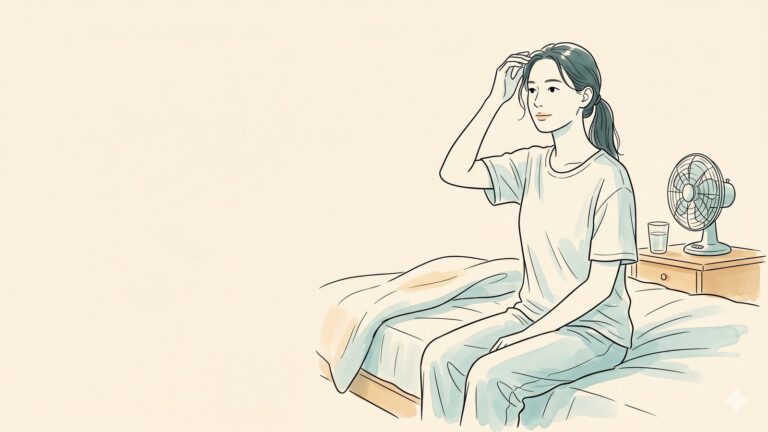
A few days before her period, she mentioned she felt heavy and a little stuck. Not sick, not in pain exactly, just uncomfortable in a way that made her quieter than usual and less up for going out. If you’ve heard some version of that and weren’t sure what to do with it, period constipation is probably the thing she was describing, and it’s a real, predictable part of the cycle.
It’s also one of those things nobody explains to the person standing next to her. You notice she’s off, you want to help, and you’ve got no idea whether this is normal or something to worry about. So let’s walk through what’s actually happening, why it tends to show up right before her period and then flip once it starts, and the handful of small things that genuinely make her more comfortable.
Why period constipation happens
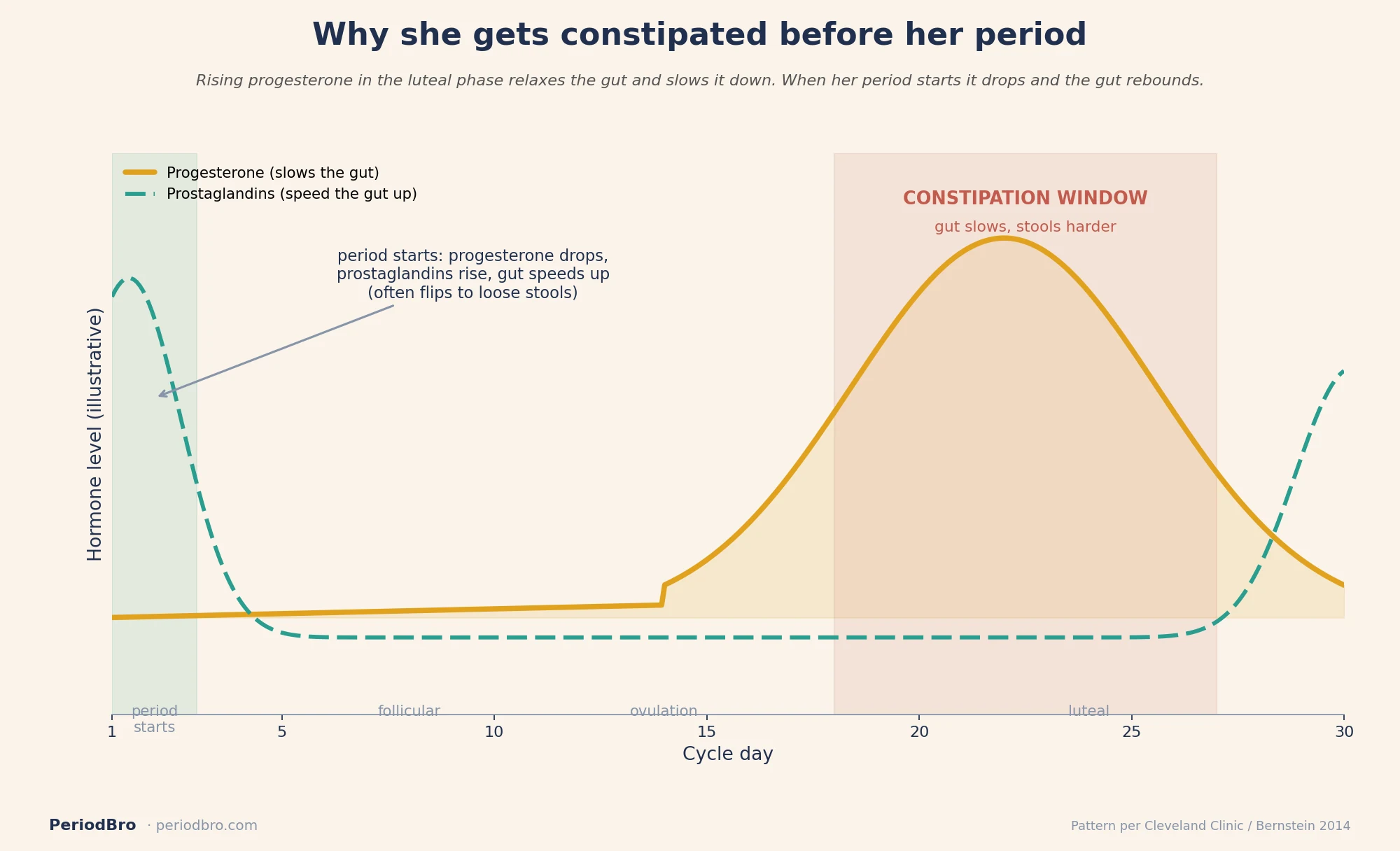
Here’s the short version: it’s mostly one hormone doing its job a little too well. After ovulation, in the roughly two weeks before her period (the luteal phase), her body produces more progesterone. Progesterone relaxes smooth muscle all over the body, and your gut is lined with smooth muscle. When those muscles relax, the wave-like contractions that move things through your intestines (called peristalsis) slow down. Food and waste sit longer, more water gets pulled back out, and the result is harder, slower, less frequent stools. That’s constipation, and the hormone driving it is the same one that’s been climbing all luteal phase (Cleveland Clinic).
This is the same progesterone that’s behind a lot of the premenstrual stuff you might already know about. It’s part of why she feels sluggish and puffy in the days before her period, and it overlaps with why she gets so bloated before her period. The slowed-down gut and the bloating are two symptoms with one root cause, which is why they so often show up together.
If you want the bigger map of where this sits in her month, the luteal phase explained for partners covers the whole stretch where progesterone runs the show. Constipation is just one of the things that phase brings.

The timing: why it shows up before, then flips
This is the part that confuses people, so it’s worth getting clear. Pre-period constipation usually starts a few days to a couple of weeks before her period, right in step with rising progesterone. Then something interesting happens the moment her period actually begins.
When bleeding starts, progesterone drops off a cliff. At the same time, her body releases prostaglandins, chemicals that make the uterus contract to shed its lining. Prostaglandins don’t stay politely in the uterus, though. They also speed up the nearby intestines. So the gut that was running slow all week suddenly gets the gas pedal pushed, and constipation can swing the other way into looser, more frequent stools (UW Medicine).
That’s the whole pattern in one sentence: constipated before, often loose during. If you’ve already read about period diarrhea, this is the other half of the same story. Same cycle, opposite hormones, opposite effect on her gut. Knowing the pattern means you’re not blindsided when she goes from “I feel so backed up” to the complete reverse forty-eight hours later. Her body isn’t malfunctioning. It’s just following the hormone schedule.
How common is this, really
It’s easy to assume she’s the only one this happens to, or worse, that she’s making more of it than she should. She isn’t. In a study of healthy women published in BMC Women’s Health, about 73 percent reported at least one gut symptom in the days before their period, with another two-thirds reporting one during their period (Bernstein et al., 2014). Constipation, bloating, abdominal pain, and diarrhea were all on the list. Nearly three out of four. This is closer to the norm than the exception.
So if there’s one thing to internalize before you do anything practical, it’s this: believe her the first time. When she says her stomach feels off in the run-up to her period, she’s describing a documented, hormone-driven thing that most people with cycles deal with. You don’t need to diagnose it or fix it. You just need to not make her explain or justify it.

What actually helps
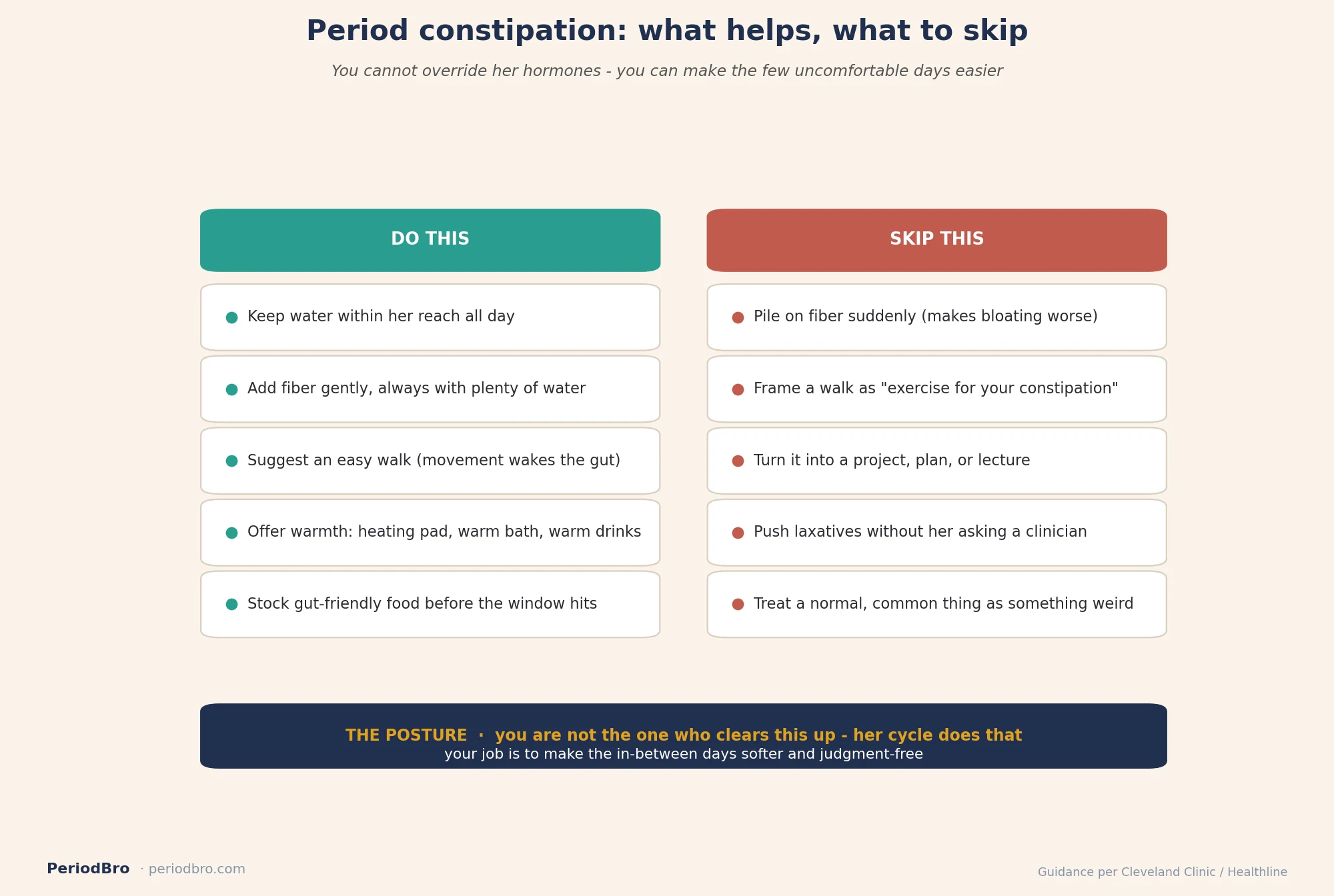
You can’t override her hormones, and you shouldn’t try to. But the standard, boring, genuinely effective stuff for constipation works here too, and you can quietly make most of it easier for her without turning it into a project.
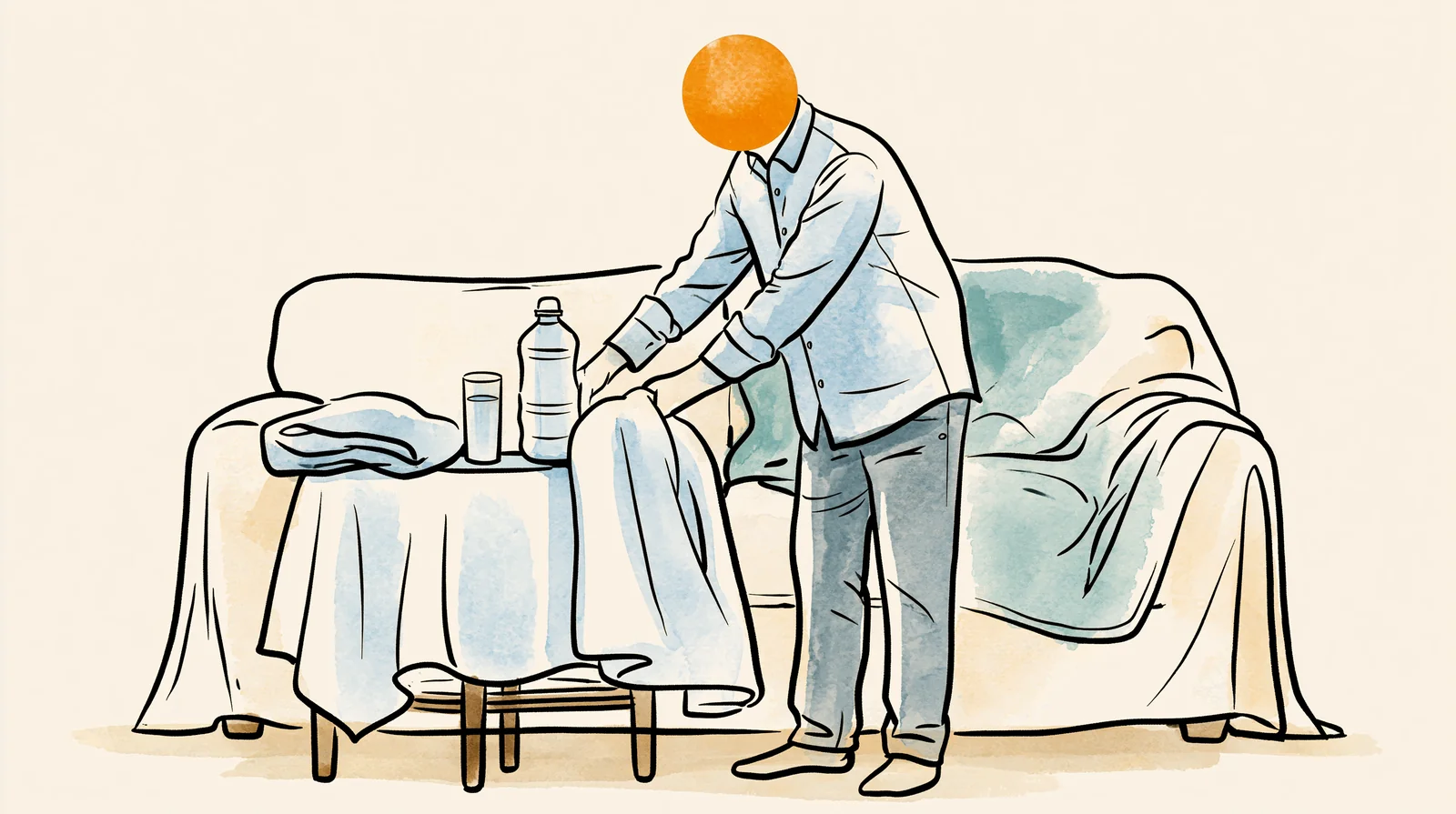
Water is the first and biggest lever. A slowed gut pulls more water out of waste, so staying well hydrated keeps things softer and easier to pass (Healthline). Keep a full glass or water bottle within her reach without saying anything about why. Warm drinks in particular, like tea or even just warm water, can help get a sluggish gut moving in the morning.
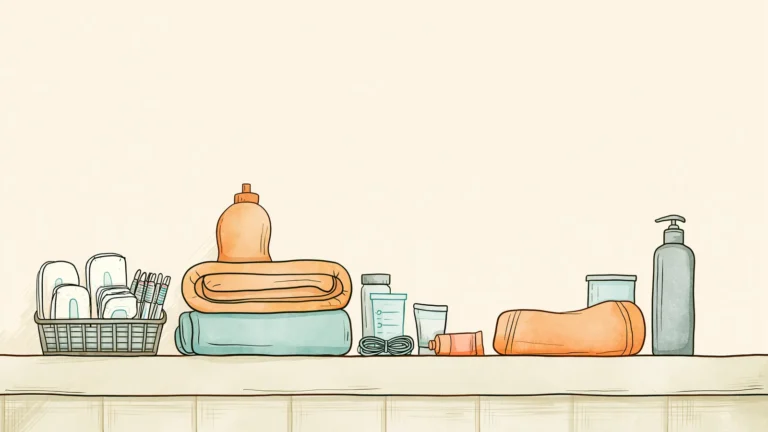
Fiber is the second lever, with one caveat: ramp it up gently and with plenty of water, because piling on fiber suddenly can actually make bloating worse. Think fruit, vegetables, whole grains, beans. This is a good week to do the grocery run and stock the easy, gut-friendly stuff, the same kind of low-effort caretaking covered in what to buy her before her period. You’re not putting her on a plan. You’re just making the helpful option the easy one.
Movement is the third. It sounds too simple, but physical activity genuinely stimulates the intestines, and even a short walk can help. You don’t have to frame it as exercise for her constipation, which would be a weird and unwelcome sentence. Just suggest a walk because the evening’s nice, or because the dog needs it, or because you want the company.

Warmth is a quiet fourth one that’s easy to miss. A heating pad on her belly or a warm bath doesn’t unclog anything directly, but it relaxes her, eases the cramping and heaviness that often ride along with a slow gut, and makes the whole stretch less miserable. The same goes for foods that are gentle on her system and naturally help things along, like fruit, leafy greens, and magnesium-rich things such as nuts and dark chocolate. None of this is dramatic. It’s the difference between her white-knuckling a few uncomfortable days alone and her feeling like someone noticed and made them softer.
And then there’s the thing that isn’t a tactic at all: patience. This almost always resolves on its own when her period starts and progesterone drops. The most useful posture is the one from being supportive when you can’t fix her pain. You’re not the one who clears this up. Her cycle does that. You’re the person who makes the few days in between easier and doesn’t make her feel weird about a normal bodily thing.
When period constipation is worth a doctor’s look
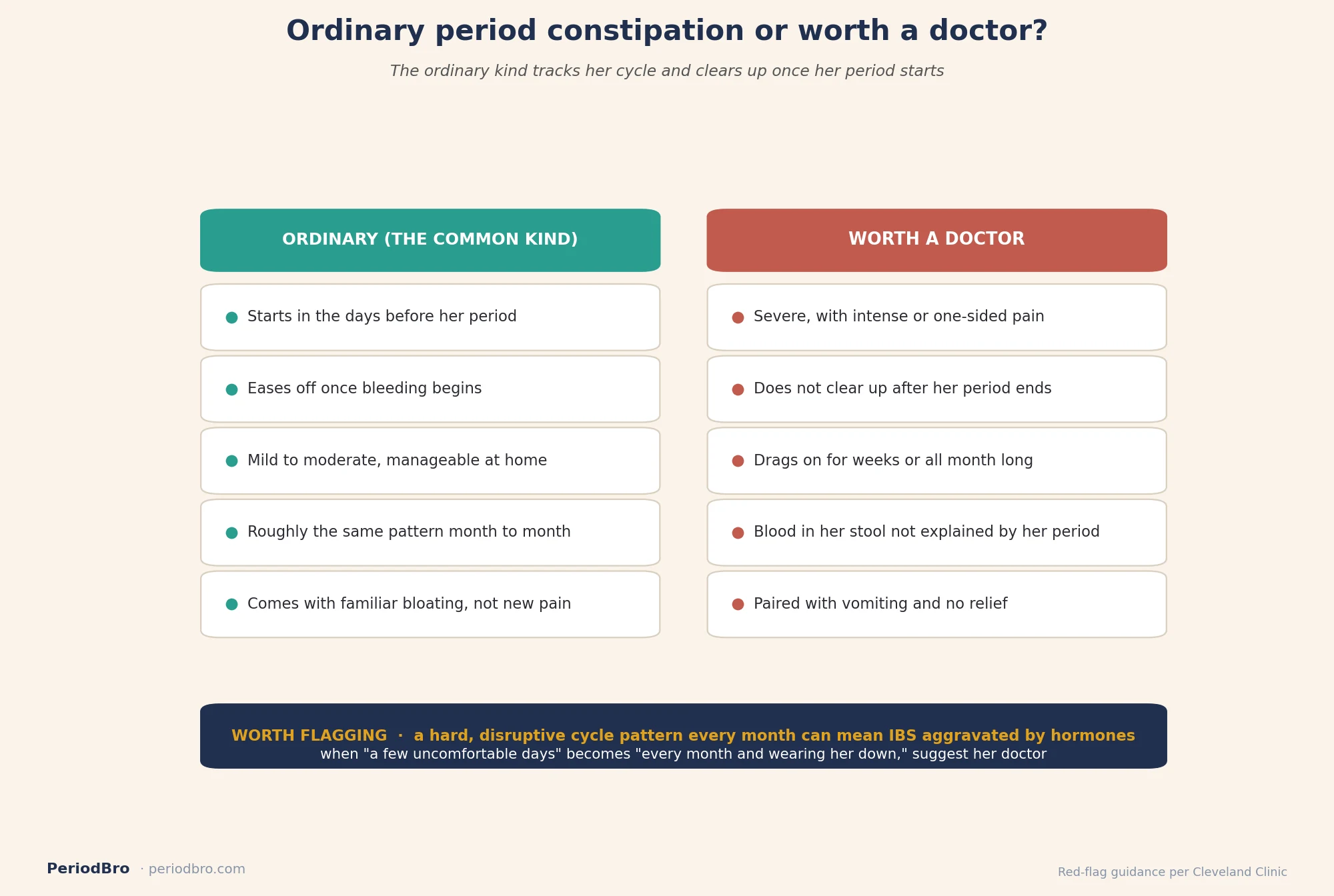
Most of the time this is routine and rides out with the cycle. But a few things deserve more than a glass of water, and it helps to know the line so you’re useful rather than alarmist.
It’s worth her checking with a clinician if the constipation is severe, comes with intense abdominal pain, or simply doesn’t resolve once her period ends and instead drags on through the month. The same goes if she’s noticing a strong, disruptive pattern of gut symptoms that swing hard with her cycle every single month, which can sometimes point to irritable bowel syndrome being aggravated by hormonal shifts (Cleveland Clinic). Blood in her stool that isn’t obviously menstrual, or constipation paired with vomiting and no relief, are also reasons to get it looked at rather than wait.
Your job here isn’t to play doctor. It’s to notice when “uncomfortable for a few days” has quietly become “this happens hard every month and it’s wearing her down,” and to be the person who gently says maybe it’s worth mentioning to her doctor. That’s support, not overreaction.
The one thing to remember
If you take nothing else from this, take the pattern. Her gut slows down before her period because of progesterone, and it usually speeds back up once bleeding starts and prostaglandins take over. It’s common, it’s predictable, and it’s not in her head. The most helpful thing you can do is stop treating it as a mystery and start treating it as a known few-day window where water, easy food, a walk, and zero judgment go a long way.
If you’d rather not keep track of all this in your head, that’s exactly what we built PeriodBro for. It quietly tells you where she is in her cycle and what tends to come with each phase, so the heavy, backed-up days don’t catch you off guard and you already know what helps before she has to ask.
This article is for general information and isn’t medical advice. If you’re worried about her symptoms, or anything here describes something more severe or persistent, the right move is always to check with a qualified healthcare professional.