Period Products Explained for Dads
The first time I stood in that aisle I was a grown man with a job and a mortgage, and I genuinely could not tell you the difference between a liner, a regular pad, and whatever “super plus” was supposed to mean. There were about ninety boxes and no obvious order to them. I picked one at random, and it was the wrong one, and my daughter was too polite to say so.
Nobody taught us this. That’s not an excuse, it’s just the situation. So here’s the whole aisle explained once, in plain language, so you can walk in, get what she needs, and walk out.

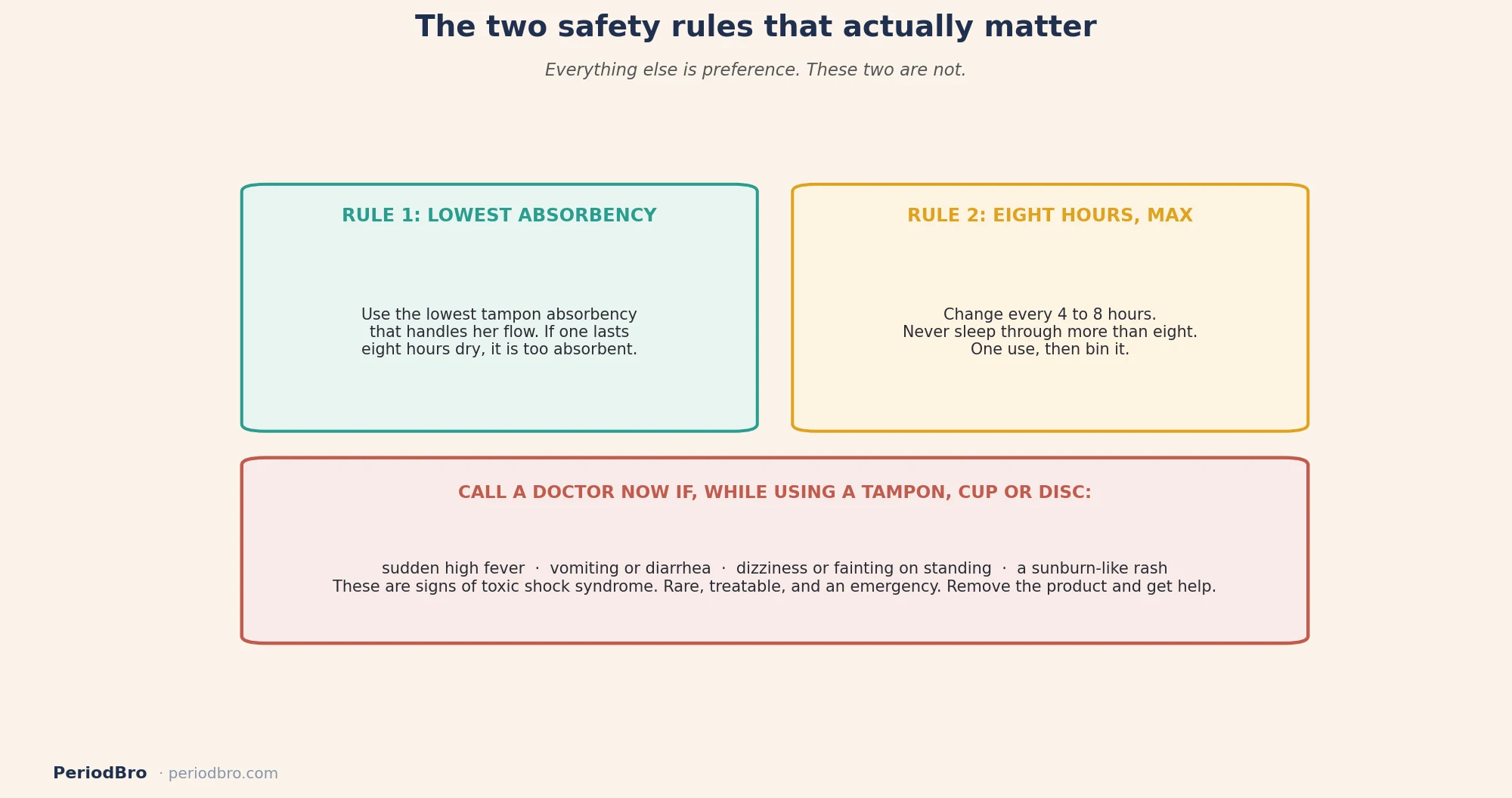
Period products for dads: the five things on the shelf
Pads. Adhesive strips that stick inside underwear and absorb outside the body. Zero learning curve, nothing goes anywhere. Sizes run from liners (barely anything, for light days or backup) through regular, super, and overnight, which are longer and wider. This is where every beginner starts, and where most daughters will start. Buy regular and overnight, plus a pack of liners.
Tampons. Absorb inside the body. They come in absorbency ratings – light, regular, super, super plus – and those ratings are standardised, which is the one genuinely useful thing to know. Some have a plastic or cardboard applicator, some don’t. Applicators are easier to learn with.
Menstrual cups. A small silicone cup that collects rather than absorbs, and gets emptied, rinsed and reused. Cheaper over time, better for the bin, and a steep learning curve for the first cycle or two. Not usually a first-period product.
Discs. Same idea as a cup but sitting higher and shaped differently. Some are reusable, some are single-use. Same steep start.
Period underwear. Looks and feels like ordinary underwear, with an absorbent layer built into the fabric. You wash it and wear it again. It’s brilliant as a backup, as overnight protection, and as a safety net for a teenager who’s terrified of leaking at school. If you buy one new thing on this list, buy these.
The two safety rules that actually matter
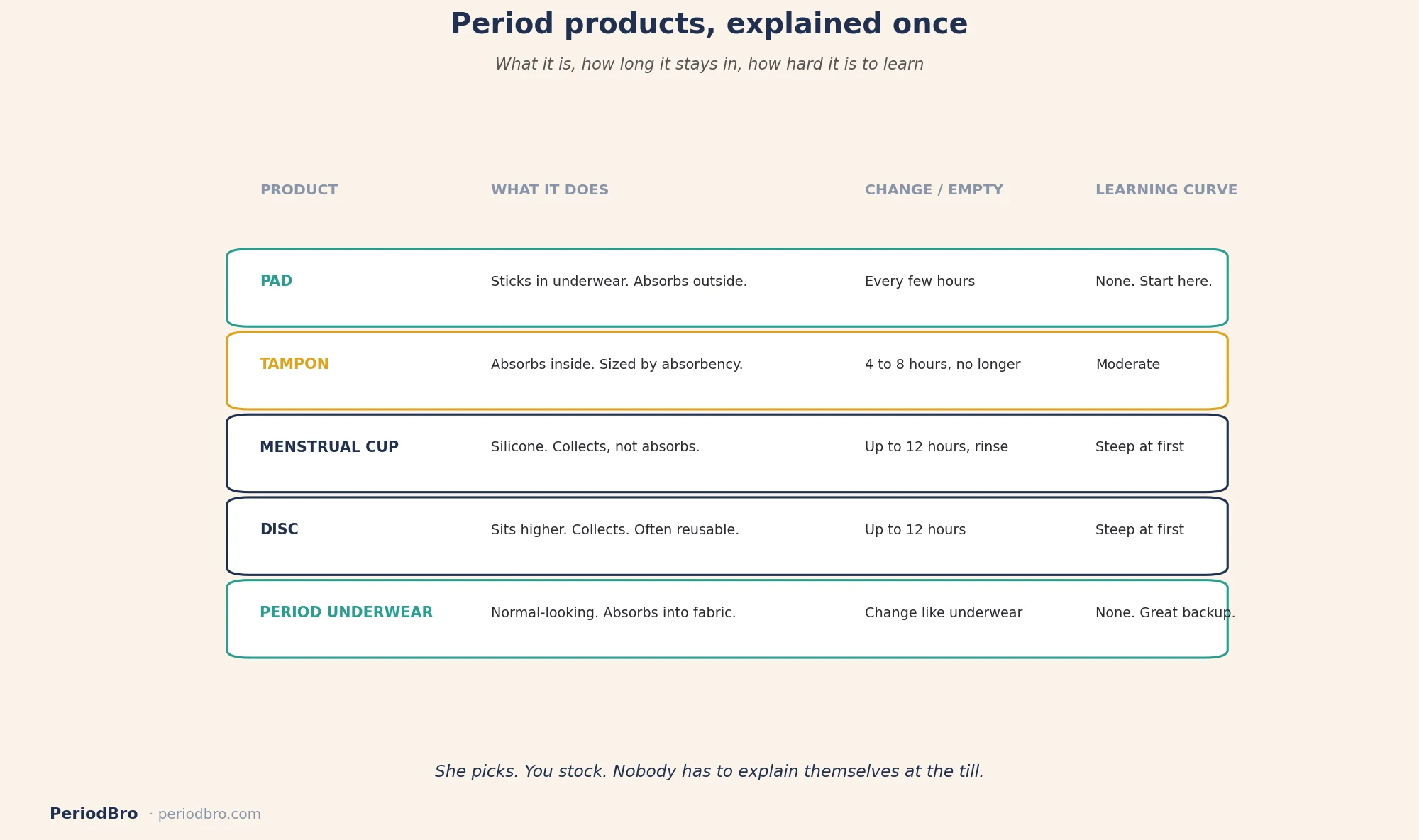
Most of this is preference. Two things are not.
The first is absorbency. Higher-absorbency tampons carry a higher risk of toxic shock syndrome, which is why the FDA standardised the ratings in the first place after the outbreak of the early 1980s. The FDA’s guidance is to use the lowest absorbency that handles her flow. A rough test: if she can wear one for eight hours and it’s still fairly dry, it’s too absorbent for her.
The second is time. Change every four to eight hours, and never wear a single tampon longer than eight. That includes sleeping. One use, then it goes in the bin. Cups and discs can generally stay in longer – up to twelve hours – but the manufacturer’s instructions are the authority there, and cups are not entirely risk-free either.
Toxic shock syndrome is genuinely rare now. It is also fast and serious, so it’s worth both of you knowing the signs: a sudden high fever, vomiting or diarrhea, dizziness or fainting when standing up, and a rash that looks like sunburn. If that happens while she’s using a tampon, cup, or disc, it needs urgent medical care. Remove the product and get her seen. Don’t wait to see if it passes.

What to buy, before you need it
Buy early. Girls in the US are starting earlier than we did: a study published in JAMA Network Open, drawing on more than 71,000 women, found the average age at first period dropped from 12.5 to 11.9 years over about five decades, with early menarche – before eleven – rising from 8.6% to 15.5%. If your daughter is ten, you’re not being premature. You’re being on time.
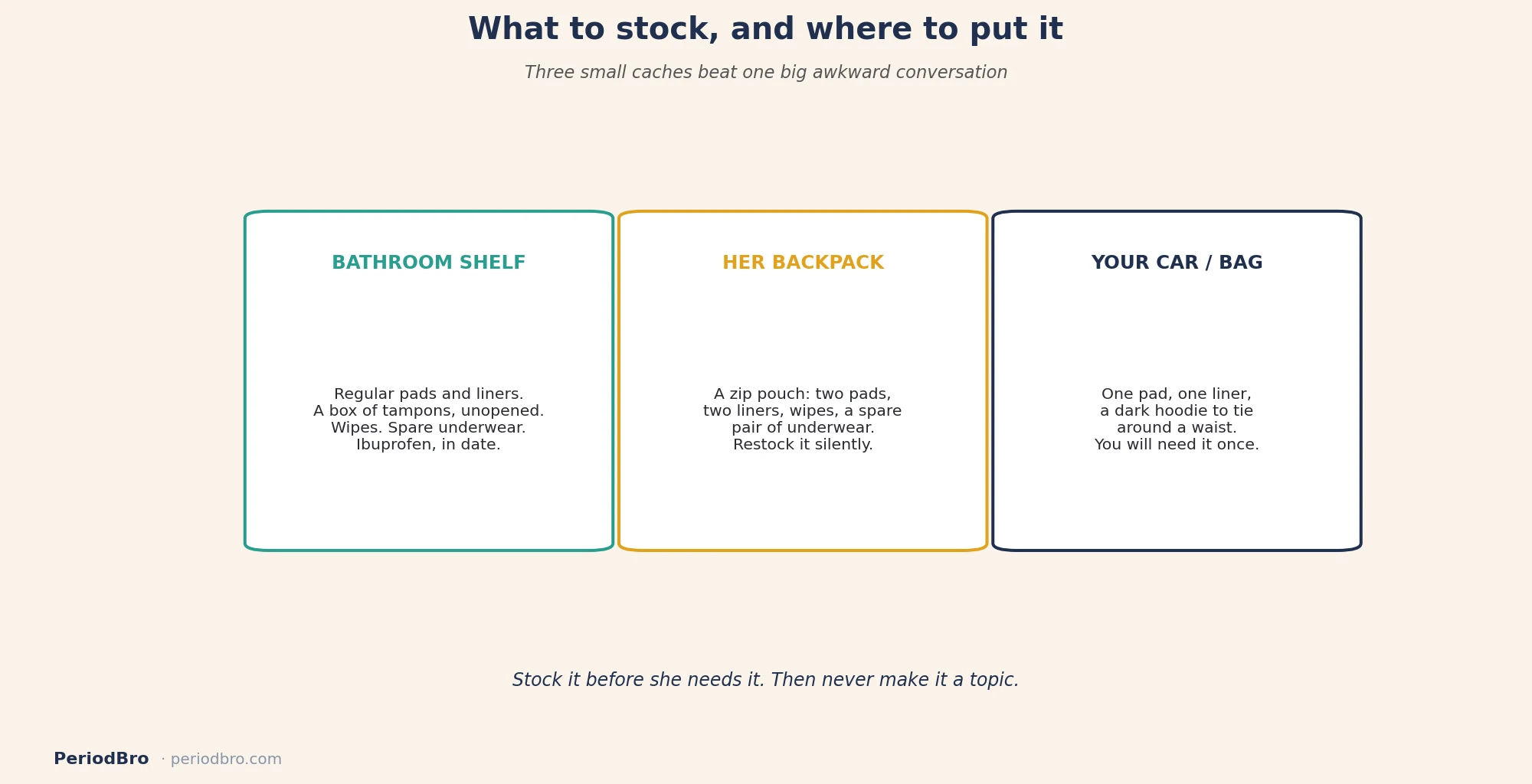
Three small caches beat one big awkward conversation.
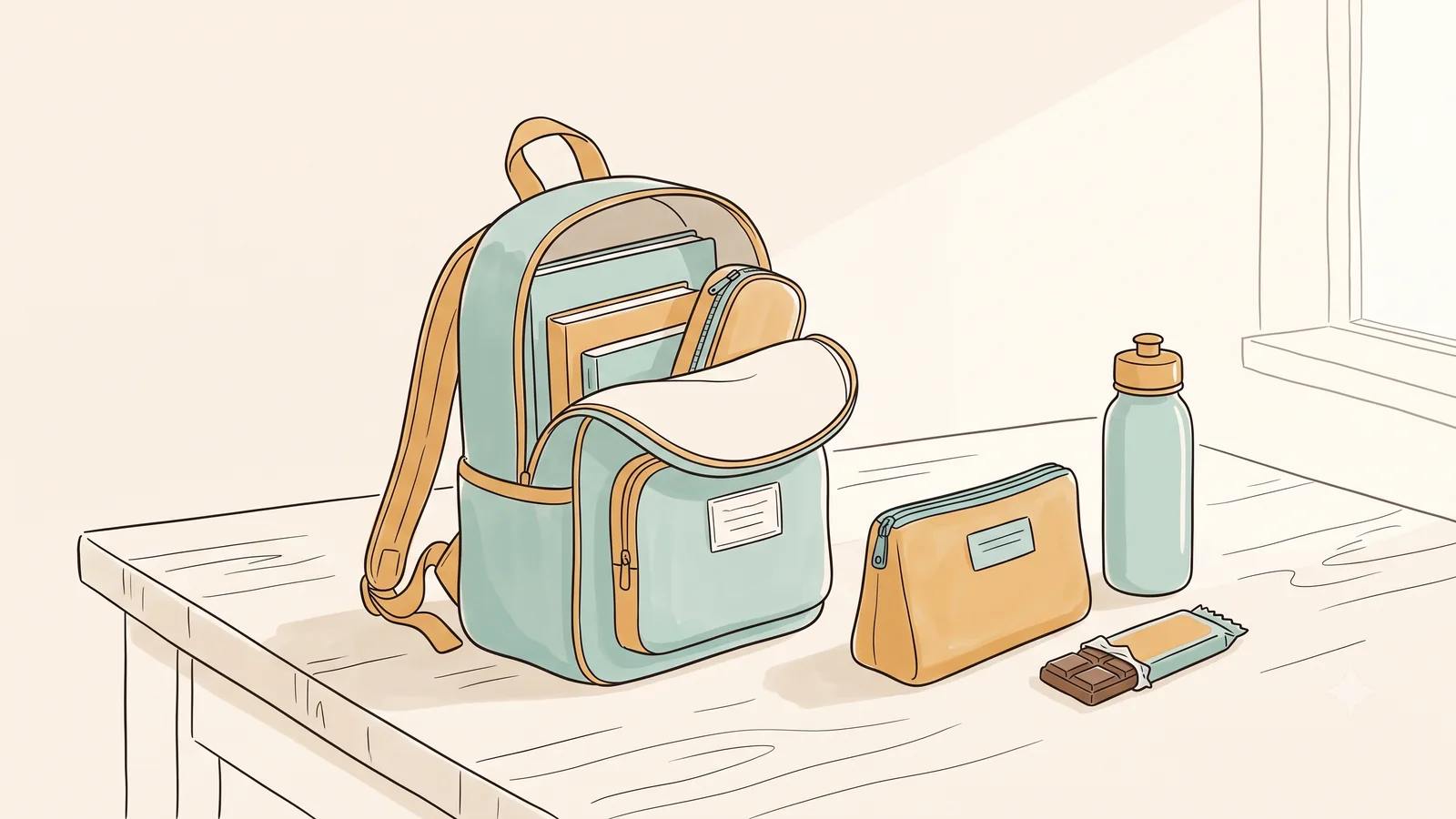
In the bathroom: regular pads, overnight pads, liners, an unopened box of tampons in case she wants them, wipes, spare underwear, and ibuprofen that hasn’t expired. In her backpack: a zip pouch with two pads, two liners, wipes, and a spare pair of underwear, which you restock silently and never mention. In your car or bag: one pad, one liner, and a dark hoodie she can tie round her waist. You will use that hoodie exactly once, and it will be the most useful thing you ever put in a car.
Then put the whole lot in place before she needs it, and don’t make it a topic. There’s a longer version of this in our guide to what to stock before your daughter’s period.
The stuff that isn’t in the period aisle
Half of what she needs isn’t a menstrual product at all. A hot water bottle or a microwaveable heat pack does more for cramps than most people expect, and a bag of frozen peas is not a substitute. Ibuprofen, in date, in a place she can find it without asking. Snacks she actually likes, bought without commentary. A bin in her bathroom with a lid, and liners for it.
And a quiet piece of household knowledge: pads, tampons and applicators go in the bin, not down the toilet, whatever the packaging says about being flushable. Wrap them in the wrapper of the next one, or in loo roll. Nobody teaches this either, and every dad learns it the expensive way with a plumber standing in his hallway.
Keep a spare bin bag under the sink and empty that bin yourself sometimes, without being asked and without saying anything about it. It’s a small thing that says the rest of it out loud.
Buying it without making it weird
You are going to feel self-conscious in that aisle exactly once, and then never again. Nobody is looking at you. The person at the till has scanned ten thousand boxes of pads and has no opinion about yours.
If she’s old enough to have a preference, ask her and write it down: brand, size, applicator or not. If she isn’t, or she’s embarrassed to say, buy the beginner set – regular pads, overnight pads, liners, a pair of period pants – and tell her plainly that if she wants something different you’ll get it, no questions. Then get it, no questions.
One more thing about school. The fear that keeps teenage girls awake isn’t pain, it’s leaking through their clothes in front of everyone. That fear is why the backpack pouch and the dark hoodie earn their place. It’s also why period underwear is worth the money even if she mostly uses pads, because it means a bad day at school is a laundry problem instead of a catastrophe. Solve for the fear, not just the flow.
Two things I’d do differently if I were starting again. First, don’t buy scented anything. Second, don’t wait for her to raise it. The dad who’s already stocked the shelf has said something without saying anything: this is normal, I’m not squeamish, you don’t have to manage my discomfort about your body.
The bit that isn’t about products at all
The shelf is the easy half. The hard half is being a man she’d actually come to. That gets built long before the first period, in whether you flinch when the subject comes up. If you want the language, period terms for dads covers the vocabulary in about ten minutes. For the conversation itself, how to talk to your daughter about periods is the one to read next, and if you’re doing this on your own, the single dad’s guide is written for you specifically.
Knowing when it’s coming helps too – not so you can announce it, but so the overnight pads are already there and the pouch is already restocked. That’s the entire job. Stock the shelf, learn five words, and don’t make her explain herself.
General information, not medical advice. Very heavy bleeding, periods that stop, pain that keeps her out of school, or any sign of toxic shock syndrome should be assessed by a doctor.