5 Signs Daughter Period Is About to Start: A Dad’s Field Guide
Most dads want to know what the signs daughter period is about to start actually look like — not in a clinical sequence on a poster, but in a real house, with a real twelve-year-old who’s stopped changing clothes in front of you. I noticed it in the way she stopped changing clothes in front of me. No announcement, no show of it — she just stopped. She was ten, and she’d closed that door for herself before I’d realized it needed closing. That was the first sign: her body had started living on a calendar I didn’t have direct access to. And I needed to learn to respect that calendar before it started, not after.
It wasn’t panic. It was the quiet realization that I’d been a few months behind, and that the next stage of her childhood was going to ask me to be a different kind of attentive.
If you’re reading this, you’re probably somewhere in that same gap. Maybe your daughter is ten and her body is changing in ways you’ve been politely not tracking. Maybe she’s twelve and you’ve been told “any day now” by someone who isn’t going to be the one in the bathroom at 2 a.m. Either way — you’re not late. You’re early enough that this can still be a choice instead of a scramble.
Here’s the thing nobody tells dads: there isn’t one sign. There’s an order. And once you know the order, the months between “I think she’s starting puberty” and “she got her first period” stop being a guessing game.
Signs Daughter Period Is About to Start: The Order They Actually Show Up
Researchers describe puberty in stages called Tanner stages. You don’t need to memorize them. You just need to know what shows up first, what shows up next, and what’s the last warning shot before the bleed.
1. Breast budding (the earliest one)
This is usually the first physical sign — a small, sometimes tender lump under one or both nipples. It can look uneven for a while. Mean age in girls is around 10, with a normal range from 8 to 12. (American Academy of Pediatrics)
What this means for you: from the moment you notice breast development, you’re on a 2-to-3-year clock until her first period. That’s not a deadline. That’s a runway.
2. Pubic hair (and then armpit hair)
Pubic hair typically appears about six months after breast budding. Underarm hair usually follows. (NCBI / StatPearls — Physiology, Puberty)
You’re not going to see this. You shouldn’t be looking. The reason it matters is that pediatricians use it as a marker, and if she ever asks you “why is this happening so fast” or “why does my body smell different now,” it helps to know there’s a sequence — not a malfunction.
3. The growth spurt
She’ll get taller. Sometimes a lot taller, sometimes in one summer. The growth spurt usually peaks before her first period, not after. If you’re suddenly looking up at her instead of down — the period isn’t far.
4. Clear or white discharge (the 6-month warning)
This is the one most dads miss because nobody talks about it. About 6 to 12 months before menarche — that’s the medical word for the first period — many girls start having a clear or whitish vaginal discharge. (Cleveland Clinic — Menarche)
You’re not going to be the one who sees this either. But you might be the one who notices a new request for a different kind of underwear, or panty liners showing up in the bathroom cabinet, or her asking her mom or stepmom or aunt something quietly that she didn’t ask before. If you live in a house where she might not have a woman to ask — this is the signal to make sure she does.
5. Acne, mood shifts, bloating, cramps
In the weeks and months before the first period, hormones get loud. You might see oily skin, breakouts along the jaw and forehead, mood that swings harder than her age would suggest, and complaints of belly cramps or bloating that don’t tie to anything she ate. (Sutter Health — Early Menstruation)
This is the cluster that often gets dismissed as “teenager stuff.” It’s not nothing. It’s the last lap.

What This Actually Looks Like in a Real Home
Here’s what nobody puts in the parenting books: most dads don’t see the signs daughter period is about to start in a clean, observable way. You don’t get a checklist. You get fragments.
You notice she’s gotten quiet at dinner two weeks in a row. You notice she stopped wanting to go to the pool. You notice the bathroom door is now always closed, locked, and she’s in there longer than she used to be. You notice she asked her mom for a “real bra” — or, if you’re a single dad, she asked you in a voice three notes higher than usual.
You won’t connect these dots in the moment. You’ll connect them six months later, when she comes out of the bathroom and says something so small you almost miss it: “Dad, I think I got it.”
The mistake I made — and I think most dads make — is treating the signs like a private surveillance problem. Am I supposed to be watching for this? How closely? Is that weird? It’s not surveillance. It’s literacy. The goal isn’t to catch the exact day. The goal is to not be the man in the house who’s the last to know what’s happening to the people he loves.
The average age of a first period in the US has shifted from 12.5 in the 1950s-60s to about 11.9 today — and for some girls, even closer to 11. (STAT News — JAMA study, May 2024) That means “she’s only nine, we have time” is a worse assumption than it used to be.
What to Do Once You See Signs
Most of this article is about noticing. This is the section that’s actually about doing.
Stock the bathroom before you need to. Pads in two sizes (regular and overnight). A small wrapped pack she can keep in her school bag. Spare underwear in a drawer in the bathroom, not in her bedroom. Wipes. A heating pad in the linen closet. Ibuprofen where she can find it without asking you. None of this is awkward if you do it before there’s a reason. All of it is awkward if you do it the night she first bleeds.
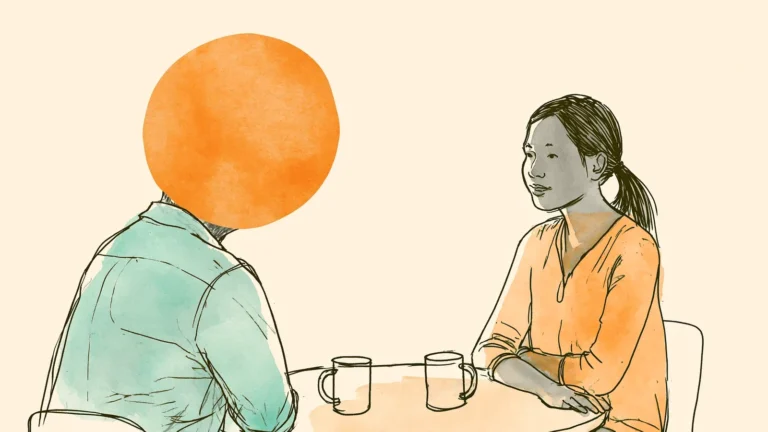
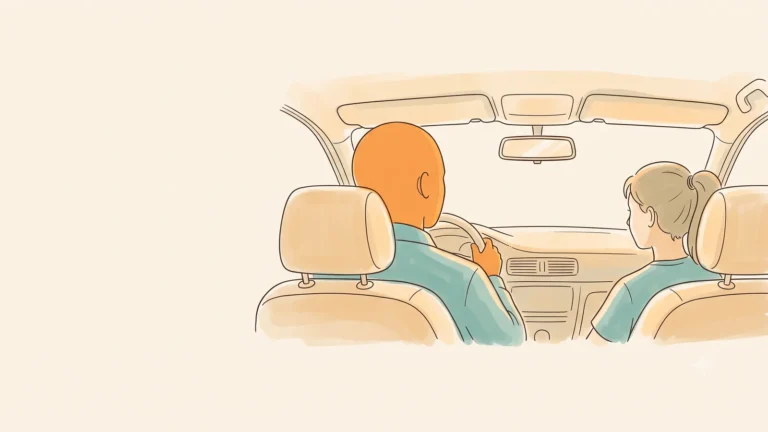
Have one short conversation early. Not the Big Talk. Not a speech. Five sentences in the car, while you’re both looking forward and not at each other. Something like: “Hey, you know your body’s going to start doing some things in the next year or two. If you ever need anything — pads, a doctor, just to talk — you tell me, or you tell whoever you’re more comfortable with, and we figure it out. No weirdness.” Done. The point isn’t to deliver information. The point is to make the door findable later.
Decide who she talks to — and tell her. If you have a co-parent, stepmom, aunt, older sister, a doctor, or a school counselor she can go to — say her name out loud. “You can always call Aunt Karen about this stuff if you don’t want to come to me first.” Saying her name is what makes it real. Otherwise the default is “I’ll figure it out alone,” and figuring it out alone at twelve is rough.
Stop apologizing for being a dad. You’re not doing puberty for her. You’re being a competent, present adult in the house. Don’t make a speech about how you’re “just a dad and you don’t understand.” She knows you’re a dad. She needs you to be a calm one, not a self-flagellating one.
If you want a longer playbook for the day it actually happens — including what to put in her bag and the script for the first awkward minute — we wrote one here: Single Dad, Daughter, First Period: A No-Panic Playbook.

What’s NOT a Sign — and When to Call the Doctor
A lot of dads spiral on the wrong signals when they’re scanning for signs daughter period is about to start. Some quick clarity:
- One pimple is not the first sign. Skin breakouts mean she’s in the cluster, not that bleeding is tomorrow.
- A bad mood week is not PMS yet. Bad weeks happen at every age. Patterns mean something. A single Tuesday does not.
- Discharge in underwear isn’t an emergency. Clear or whitish discharge is normal pre-menarche. Yellow-green, foul-smelling, or with pain — that’s a call to the pediatrician, not because of puberty, because of possible infection.
When you do call a pediatrician without hesitating: no breast development by age 13, or no first period by age 15, or no first period within 3 years of breast budding. (ACOG — Menstruation as a Vital Sign) Those are the medical lines worth memorizing. Everything else, you can ask without panicking.
If you want to step back and understand the bigger picture of what her cycle will look like once it starts — the four phases, the energy shifts, the mood arc — Fathers’ Role in Menstrual Education is the foundation read for dads.
One Thing I Wish Someone Had Told Me
When I started thinking seriously about my daughter’s cycle, I felt like I was trespassing. Like the right move was to stay out of it and let the women in her life handle it. That impulse is so common it’s basically the default for our generation of dads.
It’s also wrong.
She doesn’t need you to walk her through the biology. She needs to live in a house where a man knows roughly what’s happening in her body, doesn’t flinch when she mentions it, and has pads in the cabinet before she asks. That’s the bar. That’s the whole thing. The reason to pay attention to the signs daughter period is about to start isn’t to perform Informed Father. It’s so the day she comes out of the bathroom and says, “Dad, I think I got it,” you can say “okay, I’ve got you” instead of “uh, let me text your mom.”
I built PeriodBro for that bar. For the partner, for the dad, for the man in the house who wants to be the calm one. If that’s the kind of dad you’re trying to be, we’d be glad to have you.