Short Menstrual Cycle: Why Her Period Keeps Coming Early
A buddy of mine told me about the night his wife looked at the calendar, frowned, and said, “Didn’t I just have this?” She had. Twenty-two days earlier. He’d been logging her cycle for a while, so he pulled up the history, and there it was: three cycles in a row that ran 22, 23, and 21 days. Neither of them had noticed the drift until the numbers were lined up next to each other.
If her period keeps showing up earlier than either of you expects, you’re looking at a short menstrual cycle. Most of the time the cause is ordinary and fixable, or simply part of a life stage. Sometimes it’s a signal worth taking to a doctor. Below is where the normal range ends, what usually shortens a cycle, and what a partner can do with that information.
What counts as a short menstrual cycle
Cycle length is counted from the first day of one period to the first day of the next. Cleveland Clinic describes a typical cycle as running somewhere between 21 and 35 days, with bleeding for three to seven of them (Cleveland Clinic). The 28-day cycle you see in textbook diagrams is an average. Plenty of healthy women never have one.
Gynecologists now use a tighter definition. The International Federation of Gynecology and Obstetrics (FIGO) set the normal range for adults aged 18 to 45 at 24 to 38 days, based on large population studies, and calls anything under 24 days “frequent” (FIGO via PMC). Cycles that consistently come less than 21 days apart have an older name you may run into online: polymenorrhea.
Teens are the exception. In the first few years after a girl’s first period, ACOG considers cycles anywhere from 21 to 45 days normal while the hormonal system matures (ACOG).
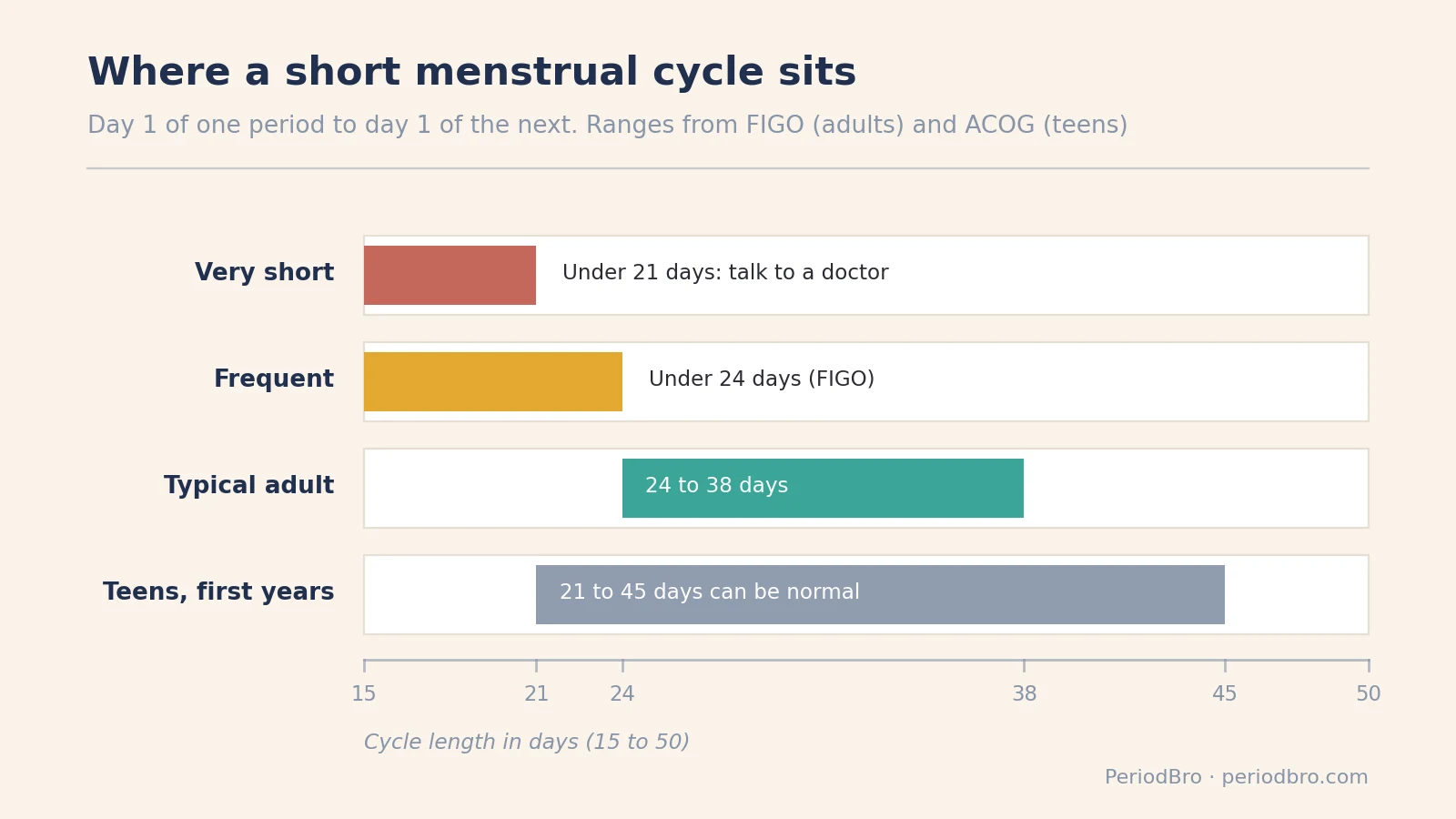
One short month means very little on its own. A pattern of three or more is worth noticing.

Where the missing days go
A cycle has two halves. The follicular phase runs from the first day of bleeding to ovulation, and the luteal phase runs from ovulation to the next period. The luteal half is fairly stable, usually close to two weeks, while the follicular half is the flexible one (StatPearls, NCBI). If you want a refresher on the four phases, our phase-by-phase guide covers them in plain terms.
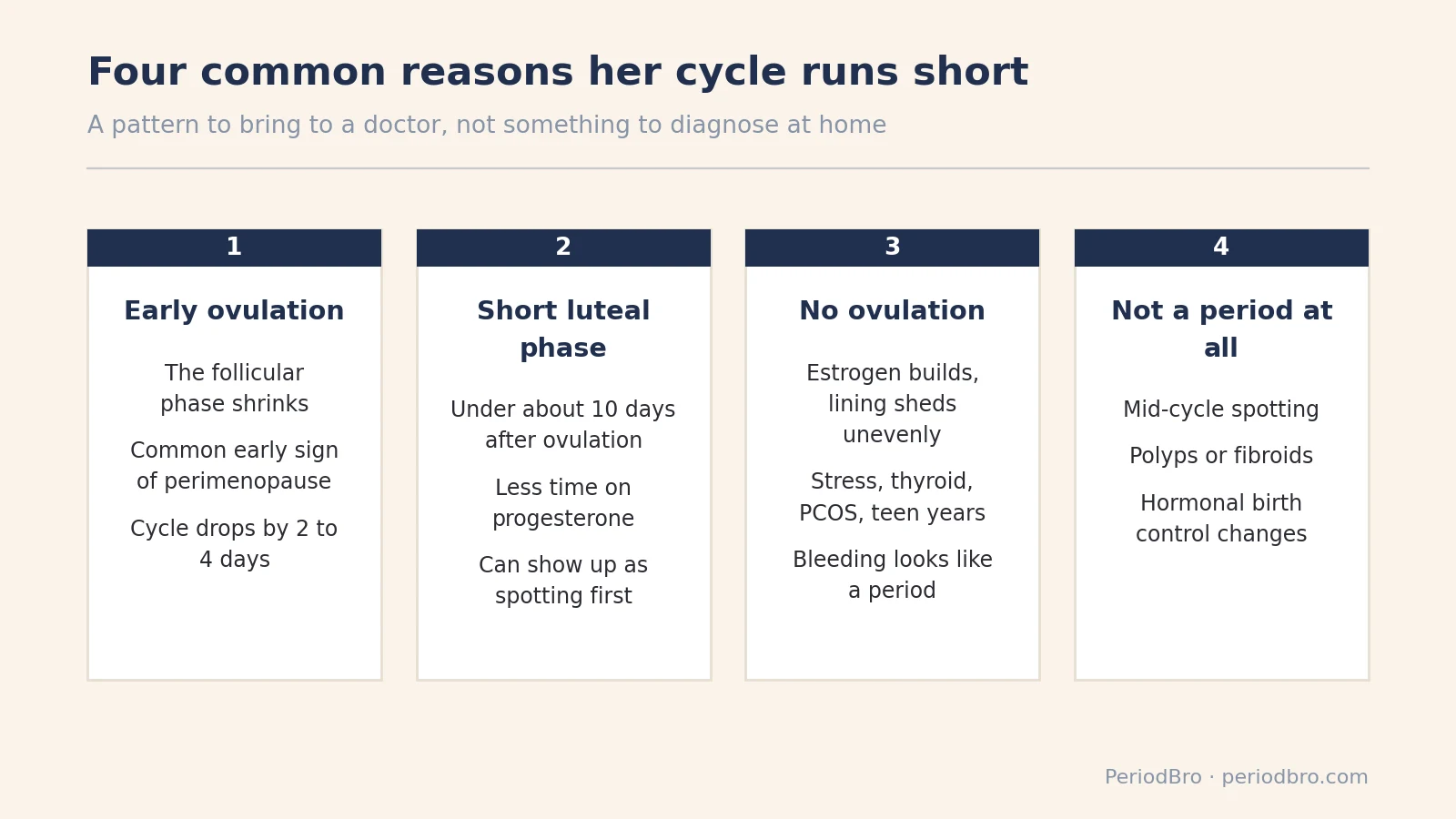
When a cycle shortens, the lost days usually come out of one of four places.
She ovulates earlier. The follicular phase shrinks and everything that follows moves up. This is the most common pattern in a woman’s late thirties and forties, and I’ll come back to it below.
The luteal phase is short. If the stretch after ovulation runs under about ten days, there’s less time with progesterone holding the uterine lining in place, and bleeding starts early. Sometimes it shows up first as a few days of spotting before the real flow.
She didn’t ovulate at all. Without ovulation, estrogen keeps building the lining with no progesterone to stabilize it, and the lining eventually sheds on its own schedule. That bleed can look exactly like a period. We covered this in detail in anovulatory cycles explained.
The bleeding isn’t a period. Mid-cycle spotting, polyps, fibroids, or a birth control change can all produce bleeding that gets logged as “period started,” which makes the cycle look shorter than it is. Spotting between periods has its own list of causes.
The usual causes, from boring to worth a test
Cleveland Clinic’s list of reasons for irregular cycles is long, and most of it applies to short cycles too: stress, big changes in weight or exercise, thyroid problems, PCOS, hormonal contraception, and structural issues like fibroids or polyps (Cleveland Clinic). A few are worth singling out for partners.
Stress and sleep. A rough month at work, a move, an illness, or a long stretch of bad sleep can shift the timing of ovulation. That usually produces one or two odd cycles that settle on their own once life does. If you already know stress can make a period late, the same system can also push it early.
Thyroid. An overactive or underactive thyroid can both change cycle length and flow. If a short cycle arrives with new fatigue, feeling cold or hot all the time, a racing heart, or weight change without a clear reason, a blood test is simple and worth asking for. We wrote a separate piece on thyroid and periods.
Coming off or switching birth control. The first few natural cycles after hormonal contraception can run short or long while her own rhythm comes back online.
Heavy, frequent bleeding. Periods that come every three weeks and run heavy add up to a lot of blood loss over a year, which is a known route to low iron. If she’s tired all the time, short of breath on the stairs, or dizzy, look at iron deficiency from heavy periods.
A short menstrual cycle in her forties
That was my buddy’s situation. His wife was 43 when her cycles started running short, and it turned out to be the most common story there is.
As the supply of egg follicles drops in the years before menopause, the ovaries respond to rising follicle-stimulating hormone by recruiting a follicle earlier. Ovulation comes sooner, the follicular phase shortens, and the whole cycle drops by a few days. Cleveland Clinic lists irregular periods, including cycles that come closer together, among the first signs of perimenopause, which can start in a woman’s forties or even late thirties (Cleveland Clinic).
The pattern often runs in two stages. Cycles shorten first, and later, as more cycles skip ovulation, they start stretching out and getting less predictable. Knowing that ahead of time helps. When her cycles later swung the other direction, neither of them panicked, because they’d read that it was likely. Our perimenopause guide for partners covers the rest of that transition.

Perimenopause is common, but that doesn’t make every short cycle in her forties automatically fine. Heavy bleeding, bleeding after sex, or bleeding between periods still deserve a doctor’s look at any age.

If you’re trying to conceive
A short cycle doesn’t mean she can’t get pregnant. Plenty of women with 24-day cycles conceive without trouble. Ovulation just happens earlier, often around day 10 instead of day 14, which means the fertile window starts sooner than a default app setting might assume.
The part worth raising with a doctor is a consistently short luteal phase, meaning fewer than about ten days between ovulation and her period. Temperature tracking can show where ovulation falls, and a clinician can decide whether any testing makes sense. For couples actively trying, ASRM recommends a fertility evaluation after 12 months of trying if she’s under 35, or after 6 months if she’s 35 or older (ASRM). A clearly irregular pattern is a reason to go sooner.
What a partner can do with this
You’re not the one who diagnoses anything here. What you can do is make the pattern visible, which is often the missing piece when she gets to a doctor’s office and gets asked, “How long are your cycles?”
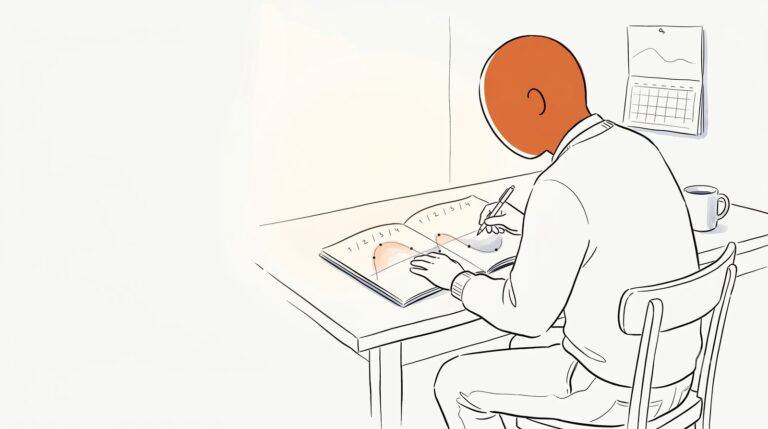
Log the start dates. Just day one of each period. After three or four months, you’ll both see whether the short cycle is a one-off or a trend. Tracking together as partners works best when it’s her data and you’re helping keep it straight.

Note what’s different. Heavier flow, spotting beforehand, more cramping, new tiredness. Those details change what a doctor looks for.
Keep the supplies ahead of the calendar. If her period now comes every three weeks, the old restock rhythm will run dry. This is the least dramatic kind of help and it gets noticed.
Offer to handle the appointment logistics if she wants that. Booking, rides, writing down questions. Don’t push it if she’d rather handle it herself.
When to see a doctor
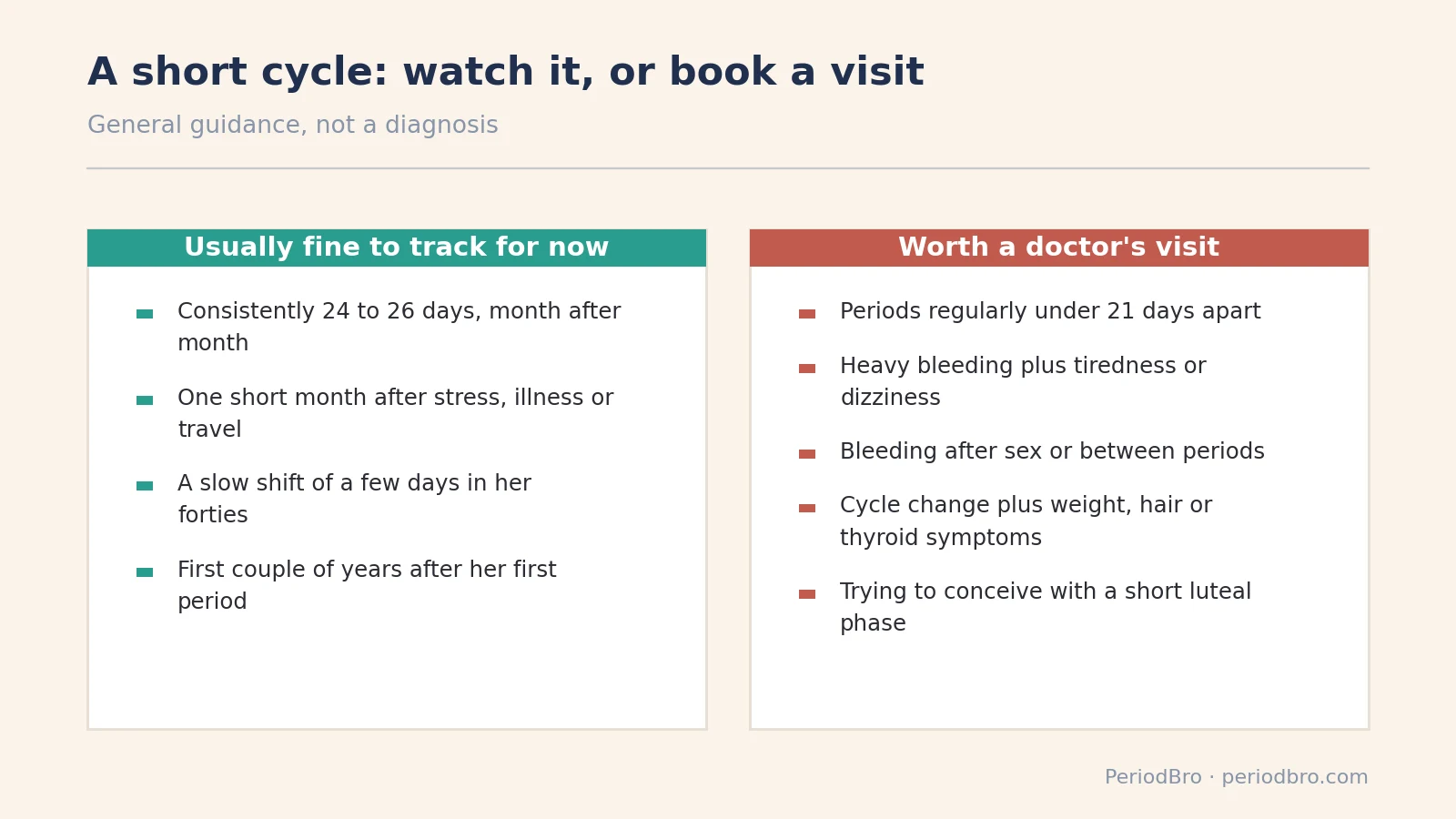
Suggest a visit, gently and without drama, if any of these show up:
- Periods regularly arriving less than 21 days apart
- Heavy bleeding, soaking a pad or tampon every hour or two, or passing large clots
- Bleeding between periods or after sex
- Fatigue, dizziness, or shortness of breath alongside frequent periods
- A short cycle plus signs of thyroid trouble, big weight changes, or new hair growth
- Any bleeding after menopause
For my buddy and his wife, the doctor visit was short. Her bloodwork came back normal, the doctor said the pattern fit early perimenopause, and they went home with a plan to keep tracking. Three months of dates on his phone turned that conversation into ten minutes instead of guesswork.
If her cycle has been running short, the likely reasons are mostly ordinary, and the few worth checking are easy to spot once the dates are written down. Your part is mostly the writing down.
PeriodBro provides educational information and is not a substitute for professional medical advice. Always consult a qualified healthcare provider for personal medical decisions.