PCOS and Periods: What Partners Need to Know
Her cycle does not behave. Some months it shows up on time, some months it skips entirely, and when it arrives it can be heavy enough to reorganize her week. If a doctor has raised PCOS, or if you have been quietly wondering, the link between PCOS and periods is worth understanding properly.
It is one of the most common hormonal conditions there is, and one of the most under-diagnosed. Understanding it fixes nothing by itself, but it does stop you misreading an unpredictable cycle as flakiness.
What PCOS is, in plain terms
Polycystic ovary syndrome is a hormonal condition where the ovaries produce more androgens than usual, which disrupts the signalling that drives ovulation. When ovulation gets unreliable, the period that follows it gets unreliable too. That chain explains most of what she experiences.
The scale is bigger than most people assume. The World Health Organization estimates 10% to 13% of women globally have PCOS, and up to 70% of them are undiagnosed. That second number is the one worth sitting with. If she has it, the odds are decent that nobody has told her yet.
How PCOS and periods interact
WHO describes the menstrual pattern as intermittent, unpredictable, or absent. In clinical terms, cycles shorter than 21 days or longer than 35, or fewer than eight periods in a year, are the flags that get a doctor’s attention.
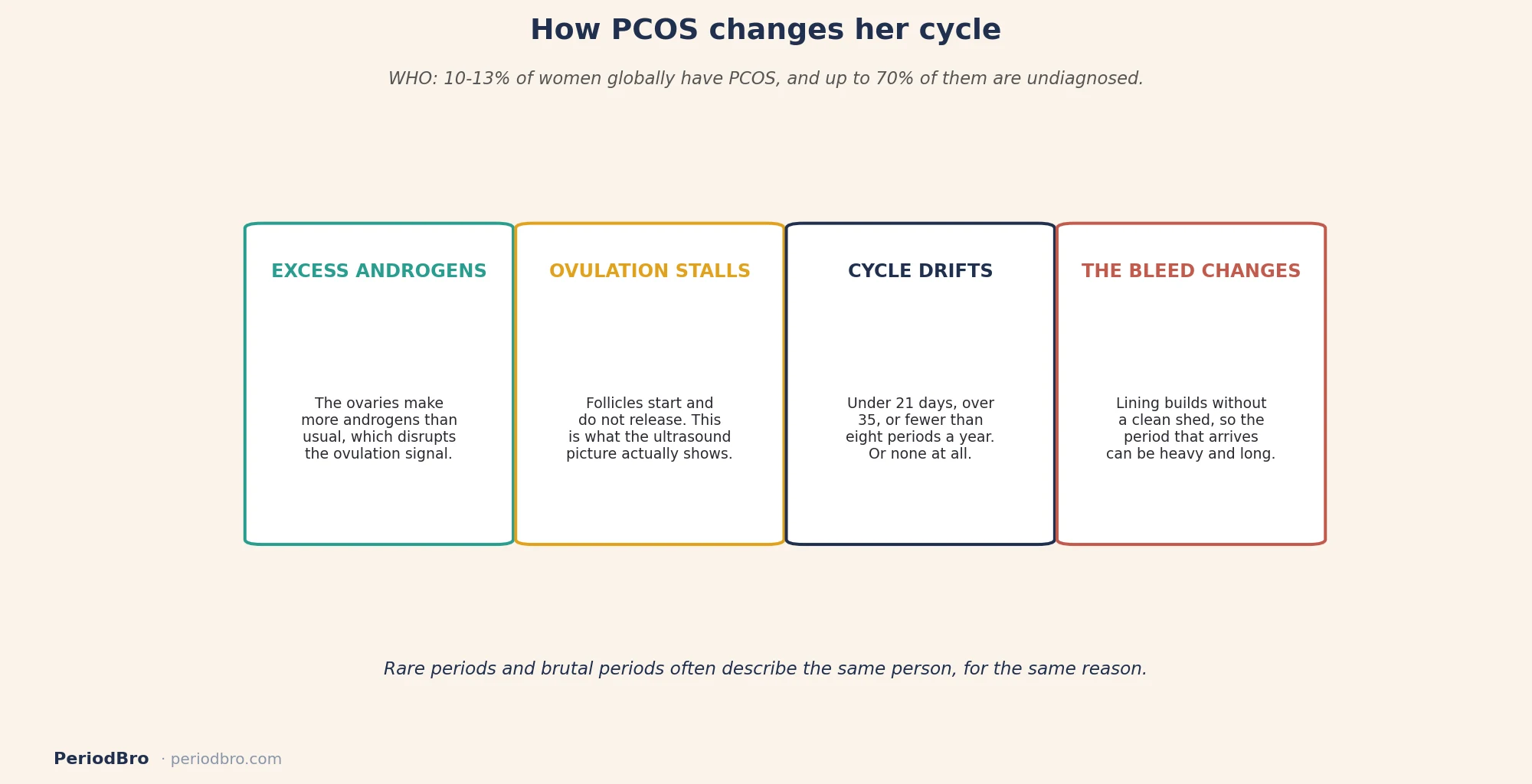
There is a second-order effect worth knowing. When ovulation does not happen, the uterine lining keeps building without the hormonal signal that normally triggers a clean shed. The bleed that eventually arrives can be heavier and longer as a result, which is why “she barely gets periods” and “her periods are brutal” often describe the same person. If that is your situation, our guide to helping with heavy periods covers the practical side.
The unpredictability is its own burden, separate from the symptoms. Someone with a 28-day rhythm can plan around it. Someone whose next period might be in three weeks or three months cannot, and every trip, event, and pale outfit carries a small ongoing calculation. That mental load is invisible from the outside.
The other symptoms, and why they land hard
Beyond the cycle itself, Cleveland Clinic lists excess facial and body hair, acne on the face, chest and back, scalp hair thinning, difficulty managing weight, and darkened patches of skin. PCOS is also the most common cause of infertility in women, per WHO.
Most of those symptoms are visible, and most of them run against what culture tells women they should look like. WHO notes the associated mental health picture directly: anxiety, depression, eating disorders, and negative body image. The hormonal condition and the emotional weight are not separate problems, and treating them as separate is a mistake partners make constantly.
So the acne is not a skincare conversation and the weight is not a discipline conversation. Both are symptoms of the same endocrine condition, and unsolicited advice about either lands as criticism no matter how it is meant.

How it gets diagnosed
PCOS has no single test. Diagnosis runs on the Rotterdam criteria, which require at least two of three findings once other causes are excluded: elevated androgens, irregular or absent ovulation, and polycystic ovaries on ultrasound. WHO states the two-of-three rule the same way.
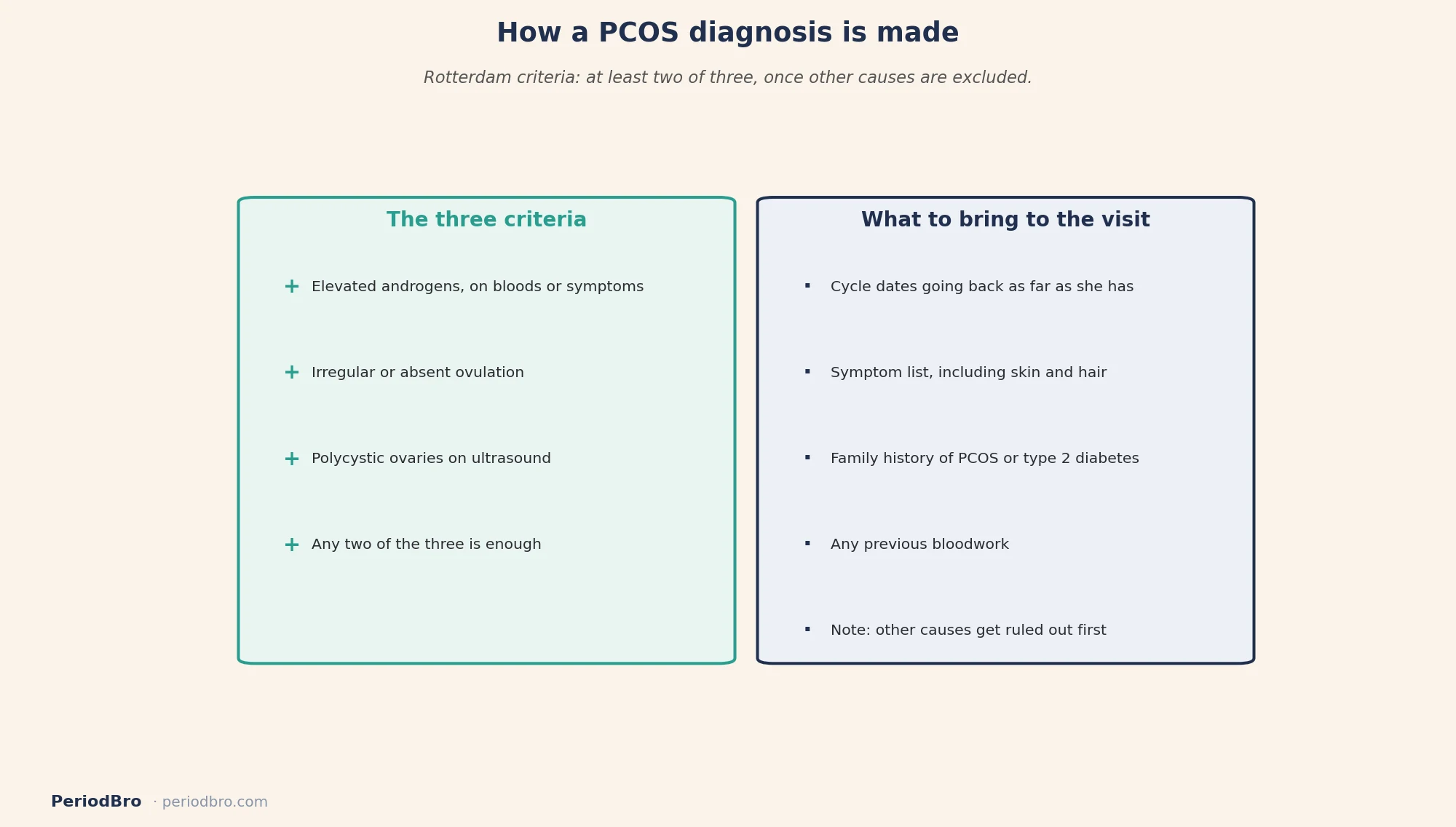
Two of those three come from tests she cannot influence. The third, ovulatory dysfunction, is established from her cycle history, and that is where a logged record beats memory by a wide margin. A year of dates showing four periods instead of twelve is evidence. “They’re kind of irregular, I think” is not.
This is also why the 70% undiagnosed figure exists. Irregular cycles get normalized for years, especially in teenagers, where irregularity is genuinely common early on. We covered that distinction in our guide to irregular periods in teenagers. If her period simply goes missing for a stretch, the reasons a period runs late covers the shorter list first.
What treatment looks like
WHO is blunt that there is no cure, and that treatment aims at symptoms and quality of life. In practice that means lifestyle measures, hormonal contraceptives to regulate cycles and manage androgen symptoms, metformin where insulin resistance is in play, androgen-blocking medication for hair and skin, and ovulation-inducing drugs when pregnancy is the goal.
Hormonal birth control comes up early and often, and it is worth understanding what it does here. It does not treat PCOS. It imposes a predictable withdrawal bleed and reduces androgen symptoms, which is genuinely useful and also means the underlying pattern is masked rather than resolved. Our piece on how birth control changes her cycle covers the mechanics.
The long-term health picture matters too. PCOS raises the risk of type 2 diabetes, high blood pressure, cardiovascular disease, sleep apnea, and endometrial changes tied to infrequent shedding of the lining. Those are reasons the condition is followed over years rather than fixed once.
What you can actually do
A guy I know spent three years thinking his partner was disorganized about scheduling anything cycle-adjacent. She was managing a condition neither of them had a name for yet. When the diagnosis finally came, his first honest reaction was relief, and his second was that he had been mildly annoyed for three years about something she could not control.
Stop treating unpredictable as unreliable. Her cycle is not a scheduling preference. If plans need to flex, that is the condition, not her attitude.
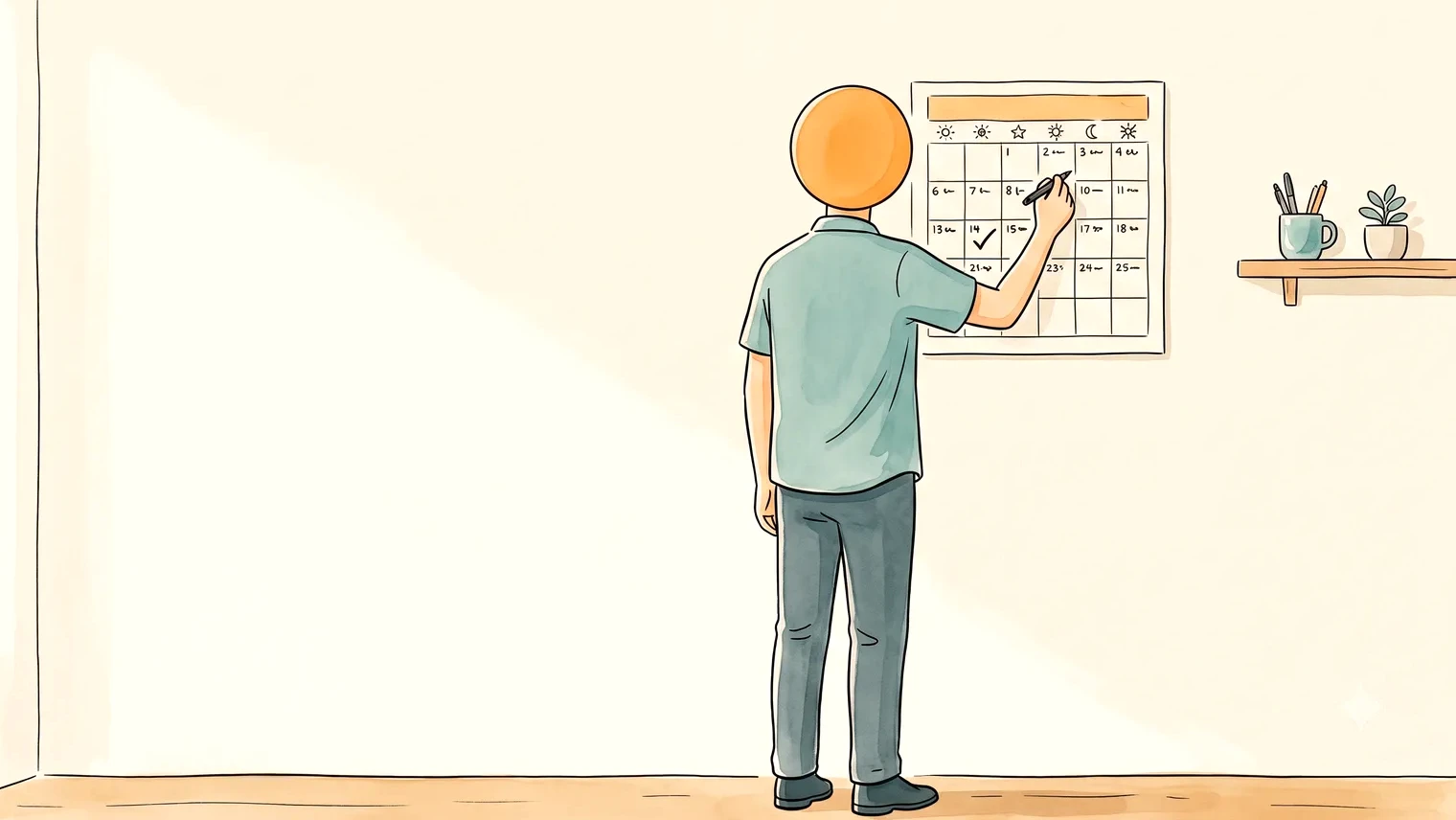
Help build the record. Cycle start dates, length, flow, and the gaps. It is the single most useful thing a non-clinician can contribute, and it is what turns a vague complaint into a diagnosable pattern.
Go to the appointment if she wants you there. PCOS visits cover fertility, weight, and mental health in one sitting, which is a lot to absorb alone. A second set of ears helps.
Keep your opinions about her body to yourself. Weight and skin are symptoms here. She has already heard the advice, usually from a doctor, usually more than once.
None of this requires you to become an expert. Knowing roughly where she is and what the condition does covers most of the distance, which is the same principle behind showing up well through her cycle generally. If you want the baseline first, start with the cycle explained simply.
Common questions
Does PCOS mean she cannot get pregnant?
No. It is the most common cause of anovulation and a leading cause of infertility, but plenty of people with PCOS conceive, with and without treatment. Ovulation-inducing medication exists specifically for this.
Are the cysts actually cysts?
Not in the usual sense. The ultrasound finding is many small follicles that stalled before releasing an egg, not cysts that need removing. The name is a historical accident that causes needless alarm.
Can PCOS go away?
There is no cure. Symptoms often shift over time and can improve with treatment and lifestyle changes, but the underlying condition is managed rather than cured.
Is irregular always PCOS?
No. Thyroid conditions, stress, weight change, perimenopause, and several other causes produce irregular cycles, which is exactly why the diagnostic rule requires other causes to be excluded first.
What should she bring to the appointment?
Cycle dates going back as far as she has them, a symptom list, family history of PCOS or type 2 diabetes, and any previous bloodwork. The cycle history is the part only she can supply.
This article is general information, not medical advice. PCOS is diagnosed and managed by clinicians, and nothing here replaces a proper evaluation. If her cycles have been irregular or absent for months, that is worth an appointment.