Period Insomnia: Why She Can’t Sleep on Her Period
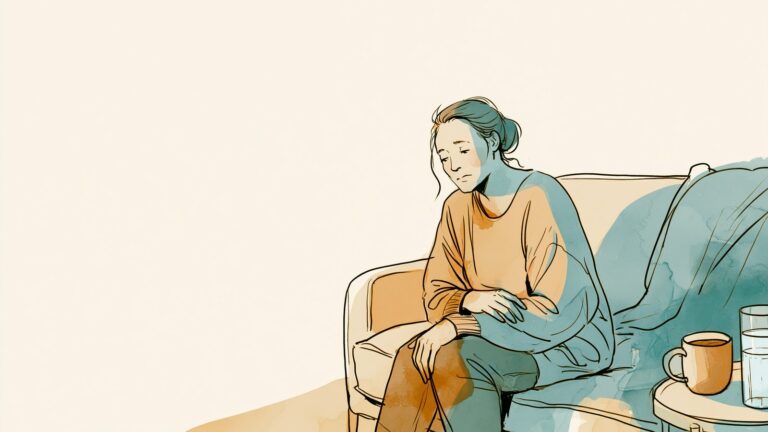
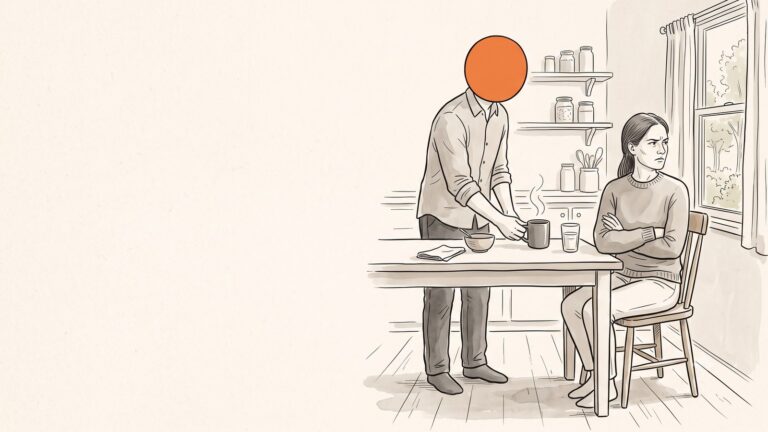
She is shattered by nine, in bed by ten, and still staring at the ceiling at one in the morning. Then her period shows up a few days later and it clicks. If your partner turns into a bad sleeper for a week every month and then goes back to normal, that is not random and it is not in her head. It has a name, period insomnia, and it tracks the same rhythm her cycle does.
You cannot fix it for her, but you can stop it being a mystery, and there are a handful of small things that genuinely help. Here is what is going on and what you can do about it.
Why the week before her period wrecks her sleep
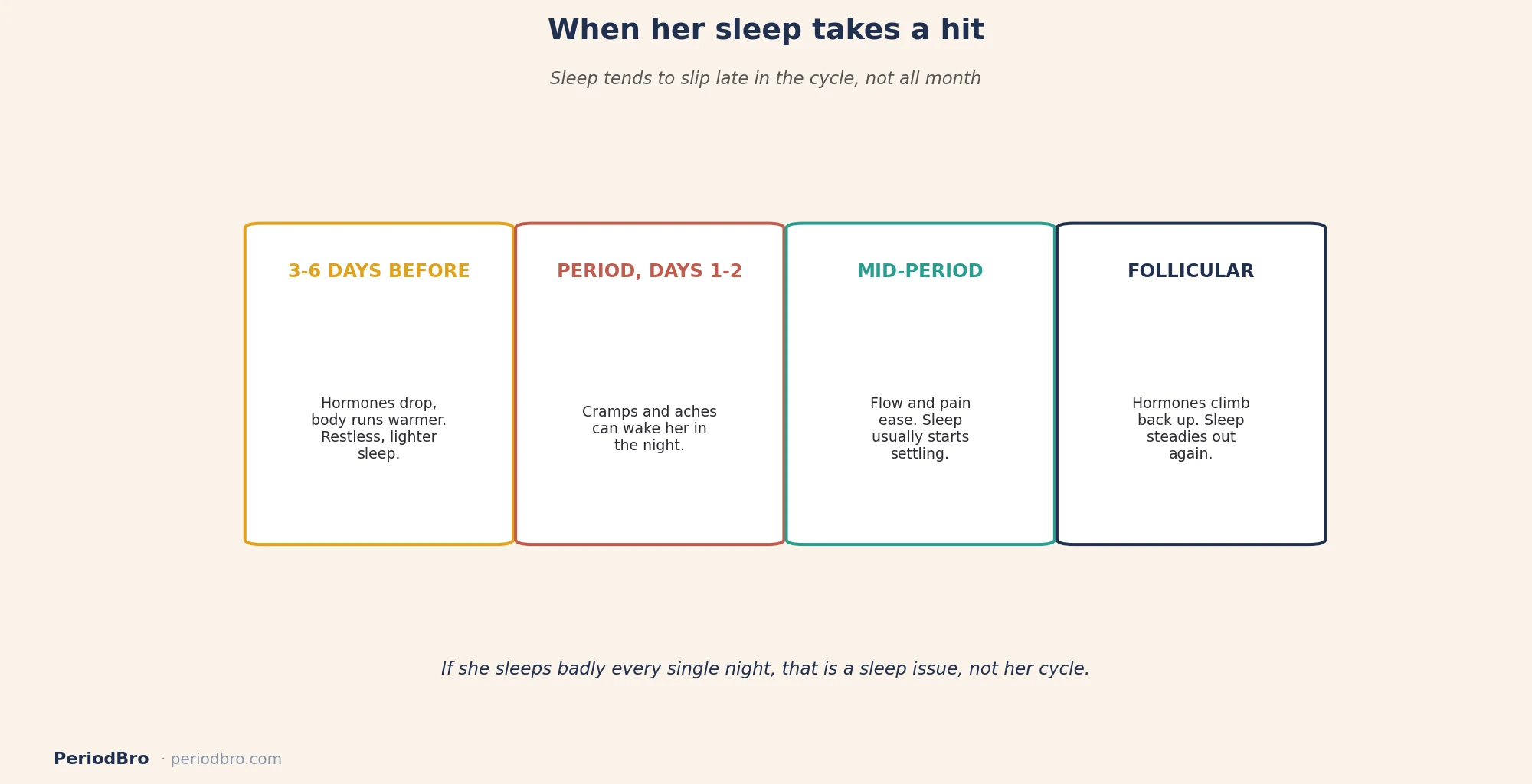
The short version is hormones. In the days before her period, both progesterone and estrogen drop off sharply, and that sudden fall is enough to unsettle sleep for a lot of people. Up to seven in ten women say their sleep changes just before their period, with the worst of it usually landing three to six days out (Sleep Health Foundation on the menstrual cycle and sleep). So the timing you are noticing is the norm, not an outlier.
It is not only about the hormones themselves, it is about what they do to her body overnight. Progesterone helps set her core body temperature, and in the back half of her cycle she runs a little warmer, which makes it harder to fall and stay asleep. Lab studies that actually wire people up while they sleep back this up: in the luteal phase, the stretch after ovulation, women get more arousals and awakenings and less deep, restorative sleep, and the researchers found the speed of the progesterone shift predicted how fragmented that sleep was (objective sleep interruption and reproductive hormones, PMC). In plain terms, her sleep gets lighter and more broken exactly when her hormones are moving fastest.

So is period insomnia a real thing, or is she just stressed?
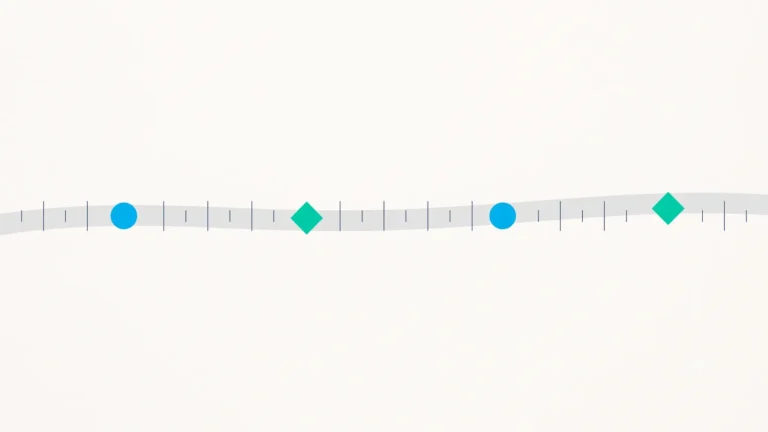
It is real, and it is common enough that sleep clinicians treat it as its own pattern rather than a one-off. The tell is the timing. Ordinary stress-driven insomnia does not politely clock in a few days before her period and clock out once her flow settles. Period insomnia does. If her bad nights cluster in the late luteal phase and the first day or two of bleeding, then ease off, the cycle is the driver (Sleep Foundation on PMS and insomnia).
That timing matters because it changes how you respond. This is not a habits problem she is failing to solve. It is a predictable rough patch, which means the useful move is to see it coming and lower the friction for that week, not to hand her a lecture about screen time. If you want the wider map of how her sleep, energy, and mood all shift across the month, we laid it out in how her sleep changes through her cycle.
The cramps make it worse, and that part you can help with
Hormones set the stage, but pain is often the thing that actually wakes her at 2am. Cramps make muscles tense up, and a body that is bracing cannot drop into sleep, so a cramp that would be a background ache in the daytime becomes the reason she is awake in the dark. Pain is one of the most common sleep-wreckers of the whole period week (Sleep Foundation on PMS and insomnia).
The good news is this is the lever you can actually reach. Heat is the standout. In trials, steady low-level heat on the lower belly eased period pain about as well as ibuprofen (topical heat for period pain, PubMed), so a heating pad or an adhesive heat patch going on before lights-out, rather than after she has already been jolted awake, can be the difference between a broken night and a decent one. Getting the pain handled early also means less need to get up for a painkiller at 3am. If cramps are the main event for her, it is worth reading up on the best ways to ease her period cramps so the pad is not the only tool in the drawer.
How to actually help her sleep on her period
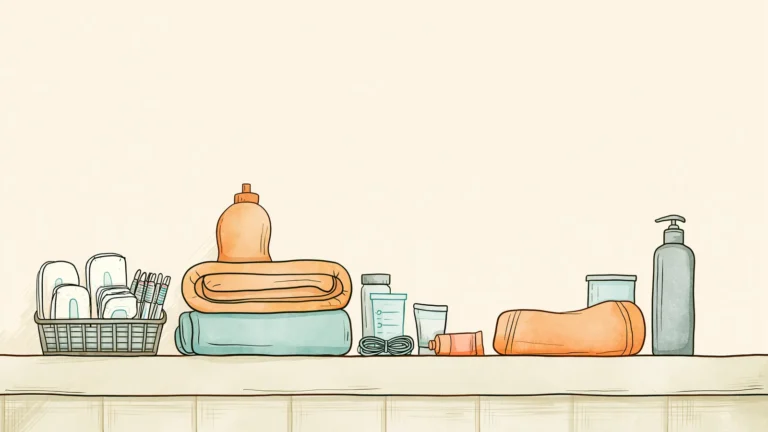
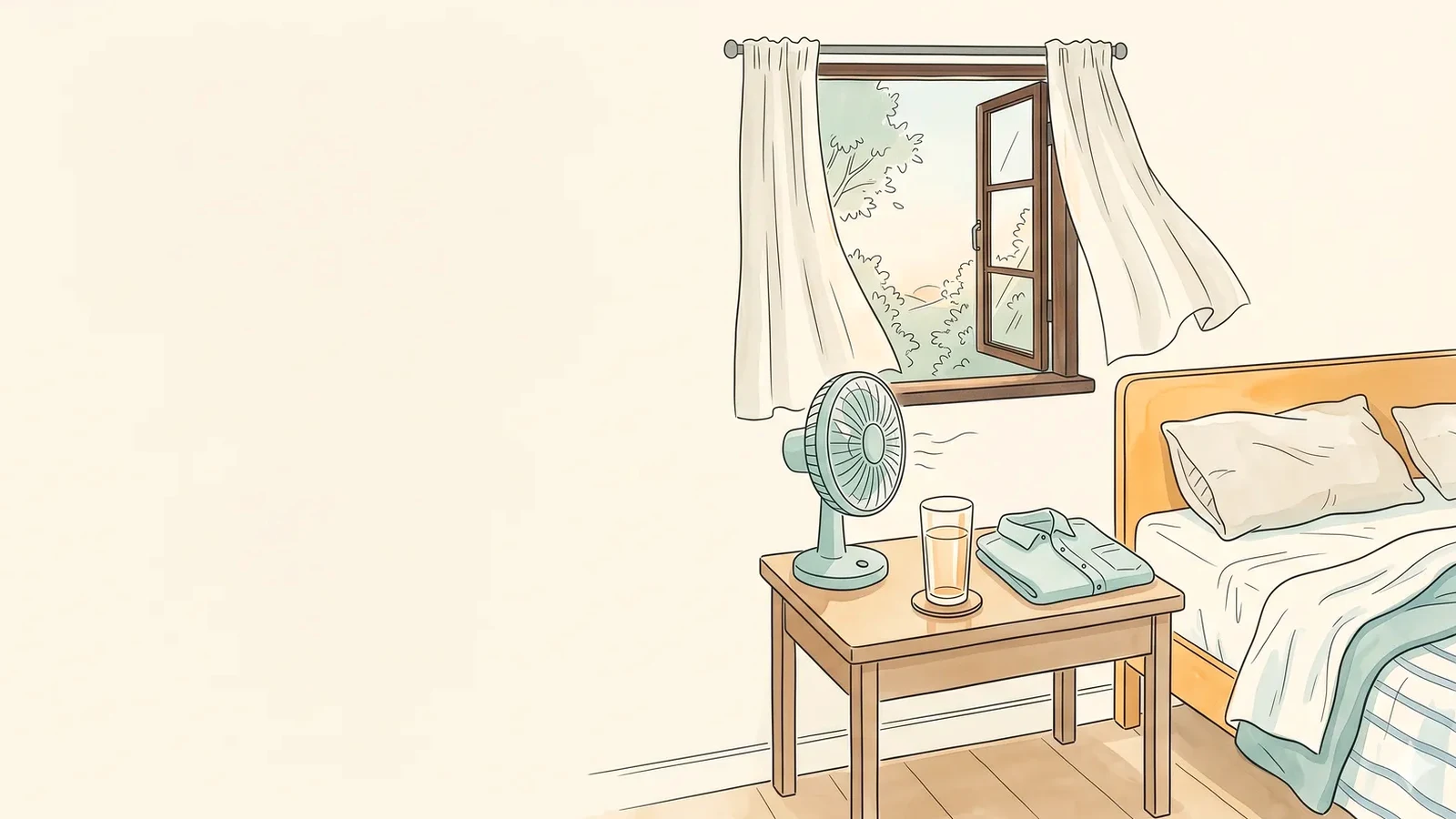
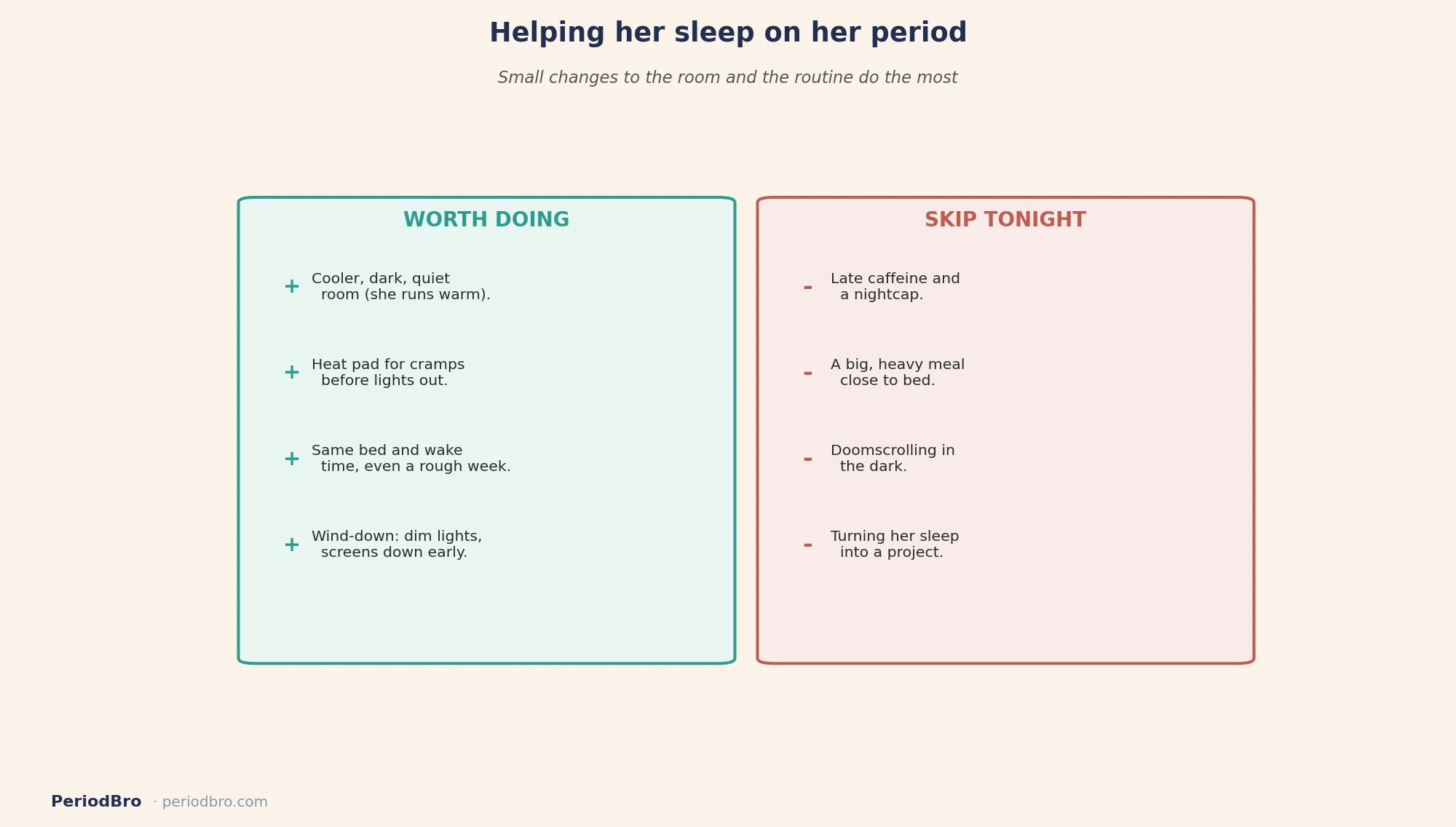
None of this is dramatic. It is a handful of small adjustments that stack up, and most of them you can quietly set up rather than nag her into. Start with the room. Since she is running warm, cooler is better, so drop the thermostat a notch, crack a window, and keep the room dark and quiet. A cool, dark, quiet room is boring advice precisely because it works.
Then protect the wind-down. A consistent bed and wake time, even on a rough week, gives her body clock something steady to hold onto while her hormones are yanking it around. Dim the lights an hour out, get the screens down, and make the bedroom feel like the calm end of the day. On the flip side, the same week is a bad time for a late coffee, a nightcap, or a heavy meal right before bed, since caffeine and alcohol both fragment sleep and a full stomach fights lying down. The one thing to avoid entirely is turning her sleep into a project you are managing. Set the conditions, offer the heat pad, then let her be.
The daytime matters more than people expect, too. Getting some daylight and a bit of movement earlier in the day helps steady her body clock, so it is easier to wind down at night, whereas a late-evening workout can leave her too keyed up to settle (Sleep Foundation on PMS and insomnia). You do not have to enforce any of this. Just knowing that a morning walk beats a 9pm gym session that week lets you nudge the day in a helpful direction instead of an unhelpful one, and it takes the pressure off the bedtime scramble.

When bad sleep is more than her cycle
Cycle-linked insomnia has a shape: it comes on late in her cycle and lifts once her period is underway. If her sleep is wrecked every night of the month, or the daytime tiredness is heavy and relentless, or low mood and anxiety are riding along with it, then the cycle probably is not the whole story and it is worth a chat with a doctor rather than another heat patch. The same goes for cramps that are severe enough to keep her up night after night, since pain like that can point to something beyond ordinary period pain (Mayo Clinic on menstrual cramps). You are not diagnosing anything here. You are just noticing when the pattern stops looking like a normal hard week. A lot of what she is feeling traces back to those hormone swings, and if you want the why behind the mood side of it too, we covered how her hormones drive her mood.
Common questions
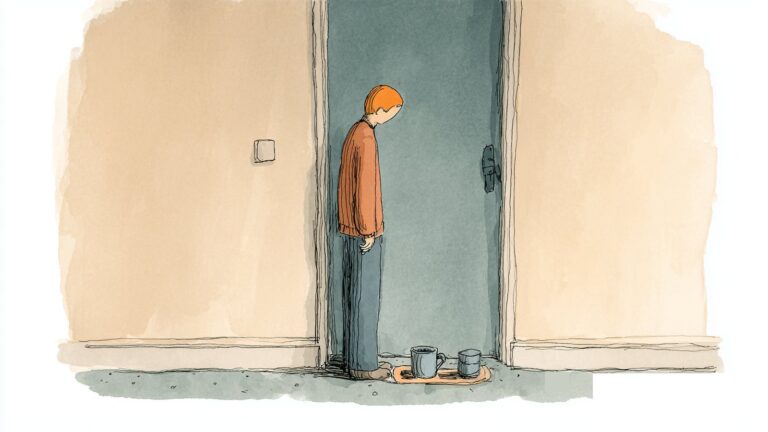
Should I sleep in the other room when she is like this? Ask, do not assume. Some people sleep better with the bed to themselves on a hot, restless night, others want you there. Offering the option is thoughtful. Disappearing without a word reads as retreat.
Does she just need more magnesium or a supplement? Maybe, maybe not. The basics, a cool room, steady schedule, heat for cramps, and easing off late caffeine, do more for most people than any pill. Treat supplements as an extra to run past a pharmacist or doctor, not the fix.
Why is she wide awake and exhausted at the same time? That is the signature of it. The hormone drop leaves her tired but wired, so her body wants sleep and cannot settle into it. It is frustrating and it is not a willpower failure.
The takeaway is simple. Her sleep going sideways for a week is a real, predictable part of her cycle, not a mood or a habit she is getting wrong. Knowing the rough week is coming means the heat pad is charged, the room is cool, and you are a bit more forgiving of a short fuse, before she is lying awake at 2am. That is the whole idea behind what we build, and it is a small part of being a better partner through her whole cycle.
This article is general information, not medical advice. Ongoing insomnia, heavy daytime tiredness, or severe period pain are worth raising with a healthcare professional.