Period Sex: A Partner’s Guide to What’s Normal, What’s Safe, and How to Bring It Up
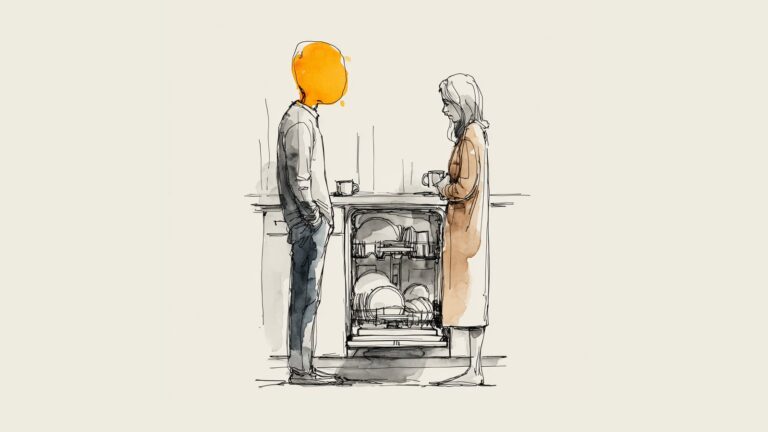
The first time I asked my partner about period sex, I made it weird. I picked the wrong moment, used a tone that sounded more like a permission slip than a question, and watched her face do the thing it does when she is about to laugh out of awkwardness. We did not have sex that night. We did, however, finally talk about something neither of us had said out loud in three years together. Which is that I had been quietly trying to figure out a question I assumed only I had.
I am not the only one. If you have ever stood in the kitchen at 11pm wondering whether wanting your partner during her period makes you a bad person, or whether not wanting it makes you a cold one, or how the question is even supposed to be raised without it landing as pressure, you have a lot of company. The answers are mostly easy. The asking is hard. This piece is the playbook I wish I had then.
A small note before we start. The published research on cycle-by-cycle desire is messier than wellness blogs make it sound. I am going to share the patterns that hold up across multiple studies, and I am going to flag where the picture is more complicated than a single curve suggests. If you want one number, this is not the article. If you want the actual shape of a real thing, keep reading.
Is period sex normal?
Short answer: yes. Long answer: yes, with the boring honesty that “normal” covers a much wider range than most people think.
A meaningful share of couples have sex during a period at least sometimes. Plenty of others never do, by preference of one partner or both. Both of those are inside the range of normal adult relationships. The cultural baseline tells you it is supposed to be either a big taboo or a sexy edge case, and neither matches what actually happens in most homes, which is that people negotiate it the way they negotiate everything else: case by case, with mood and timing and who is more tired.
The part that surprised me when I started reading was who actually puts the brakes on. The conventional wisdom in the partner’s head is “she will think I’m gross for wanting it.” The conventional reality is that the person more likely to say no is the one menstruating, for reasons that have nothing to do with what her partner thinks and everything to do with how she feels. Cramps, fatigue, the practical question of laundry, sometimes a flat unsexy mood. None of that is about you.
That is worth sitting with for a second, because the assumption sets the whole conversation off on the wrong foot. If you walk in expecting her to recoil, you raise it like you are confessing. If you walk in knowing that her answer is mostly about her body that day, you can ask the way you would ask about anything else.
Is period sex safe?
Yes, with three honest footnotes. None of them are dramatic. All of them are worth knowing.
Pregnancy is less likely, but not impossible. Sperm can survive for several days in the reproductive tract. For someone with a shorter or irregular cycle, sex toward the end of a period can overlap with the start of a fertile window. If you are not trying to conceive, use the contraception you would normally use. Period blood is not contraception.
STIs that travel in blood can travel through period sex. HIV, hepatitis B and hepatitis C are bloodborne, and menstrual blood is a recognized route of transmission for all three (CDC). The point is not that period sex is risky in a quantified way – there is no published “elevated risk” number specifically for it – but that if you do not already use barrier methods, this is a reasonable moment to start, especially if you have not had a recent test together. This is the same advice you would get at any decent clinic.
Remove a tampon first. A tampon can get pushed up and stuck during sex, which is unpleasant on its own, and a forgotten tampon carries a rare but real risk of toxic shock syndrome. Worth the ten seconds.
That is the medical scope. There is no list of things you cannot do. There is no “doctors say to avoid.” Anyone who tells you otherwise is selling something.
The thing nobody tells partners: desire runs on a cycle, not a weekly average
This is the part that quietly changed my whole relationship, and I am going to spend the most time on it because almost nobody puts it this clearly to the partner.
You have probably heard, in some form, that the average married couple has sex about once a week. That number gets repeated everywhere, sometimes as comfort, sometimes as a benchmark, sometimes as a quiet bar to measure your own life against. The number is roughly real. It is also misleading in a specific way that matters.
The “once a week” average is averaged across time. Across many couples, across many months, across many phases of life. What it hides is that desire does not arrive in equal weekly portions. For a lot of people with a regular menstrual cycle, desire has a direction across the month. It tends to rise in the late-follicular phase and around ovulation, and it tends to ease in the luteal phase and the menstrual phase. The pattern is not enormous. It is not the same in every person. Some people feel it strongly, some barely notice, a few have peaks in unusual places. But on average, across the population, the pattern is real and it has been reproduced in study after study.
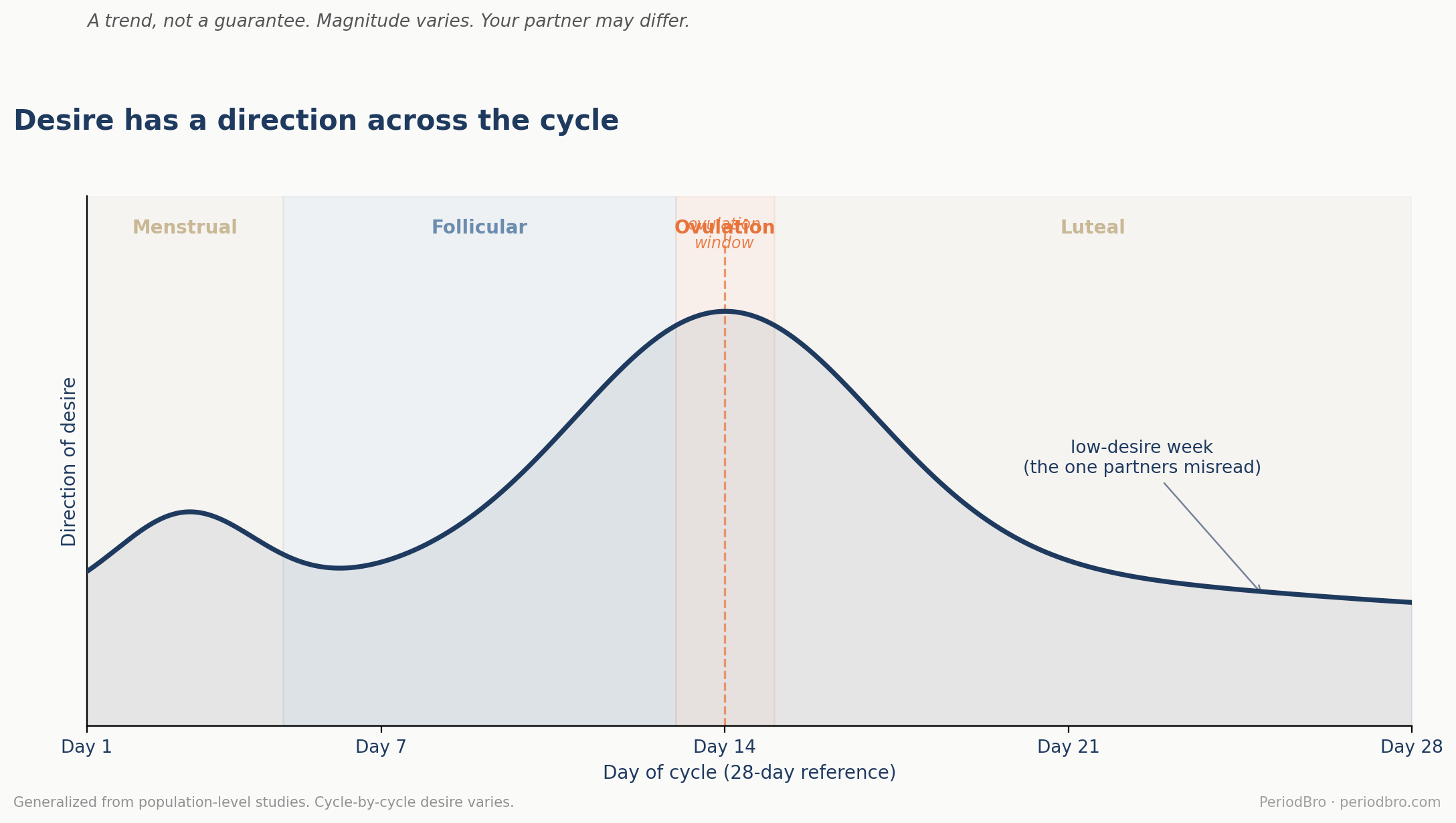
What that means in practice: a “once a week” average can hide a couple where one week of the month has four nights of high desire and another week has zero. Measured by the week, that couple looks like they are breaking. Measured by the cycle, they are running on a rhythm that millions of other people also run on. Two completely different stories from the same numbers.
This is the reframe the whole article is built on, so let me say it directly. You are not comparing your sex life to an even line. You are comparing it to a curve. And if you do not know the shape of the curve, every dip looks like a verdict on you.
A trend, not a law. Before anyone takes this and runs too far with it: the cycle-desire pattern is real on average, but it varies a lot from person to person. Some people feel a strong shift, some feel almost none. A few experience a small second peak around menstruation. Hormonal birth control flattens the pattern almost entirely for many users. Mood, sleep, stress, chemistry with the partner – all of these matter more than the phase in any given week. If your partner’s pattern does not match what I am describing, your partner’s pattern is the real one. The curve is a starting place for understanding, not a script to expect.
Reading her low-desire week as a phase, not a rejection
Here is where I have to be specific about a thing that almost no article for partners says clearly.
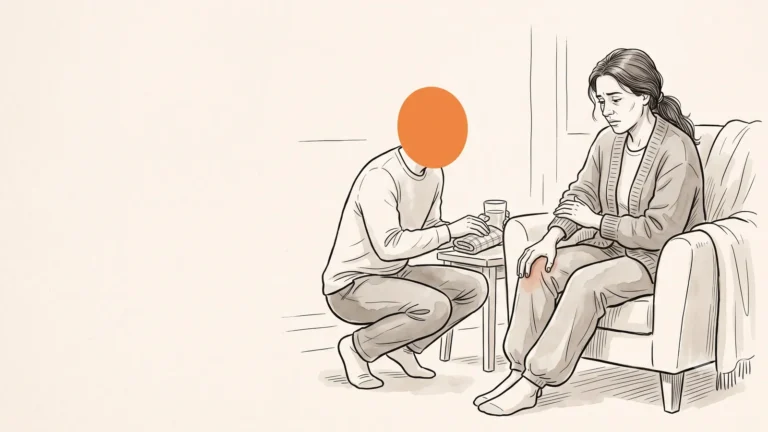
When desire dips, partners take it personally. Not always overtly. Sometimes it shows up as a quiet “did I do something.” Sometimes as a slow withdrawal. Sometimes as the moment in bed where you reach over and she does not turn toward you, and you turn back to the wall and start running the past two weeks for a clue. None of that is healthy, and most of it is unnecessary, and almost all of it traces back to not having a frame for what is happening.

The pattern I had to learn: in the second half of her cycle, particularly the four or five days right before her period, my partner’s body is moving toward something. Energy ebbs. Mood gets more variable. Sleep gets shorter or weirder. Cramps start in some months. The same person who initiated sex three times the previous week is, this week, mostly interested in the couch and the dog. None of this is about me. None of it is a verdict on the relationship. It is a phase, with a calendar.
This is one common version of the pattern, not the only one. Some people have shorter luteal phases and barely notice the dip. Some have longer, more turbulent ones. A few hit their lowest patch right at the start of bleeding rather than before it. The point is not that your partner’s body follows a textbook week. The point is that there is a phase logic underneath the days, and once you know that, you stop looking for a personal cause for something that does not have one.
If you can hold that frame, two things change. First, you stop reading the low week as a rejection, which means you stop doing the small needy behaviors that make it worse. Second, you start showing up in the low week the way the low week actually calls for, which is mostly presence without pressure. The couch. The grocery run. The good dinner that does not require her to entertain you. The not-asking.
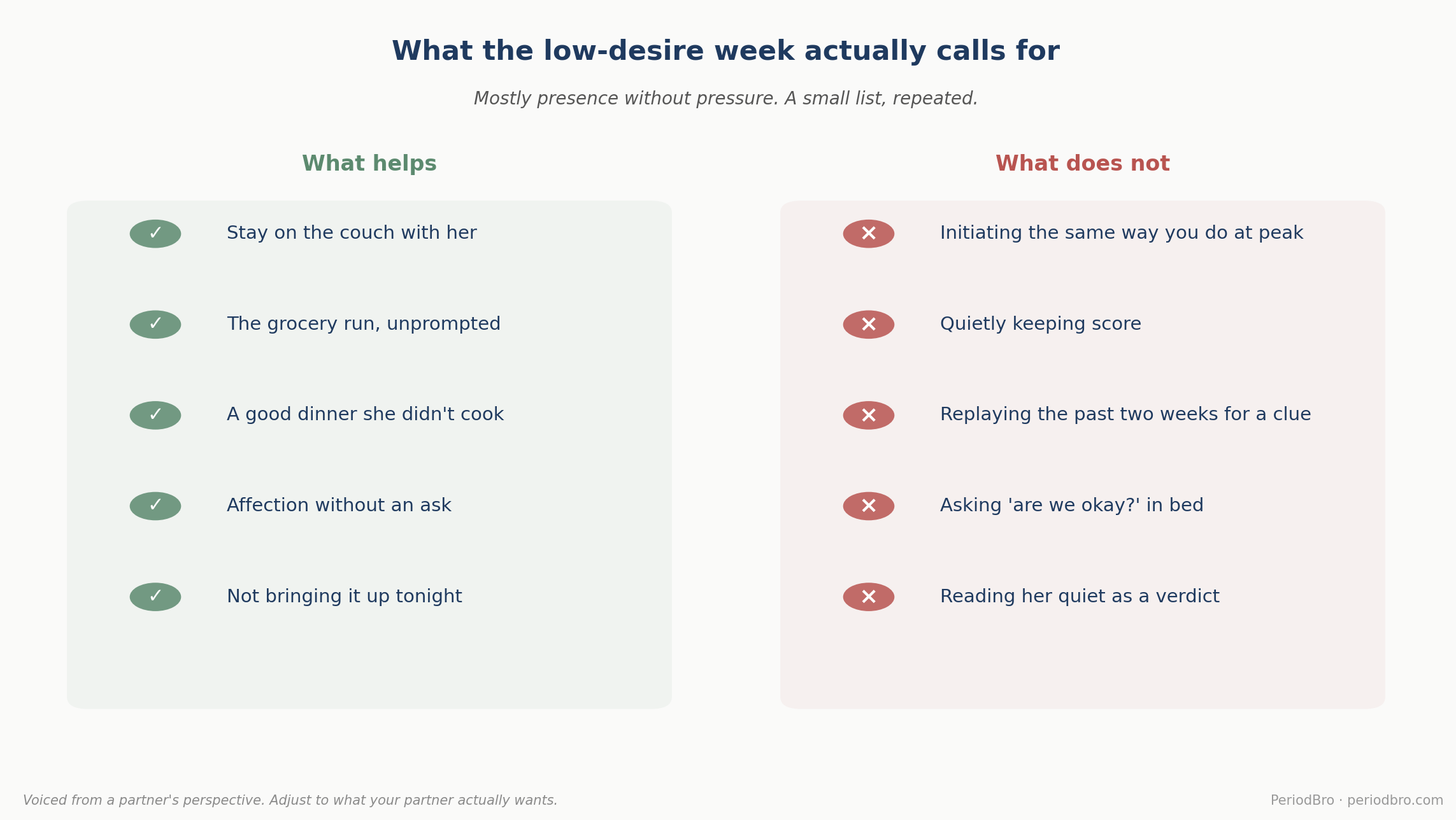
I want to name a thing my brain used to do when I had not yet learned this, because if you do not see it you cannot stop it. I would quietly start keeping score. Two weeks of low frequency would start to feel, by the third week, like an active pattern. I would replay things I had said. I would wonder if her ex had been different. I would, in the worst version of myself, get a little resentful and let it leak into my tone. None of that helped anyone. All of it would have been prevented by knowing what I am telling you now: a low week in the cycle is not a verdict, and the way to make sure it does not become one is to not treat it as one.
If you are reading this with a tight stomach because you recognize the score-keeping, you are not a bad partner. You are a partner without the frame. The frame is what fixes it.
How to bring it up without it landing as pressure
The mechanics here are simpler than people expect, once you accept one rule: do not raise the topic in bed in the moment of trying. That single move, more than anything else, is what makes period sex feel like pressure even when nothing else about your behavior is pressuring.

In the moment, you are warm and a bit hopeful and slightly vulnerable, and you reach over with a tone that is already 70 percent question. She is in her own state, which may be tired or hopeful or anywhere in between. The window for her to give a free no is small, and the window for her to give a free yes is even smaller. Most of what happens in that moment ends with one of you slightly disappointed, and neither of you having had an honest conversation.
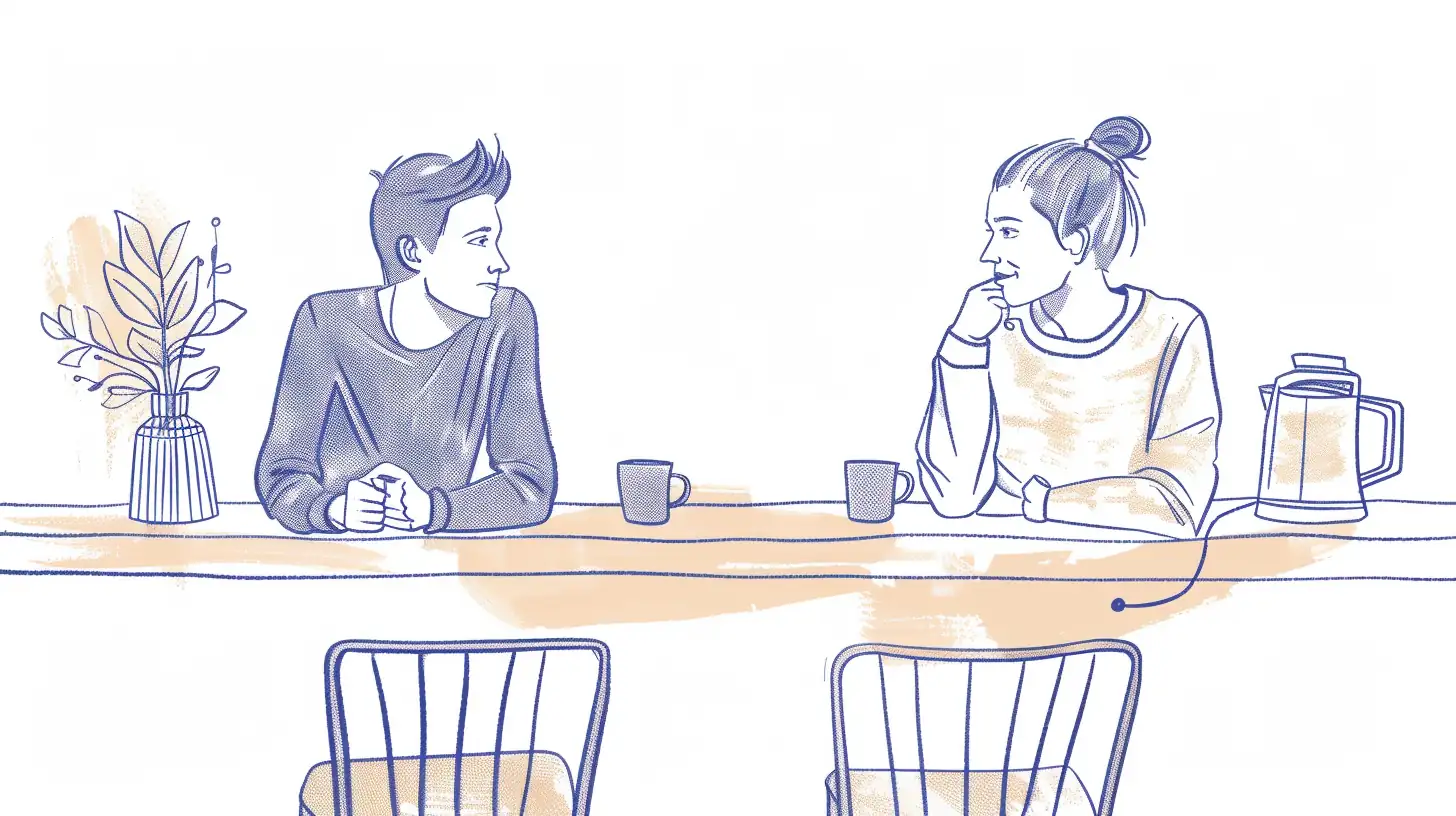
The fix is to raise the topic at a completely different time. Folding laundry. Walking the dog. The car. Anywhere that is not bed, not foreplay, not the lead-up to anything. The tone is curious, not negotiating. The shape is, “I have been wondering whether period sex is something you ever want, or whether it is a no for you. I am fine either way, I just realized we have never actually talked about it.” That is the whole script. You do not need a longer version.
Three things that script does, in case it is useful to know why it works. It separates the question from any specific instance, so neither of you has to defend a yes or a no in the moment. It gives her a clear no-cost path, which is the only kind of conversation in which she can answer honestly. And it signals, by your willingness to ask, that you understand this is a real question with multiple right answers, not a default she is supposed to clear.
A few partner-side honest moments inside that conversation are usually worth more than any clever framing. “I want to ask because I do not want to misread anything.” “I noticed I have been quietly weird about it and I would rather just talk.” “I have been told my whole life this should be obvious one way or the other, and it has never felt obvious to me.” Any of those is more useful than the carefully neutral version your brain wants to write.
One more piece. If her answer is no, or “not really,” or “depends on the day,” the work afterward is to not treat that as a problem to solve. You asked because you wanted to know. Now you know. Adjust your assumptions, drop the pressure entirely, and keep the rest of your relationship going. The conversation is the result. Sex is not the metric.
Practical notes if you both want to
If you have had the conversation and she is into the idea sometimes, the logistics are mundane. I am going to keep this section short because I think the long version has done more work than the practical bit.
A dark towel handles most of the cleanup question without making either of you think about it. Showers afterward are nice and uncomplicated. Lighter flow days are easier if either of you is squeamish about the heavier ones. A barrier method, if you do not use one routinely, is a reasonable plus given the slightly elevated STI exposure I mentioned earlier. Removing the tampon first is the only specific medical do.
There is a separate question that comes up enough to mention here. Some people find that orgasm in the early days of a period helps with cramps. The mechanism is plausible – orgasm involves uterine contractions that may help shed the lining and release endorphins that act as natural pain relievers. The data is mostly anecdotal. If it works for your partner, that is a real thing. If it does not, that is also real. Do not promise it. Do not use it as a reason. It is a “sometimes for some people” thing, not a prescription.
The last note is the most important and the easiest to forget. None of the practical stuff matters if either of you is not actually in the mood. The practical question is downstream of the desire question. The desire question is downstream of where she is in her cycle, what kind of day she had, what kind of presence you have brought into the week, and a dozen other things that are not on a calendar. The whole point of this article is that you do not optimize for the night. You build the week.
A short note on when low desire is worth a conversation with a clinician
I want to draw one line clearly. The low-desire week in a cycle is normal and does not need fixing. A persistent and distressing low desire that does not come and go with the cycle is a different thing, and it is worth a clinician. The signs that you are looking at something more than a phase are: it lasts for months, it bothers her, it is not better at any point in the cycle, and it is not obviously tied to a major stressor. None of those tell you the cause. All of them tell you that a doctor is the right next step, not a partner trying to fix it.
If your partner’s low desire bothers you but not her, that is yours to sit with, not hers to solve. If it bothers her, encourage the doctor visit and offer to come with her. Do not, under any circumstance, deliver this advice in a way that suggests she is broken. There is a whole industry of partners who quietly diagnose their partners with low libido, and almost none of them are right about what they are seeing.
What I would tell my earlier self in one paragraph
Period sex is mostly a question about communication, not biology. Desire is mostly a question about phase, not effort. The number that tells you whether your sex life is healthy is not a weekly count. It is whether you can have an honest conversation in the kitchen about what either of you wants, without it ending in pressure or silence. If you can do that, the rest works itself out across a month. If you cannot, no number of period-week initiations is going to help.
Three years ago, I did not know any of this. I thought I was supposed to keep score. I thought desire was a constant and that variation meant something was wrong. I thought asking made me a worse partner. I was wrong on all tree. The frame that fixed it was not a sex technique. It was learning to see a curve where I had been seeing a line.
One small thing the app does, mentioned only because it is the actual job it does. The app shows your partner’s pattern instead of an internet-average number, so the low-desire week reads as a phase you can see coming, not a rejection. That is the whole pitch. If you want to try it, it is at app.periodbro.com.
Sources and further reading
The medical claims in this article were checked against current guidance. If you want to read the underlying sources:
- Cycle-by-cycle desire trend. Roney & Simmons, Hormones and Behavior, on hormonal predictors of women’s sexual motivation. Recent review: “Female Sexual Desire and Behavior Across the Menstrual Cycle,” Journal of Sex & Marital Therapy, 2025. Both confirm a population-level mid-cycle rise with substantial individual variation.
- Hormonal birth control flattens the pattern. Multiple analyses in Collabra: Psychology (2021) and successor reviews, showing reduced cyclic variation in desire among users of combined hormonal contraceptives.
- Once-a-week frequency baseline. US General Social Survey trend data, and Muise, Schimmack & Impett (2016) Social Psychological and Personality Science, “Sexual Frequency Predicts Greater Well-Being, But More is Not Always Better” (the curvilinear-plateau finding).
- Bloodborne STI guidance. CDC bloodborne pathogens guidance for HIV/HBV/HCV.
- Sperm survival window. ACOG patient education on fertility awareness.
- Toxic shock syndrome risk from a retained tampon. Mayo Clinic patient guidance on TSS.
- Persistent low desire (HSDD). ISSWSH/ICSM expert consensus statements; ICD-11 retains the HSDD category with distress and duration criteria.
Related reading
- menstrual cycle phases explained for men – the biology under the desire shifts
- how to support girlfriend on her period – how to show up in the low-desire week
- cycle awareness for partners – what cycle awareness actually changes between two people

Medical disclaimer: PeriodBro provides educational information from a partner perspective and is not a substitute for professional medical advice. Always consult a qualified healthcare provider for personal medical decisions or any persistent concern about desire, pain, bleeding, or contraception.