Period Diarrhea: Why Her Stomach Acts Up Around Her Period (and How to Help)
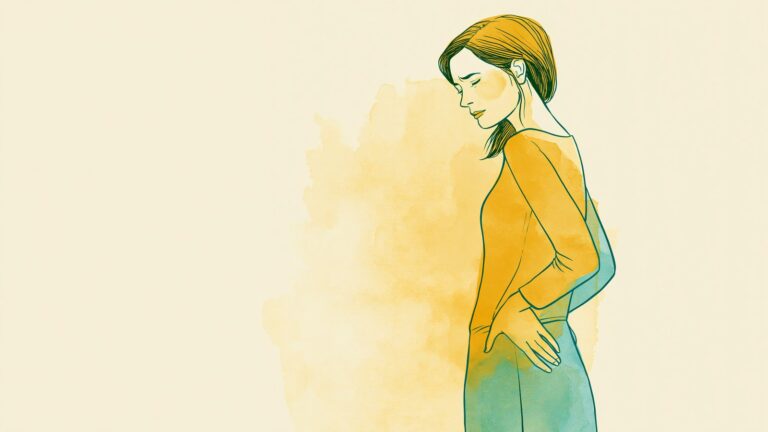
The first time my partner disappeared into the bathroom three times before breakfast on the first morning of her period, I genuinely thought she’d caught a stomach bug. She hadn’t. Her body was just doing the thing almost nobody warns you about: the same hormones that bring on cramps also hit the gut. That’s period diarrhea, and for most people it’s completely normal.
It took me embarrassingly little reading to understand it, and once I did, I stopped hovering with a thermometer and started being useful. Here’s what’s actually going on, and what you can quietly do about it.
What period diarrhea actually is
Right before her period starts, her body releases prostaglandins, fatty-acid compounds that make the smooth muscle of the uterus contract so it can shed its lining. That’s the engine behind cramps. The catch is that the uterus doesn’t get a private supply. Those prostaglandins spill over to the smooth muscle right next door, including her intestines, and speed everything up. Faster gut contractions mean looser, more frequent stools, and sometimes outright diarrhea. As Cleveland Clinic puts it, the same prostaglandins that work on the uterus “can have a similar impact on your bowels, leading to more poop, and even diarrhea.”
There’s a second lever, too. Through most of the back half of her cycle, the luteal phase, progesterone runs high, and progesterone tends to slow the gut down. That’s why a lot of people feel backed up and constipated in the days before their period. Then the period arrives, progesterone drops off a cliff, the brake comes off, and the bowel swings hard the other way. Constipated one week, running to the bathroom the next. It’s the same hormonal shift you may have read about driving her luteal-phase mood and energy, just playing out in her digestive system instead.
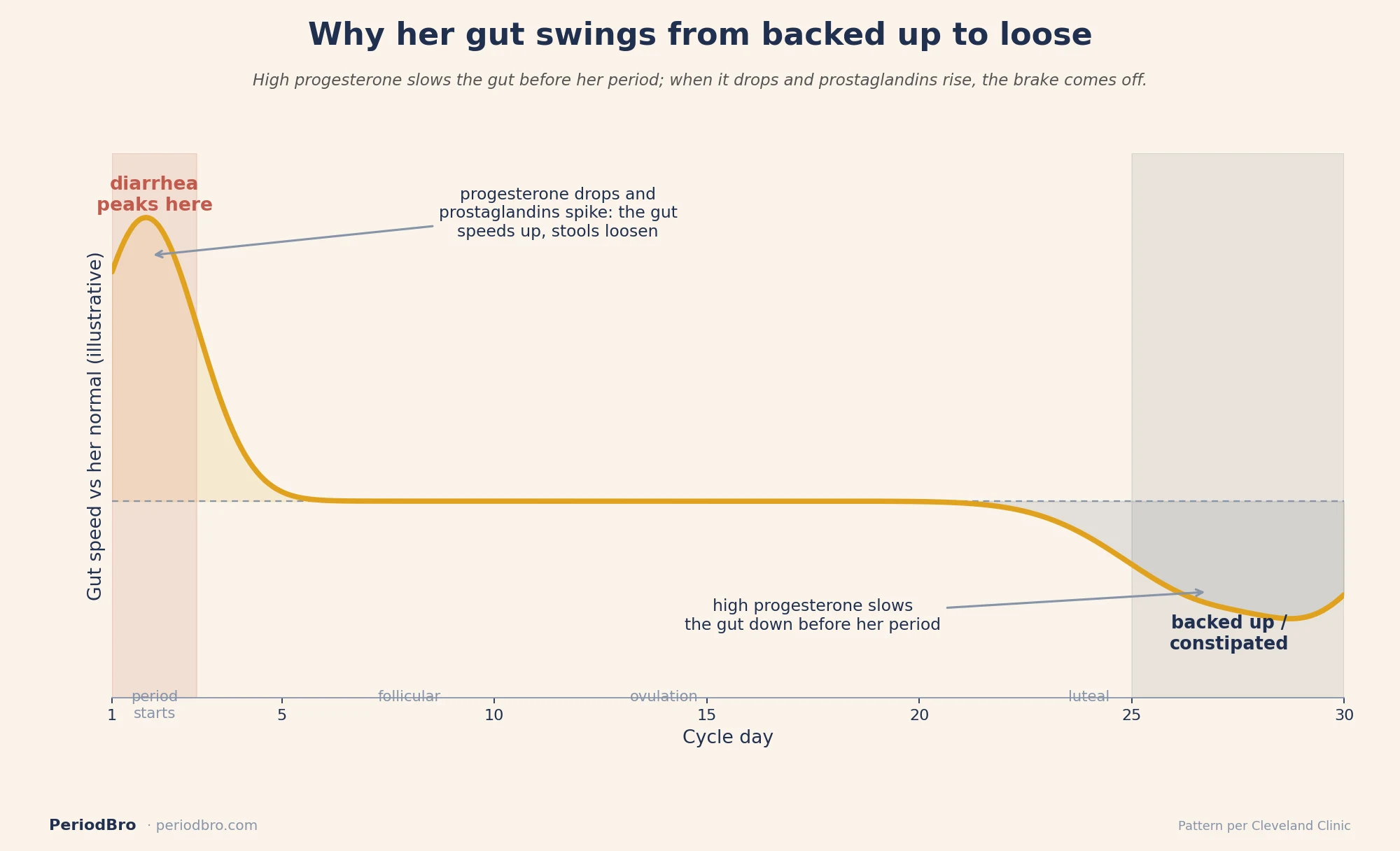
It helps to think of it the way her body does. Until ovulation, everything is geared toward maybe accepting a pregnancy. Once the period starts, the system flips into clear-it-out mode. The loose stools are part of that reset, not a malfunction.
Worth knowing, too: it doesn’t look the same for everyone, and it doesn’t even look the same for the same person every month. Some people mostly get diarrhea, some get nausea or a queasy, off-food feeling, some get constipated and bloated instead, and plenty get some mix that shifts cycle to cycle. So if last month was a rough bathroom day and this month she’s bloated and backed up, that’s not a contradiction. It’s the same hormonal tide, just hitting the gut a little differently.

How common this is (way more than you’d think)
If you’ve never heard a single word about this, that’s not because it’s rare. It’s because almost nobody talks about it. In one study of healthy women, around 73% reported at least one gastrointestinal symptom, things like diarrhea, nausea, or abdominal pain, in the days just before or during their period. That’s not a fringe few. That’s most.
Researchers who tracked bowel habits day by day across the menstrual cycle found the same thing from the data side: stool frequency and form measurably shift with the calendar, with the loosest and most frequent stools clustering right around the onset of bleeding. So when it feels like clockwork, fine all month and then a rough day or two when her period lands, that’s exactly the pattern the science shows. It’s biology on a schedule, not something she ate, and definitely not something you did.
This also tends to travel with the wider flu-like premenstrual package, the achy, queasy, run-down feeling some people get that’s sometimes called period flu. If the bathroom trips come bundled with body aches and low-grade misery, you’re looking at the same underlying hormone-and-prostaglandin story expressing itself in more than one place at once.
What actually helps (your part)
Here’s the freeing part: you don’t need to fix this, and you genuinely can’t. What you can do is make a rough day a lot softer. A few moves that actually land:
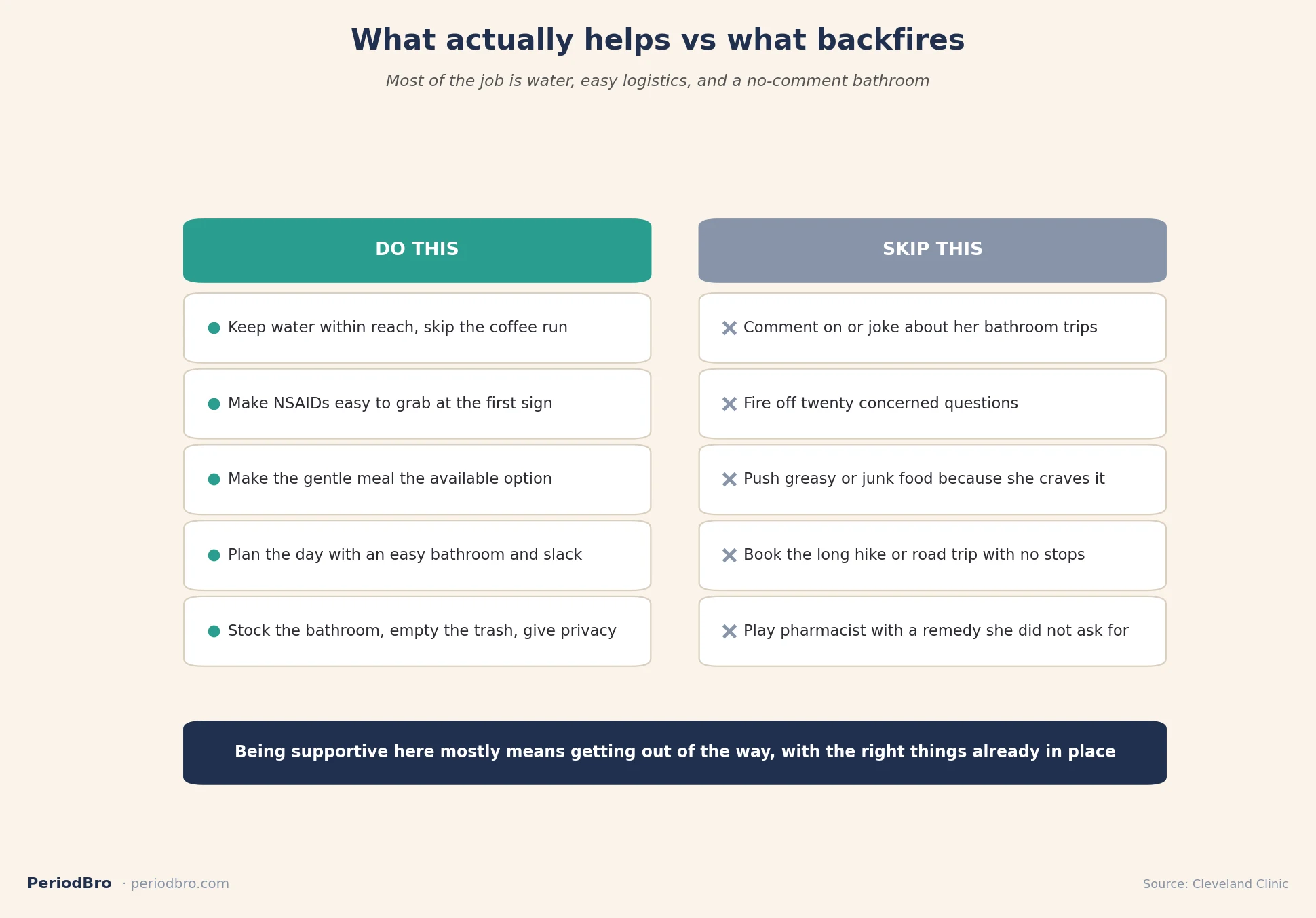
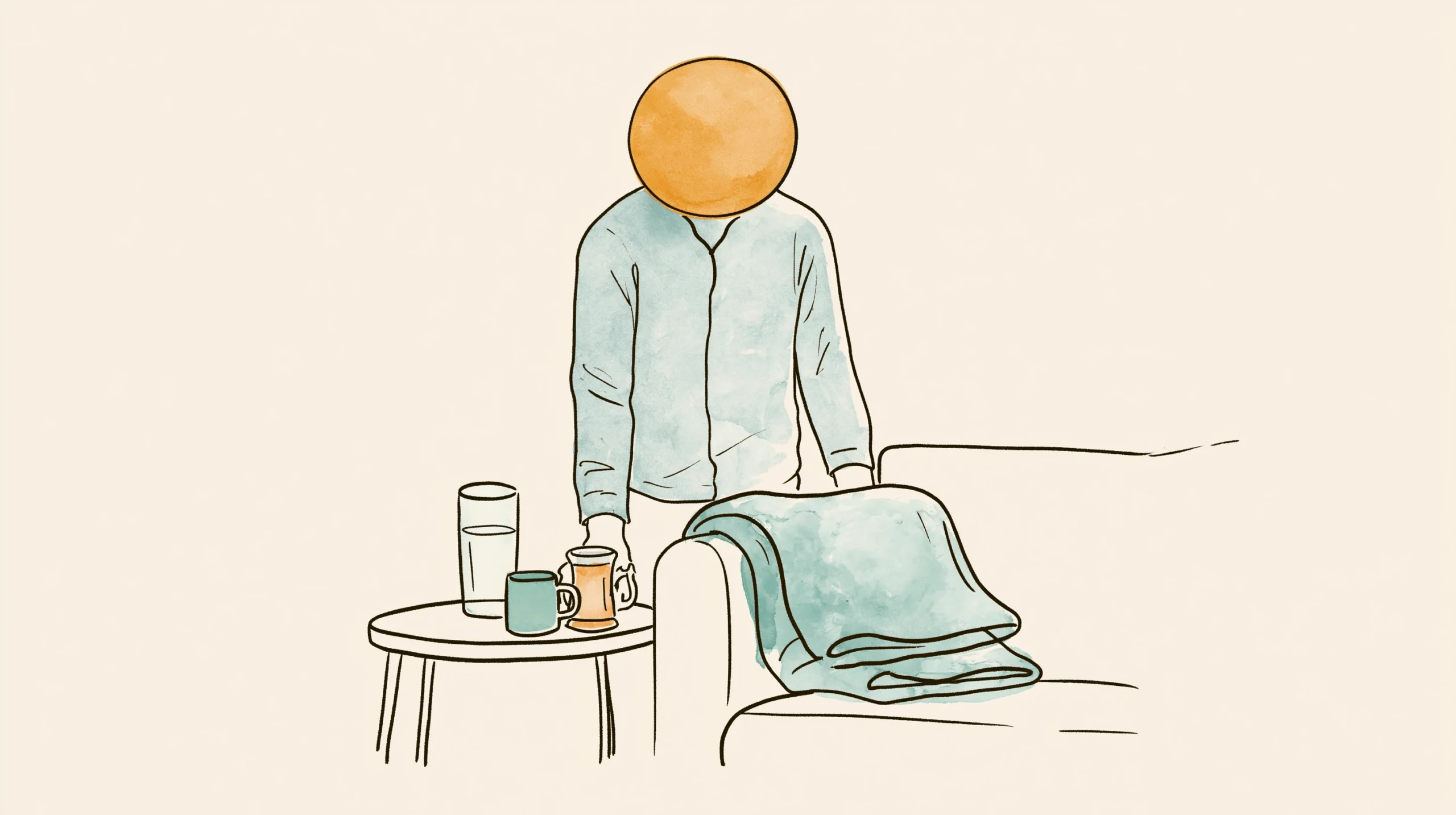
Keep her hydrated. Diarrhea pulls water out of her, and dehydration quietly makes everything worse, including the cramps, the fatigue, and the headaches. Have water within reach, and maybe skip the morning coffee run, because caffeine has a laxative kick she doesn’t need right then.
Get ahead of the prostaglandins. Taking ibuprofen at the first sign, before the worst of it sets in, can blunt prostaglandin release, which is part of why an NSAID can ease both the cramps and the gut at once. There’s more on the trade-offs in this partner’s guide to period pain relief, but the short version is simple: it’s her call, you follow the label, you don’t play pharmacist.
Keep the food simple. The pre-period cravings for salty, greasy, sugary stuff are real, but that’s exactly the food that turns an unhappy gut into a furious one. You don’t lecture her about it. You just make the easy option the available option: a gentle meal, some fruit, a bit of fiber, instead of a counter full of takeout. The same calm, prepared approach works for the cramps that ride alongside the bowel stuff.
Plan around it instead of through it. If you know her period is about to land, that’s not the morning to book the three-hour hike with no bathroom in sight, or the long road trip with no stops. You don’t have to say why. You just build a little slack into the plan, pick the place with an easy exit, and let the day be loose enough that a sudden detour isn’t a crisis. Quiet logistics beat grand gestures here every time.
And the one most men get wrong: don’t make it a thing. Nobody on earth wants running commentary on their bowels. You don’t announce it, you don’t joke about it, you don’t fire off twenty concerned questions. You quietly make sure the bathroom’s stocked, the trash is empty, there’s a clear path, and she has privacy. The shift for me was realizing that being supportive here mostly means getting out of the way, with the right things already in place.

When period diarrhea is worth a doctor’s look
Most of the time this is just an annoying day that passes. But a few patterns are worth noticing, and worth her mentioning to a doctor:
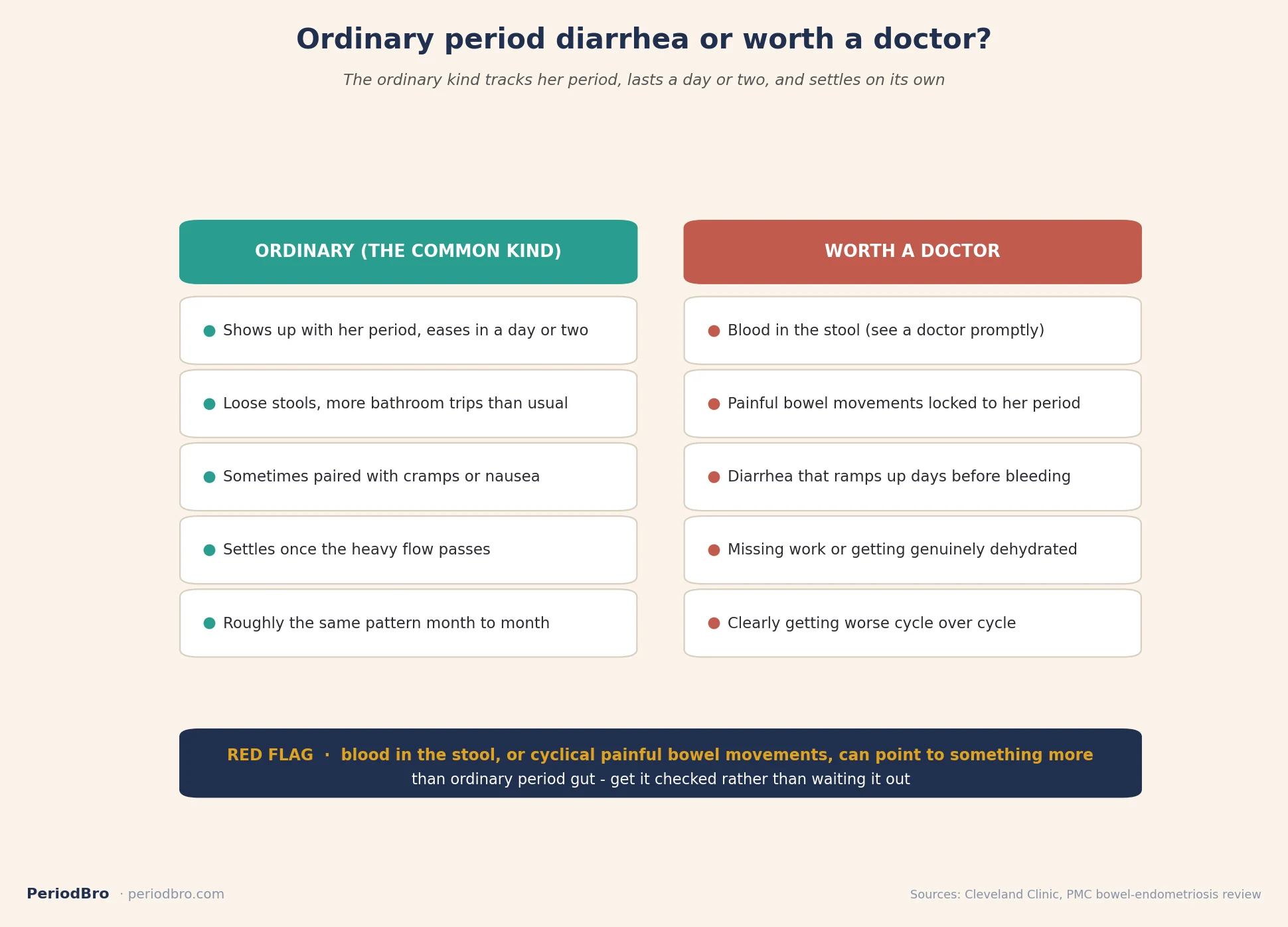
Blood in her stool. Cleveland Clinic is blunt about this one: pain along with blood in the stool should be seen by a physician as soon as possible to rule out something more serious. This isn’t a wait-and-see.
Bowel pain that shows up like clockwork with her period, especially painful bowel movements, or diarrhea that ramps up two or three days before the bleeding starts. Cyclical, period-locked bowel symptoms can be a sign of bowel endometriosis, which is badly under-diagnosed and routinely brushed off for years before anyone takes it seriously.
It’s debilitating, not just inconvenient. If she’s missing work, getting genuinely dehydrated, or it’s clearly getting worse cycle over cycle, that’s a real conversation to have. People who already live with IBS or Crohn’s often find their symptoms flare around their period, and a doctor can actually help manage that instead of leaving her to white-knuckle it every month.
None of this is meant to alarm you. It’s so that if she ever says “this is more than normal,” you take it at face value, help her get seen, and don’t quietly file it under “she’ll be fine.”
The one thing to remember
If you do nothing else, do this: treat the rough day as predictable, not mysterious. Have a rough sense of when her period lands, keep water and her go-to comforts within reach, and make the bathroom a no-comment zone. That’s the whole job. You’re not diagnosing anything and you’re not rescuing anyone. You’re just the person who already had it handled before she had to ask.
That last part, seeing the window coming instead of getting blindsided by it, is exactly what PeriodBro is built for: a private, partner-first way to know what’s likely on the way so you can show up early and quietly.
This article is for general information and isn’t medical advice. If her symptoms are severe, include blood in the stool, or worry either of you, talk to a healthcare provider.