When to Go to the ER for Period Pain: A Partner’s Checklist
A while back, at about two in the morning, my girlfriend was curled on the bathroom floor with cramps worse than anything I’d seen from her. I stood in the doorway holding my car keys and had no idea whether this was a “heating pad and ibuprofen” night or a “go to the hospital now” night. She didn’t know either. We ended up calling a nurse line, which was the right call, but I hated not knowing what to look for.
Most period pain, even bad period pain, can be handled at home. A few situations can’t. This guide covers when to go to the ER for period pain, when a same-day call to her doctor is enough, and what you can do as the person standing in the doorway.
Most bad nights are not emergencies
Period cramps come from the uterus contracting, driven by chemicals called prostaglandins. They usually start just before or at the start of bleeding and ease over two to three days. Over-the-counter pain relievers like ibuprofen, heat and rest help most people (ACOG).
Pain that’s familiar, shows up at the usual point in her cycle and responds to the usual fixes is very unlikely to need an ER. That doesn’t mean it’s fine to ignore. If her periods regularly knock her out of work or school, that’s worth a proper appointment, and our guide to whether her period pain is normal covers where the line is. But it’s a doctor’s office problem, not an emergency room one.
The red flags below are the things that change that.
Why people wait too long
In practice, people are far more likely to sit at home with something serious than to rush to the ER over ordinary cramps, mostly because nobody wants to make a fuss. Plenty of women have spent years being told that period pain is just part of life, so by the time something is genuinely wrong, she may be the last person to call it an emergency. She might worry about the bill, about looking dramatic, or about being sent home with “it’s just cramps.”
Partners hesitate for their own reasons. You don’t want to overrule her, and you don’t want to be the guy who panicked. That’s where knowing the specific red flags helps. You’re not guessing or overreacting if you can say “this is sudden, one-sided and she’s throwing up, so we’re going.” Agreeing on that list together on a calm day, before you ever need it, takes the awkwardness out of the moment.
When to go to the ER for period pain
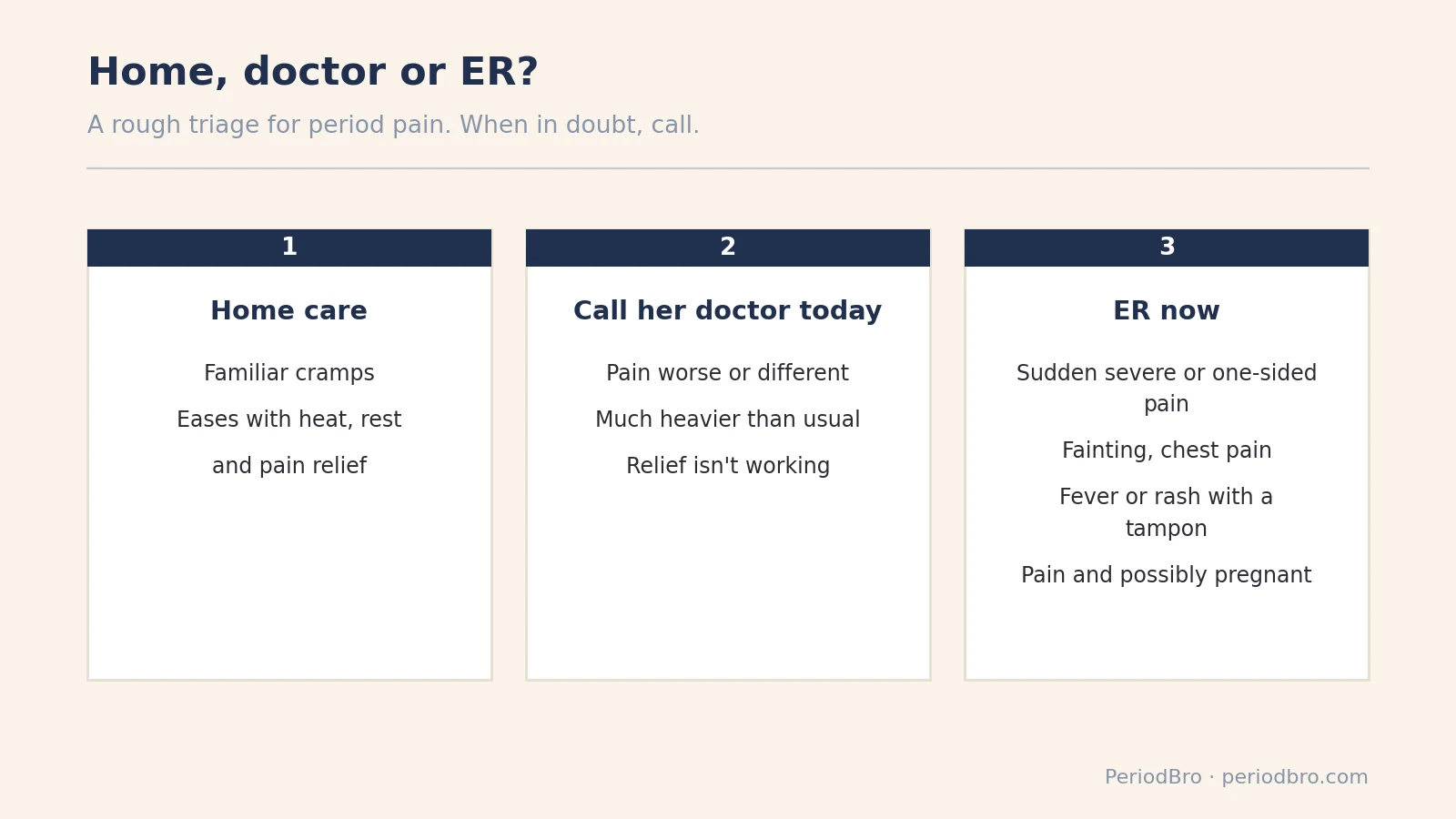
Go to the emergency room, or call 911, if any of these happen:
- Sudden, severe pain that’s different from her usual cramps, especially if it’s on one side, comes on fast, or comes with nausea and vomiting. This can be ovarian torsion, where an ovary twists and cuts off its own blood supply. Cleveland Clinic stresses that getting to an ER quickly can save the ovary (Cleveland Clinic).
- Any chance she’s pregnant, with one-sided pain and bleeding. An ectopic pregnancy can look like a strange period. The NHS lists sudden intense belly pain, dizziness or fainting, and feeling sick as signs of a rupture, and says to call emergency services right away. Pain where the shoulder meets the arm can also signal internal bleeding (NHS).
- Fainting, nearly fainting, chest pain or shortness of breath with heavy bleeding. Those can mean she’s lost more blood than her body can handle.
- Fever, vomiting, a sunburn-like rash or confusion while using a tampon. These are warning signs of toxic shock syndrome, which needs emergency treatment (Cleveland Clinic). Take the tampon out and go.
- Severe pain with a fever and an unwell feeling, which can point to a pelvic infection.
A ruptured ovarian cyst can also cause sudden sharp pain. Many settle on their own, but sudden severe pain, especially with fever, vomiting, dizziness or fast breathing, is a reason to get seen right away (Cleveland Clinic). Our piece on ovarian cysts and periods explains the more common, quieter kind.
Heavy bleeding: how heavy is too heavy
Heavy bleeding is where a lot of partners get stuck, because “a lot of blood” is hard to judge from outside the bathroom. Mayo Clinic gives a clear threshold: soaking through one or more pads or tampons every hour for several hours in a row is a reason to get medical help that day, not at her next checkup (Mayo Clinic). Add dizziness, a racing heart, pale clammy skin or fainting, and it becomes an ER trip.
Other signs of heavy bleeding include passing clots the size of a quarter or bigger, needing to double up on protection, or waking at night to change pads (Cleveland Clinic). On their own, those usually call for a doctor’s appointment, not an emergency room. If she bleeds through clothes or sheets, our guide on what to do when she bleeds through covers the practical side, and how to help with heavy periods covers the longer-term picture.
Call her doctor today, not the ER
There’s a middle ground between “wait it out” and “go now.” Call her doctor’s office, an on-call line or a nurse advice line the same day if:
- Her usual pain relief isn’t touching the pain, but there are no red flags.
- The pain is clearly worse than her normal periods, or feels different.
- Her period is much heavier than usual but she feels okay otherwise.
- She has new pain between periods or pain during sex alongside worse periods.
- She’s been feeling tired and breathless for weeks, which can point to anemia from heavy periods.
Many insurance plans and health systems run free 24-hour nurse lines, and it’s worth finding the number now, while nobody’s hurting. Save it in your phone next to her doctor’s number.
What you can do in the moment
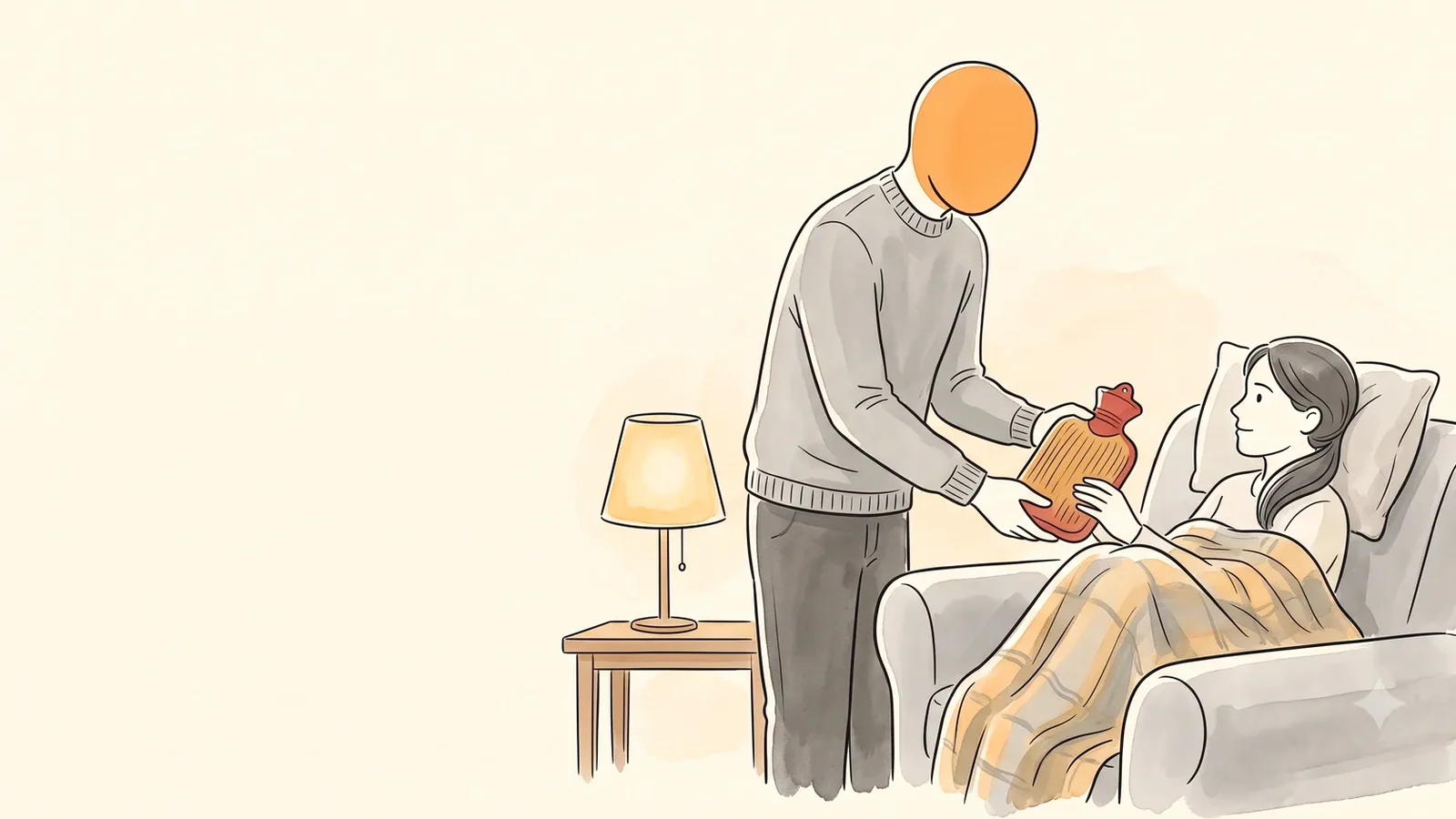
When it’s bad, your job is to be calm and useful. A few things that help:
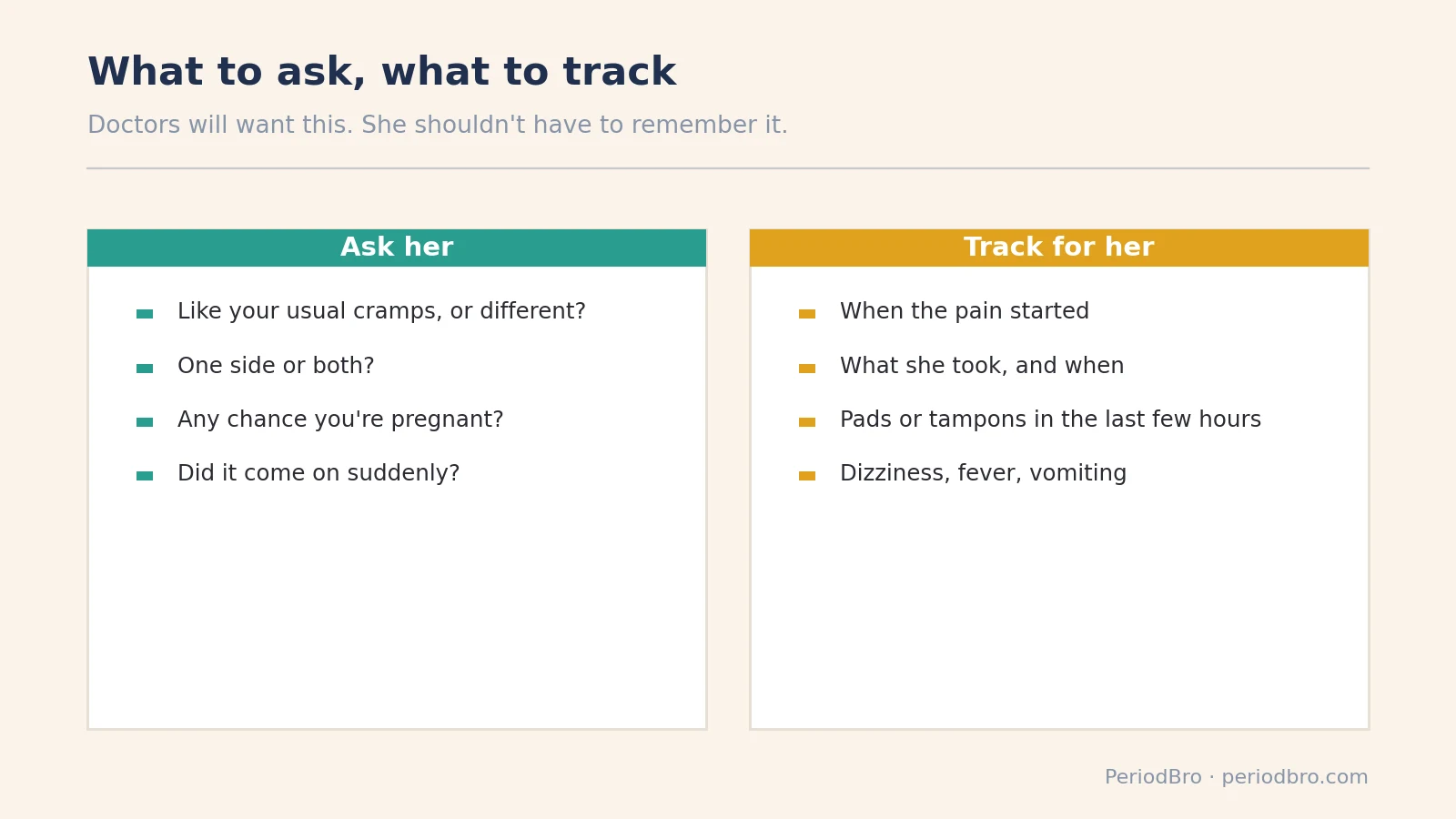
- Ask simple questions. Is this like your normal cramps or different? One side or both? Any chance you could be pregnant? Did it come on suddenly? Her answers tell you most of what you need.
- Keep track of the details. When the pain started, what she’s taken and when, how many pads or tampons she’s gone through in the last few hours. Doctors will ask, and she shouldn’t have to remember while in pain.
- Don’t let her drive. If she’s dizzy or in severe pain, you drive, or you call an ambulance if she’s fainting or getting worse fast.
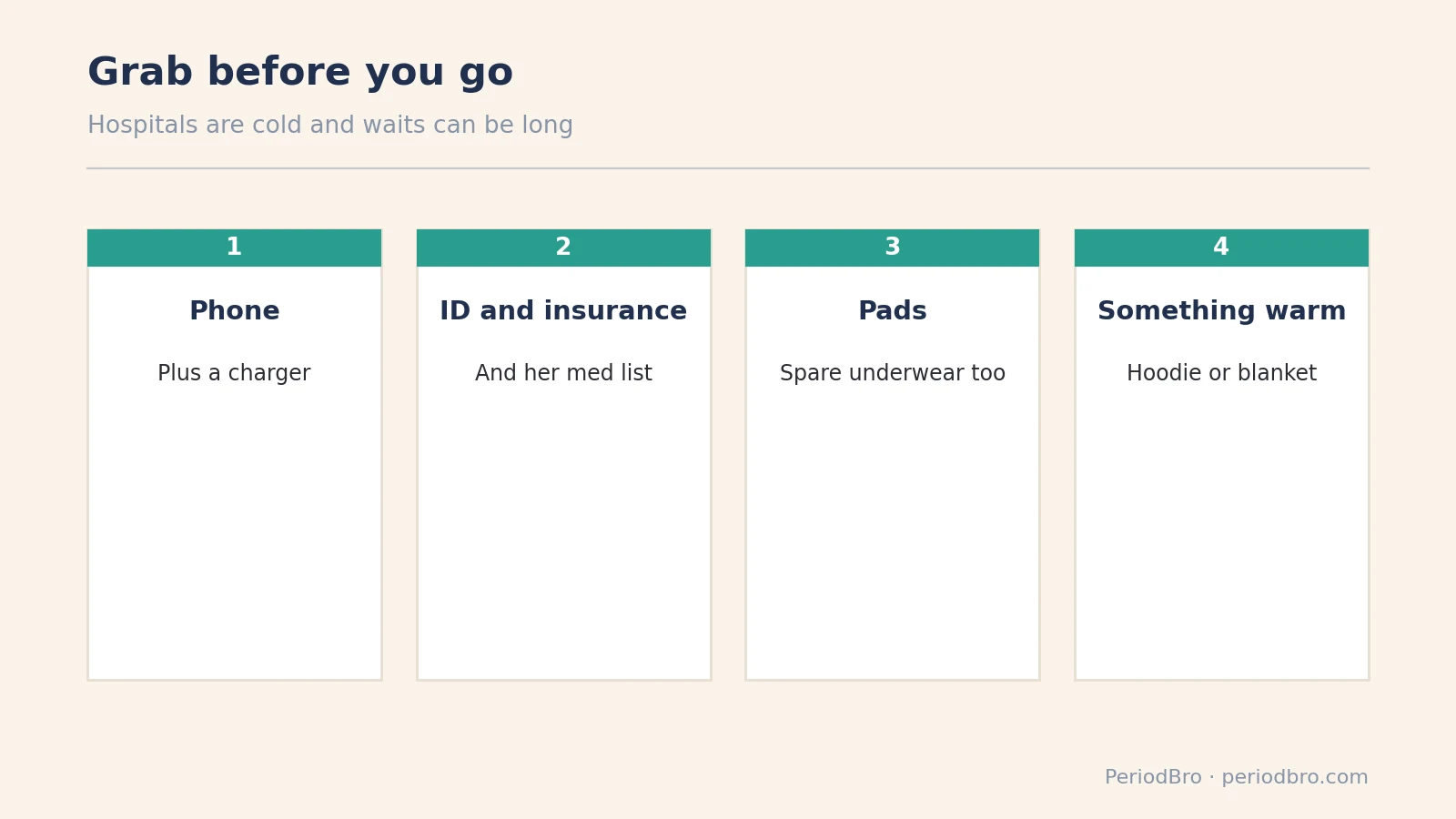
- Bring her stuff. Phone and charger, ID and insurance card, a list of her medications, spare pads and underwear, and something warm. Hospitals are cold and waits can be long.
- Back her up. If she says the pain is the worst she’s ever had, say that to the triage nurse too. Women’s pain gets underestimated often enough that having someone repeat it matters. Our piece on what to do when a doctor dismissed her period pain covers how to advocate without taking over.

After a scare: follow up
A trip to the ER for period pain is often the first time anyone takes her symptoms seriously, and it shouldn’t be the last. Conditions like endometriosis, fibroids and adenomyosis often sit behind years of severe periods without a diagnosis. If the ER rules out an emergency but she still has pain that disrupts her life, book a follow-up with a gynecologist and bring the notes from the visit. Our guide to endometriosis for partners is a good place to start if that’s on the table.
It also helps to track her cycle and symptoms for a few months. A record of when the pain hits, how bad it is and how heavy the bleeding gets gives a doctor something concrete to work with.
What I’d tell myself at two in the morning
That night turned out to be a bad but ordinary period. The nurse asked a handful of questions, ruled out the scary stuff, and told us what to watch for. What stuck with me was how much calmer we both were once someone gave us a checklist. Since then I keep the red flags in my head and the nurse line saved in my phone, and I’m a lot less useless in that doorway.
For the bigger picture on why your support matters this much, read how partner support affects her period.
I built PeriodBro so partners can see the hard days coming and be ready for them. If that sounds useful, you can try it free here.
PeriodBro provides educational information and is not a substitute for professional medical advice. If you think someone is having a medical emergency, call 911 or your local emergency number. Always consult a qualified healthcare provider for personal medical decisions.