
Swimming on Your Period: What Dads Should Know for Teen Daughters
A dad I know got a text from his 13-year-old an hour before a friend’s pool party: “I can’t go.” No reason given. It took him most of that hour to work out that she’d started her period that morning, had never used a tampon, and assumed swimming on your period was either impossible or a guaranteed disaster in front of everyone she knew. She stayed home. He spent the evening wishing someone had told him how simple the answer was.
If you’ve got a daughter who swims, whether it’s a summer pool, a school swim class or a competitive team, this is the conversation to have before the day it matters. Here’s what actually works in the water, what doesn’t, the myths worth clearing up, and how to bring it up without making it weird.
Swimming on your period: is it safe?
Yes. Swimming on your period is safe, and plenty of competitive swimmers train and race through theirs. The only real question is what she uses to catch the flow, because that’s what decides whether she feels confident or spends the afternoon worrying.
Some exercise can even help with cramps, and staying active during her period is something many doctors encourage. Our guide to her period and sports covers the bigger picture for active girls.
One thing that surprises kids: the period doesn’t stop in the water. The Center for Young Women’s Health at Boston Children’s Hospital notes that cold water usually makes the flow lighter, so it may not be noticeable, but it doesn’t switch off (Center for Young Women’s Health). Water pressure can slow things a little while she’s swimming, and then flow picks up again when she gets out and sits on the side. That’s why she still needs protection.
What works in the water and what doesn’t
Pads are the product most girls start with, and they’re the one thing that doesn’t work in a pool. A pad soaks up water within seconds, gets heavy and stops absorbing anything else (KidsHealth). So the real options are these:
- Tampons. The most common choice. A tampon sits inside the vagina and absorbs flow there, so water doesn’t affect it. KidsHealth suggests a slim or “light” size for beginners, reading the instructions first and leaving extra time the first time (KidsHealth).
- Menstrual cups or discs. Reusable or disposable options that collect flow instead of absorbing it. They can be worn longer than tampons, but they take more practice to put in and take out, so most teens are better off trying one at home first. Our menstrual cup guide and menstrual disc explainer have the details.
- Period swimwear. Swimsuits with a built-in absorbent layer. They’re a good fit for light days, for girls who aren’t ready for internal products, or as a backup under a tampon. On heavy days, most brands themselves say they won’t hold enough on their own.
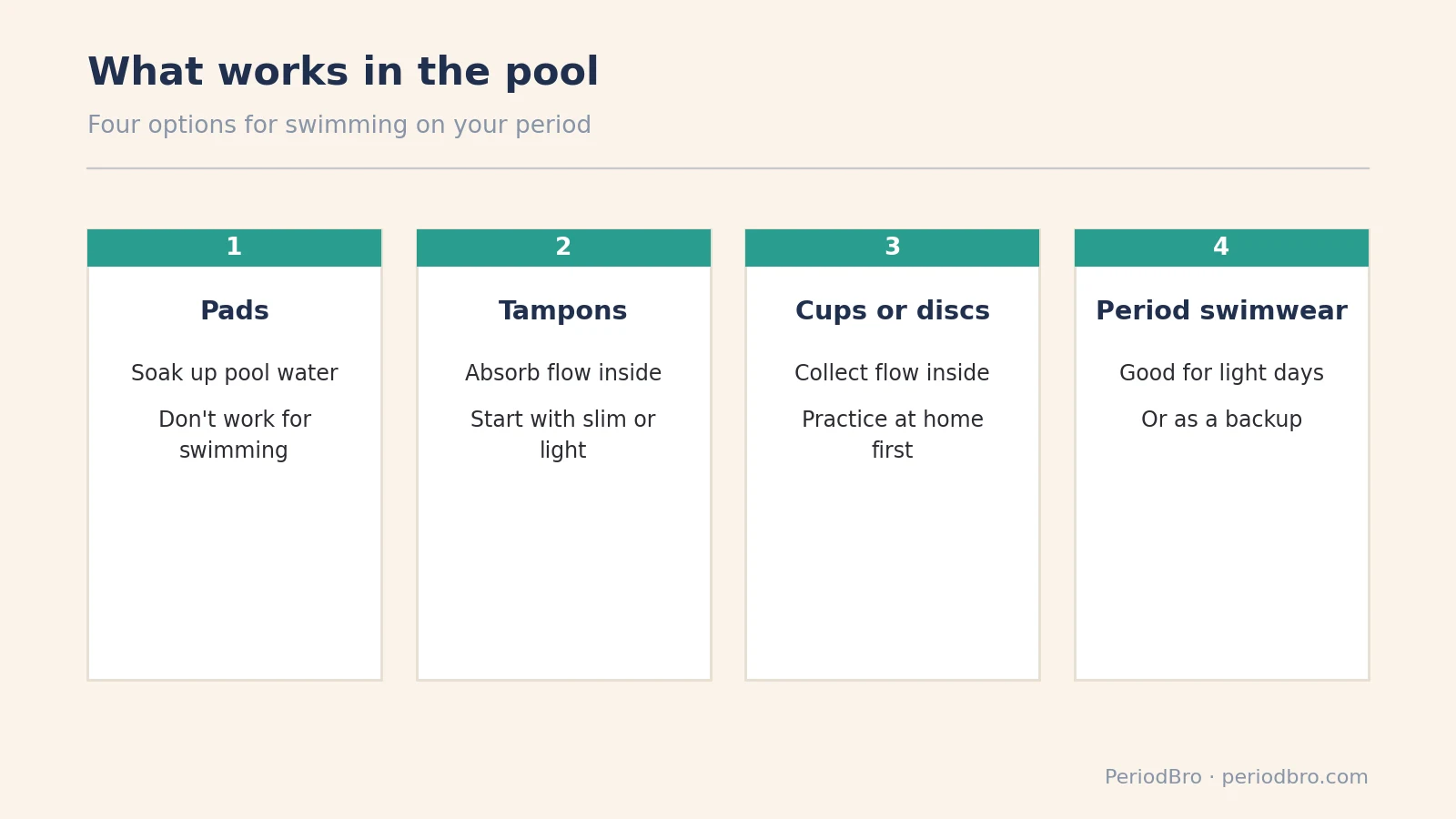
A lot of girls end up using period swimwear for lighter days and a tampon on heavier ones. What matters is that she’s tried her option before the pool party, not in a changing room with friends waiting outside.

Tampons and swimming: the safety bits
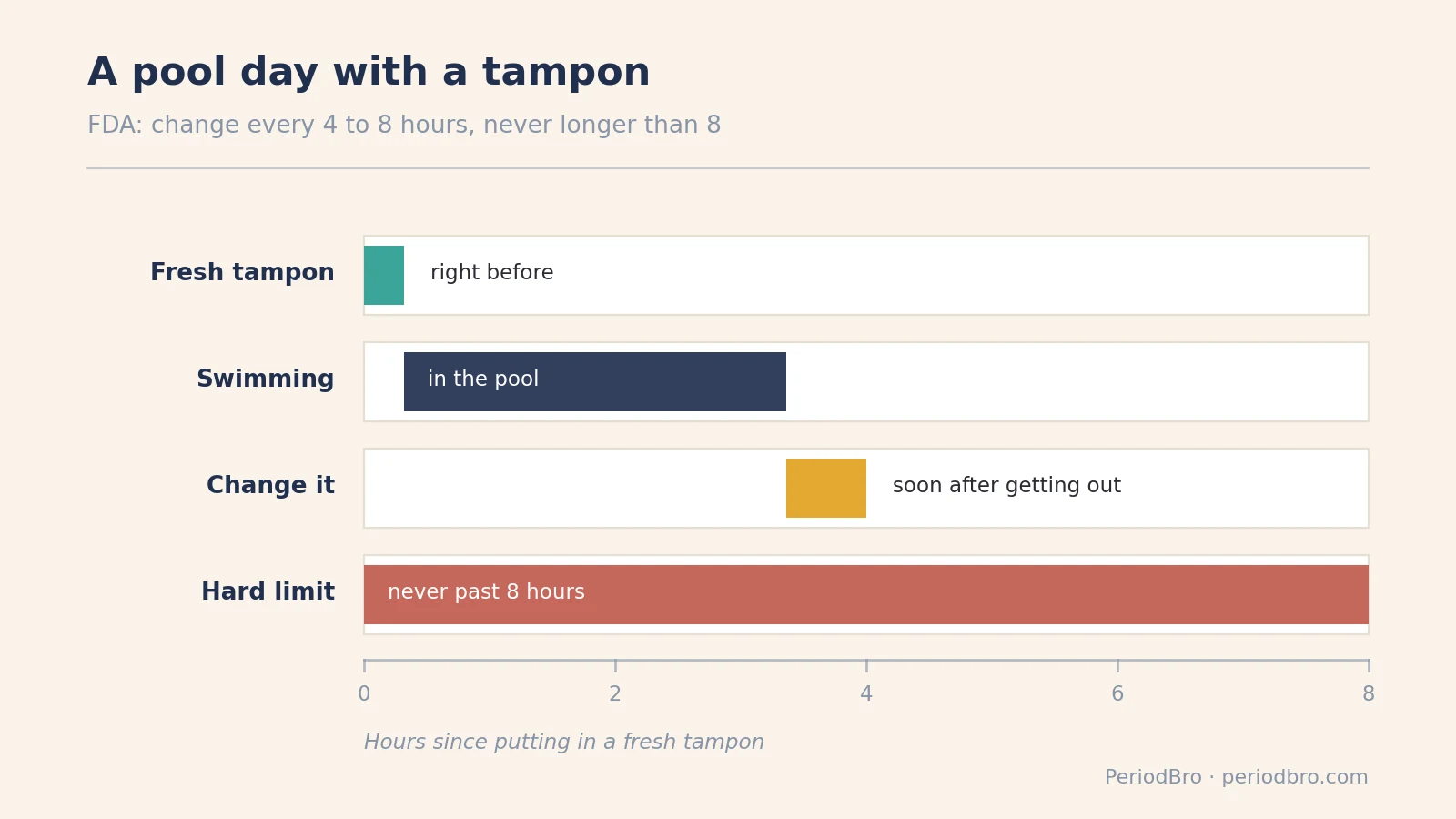
Tampons are safe for teens, including on the first period. What she needs to know is how long to wear one. The FDA advises using the lowest absorbency that handles her flow and changing a tampon every 4 to 8 hours, never longer than 8 (FDA). The simple rule for a pool day: put a fresh one in before swimming and change it soon after getting out.
The reason for the time limit is toxic shock syndrome, a rare but serious bacterial illness linked to tampons left in too long or with higher absorbency than needed. Warning signs include a sudden high fever, vomiting or diarrhea, a sunburn-like rash, dizziness and muscle aches (Mayo Clinic). If those show up while she’s using a tampon, take it out and get medical help right away. Our guide to toxic shock syndrome in teens covers it in more depth. It’s rare, and it shouldn’t scare her off tampons, but it’s the one rule she needs to remember.
If she’s never used a tampon, a calm practice run at home on a regular period day makes the pool day much easier. Our guide to her first tampon walks through how dads can help without being in the bathroom.

The myths she might have heard
Kids pick up a lot of nonsense about periods and water. A few worth clearing up:
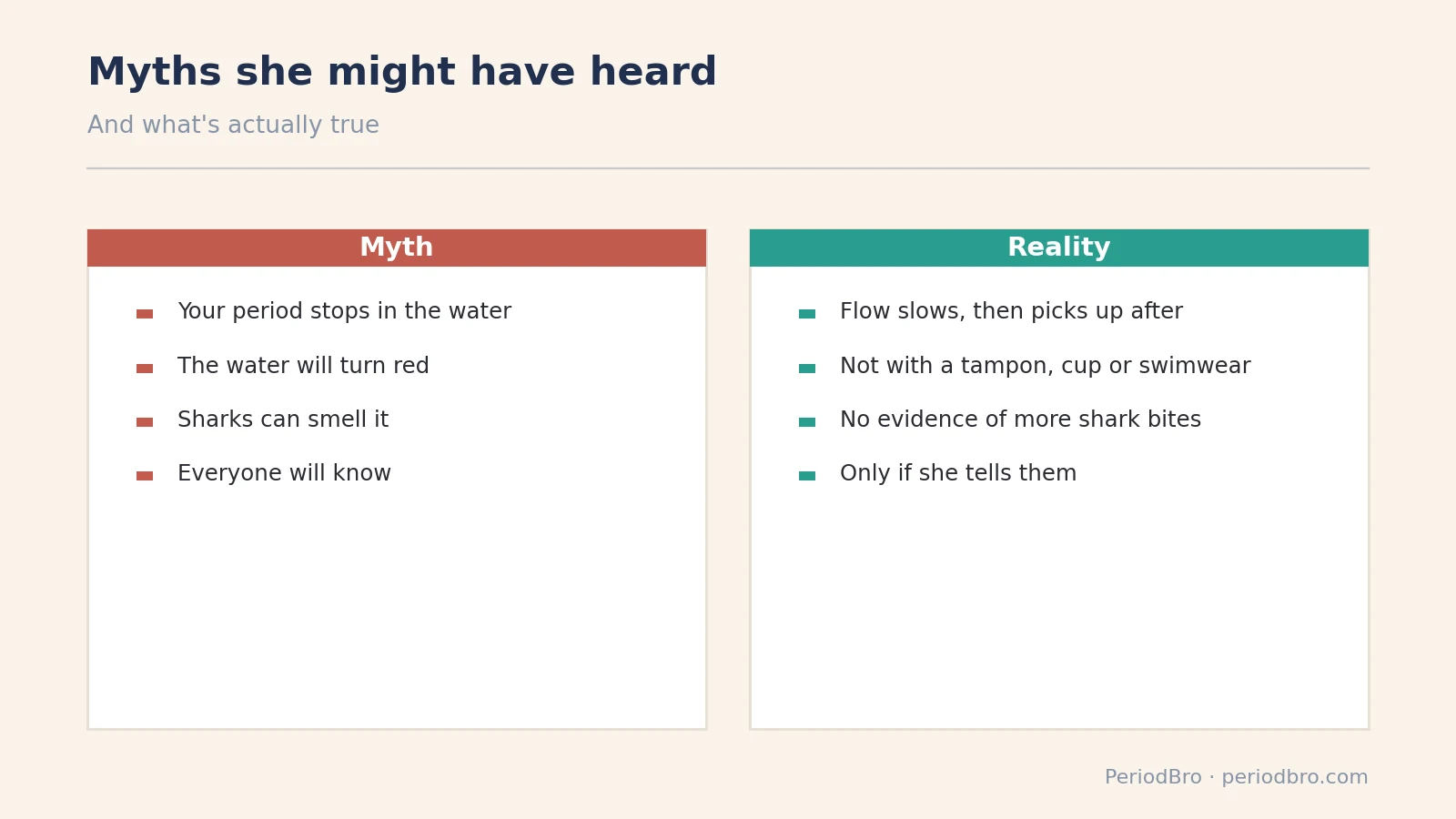
- “The water will turn red.” With a tampon, cup or properly fitted period swimwear, there’s nothing to see. Even without protection, flow in the water is usually light.
- “Sharks will smell it.” There’s no evidence that people on their periods are more likely to be bitten by sharks. For a backyard pool this one is especially easy to put to rest.
- “Chlorine is bad for her.” There’s no reason to avoid a chlorinated pool because of her period. Getting out of a wet suit fairly quickly is still a good habit, since sitting around in damp swimwear can irritate skin.
- “Everyone will know.” They won’t, unless she tells them. That’s often the fear underneath all the other ones.
Packing a swim bag that has her covered
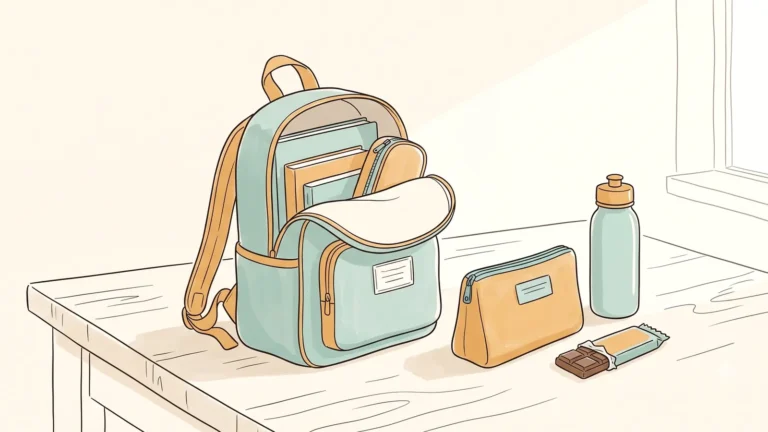
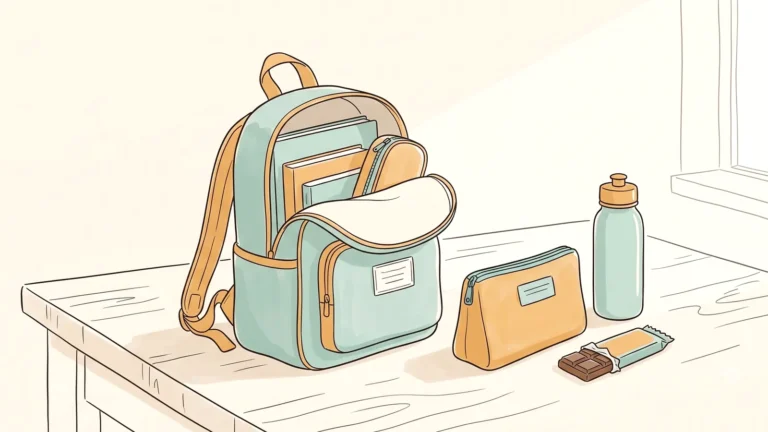
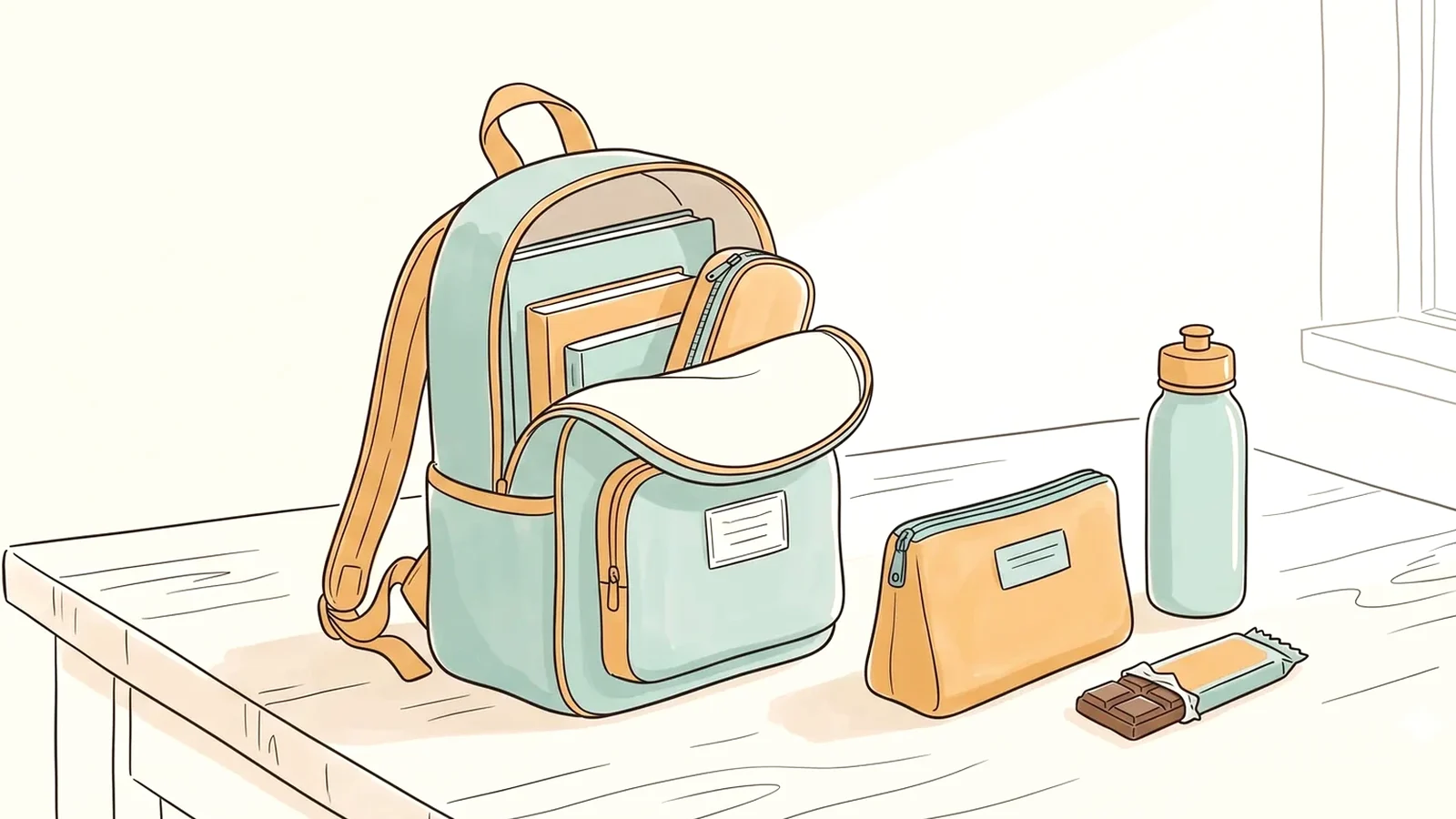
The easiest way to take the stress out of it is a small kit that lives in her swim bag. Put in a few tampons in her usual size, a liner or pad for after swimming, a spare pair of underwear, a small zip pouch to keep it all private, and a plastic bag for anything used. Add a dark towel and pain relief if she gets cramps and you’ve agreed on what she can take.
Restock it once a month without being asked. She’ll notice, even if she never mentions it. If you’re stocking the house for the first time, our list of what to stock before her first period covers the basics, and her period away from home helps with trips, camps and sleepovers.

How to bring it up as a dad
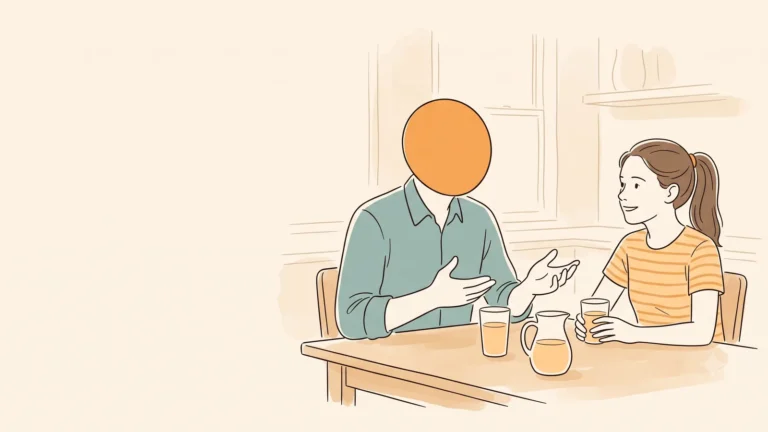
You don’t need a speech. Pick a low-stakes moment, ideally well before swim season or a pool party, and keep it short. Something like: “Hey, if your period ever lines up with swimming, there are ways to still go. Want me to grab some stuff so you can try it out at home?” Then leave it there.
A few things make it easier:
- Say it in the car or while doing something else. Side-by-side conversations feel less intense than across a table.
- Offer to buy, not to explain. She can read the instructions or watch a video on her own.
- If there’s a mom, aunt, older cousin or coach she trusts, offer to loop them in. You’re still the one who made sure she had what she needed.
- Never make her justify sitting out. If she’s not ready to try a tampon this time, “no problem, there’ll be other pool days” is the right answer.
Our guide on how to talk to your daughter about periods has more on phrasing that doesn’t make teenagers want to disappear.
Swim team, school and coaches
If she swims competitively, periods are just part of training. Coaches have dealt with this many times. She shouldn’t have to explain why she needs a quick bathroom break between sets, and you can help by making sure she knows that’s normal to ask for.
School swim classes can be trickier, because some girls use “I’m on my period” as a reason to sit out and some are told they can’t swim. If she wants to swim and has the right products, she can. If she’s in real pain, that’s a fair reason to sit one out. Either way it’s her call. If cramps are bad enough to stop her doing things regularly, that’s worth raising with her doctor, since severe period pain isn’t something teens just have to put up with (ACOG).
What happened next time
The dad from the pool party did the simple thing afterward. He bought a box of slim tampons and a pair of period swim bottoms, left them on her bed with a note that said “for next time, no pressure,” and didn’t mention it again. A month later she went to a swim meet mid-period and came home annoyed about her split time. Her period didn’t come up once.
For the bigger picture on why a dad’s part in this matters, read the father’s role in menstrual education.
PeriodBro helps dads and partners see periods coming and get ready before they show up. If that sounds useful, you can try it free here.
PeriodBro provides educational information and is not a substitute for professional medical advice. Always consult a qualified healthcare provider for personal medical decisions.