
Her Period at Two Houses: A Divorced Dad’s Guide
The text arrives on a Friday evening, which is when your daughter is packed and already on her way over. It says she started, or it says she needs stuff, or it says nothing useful at all and you find out at ten past eight the next morning. Handling her period at two houses is a job that gets handed to divorced dads with no notice and no briefing, and it’s mostly a supply problem wearing the costume of an emotional one.
The parts you control are the parts that matter most to her, and none of them require you to be comfortable talking about this. They need a stocked cupboard and one civil conversation with her mother.

What her period at two houses actually needs
Two households create one specific failure: everything she needs is at the other place. The pads are in the wrong bathroom, the painkillers are in the wrong cupboard, the good hot water bottle is at her mum’s, and the spare knickers she keeps in her school bag ran out on Tuesday.
She won’t flag it in advance. A teenager is not going to open a conversation with her dad about restocking sanitary products, especially in the first year or two when the whole subject is raw. She’ll manage silently, improvise with loo roll, or stay at the other house, and you’ll read that as a preference rather than as logistics.
The standard is simple. Everything she needs exists at your house, in a known place, without her having to ask. That’s the whole strategy, and it’s worth setting up before there’s an occasion for it.
Stock your house before there’s a reason to
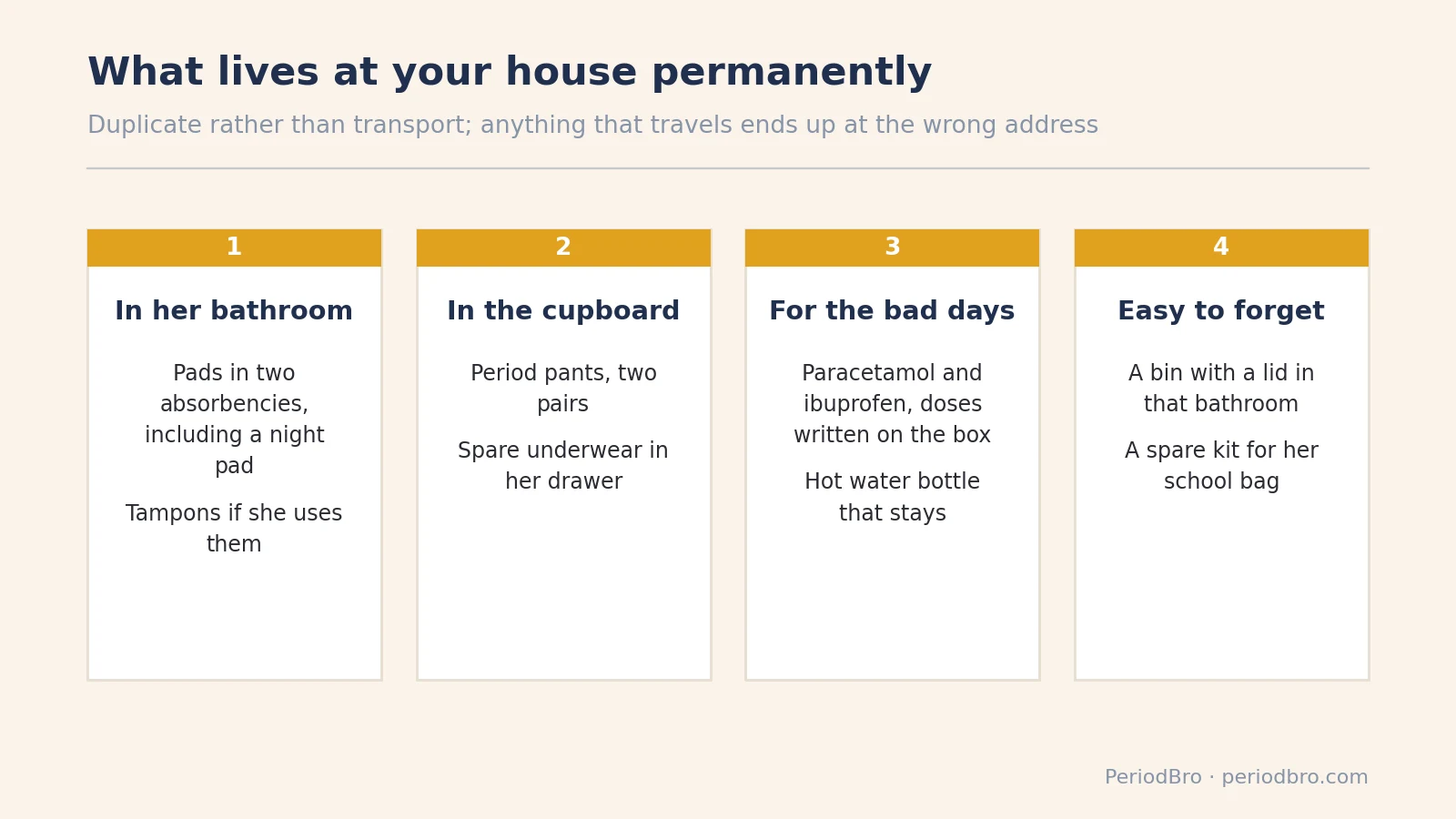
Put a box in the bathroom she uses, not the family bathroom, and not your bedroom. Pads in two absorbencies including a night pad, tampons if she’s using them, and a couple of pairs of period pants, which have quietly become the thing teenagers actually reach for because there’s nothing to run out of.
Add paracetamol and ibuprofen with the doses written on the box in your handwriting, plus a hot water bottle that lives at yours permanently. Spare underwear in her size, in her drawer, unremarked. A bin with a lid in that bathroom, which sounds trivial and is the single most common thing girls mention when asked what makes a bathroom usable.
Then tell her once, in a flat voice, where it all is, and drop it. Not a conversation, an inventory. Something like: there’s a box in the bathroom cupboard with everything in it, I’ll keep it topped up, tell me if you want a different brand. The full stocking list covers the details, and what the products actually are is worth ten minutes if you’ve never had reason to learn.
What normal looks like in the first couple of years
Knowing the ordinary range stops you either panicking or dismissing, and both of those go badly. Periods now start earlier than they did for your generation. A 2024 JAMA Network Open study of 71,341 people in the US found the average age of a first period fell from 12.5 years for those born in the 1950s and 60s to 11.9 for those born between 2000 and 2005, with early starts under age eleven rising from 8.6 to 15.5 percent.
The same study found something more useful for a worried parent. The share reaching regular cycles within two years dropped from 76 to 56 percent across those generations, and the share still not in a regular pattern rose from 3.4 to nearly 19 percent. Irregular cycles for a long stretch after the first period are common rather than alarming.
ACOG’s guidance on treating the cycle as a vital sign puts hard numbers on it: in the early years about 90 percent of cycles fall between 21 and 45 days, most first periods last two to seven days, and by the third year most girls settle into the adult 21 to 34 day range. A gap of six weeks in year one is unremarkable. The same gap in year four is worth an appointment. If hers is jumping around, the irregular-periods picture goes deeper.

Coordinating with her mother without negotiating
This is the part that separates two houses from one, and the trap is treating it like every other co-parenting discussion. Her period isn’t a schedule item to be traded. Nobody needs to agree on anything.
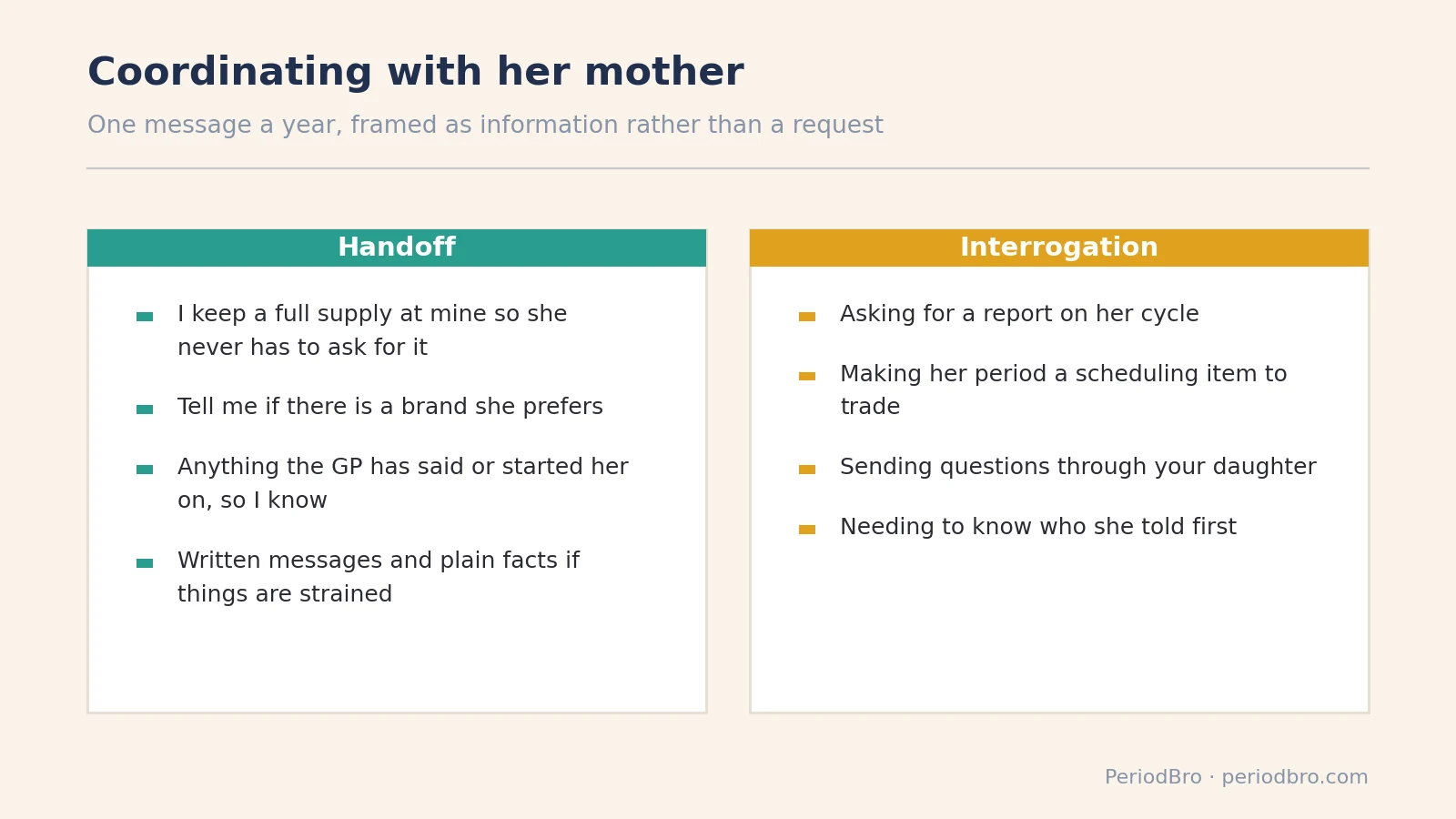
One message, once, framed as information rather than a request: I’m keeping a full supply at mine so she never has to think about it, tell me if there’s a brand she prefers or anything the doctor has said. That’s it. You’re not asking permission, not asking for a report, and not making her mum responsible for briefing you.
Where a genuine handoff helps is medical. If your daughter has been to a GP about heavy bleeding or pain, or she’s been started on anything, you need to know what and when, in the same way you’d need to know about an inhaler. Ask for that specifically and narrowly. If the co-parenting relationship is difficult, keep it to written messages and keep it to facts, because the alternative is your daughter carrying messages between two adults about her own body.
Which is the actual rule underneath all of it. She doesn’t become the go-between. Not for supplies, not for information, not for what happened at the doctor.
When it starts on your weekend
If it’s her first one and it happens at yours, the bar is low and you will clear it. Don’t make a moment of it. Tell her where the box is, ask if she wants anything from the shop, offer a hot water bottle, and carry on with the day. Warmth without ceremony. The first-period walkthrough covers the specifics if you want the longer version.
What she’s watching for is whether you’re embarrassed. Awkward is fine and normal, and she’d rather have an awkward dad who restocks the cupboard than a smooth one who hands the subject to somebody else. If she wants her mum, that’s not a rejection, and phoning her is a good outcome rather than a failure on your part.
One thing worth doing that evening: note the date somewhere you’ll still have it in three months. Not to monitor her, and it doesn’t need to be a shared calendar or anything she can see. Just so that when she says her stomach hurts on a Sunday in November, you have some idea whether it’s the week you’d expect. Doing that without it becoming surveillance is mostly about who the record is for.
School mornings at your place
Absence is where this stops being about comfort. A 2025 population survey of 5,483 young people in Sweden found that among 16 to 19 year olds, almost 20 percent said they missed school because of menstrual symptoms every single period. Heavy bleeding was reported by 40 percent. Symptoms like headache, tiredness and trouble concentrating had the biggest effect on whether they stayed home.
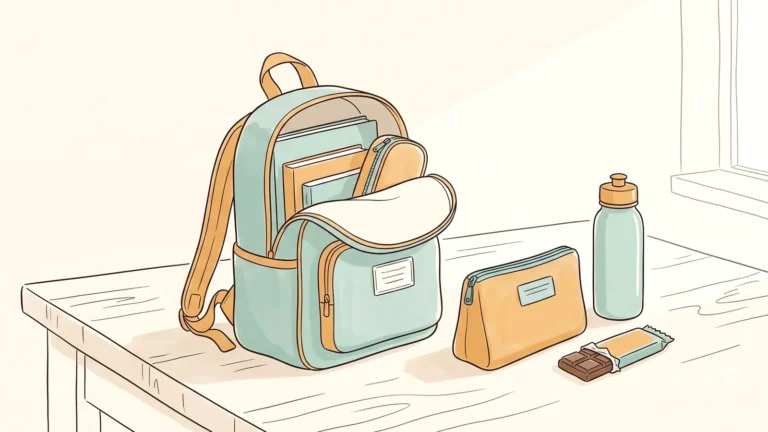
If the two of you split weekdays, that pattern is visible to you and to nobody else. Painkillers taken with food before the bus rather than at eleven o’clock in the school toilets makes a real difference. A spare kit in the school bag matters more when she’s leaving from a different address twice a week, and the school-day version of this is worth reading alongside.
Her period at two houses works when the two mornings look the same from her side. Same box, same painkillers, same offer of a lift if it’s a bad day.
What to skip
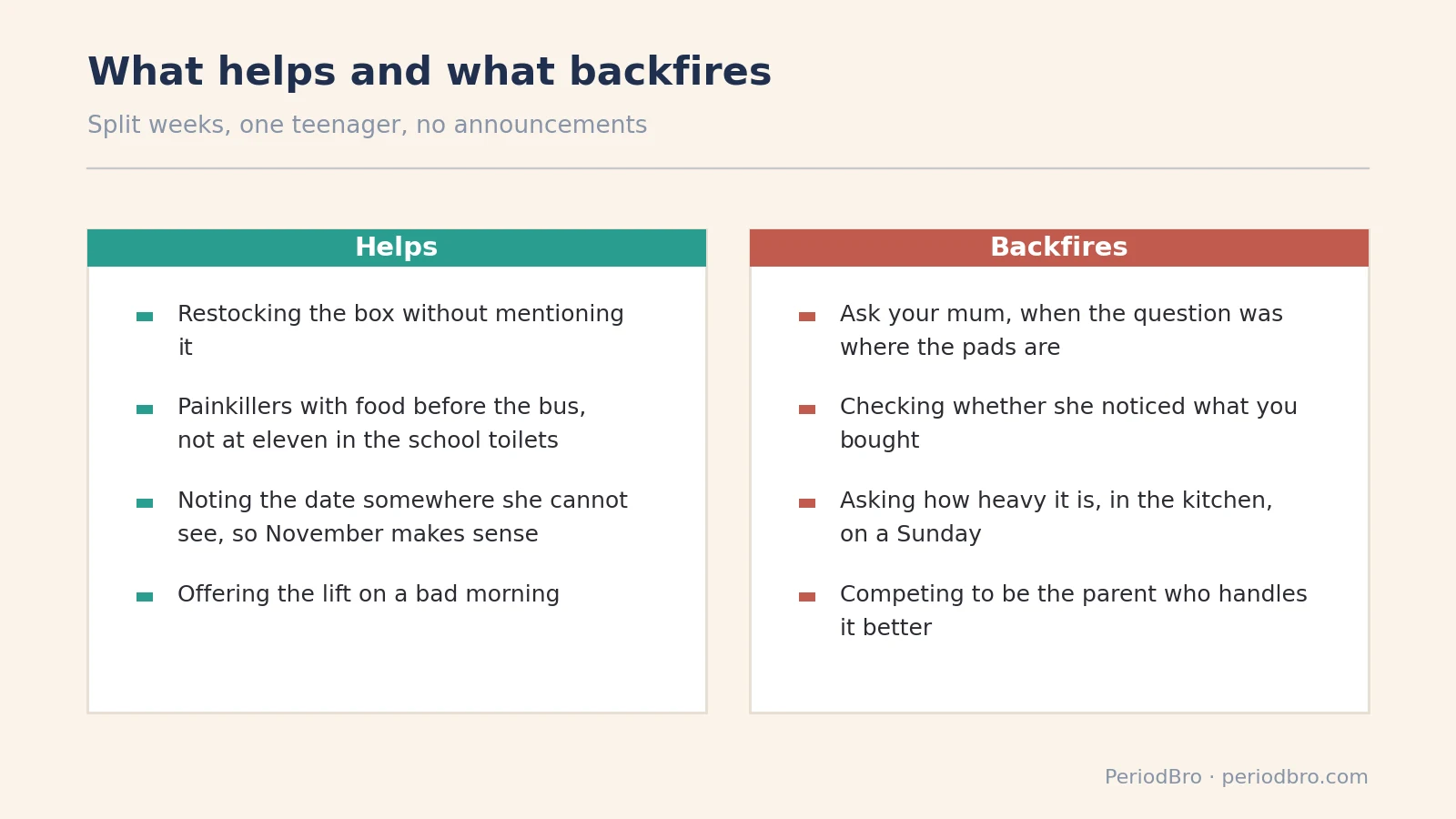
Don’t compete. Being the parent who handles this better is not a prize, and a teenager can smell it instantly. Don’t announce the restocking, or check whether she noticed, or mention what you bought.
Don’t outsource it entirely either. “Ask your mum” is a reasonable answer to a medical question and a poor answer to a question about where the pads are, and hearing it twice teaches her that your house is the one where this can’t be dealt with.
And don’t interrogate. A dad asking how heavy it is, on a Sunday, in the kitchen, gets a closed door. If you’re worried about volume or pain, say the specific thing you noticed and offer the appointment, then leave it with her.
When to get a doctor involved
Book an appointment for bleeding that soaks through a pad or tampon in an hour or less, periods lasting more than seven days, pain that keeps her off school despite painkillers, cycles shorter than 21 days or longer than 45 once she’s a couple of years in, or no period at all by age fifteen. When to see a doctor goes through each of those.
One reason not to sit on heavy bleeding: it is sometimes the first sign of an inherited clotting problem. ACOG guidance for clinicians notes that bleeding disorders affect 1 to 2 percent of the general population but turn up in roughly 20 percent of teenagers assessed for heavy periods, and in a third of those admitted to hospital for it. The same guidance asks doctors to check ferritin, because iron runs down quietly over months of heavy months and the tiredness gets blamed on being fifteen.
Go to that appointment if she will have you, or make sure somebody does. Teenagers get talked past in consultations, and the parent who brought a written record of dates and symptoms is the one who gets taken seriously. For the wider case on why this is your job and not somebody else’s, a father’s role in menstrual education is the longer argument.

PeriodBro keeps a private record of dates and symptoms across a split week, so the pattern is still legible when she’s only at yours half the time. Try it free.
This article is general information, not medical advice. Heavy bleeding, periods that keep her off school, or no period by age fifteen are all worth a doctor’s appointment rather than a wait-and-see between two households.