
Her First Period Away From Home: Sleepovers, Trips and Camp
School trip on Thursday. Sleepover on Saturday. Camp in three weeks. Somewhere in that calendar is a decent chance her period arrives while she is nowhere near you, and if she has not started yet, it might be the first one. Handling your daughter’s first period away from home is mostly preparation, and preparation is a thing you are allowed to be good at.
The goal is making sure that when it happens she has what she needs in her bag and knows she is not in trouble. Preventing the awkward moment was never on the table.
The odds are higher than you think
Menarche typically lands between ages 10 and 16, with an average onset around 12.4 years. In the US most people start around 12 or 12 and a half.
Run that against a normal childhood calendar. Sleepovers, weekends at a friend’s, school residentials, camp, a fortnight at her grandparents’. Across the two or three years when a first period is most likely, a lot of nights happen somewhere other than home. Planning for it being away is the realistic default, not the paranoid one.
If she has not started yet and you are trying to read the runway, we mapped the early markers in the signs her period is about to start.

What goes in the bag
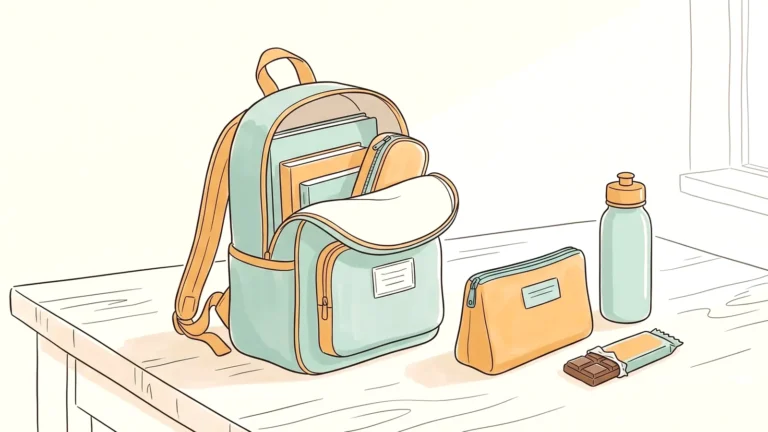
Small, sealed and permanent. A kit works because it lives in the bag she takes places, rather than being assembled the night before a trip, which is exactly when it gets forgotten.
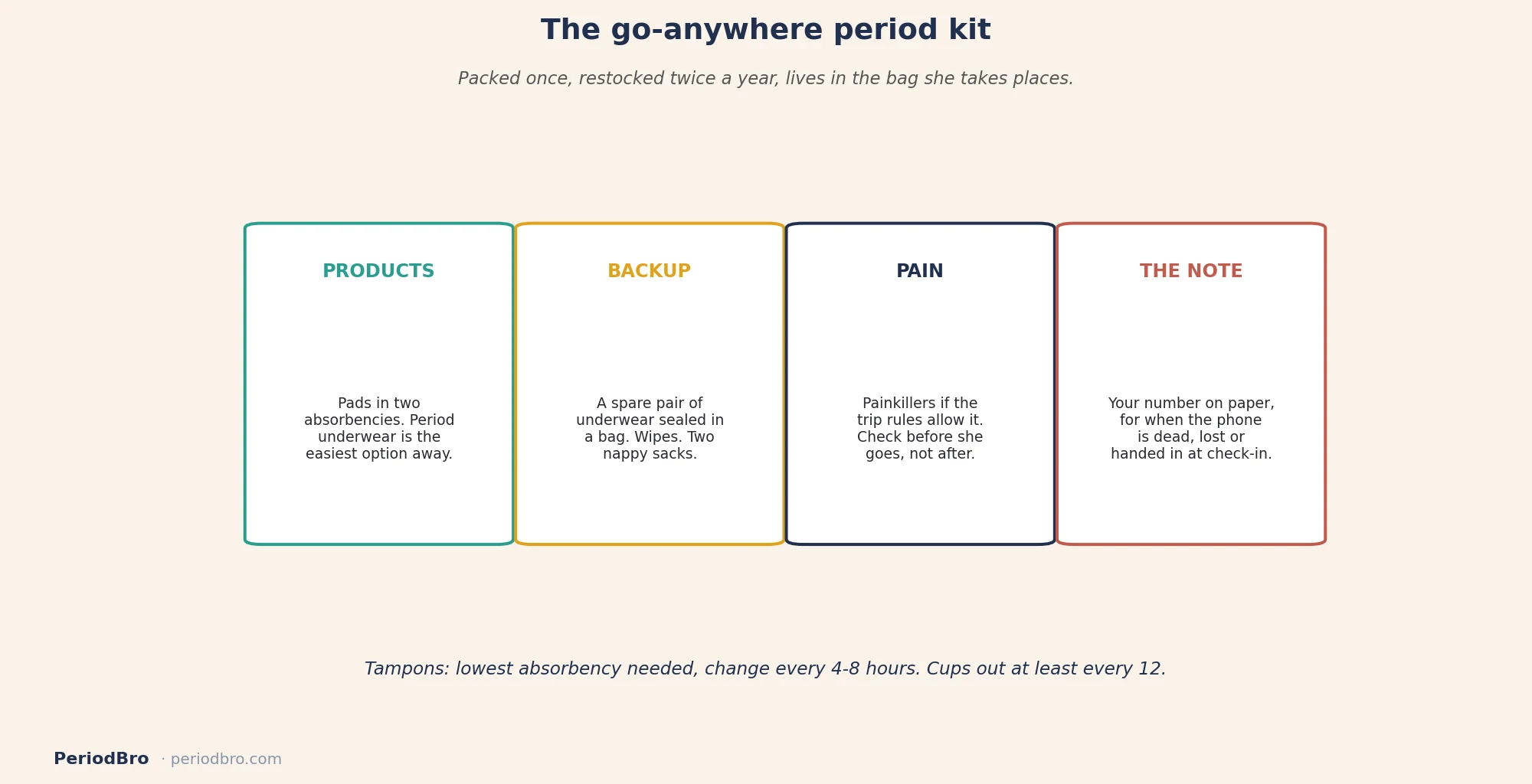
Pads in two absorbencies, a spare pair of underwear in a sealed bag, wipes, a nappy sack or two for disposal where there is no bin, and painkillers if she is old enough to carry them and the trip rules allow it. A note with your number, which sounds redundant until her phone is dead or confiscated.
On tampons and cups, take the safety guidance seriously if she uses them. HealthyChildren advises using the lowest absorbency needed and changing a tampon every 4 to 8 hours, because leaving one in longer raises the risk of toxic shock syndrome. Cups should come out at least every 12 hours. Period underwear carries no TSS risk because it sits outside the body, which makes it a genuinely good option for camp and long travel days.
The full home version of this list is in what to stock before her first period, and the school-specific version is in her period at school.
The conversation before she goes
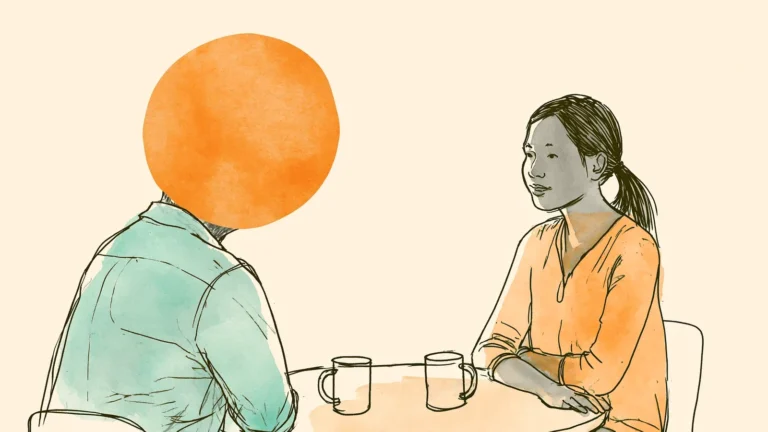
Short, practical and not a ceremony. Ninety seconds while you are packing the car does more than a sit-down talk, and it is much easier for her to receive.
Cover four things. Where the kit is in her bag. That if it starts, she is not in trouble and nothing has gone wrong. Who she can go to if you are not there, named specifically. And that she can text you at any hour, including to say nothing more than that it happened.

Brief the adults, quietly
This is the step dads skip most and regret most. One message to the trip leader, camp nurse, or the parent hosting the sleepover, sent privately: she may start her period, she has supplies, please help if she asks.
Tell her you have done it, and tell her exactly who you told. A brief she does not know about feels like being talked about behind her back. The same message, disclosed, reads as backup. The difference is entirely in whether she was informed.
Three kinds of trip, three different plans
The kit stays the same. What changes is who else is around and how long she is out of reach.
A sleepover is the easy one. One night, one house, one adult to message, and you are twenty minutes away if it goes sideways. The kit plus a quiet word with the host parent covers it entirely.
A school residential needs slightly more. Trips usually have a designated staff member for medical matters and a rule about who carries painkillers, so check both before she packs rather than after. Add a second set of supplies in a different pocket, because bags get moved, shared, and left on coaches.
Camp or a long stay is where quantity matters. A week or two away means enough supplies for a full period plus a buffer, and a plan for restocking if she runs out. Period underwear earns its place here, since it needs no disposal and survives days without a decent bathroom.
If it happens and she calls
Your voice sets the whole tone, and she will remember it longer than she remembers the logistics.
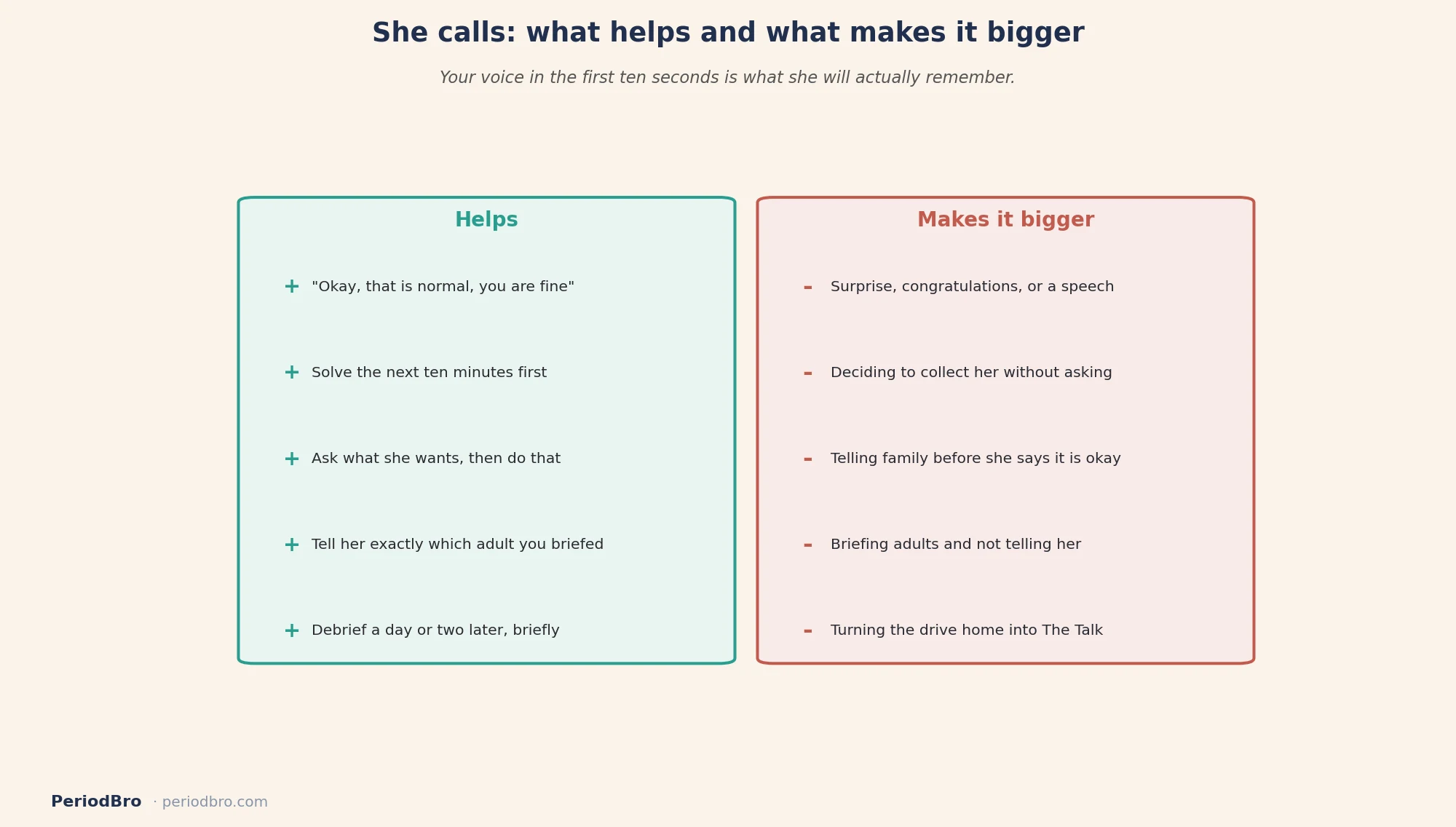
Lead with normal. “Okay, that’s normal, you’re fine.” Not surprise, not congratulations, not a speech. She needs the event downgraded to ordinary and she needs it fast.
Solve the immediate problem first. Is there a pad within reach right now. Everything else waits.
Ask what she wants, then do that. Some daughters want picking up. Some would be mortified by a parent turning up. Deciding for her is the mistake here.
Do not announce it. Not to her mother, siblings, or grandparents without asking. Who knows is hers to decide, and getting this wrong once tends to close the subject for years.
Debrief later, briefly. A day or two after she is home. What she needs more of, what she wants in the kit next time. It treats her as competent, which is the message you want landing.
If this is her first one and you want the wider playbook, the no-panic playbook for a first period covers the ground, and how to talk to your daughter about periods covers the conversations before it.
Common questions
What if she has not started and I do not want to worry her?
Framing it as a supplies question rather than a body question removes almost all of the weight. “There’s a kit in the front pocket, just in case” needs no follow-up.
Should I tell the sleepover parent?
Yes, briefly and privately, and tell your daughter you did. Most parents handle it without comment and having one informed adult in the house is worth the small awkwardness.
Can she use tampons at camp?
If she already uses them comfortably. The guidance is lowest absorbency needed and a change every 4 to 8 hours. Period underwear or pads are simpler for a first trip.
What if she is embarrassed to ask an adult there?
That is normal and it is why the kit matters more than the adults do. If she is self-sufficient for a day, she can wait until she is home to talk about it.
What if she leaks and ruins clothes or bedding?
It happens, and how you handle it teaches her whether this is a disaster or laundry. Cold water, no fuss, offer to sort it out with the host adult if she cannot face asking. Then never mention it again.
Does her mother need to be the one doing this?
No. Supplies, logistics, and a calm voice have no gender requirement, and a daughter who learns her dad handles this without flinching gains something that outlasts the trip.
What about pain while she is away?
Check the trip’s medication rules before she goes, since many require painkillers to be handed to a leader. Cramps that stop her joining in are worth a doctor’s opinion afterwards, and we covered that in helping your daughter with period cramps.
This article is general information, not medical advice. Heavy bleeding, severe pain, or a first period before age 9 or absent by 15 is worth raising with a clinician.