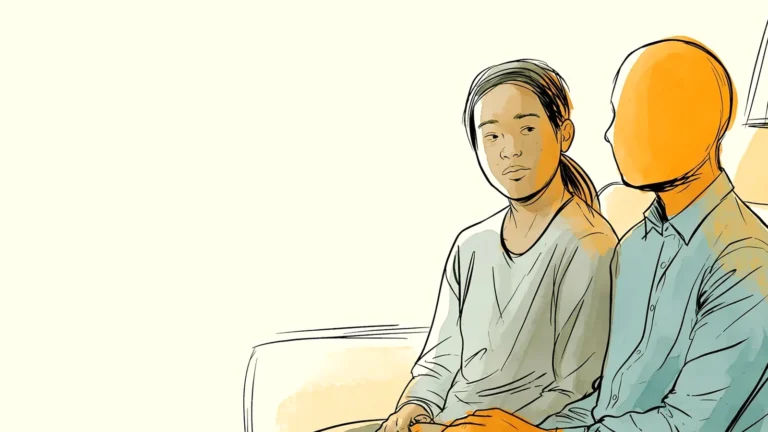

How to Support Her Through Ovulation Pain
The first time she doubled over on the kitchen floor two weeks before her period, my first thought was that something was seriously wrong, not that this could be a completely normal part of her cycle. She wasn’t due for her period for another twelve days, so why was she in pain like that? It took a trip to urgent care and a slightly embarrassed doctor’s explanation for me to learn the word mittelschmerz, German for “middle pain,” and realize this happens to a lot of women every single cycle.
If you’ve never heard the term, you’re not alone, and that’s exactly why a lot of partners either panic unnecessarily or, worse, dismiss real pain as nothing. We’ve covered why ovulation pain happens in the first place before. Here’s how to support her through ovulation pain without overreacting or underreacting to it.
What ovulation pain actually is
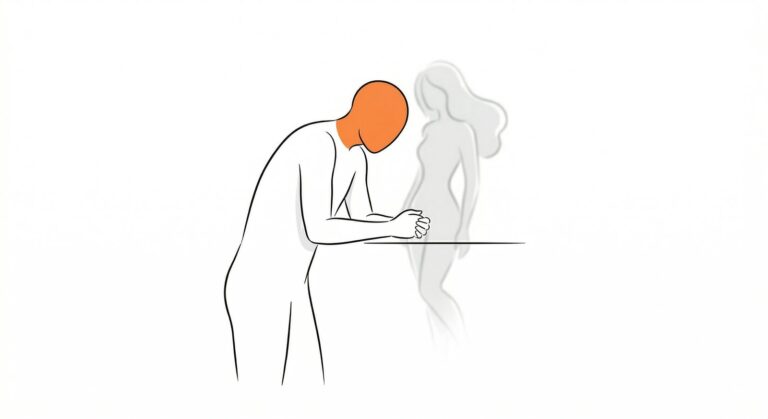
Mittelschmerz is one-sided, lower abdominal pain that shows up roughly midway through her cycle, about fourteen days before her next period, tied to ovulation itself. It’s caused by the growing follicle stretching the surface of the ovary as it matures, and then by fluid or a small amount of blood released when the follicle ruptures, which can briefly irritate the lining of the abdomen (Mayo Clinic, mittelschmerz symptoms and causes). It typically lasts anywhere from a few minutes to a few hours, though it can occasionally stretch to a day or two. Some women get it every cycle like clockwork. Others never notice it at all, or only notice it some months and not others.

Doctors aren’t entirely certain of the mechanism, and Mayo Clinic is upfront that “the exact cause is unknown,” but the follicle-stretching and fluid-irritation explanation is the leading one. What matters more for you than the precise mechanism is recognizing the pattern: sharp or crampy pain, usually on one side, showing up mid-cycle rather than right before or during her period.

How to support her through ovulation pain in the moment
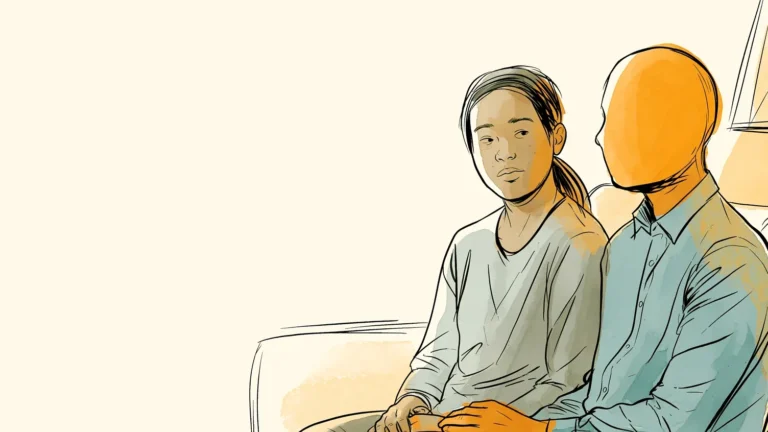
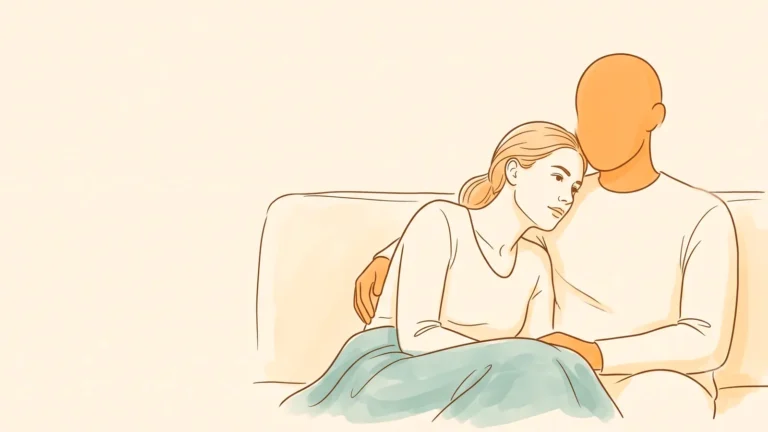
Most of what helps here is exactly what helps with period cramps: heat, over-the-counter pain relief if she wants it, and not needing her to explain or justify the pain to you before you take it seriously. A heating pad or hot water bottle against the lower abdomen, a quiet spot to lie down for twenty minutes, and not being asked “are you sure it’s not something else” five times in a row all go a long way. If she wants to keep moving and just needs a little space, respect that too. This isn’t a moment that requires you to fix anything. It usually just requires you to not make it a bigger production than it needs to be.

Where it does matter to pay closer attention is if the pain doesn’t fit the usual pattern. Doctors recommend contacting a physician if new pelvic pain becomes severe, comes with nausea or fever, or persists longer than expected, since those combinations can point to something else entirely, including appendicitis, pelvic inflammatory disease, or in rare cases an ectopic pregnancy (Mayo Clinic, mittelschmerz symptoms and causes). You don’t need to diagnose anything yourself. This is a specific case of the broader question of when her period pain is normal: you just need to know that “it’s probably just ovulation” stops being a safe assumption once fever, severe pain, or a couple of days without improvement enter the picture.

Why this gets overlooked compared to period pain
Period cramps get talked about constantly, in ads, in group chats, in every “how to support her” article on the internet, including several of our own. Ovulation pain barely gets mentioned, partly because it’s less universal and partly because it doesn’t come with the obvious marker of visible bleeding to explain what’s going on. That gap means a lot of partners have genuinely never heard of it until it happens in front of them, the way I hadn’t.
It also means she may not bring it up either, especially early in a relationship, because it can feel like a strange thing to announce (“hey, my ovary hurts”) compared to a period, which at least has a name everyone already knows. If she winces and says “it’s just my ovary, I’m ovulating,” that offhand explanation is doing a lot of work, and it’s worth treating it as seriously as you would treat a period cramp, not brushing past it because it doesn’t have the same cultural shorthand.


Telling it apart from something else going on
Mittelschmerz isn’t the only thing that can cause mid-cycle pain, and it’s worth knowing the neighbors on the list so you’re not stuck assuming every ache two weeks before her period is automatically ovulation. Ovarian cysts, which are extremely common and usually harmless fluid-filled sacs that form as part of the normal ovulation process, can occasionally cause similar or more intense pain, especially if one ruptures or twists. The distinguishing features doctors look for are intensity that keeps climbing instead of settling, pain that sticks around well past a day or two, or pain paired with fever, vomiting, or fainting, none of which are typical for garden-variety mittelschmerz (Cleveland Clinic, ovulation pain). If something feels like it’s escalating rather than following the usual short, self-limited pattern, that escalation itself is the signal to take more seriously than the pain level on any single hour.
What tracking it actually changes
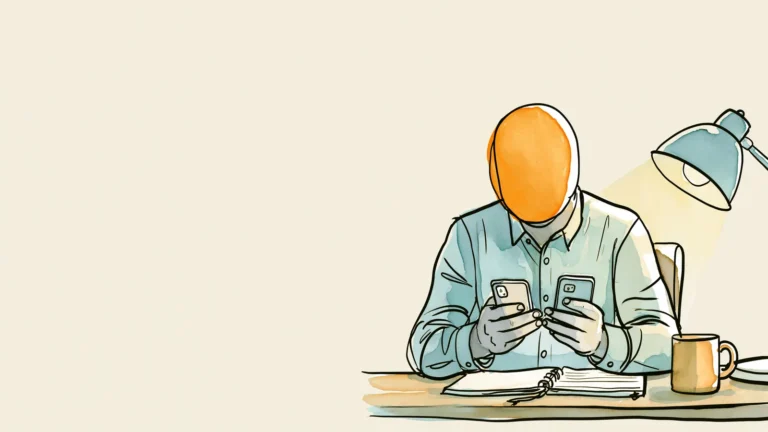
The single most useful thing that came out of our urgent care trip wasn’t the diagnosis, it was that we started logging it. Once you know roughly which day of her cycle to expect it, a sudden ache mid-month stops being alarming and starts being “oh, right, this is the week.” That doesn’t mean every twinge gets waved off automatically. It means you have a baseline to compare against, so the times it’s genuinely different, sharper, longer, accompanied by other symptoms, stand out instead of blending into a fog of “cramps happen sometimes.”
For us, tracking also made it obvious that her ovulation pain was reliably on the same side for months at a time before switching, which is a normal pattern since ovulation typically alternates ovaries but not always in strict rotation. Knowing that ahead of time took away a whole category of “wait, is this new” moments that used to spike both our anxiety levels for no reason.
A few quick answers
Does everyone get ovulation pain? No. Estimates vary, but a meaningful share of women notice it at least occasionally, and plenty never notice it at all. Not noticing it doesn’t mean ovulation isn’t happening.
Can birth control stop it? Often, yes. Hormonal birth control that prevents ovulation typically prevents mittelschmerz along with it, since no egg release means no follicle rupture. Doctors sometimes prescribe it specifically for recurring, disruptive ovulation pain.
Should we avoid sex during ovulation pain? That’s entirely up to her and how she’s feeling, not a medical requirement either way. Some women find pressure on that side genuinely uncomfortable during an episode; others don’t notice a difference.
Is ovulation pain a good fertility sign? If you’re trying to conceive, noticing it can actually be useful information, since it roughly marks the fertile window. It’s not precise enough to replace an ovulation predictor on its own, but it’s a real data point worth logging alongside everything else.
None of this needs to turn into a medical crisis every month. Most of the time, ovulation pain is exactly what it sounds like: a brief, normal, slightly inconvenient part of a cycle that resolves on its own within a few hours. Your job isn’t to fix it. It’s to know enough to take it seriously without overreacting, and to recognize the rare moment when “it’s just ovulation” stops being the right explanation.
This article is educational and isn’t a substitute for professional medical advice. If pain is severe, doesn’t improve, or comes with fever or other concerning symptoms, contact a doctor.