Endometriosis in Teens: What Dads Should Watch For
She’s missed the same two days of school for three months running, and the ibuprofen isn’t touching it anymore. You’ve told yourself it’s just a bad cycle, the way yours were when you were younger, except you never had cycles, and you’re starting to wonder if “bad period” is the right explanation at all. Endometriosis in teenage girls is more common than most parents assume, and it rarely looks like the version doctors describe in adults.
Endometriosis in teenage girls: when it’s not just a bad period
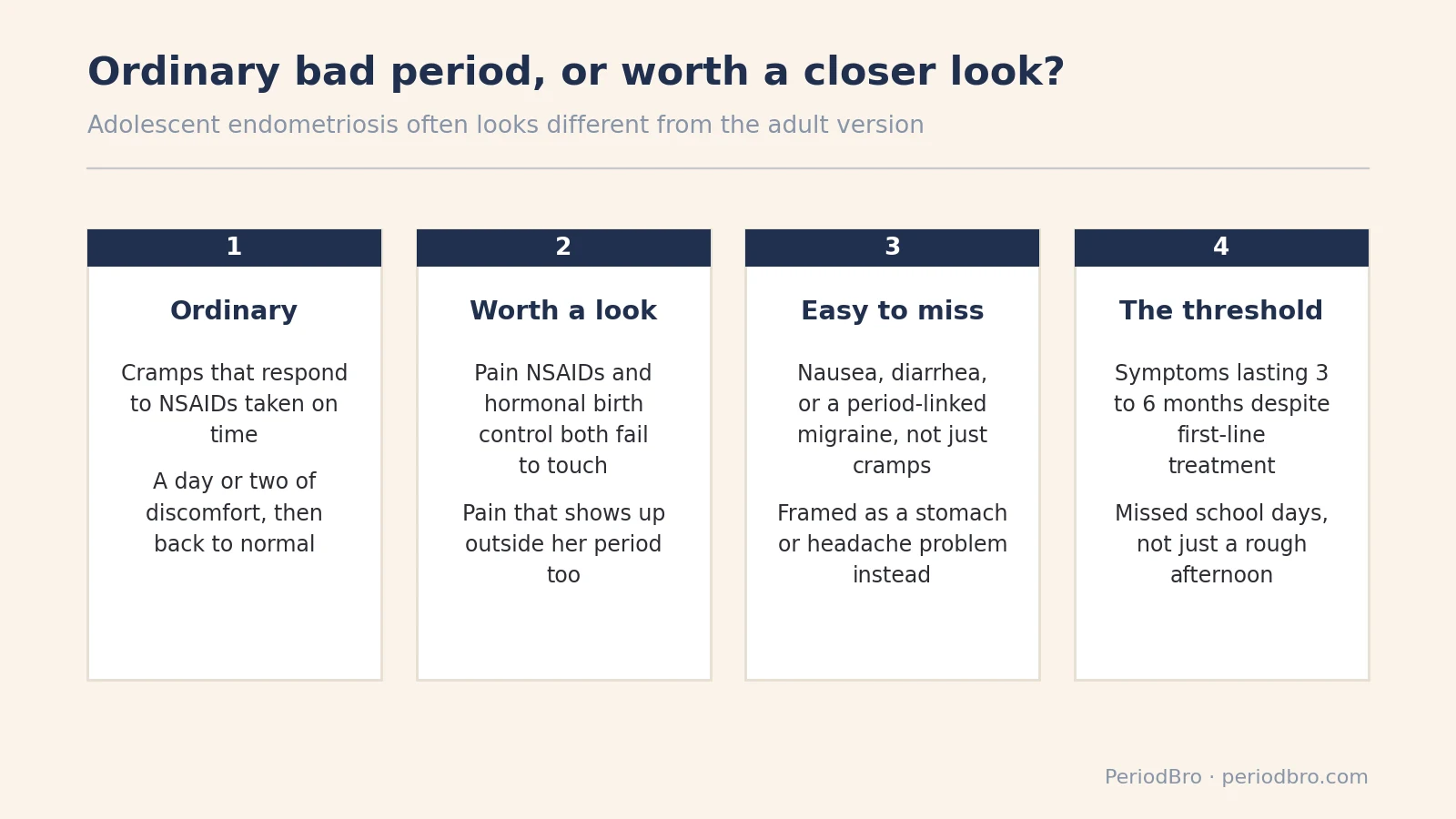
Most period pain in teenagers is exactly what it looks like: prostaglandin-driven cramping that responds to NSAIDs taken on schedule and settles down after a day or two. That’s the baseline, and most of the time it holds. Endometriosis in teenage girls is a different pattern, and it’s more common at this age than most parents assume. This piece is about your daughter, not your partner, so it’s a different conversation than our guide to endometriosis for partners, which is written for adult relationships. The biology is the same. Who’s paying attention to it, and what they’re watching for, isn’t.
Endometriosis happens when tissue similar to the uterine lining grows outside the uterus, most often on the ovaries, the fallopian tubes, or the lining of the pelvis. That tissue responds to hormonal cycles the way it would inside the uterus, which means it can cause inflammation, scarring, and pain that doesn’t behave like ordinary cramps.
Why it gets missed so often in teenagers
Adolescent endometriosis doesn’t always look like the adult version. Teenagers with it more often report non-specific abdominal pain, pain that shows up outside the period window entirely, gastrointestinal symptoms like nausea or diarrhea timed to the cycle, and even period-linked migraines. A lot of that gets worked up as a stomach problem or a headache problem, with nobody connecting it back to her cycle.
There’s also a normalization problem that starts early and runs deep: everyone tells teenage girls that periods hurt, so a teenager with genuinely abnormal pain has no baseline to compare herself against, and neither do the adults around her. Research on diagnostic delay points to exactly this mix, limited awareness among clinicians about how the disease presents in adolescents, and the social habit of treating menstrual pain as something to just push through.
The numbers back up how much gets missed. Over 60% of adult women diagnosed with endometriosis say their symptoms started before age 20, meaning most of this disease begins on someone’s watch as a teenager, whether or not anyone caught it at the time.
The threshold that matters
You don’t need to diagnose anything. You need to know when “this has gone on long enough” is a medically real threshold, not just a parent’s gut feeling. The standard first-line approach for period pain in teens is NSAIDs plus hormonal birth control, and it works for most girls. When pelvic pain or severe cramping persists for three to six months despite that combination genuinely being tried and genuinely not working, that’s the point where a closer look is appropriate.
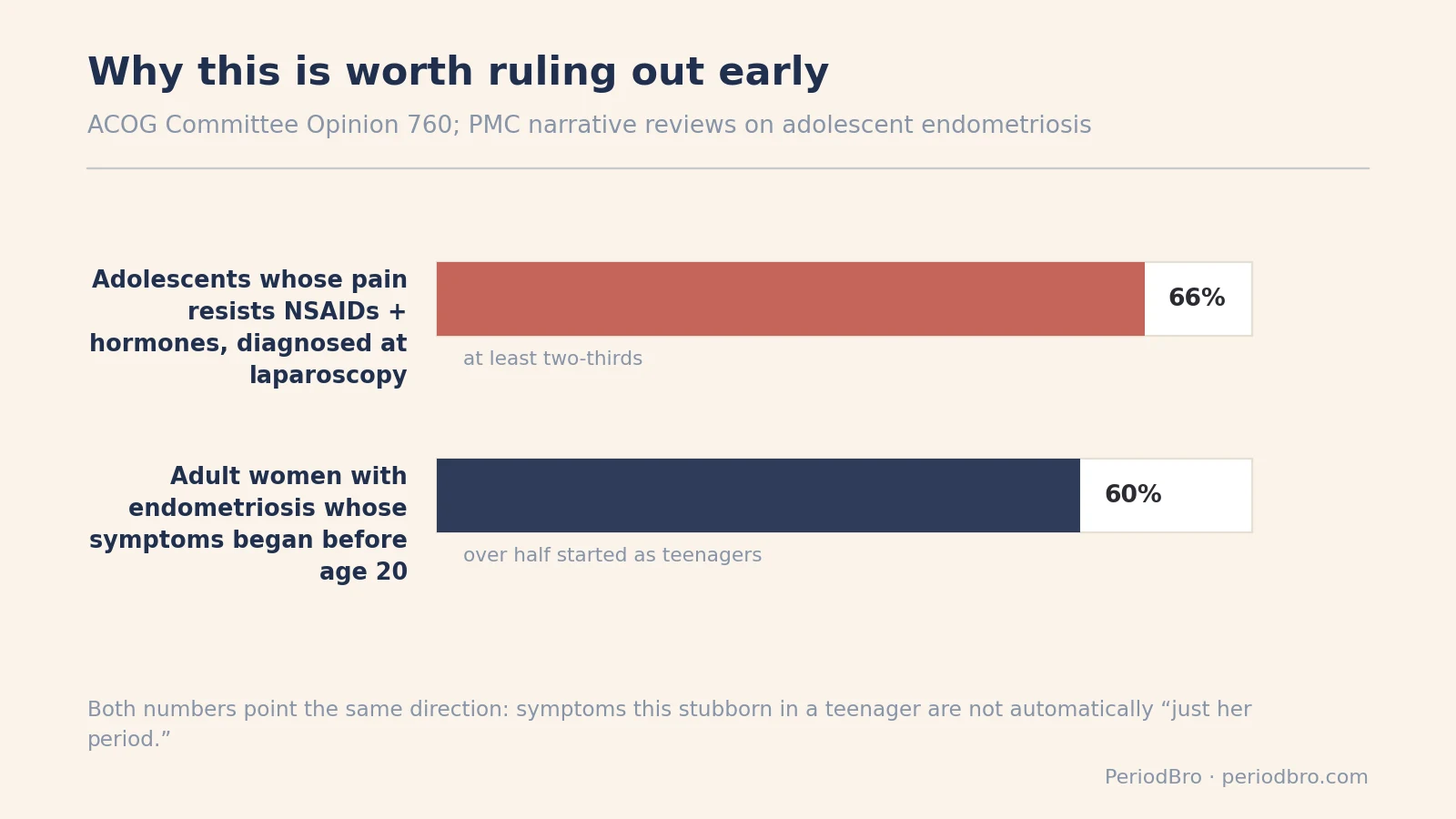
The scale of it is worth knowing too: among adolescents whose pain doesn’t respond to NSAIDs and hormonal treatment, at least two-thirds are found to have endometriosis when they eventually undergo diagnostic laparoscopy. That’s not a rare long shot you’d be chasing. It’s the most likely explanation once the first-line treatment has genuinely failed.

What a doctor’s visit looks like
Laparoscopy is the definitive way to diagnose endometriosis, but it’s not usually the first step, and you shouldn’t expect a doctor to jump straight to surgery. The typical path starts with a trial of NSAIDs and hormonal therapy, and only moves toward imaging or a surgical referral if that trial fails over the three-to-six-month window, or if pain is severe enough to be affecting school attendance and daily functioning in the meantime. Boston Children’s Hospital’s own referral guidance for pediatric endometriosis lists exactly those two triggers: treatment that isn’t working, and pain that isn’t just uncomfortable but functionally disruptive.
The American College of Obstetricians and Gynecologists updated its guidance in 2026 specifically to shorten the time it takes to get adolescents and adults an accurate diagnosis. This has been a recognized problem for a while, and the medical system is trying to close the gap your daughter might be sitting in right now.
What to do as her dad
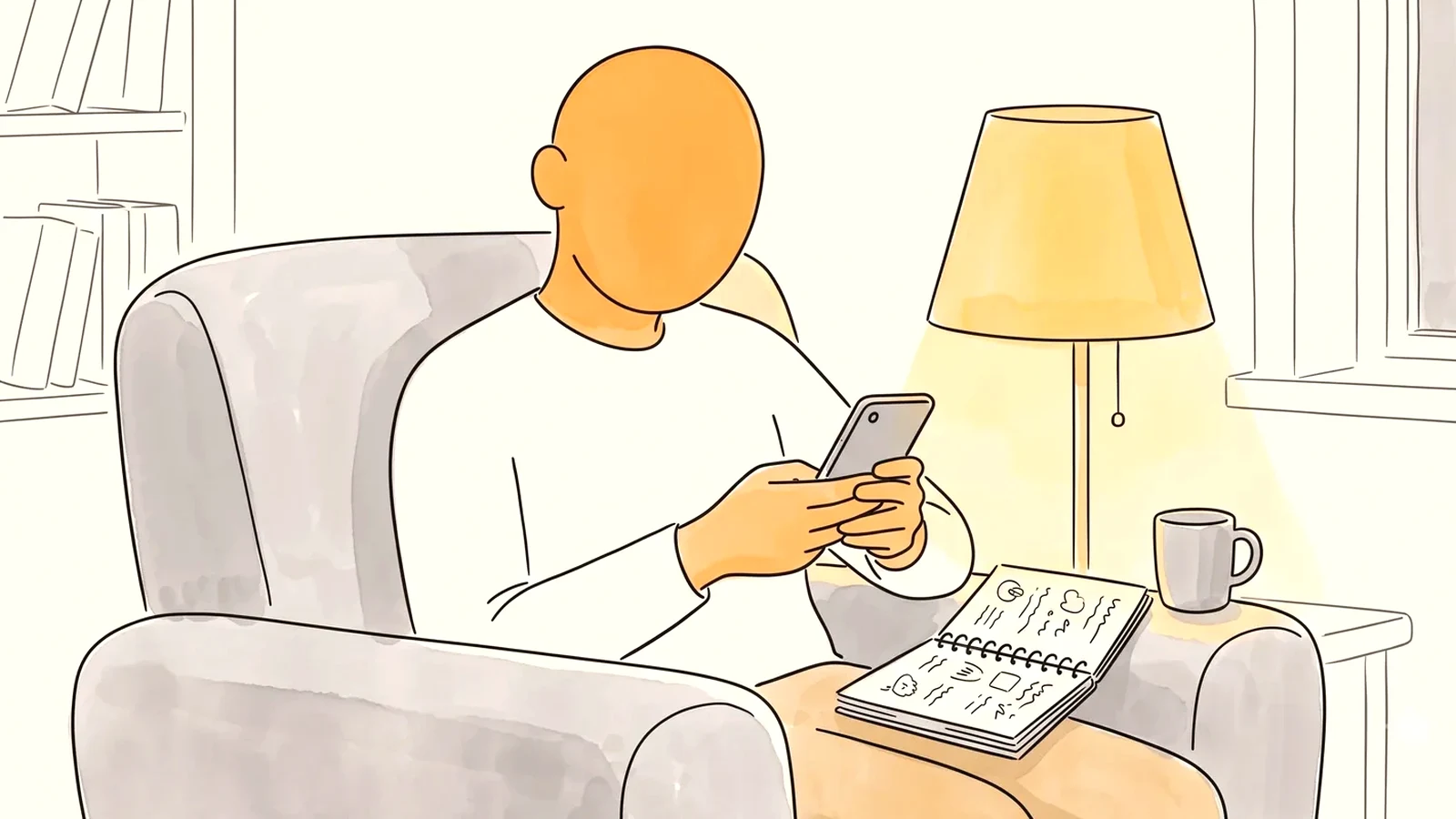
You’re not running this appointment, but you can make it work better. Keep a plain log: which days, how severe on a simple scale, what she took, whether it helped. “It’s been bad” doesn’t give a doctor anything to act on. Three months of dated, specific notes does.
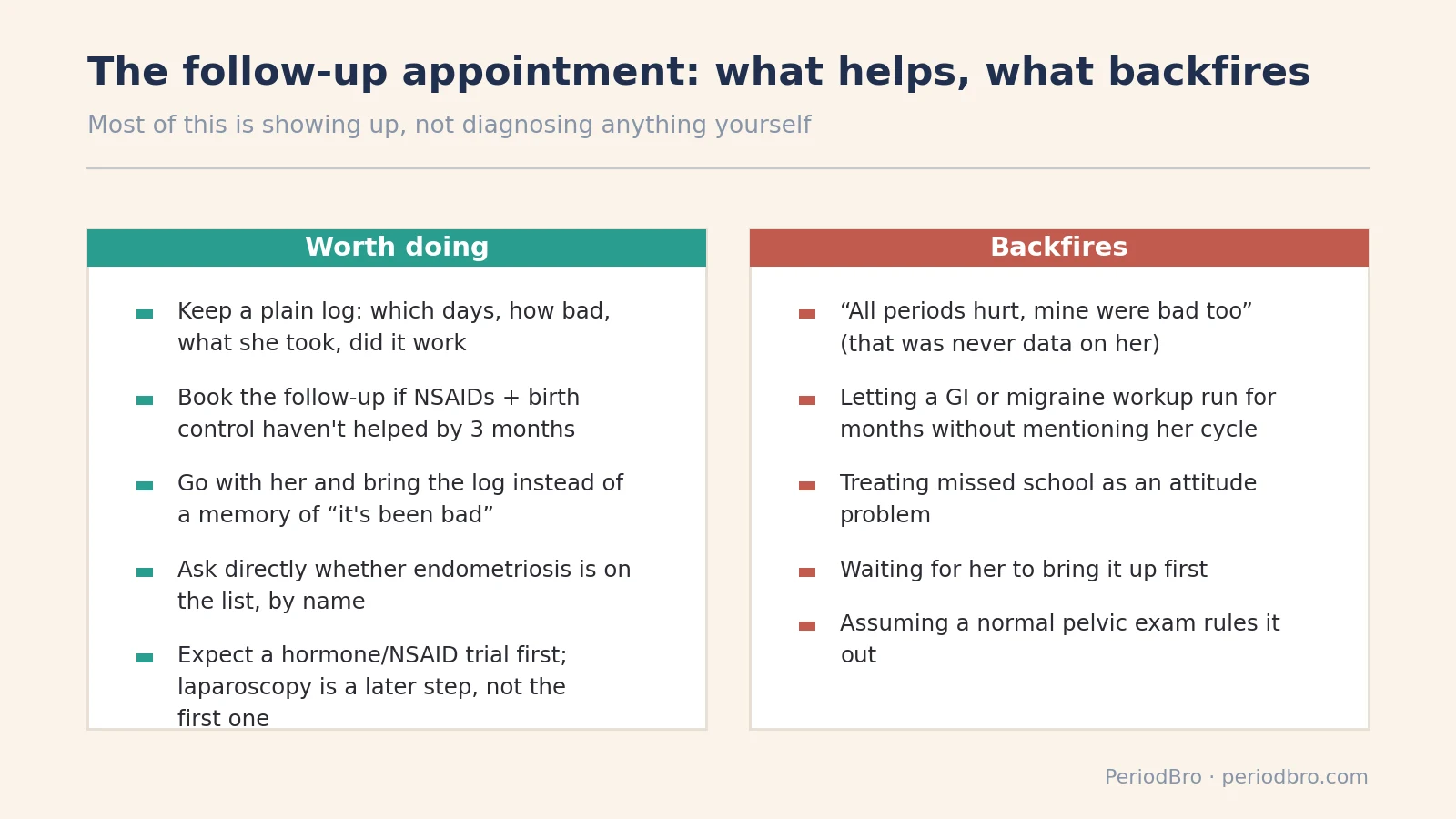
Go with her to the follow-up if the first round of treatment hasn’t worked, and ask directly whether endometriosis is on the list, by name. Doctors respond to specific, informed questions faster than to a vague “something’s wrong.” If a GI workup or migraine referral has been running for months without anyone mentioning her cycle, that’s worth raising yourself. And if the appointment produces a normal pelvic exam, know that a normal exam doesn’t rule endometriosis out. It often takes imaging or laparoscopy to see what’s there.
The thing to avoid is measuring her pain against your own memory of nothing, since you never had a period to compare it to, or against a vague sense that “periods are just like that.” That instinct is understandable and it’s also exactly the assumption that keeps this diagnosis delayed for years in a lot of teenagers.
If you want the fuller picture on where to draw the line between a rough period and something worth flagging in general, our guide on when period pain is worth a closer look covers the adult version of this same threshold question, and our piece on helping a daughter through cramps day to day has the practical side of showing up for her while all this gets sorted out. For the biology underneath any of it, our menstrual cycle guide is a good starting point if the terminology is unfamiliar.
It’s not the conversation you’d expect to have
Most dads never had a period, which means the instinct to compare her experience to your own memory of anything just doesn’t apply here, and that turns out to help once you notice it. You’re not the reference point. That frees you up to just watch the pattern instead of judging it against a baseline you don’t have. It also means you’re not the right person to reassure her that “this is normal,” since you genuinely don’t know. What you can do is take her report seriously enough to write it down and get it in front of someone who does know.
It helps to remember that a teenager describing pain has less practice than an adult at calibrating how bad is bad enough to mention. She may underreport out of not wanting to seem dramatic, or because missing school already feels like a bigger deal to her than the pain does. Asking specific, low-pressure questions (does it wake you up at night, does the medication actually help or just take the edge off, is this worse than last month) usually gets further than a general “are you okay.”
Quick answers
Is endometriosis in teenage girls common, or is this rare?
It’s more common than most parents assume. Chronic pelvic pain and severe dysmenorrhea in adolescents are common enough complaints, and among the subset whose pain doesn’t respond to standard treatment, endometriosis turns out to be the explanation more often than not.
Can a normal ultrasound or pelvic exam rule it out?
No. Endometriosis often doesn’t show up clearly on a standard pelvic exam or basic ultrasound, especially in adolescents. A normal result narrows things down, it doesn’t close the door.
Does she need surgery to get diagnosed?
Not necessarily right away. Laparoscopy is the definitive diagnostic test, but most clinicians start with a hormonal and NSAID trial first, and only move toward surgery if that trial fails or symptoms are severe enough to warrant it sooner.
None of this requires you to become a diagnostician. It requires you to notice a pattern, write it down, and push for a specific answer instead of a general reassurance. Most dads are already better equipped for that than they give themselves credit for.
PeriodBro provides educational information and is not a substitute for professional medical advice. Always consult a qualified healthcare provider for personal medical decisions, including any evaluation of persistent or severe pelvic pain in a teenager.