
Cycle Syncing for Couples: How to Work With Her Energy, Not Against It
I planned a perfect Saturday once. Booked a long hike, a late lunch with two other couples, then a thing downtown in the evening. I’d been looking forward to it all week. By the time we got to the trailhead she was quiet, and by lunch she was running on fumes and pretending she wasn’t. I spent the whole day thinking I’d done something wrong. I hadn’t. I’d just scheduled a marathon for the one week of the month her body had the least to give.
That was the day I stopped thinking of her energy as a mood I had to manage and started thinking of it as a rhythm I could actually plan around. That, stripped of the wellness-blog hype, is what cycle syncing for couples really comes down to.
What “cycle syncing” actually means (and what it doesn’t)
If you’ve heard the phrase “cycle syncing,” you’ve probably heard two different things, and it’s worth pulling them apart.
The first is the old idea that people who live together start getting their periods at the same time. It’s a sticky myth, but the data doesn’t hold it up. When the tracking app Clue teamed up with researchers at Oxford to look at real cycle data from hundreds of pairs, most pairs’ periods actually drifted further apart over time, not closer. The International Federation of Gynecology and Obstetrics walked through why: cycles vary in length, periods last several days, so two of them will overlap by coincidence often enough to feel like a pattern. So no, you’re not going to sync up with her, and that’s not what we’re talking about.
The second meaning is the useful one. It’s the idea of planning your life around the predictable energy shifts that happen across her cycle. The wellness industry has turned this into rigid protocols – eat these exact foods on these exact days, only do this kind of workout in this phase – and there’s not much hard evidence that the strict version does anything magic. But strip away the protocol and there’s a real thing underneath: her available energy is not flat across the month, it moves in a pattern, and that pattern is predictable enough to plan around. You don’t need a 12-step regimen. You need to stop booking the marathon on the wrong week.
Her energy isn’t random. It runs on a curve.
Here’s the part nobody sat me down and explained. The cycle runs in four phases, and each one has a different hormonal weather system that affects how much gas is in the tank.
It starts with the period itself – the menstrual phase – when hormones are at their lowest and a lot of people feel tired and low-key. Then comes the follicular phase, when estrogen climbs back up and, for many, energy and mood climb with it. Around ovulation, roughly the middle of the cycle, estrogen and testosterone peak, and this is often the high-energy, most-social, most-outgoing stretch. Cleveland Clinic lays out the phase-by-phase pattern and notes energy tends to rise through the follicular phase and peak around ovulation.
Then the back half. After ovulation, the luteal phase begins, progesterone rises, and as it winds down toward the period a lot of people hit fatigue, lower mood, and that “I just need to sit down” wall. And this isn’t only in her head – her body is literally doing more work. Studies of sleeping metabolism found that resting energy expenditure goes up in the luteal phase, on the order of 5 to 9 percent, tracking closely with progesterone levels. Her body is burning more fuel at rest, which is part of why she’s hungrier and more wiped out that week. The same shift shows up in appetite: a meta-analysis of energy intake across the cycle found people tend to eat more in the luteal phase than the follicular one.

For the full breakdown of the hormones behind all of this, I went deep on it in our week-by-week map of how hormones drive her mood, and on the luteal stretch specifically in the luteal phase explained. But for syncing your shared life, you don’t need to memorize the biology. You just need the shape of the curve: low at the period, rising after, peak in the middle, sliding down toward the next period.
How cycle syncing for couples actually works in practice
Once you can see the curve, planning around it stops being guesswork. This isn’t about putting her on a regimen. It’s about you – both of you – stopping the habit of booking the heavy stuff on the heavy weeks. Here’s how that plays out.
The high-energy middle is where you put the big stuff. The follicular-to-ovulation stretch is usually the green-light window. If you’re planning a trip, a big social weekend, the dinner with the friends who wear you out a little, the project around the house that takes real effort – this is when to aim for it. It’s also, not coincidentally, often when she’s most up for connection, so it’s prime time for the date you actually want to put effort into. I sketched out a fuller version of this in our guide to planning date nights around her cycle.
The back half is where you protect the calendar instead of filling it. As the luteal phase slides toward her period, the move is to leave more white space. That doesn’t mean canceling life. It means not stacking three demanding things on one Saturday. It means being the one who says “let’s keep this weekend low-key” before she has to ask for it. The version of me from that hike would have read a quiet Saturday as a problem to fix. The version of me now reads it as the right call for the week.
The hard conversations have better and worse weeks. This one took me a while. The tense, “we need to talk about the money” kind of conversation lands differently depending on the week. The same issue raised during the high-energy window tends to go somewhere; raised the night before her period, when everything already feels like too much, it tends to turn into the fight neither of you meant to have. The issue is real either way – I’m not saying her feelings are “just hormones,” because they’re not. I’m saying timing is a tool you have, so use it.
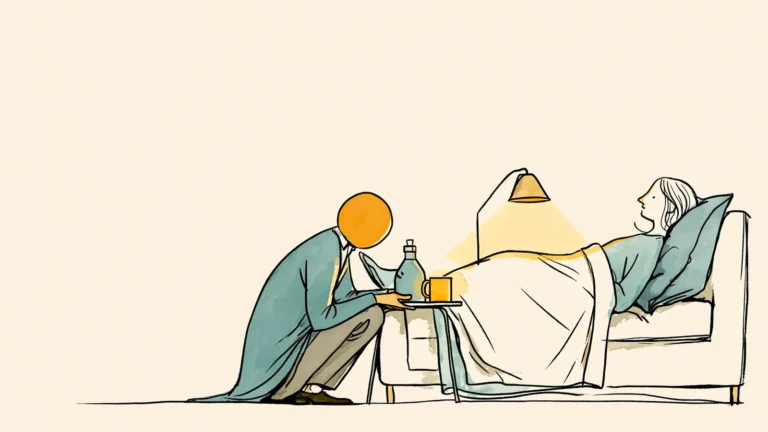
The low-energy weeks are where small support beats grand gestures. When she’s running on the luteal-phase deficit, the thing that lands isn’t a big romantic production. It’s the dishes done without being asked, the heating pad already warm, the plan canceled before she had to be the one to bail. Low effort from you, high relief for her. That’s the trade you want that week.
The clearest example I’ve got: one luteal week I almost surprised her with tickets to a show on a Thursday night. Six months earlier I’d have done it and felt like a hero. Instead I traded the grand gesture for a boring one – I picked up her usual order on the way home, told her I’d handle dinner and everything else that night, and said go lie down. She told me later that was the nicest thing I’d done in weeks. The show would have been a gift to the version of her I wanted that night. The quiet evening was a gift to the actual person standing in the kitchen.

The one rule that keeps this from going wrong
Here’s where a lot of guys get this backwards, so let me be blunt about it. The goal is not to build a calendar in your head and then manage her according to it. The cycle gives you the general shape. It does not tell you what’s true for her, today.
Phase length and intensity vary a lot from person to person, and any given month can be thrown off by stress, sleep, travel, or nothing at all. So the curve is your starting hypothesis, not your verdict. You still have to look at the actual person in front of you. The worst thing you can do with this knowledge is weaponize it – “you’re just like this because it’s your luteal phase” is a sentence that has never once helped anyone. Don’t diagnose her. Notice the pattern, then check it against reality by paying attention and, when it matters, just asking. “Want a quiet one this weekend or are you up for the thing?” costs you nothing and gets you the real answer instead of the one you guessed.
This is honestly the whole reason I started tracking in the first place. Not to predict her, not to manage her, just to stop being caught off guard by a rhythm that was completely knowable if I’d only paid attention to it. The tracking turns the vague sense of “she’s been off this week” into “right, it’s that week, plan accordingly” – which is a much kinder thing to do with the information than guessing.
Where to start this week
Don’t try to run the whole system on day one. Just do this: figure out roughly where she is in her cycle right now, and let it inform one decision you’re already making. A plan you’re about to book, a conversation you’ve been sitting on, a weekend that’s still open. Match it to the curve and see how it lands. That’s it. One synced decision is enough to feel the difference between working with her energy and quietly working against it.
I built PeriodBro because I wanted exactly this – a way to know where she was in her cycle without making her install another app or turn her body into a project. If you want the rhythm in your pocket instead of in your guesswork, that’s who it’s for.