Why Her Sex Drive Spikes Around Ovulation
You’ve probably noticed it even if you never had a name for it. Some stretch of the month, she’s noticeably more into it: more forward, more responsive, initiating in a way that feels a little different from the baseline. Then a week or so later that energy quietly settles back down. It’s not random, and it’s not about you doing something magically right or wrong. A lot of the time, you’re watching ovulation.
Here’s what’s actually happening when her sex drive climbs around the middle of her cycle, why it happens, and how to be aware of it without turning it into something strange.
The short version: desire often peaks around ovulation
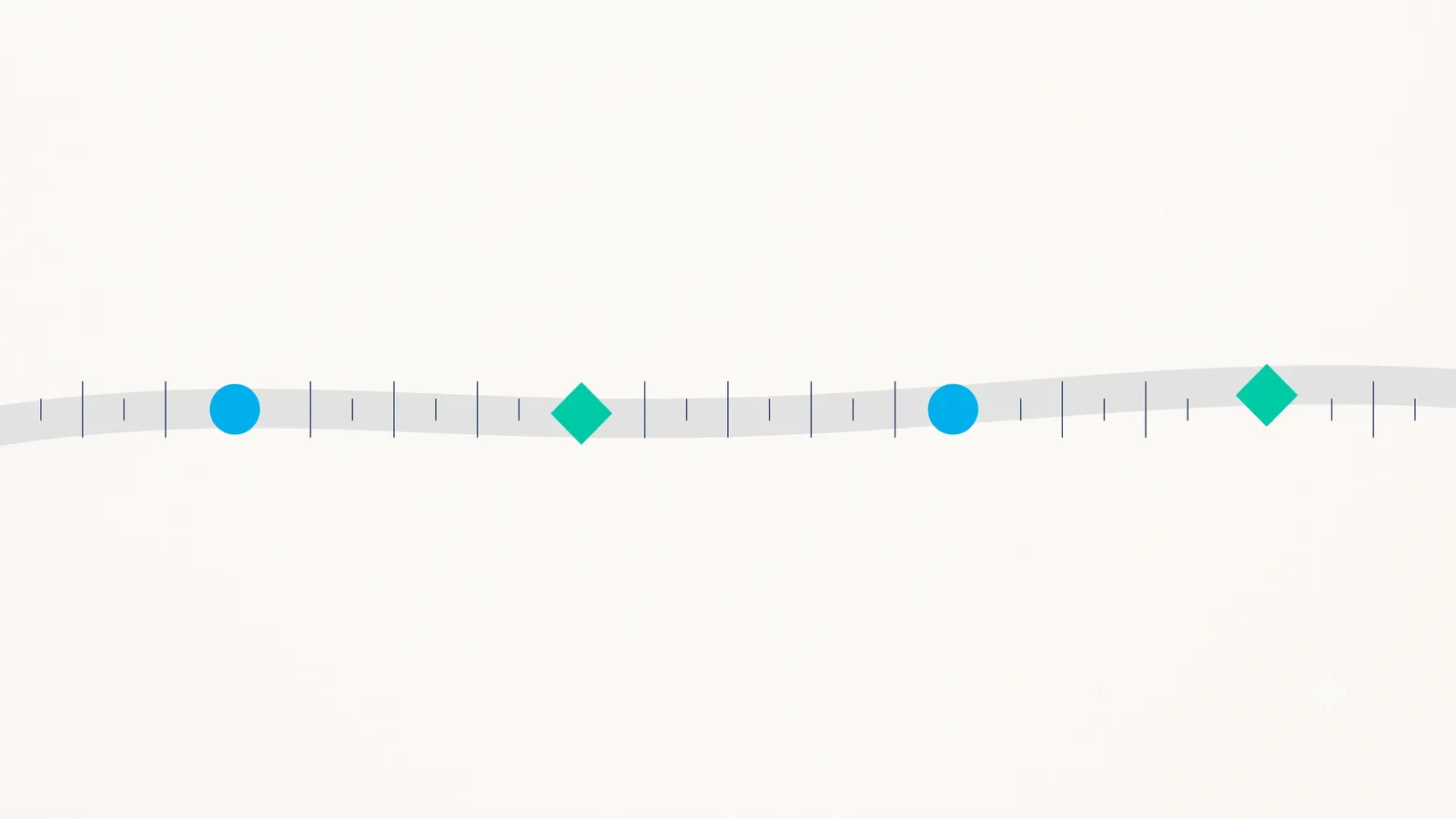
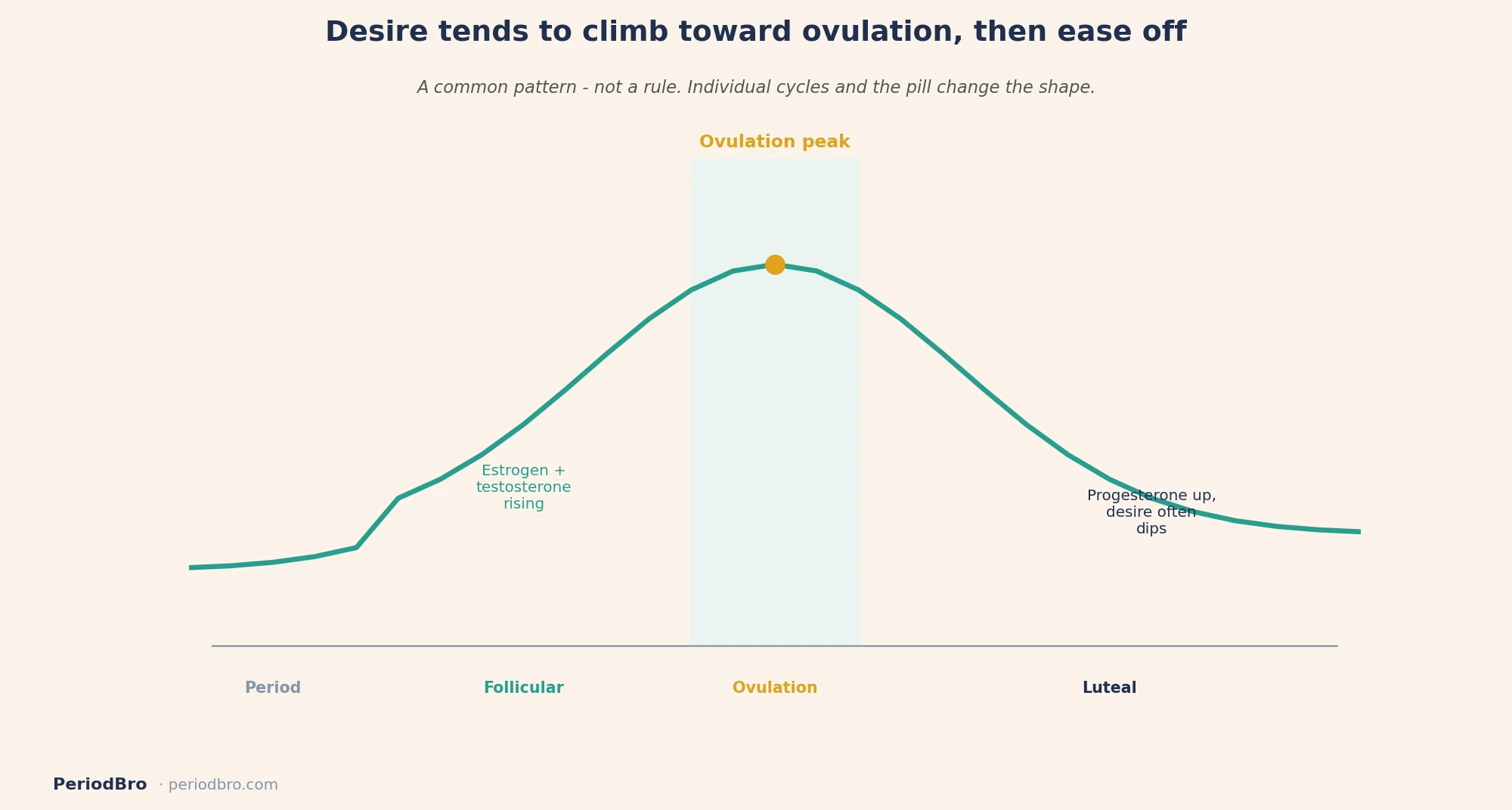
For many women, sexual desire tends to rise through the first half of the cycle and reach its high point right around ovulation, roughly the middle of a typical cycle, before easing off in the back half (Dr. Jolene Brighten). Large studies have found that measures of desire, including how often women initiate, cluster around this mid-cycle window. It lines up with biology: ovulation is the fertile window, so a nudge toward wanting closeness right then makes evolutionary sense.
If the word “ovulation” is still fuzzy for you, it’s worth a two-minute primer. We wrote ovulation explained for men for exactly this, and the fuller menstrual cycle phases explained for men if you want the whole map. The one-line version: mid-cycle, an egg is released, and the hormones around that event do a lot more than manage fertility.

Why her sex drive spikes during ovulation
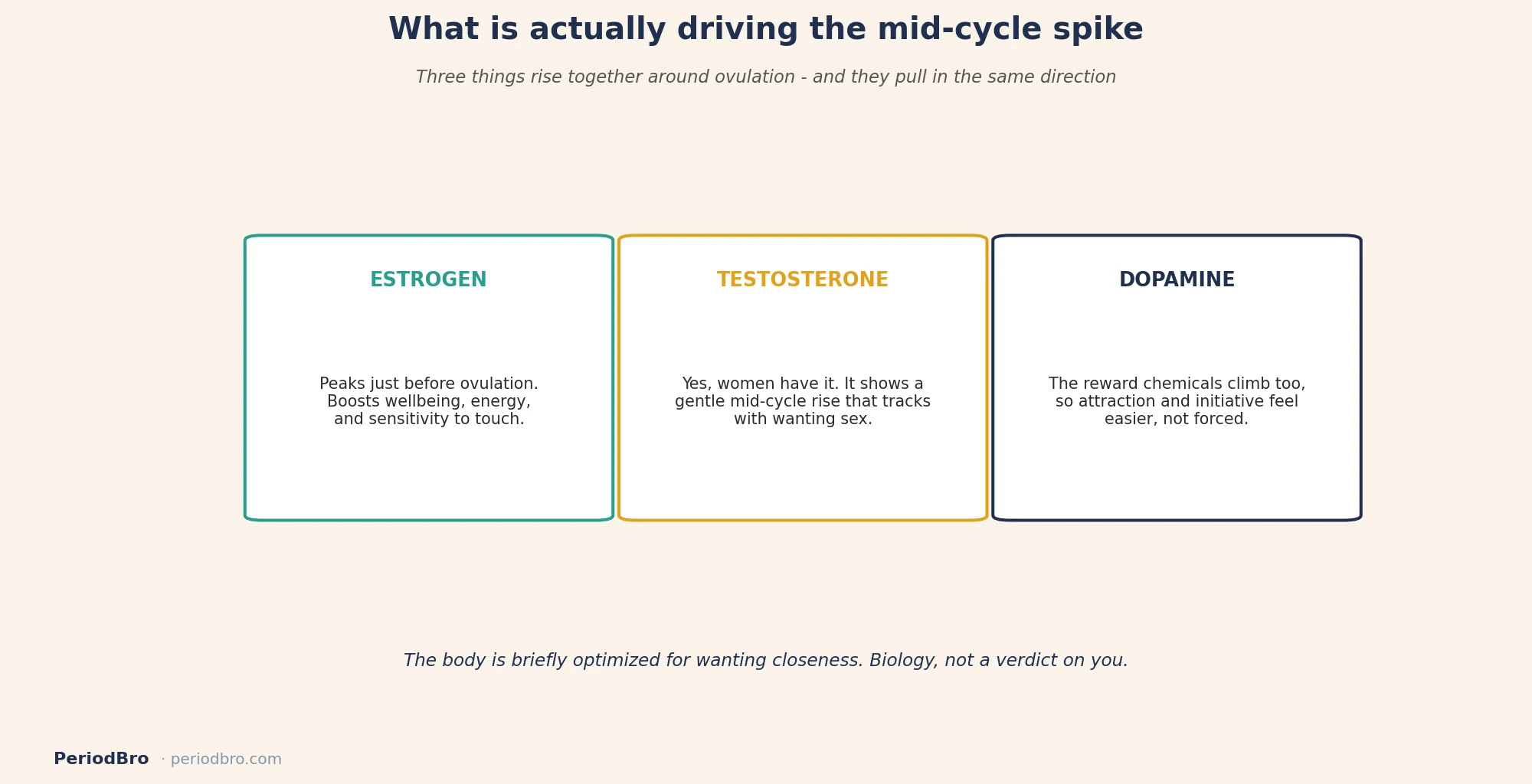
Three things rise together in the run-up to ovulation, and they all pull in the same direction. Estrogen climbs to its peak just before the egg is released, which lifts mood, energy, and sensitivity to touch. Testosterone, which women have in smaller amounts than men but very much have, shows a gentle mid-cycle rise that tracks closely with wanting sex (a review in Sexual Medicine Reviews). And the brain’s reward chemistry, dopamine and its relatives, tends to run higher too, so attraction and initiative feel easier rather than forced.
Put those together and you get a body that’s briefly, genuinely optimized for wanting closeness. That’s the mechanism. It’s not a performance review of you, and it’s not something she’s deciding on purpose. It’s hormones doing what hormones do. If you find the mood-and-hormone link interesting, we go deeper on how hormones drive her mood across the whole cycle, because desire is only one of the things that shifts.

It’s not only about sex
Here’s something worth knowing, because it changes how you read her: the same hormonal shift that lifts desire around ovulation tends to lift a bunch of other things at the same time. Estrogen peaking is why a lot of women report feeling more energetic, more confident, more social and quick-witted in this stretch, and even that their skin and hair look a little better. It’s not vanity or coincidence; it’s the follicular-into-ovulation window doing its thing.
Why does that matter to you? Because if you only clock the sex part, you miss the bigger picture, which is that this is often just a genuinely good week for her. She may be up for going out, tackling the big project, saying yes to plans. Meeting that with your own good energy, being fun and present rather than treating the week as purely about the bedroom, is what actually makes the most of it. The desire spike is one thread in a week where she often feels most like the best version of herself. Show up for the whole thing.
The flip side is the back half of the cycle, where energy and mood can dip along with desire. That’s not a fault or a withdrawal from you, it’s the other end of the same rhythm, and knowing it’s coming is half of handling it well.
The caveats, because this isn’t a timer
Now the important part, the part that keeps you from being that guy. This is a tendency, not a schedule you can hold her to. Plenty of women don’t feel a clear mid-cycle spike at all, and desire is shaped by far more than hormones: stress, sleep, how connected she feels to you, whether the week has been kind to her. Any of those can flatten the curve entirely.
One caveat matters more than the rest: hormonal birth control changes the picture. The combined pill works largely by suppressing ovulation, and it can lower free testosterone, so for many women on it the mid-cycle desire bump is blunted or gone (Cleveland Clinic). So if she’s on the pill, don’t expect the same rhythm, and definitely don’t tell her she “should” be feeling something on a given day. Her body isn’t running the textbook cycle. The follicular half of the cycle is where a lot of this good-energy stuff lives, and we cover that stretch in what the follicular phase is.

How to actually use this without being weird about it
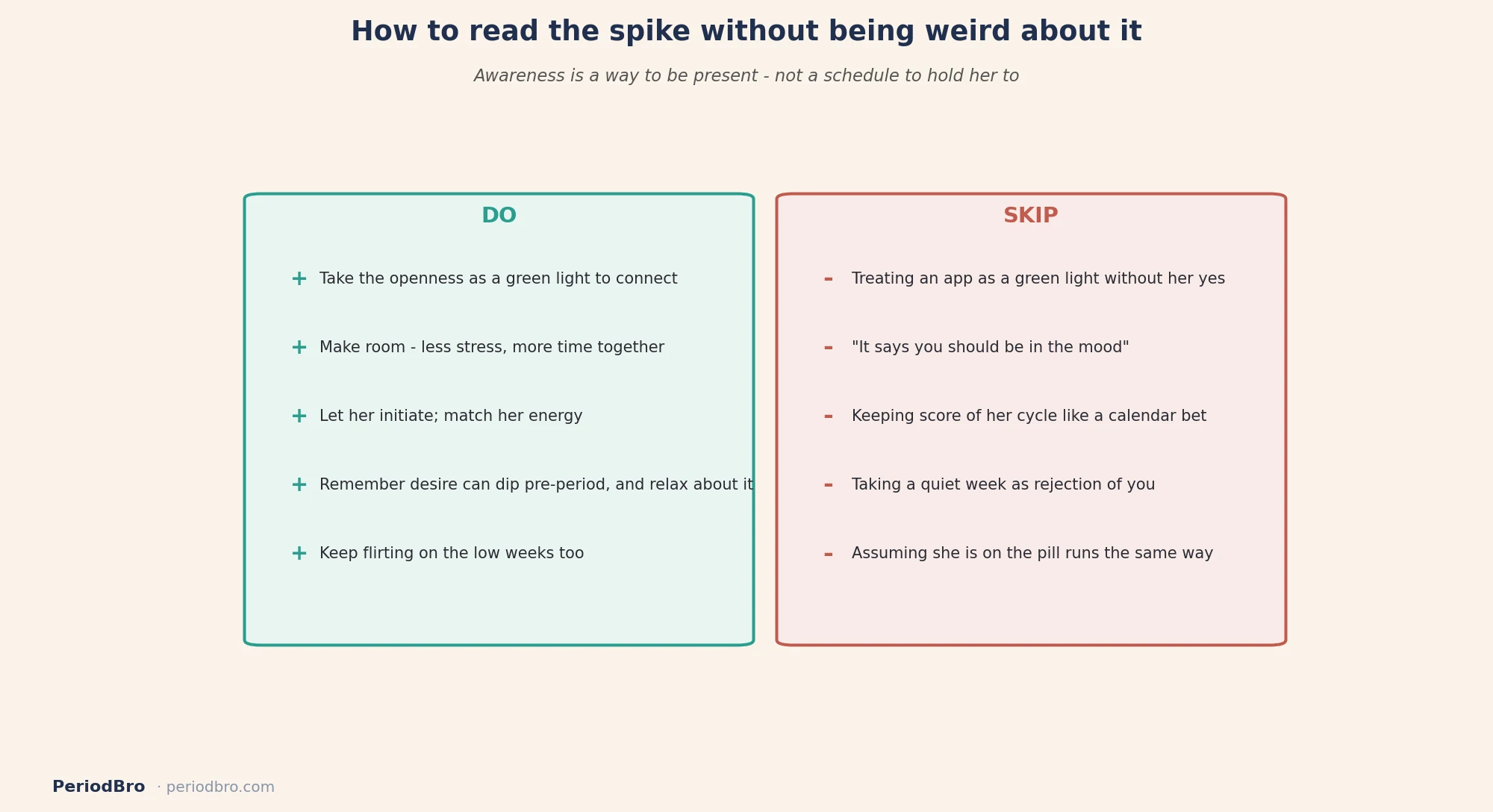
Awareness here is a way to be present, not a scheme. Used well, it just means you notice when she’s more open and you make room for it: less stress in the house, more time together, letting her initiate and matching her energy instead of scheduling anything. It also means you don’t take the quieter weeks as a rejection of you personally. Desire often dips in the days before her period, and reading that as “she’s not into me anymore” is one of the more common, more avoidable ways guys hurt themselves.
What it never means is treating an app or a calendar as a green light without her actual yes. Consent isn’t a phase of the cycle. “The tracker says you should be in the mood” is a sentence that has never once worked and never will. Keep flirting on the low weeks, stay warm across the whole month, and let the mid-cycle energy be a nice bonus rather than the only time you show up. If you want to build a bit of this into how you plan time together, date nights around her cycle is a low-pressure place to start.
What if the spike never seems to show up?
Plenty of guys read all this and think, “that’s not us at all.” That’s completely normal, and it’s not a problem to solve. Some women just don’t experience a pronounced mid-cycle jump. She might be on hormonal birth control, which flattens it. She might be stressed, run down, or dealing with something that has nothing to do with her cycle. Desire is one of the first things to quietly disappear when life gets heavy, for anyone.
So if the rhythm this article describes doesn’t match your relationship, don’t go chasing it or, worse, start making her feel like she’s malfunctioning. The single most attractive thing you can do across the whole month is take the pressure off. Reduce the stress in her week, carry more of the invisible load, be genuinely fun to be around, and stay warm without keeping score. Connection is the real driver of desire in a long relationship, and no hormonal window will do the work that a calm, considerate partner does. Think of ovulation as a small tailwind when it’s there, and the everyday stuff as the engine.
The whole point of understanding the mid-cycle spike isn’t to game anything. It’s to stop misreading her. When you know that desire has a natural rhythm, a warmer week doesn’t go to your head and a cooler one doesn’t wound your ego. You just get to be a steadier, more relaxed partner across the whole month, which, funnily enough, tends to be good for the part you were curious about in the first place. For more on the intimacy side specifically, our guide to sex and intimacy across her cycle picks up where this leaves off.
This article is general educational information, not medical advice. Every cycle and every person is different, and anything to do with fertility, contraception, or a change in her health is a conversation for a qualified healthcare professional.