What a Period Tracking App for Partners Should Actually Do
A few weeks into dating someone new, I figured out that her hardest days followed a pattern. I wanted to keep track of it so I could be useful instead of clueless. So I did the obvious thing: I went looking for an app. And then I stalled, because every option I found wanted me to ask her to install it, link her account, and hand me a window into her body. Three weeks in. I couldn’t picture that conversation going well, so I gave up and tried to remember it in my head, which is to say I forgot it constantly.
That gap is the whole reason I think about what a period tracking app for partners should actually do. Not what it does now. What it should do.
To be fair, the apps did notice us
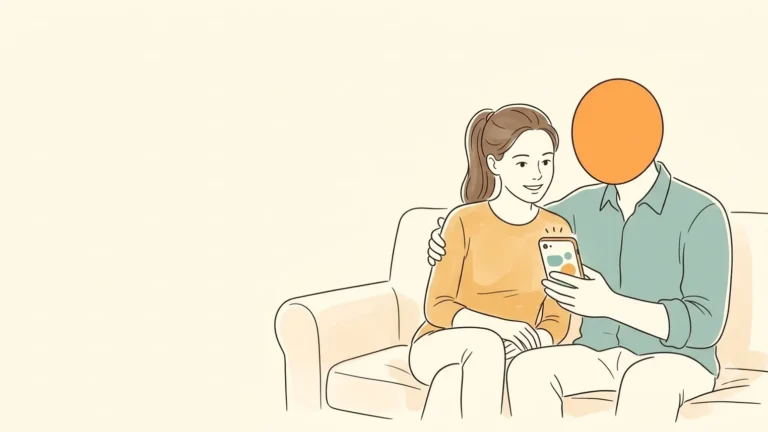
Let me give credit where it’s due. The big cycle apps figured out that partners exist. Flo, the largest of them, now has a “Flo for Partners” mode. She opens her app, taps a Partner tab, links you, and you get a feed of what’s going on day to day, plus some couples quizzes (Flo). It takes about two minutes to set up, and she can stop sharing whenever she wants (Flo Help). That’s real progress. Five years ago none of this existed.
So I’m not here to tell you the apps ignore partners. They don’t anymore. The problem is subtler than that, and it took me a while to put my finger on it.
The problem isn’t that apps ignore partners. It’s who they’re built around.
Every one of these partner features is the same shape: she is the user, and you are a guest she invites in. She installs. She logs. She decides what you see. You get a read-only window into a tool that was designed for her body, translated for you as an afterthought.
For a lot of couples, that’s fine, and it works. But it quietly assumes a few things that aren’t always true. It assumes she already uses a cycle app. It assumes you’re far enough along that asking her to link you doesn’t feel like a strange ask. And it assumes there’s exactly one person in your life whose cycle you’d ever want to understand.
None of those held for me. And once I started paying attention, I realized they don’t hold for a lot of people who’d genuinely benefit from knowing this stuff.
Three situations a partner mode quietly leaves out
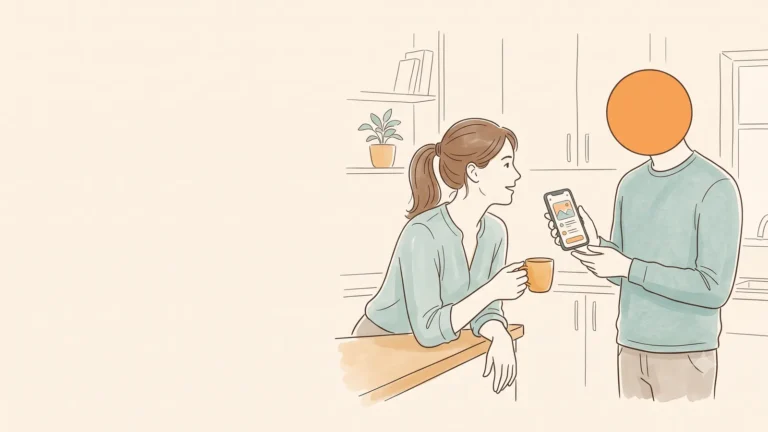
The early relationship. This was mine. When you’ve been seeing someone for a few weeks, “hey, can you install this app and share your menstrual data with me” is not a light request, even with the best intentions. It can land as intense, or clinical, or like you’re managing her. So you don’t ask, and you stay in the dark on purpose. A partner feature that depends on her doing the setup is no help at all in the exact moment you most want to quietly get your act together. The irony is that this is the stage where a little understanding goes the furthest, because you don’t yet have years of shared context to fall back on. You’re still learning the difference between a bad day and a hard week, and you’re learning it without any map.
The father. Here’s the one nobody builds for. I also have a daughter. Part of showing up for her, as she gets older, is understanding what her body is going through so I’m not caught flat-footed. No “partner mode” on earth is designed for a dad who wants to keep a respectful, private sense of where his kid is in her cycle so he can be patient on the rough days. The whole category assumes a romantic couple, and that’s a narrow slice of who actually carries this kind of care. If you want the longer version of that argument, I wrote about a father’s role in all this separately.
More than one person. A guy I know is close with his teenage daughter, his partner, and an aging mom he helps care for. Three different people, three different rhythms, and not a single app that lets him hold more than one. The cycle apps are built around a single body: hers. The reality of caring for people is that there’s usually more than one woman in your life you’d show up for, and it was never about romance. It’s about the people who matter.
What a period tracking app for partners should actually do
So here’s the spec I wish I’d had. A real period tracking app for partners starts from a different premise: you are the primary user, not a guest.
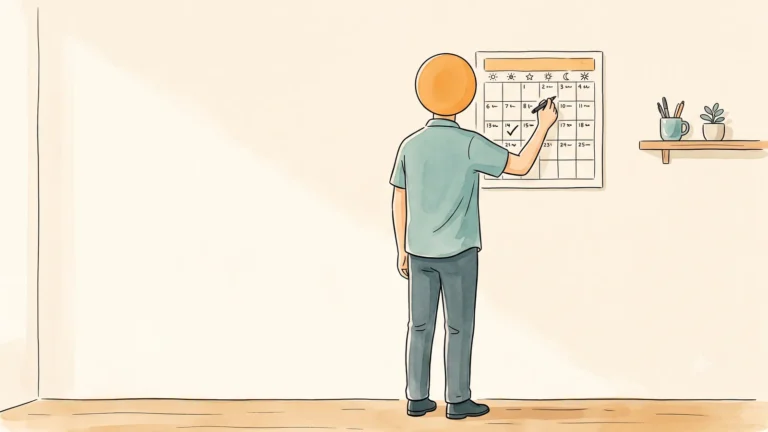
That changes everything downstream. It means you can track on your own, from your own phone, the way you’d track anything else you care about, without needing anyone to install anything or sign off on it first. It means more than one profile, because the people you look out for don’t come one at a time. It means the daily output is written for someone who is not living inside this body and didn’t grow up learning the vocabulary, so “day 23, expect lower energy and a shorter fuse, keep plans light” instead of a chart you have to decode. And it means the app meets you where your knowledge actually is, which for most of us is somewhere near zero at the start. I didn’t know what the luteal phase was until I was well into adulthood. Nobody had ever suggested I should. A tool built for partners assumes that, and teaches as it goes, instead of handing you a dashboard meant for someone who’s tracked her own body for a decade. The average cycle runs about 28 days but anywhere from 21 to 35 is normal, and the rough back half, the luteal phase, tends to be where the mood and energy shifts show up (Cleveland Clinic). You don’t need a medical degree for that. You need it said plainly, on the right day.
And it means doing all of this without turning you into a creep. There’s a real line between paying attention and surveilling someone, and I’ve written a whole playbook on tracking without being creepy because it matters more than any feature. The goal is to be more present, not to monitor anyone.

The privacy part nobody wants to talk about
There’s a reason “just have her share it from her app” should make you pause, and it’s not about your relationship. It’s about where that data goes.
Period apps have a genuinely ugly track record here. Flo got hit with an FTC complaint after it came out that the app had been sharing sensitive health data with companies like Facebook and Google despite promising not to; the settlement forced it to get real consent before sharing health information (NPR). The lawsuits didn’t stop there. Google reached a settlement in 2024 over claims it collected Flo users’ health data without permission (Bloomberg Law). After Roe v. Wade was overturned, a lot of people deleted their cycle apps outright, worried that intimate reproductive data could be subpoenaed or used against them (NPR).
So when an app asks her to log her cycle into the cloud and pipe it to you, the honest question is: who else is in that pipe? A partner tool that takes this seriously keeps the data minimal and local where it can, sells nothing, and treats reproductive information as the genuinely sensitive thing it is. Privacy here isn’t a premium feature. It’s the floor. If you want the careful version of how to even raise tracking with a partner without it feeling invasive, I put that in a guide to tracking with consent.
What I’d actually do
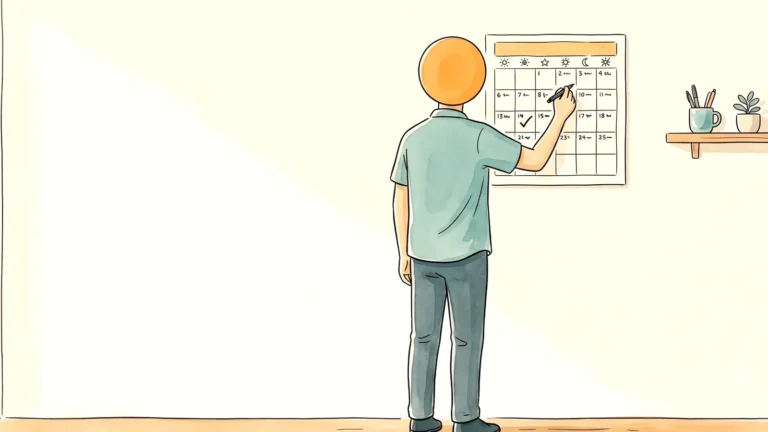
If you’re where I was a few weeks into something new, here’s the one move: start with yourself, not with her. Track what you can observe on your own, learn the rough rhythm, and let your behavior change first. Be the person who plans the heavy week lighter and brings home the right thing on the right day, before you ever have a conversation about apps or data. The understanding is the point. The tool is just there to remind you. If you want a fuller map of what showing up across the whole month looks like, I pulled it together into a complete playbook for being a better partner through her cycle.
That’s the whole reason I built PeriodBro the way I did: you’re the user, you can hold more than one person, the daily hint is in plain English, and the data stays yours. I wanted that for myself, both for the relationship I was in and for being a better father. If that sounds like the gap you’ve been living in too, that’s exactly who it’s for.
You don’t need the perfect app to start showing up better. But you do deserve one that was actually built for you.