What Is the Follicular Phase? Why She’s Full of Energy
You probably noticed it before you understood it. There’s a stretch most months – usually the week right after her period ends – where she seems lighter. More up for plans. Quicker to laugh, faster at work, keen to start things. If you’ve ever wondered what is the follicular phase, that “she’s suddenly full of energy” week is your answer. It’s not a mood. It’s a hormone schedule, and it’s one of the easiest phases to actually work with.
Here’s what’s happening under the hood, and how to make the most of it without turning into her life coach.
What the follicular phase actually is
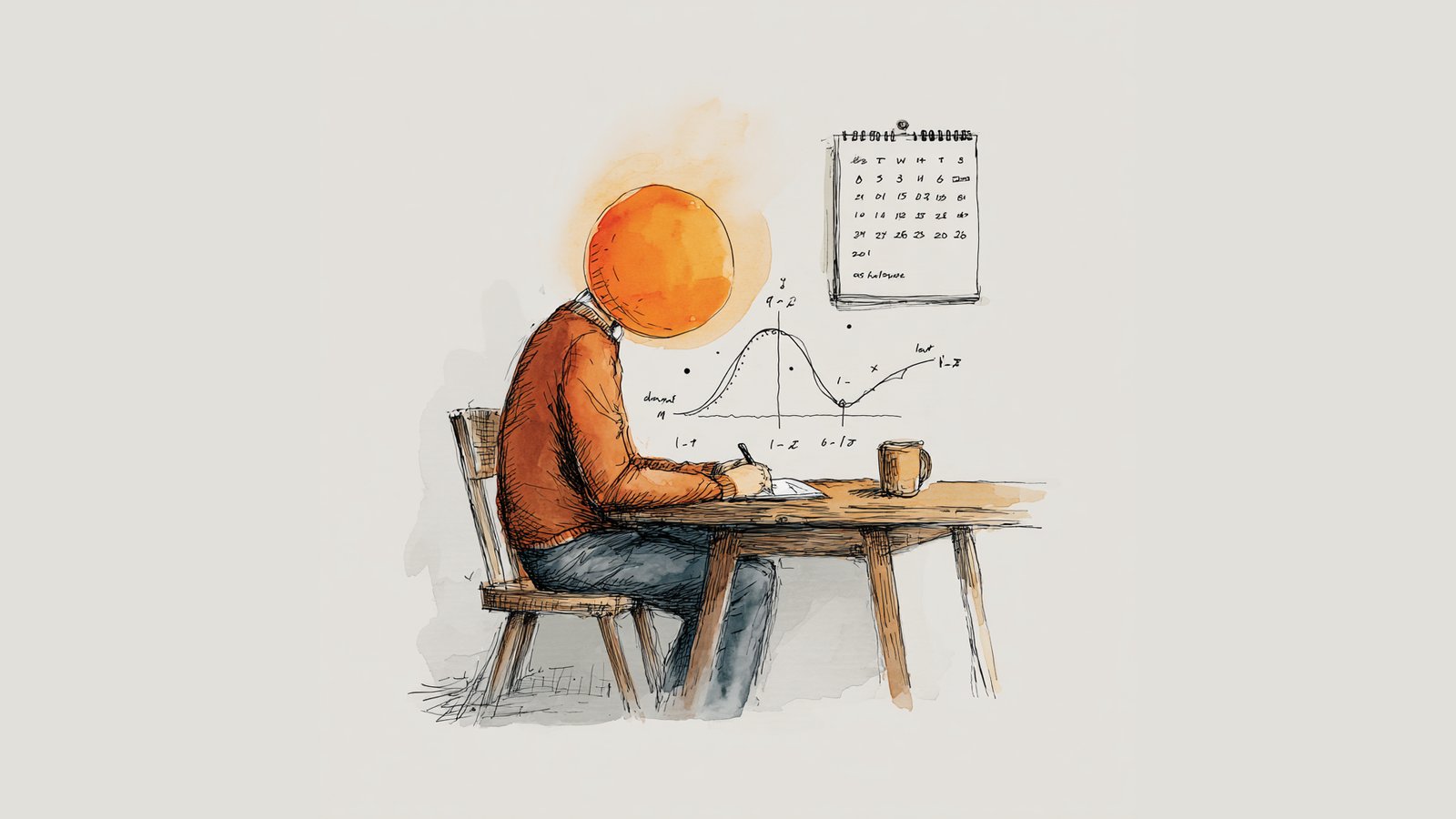
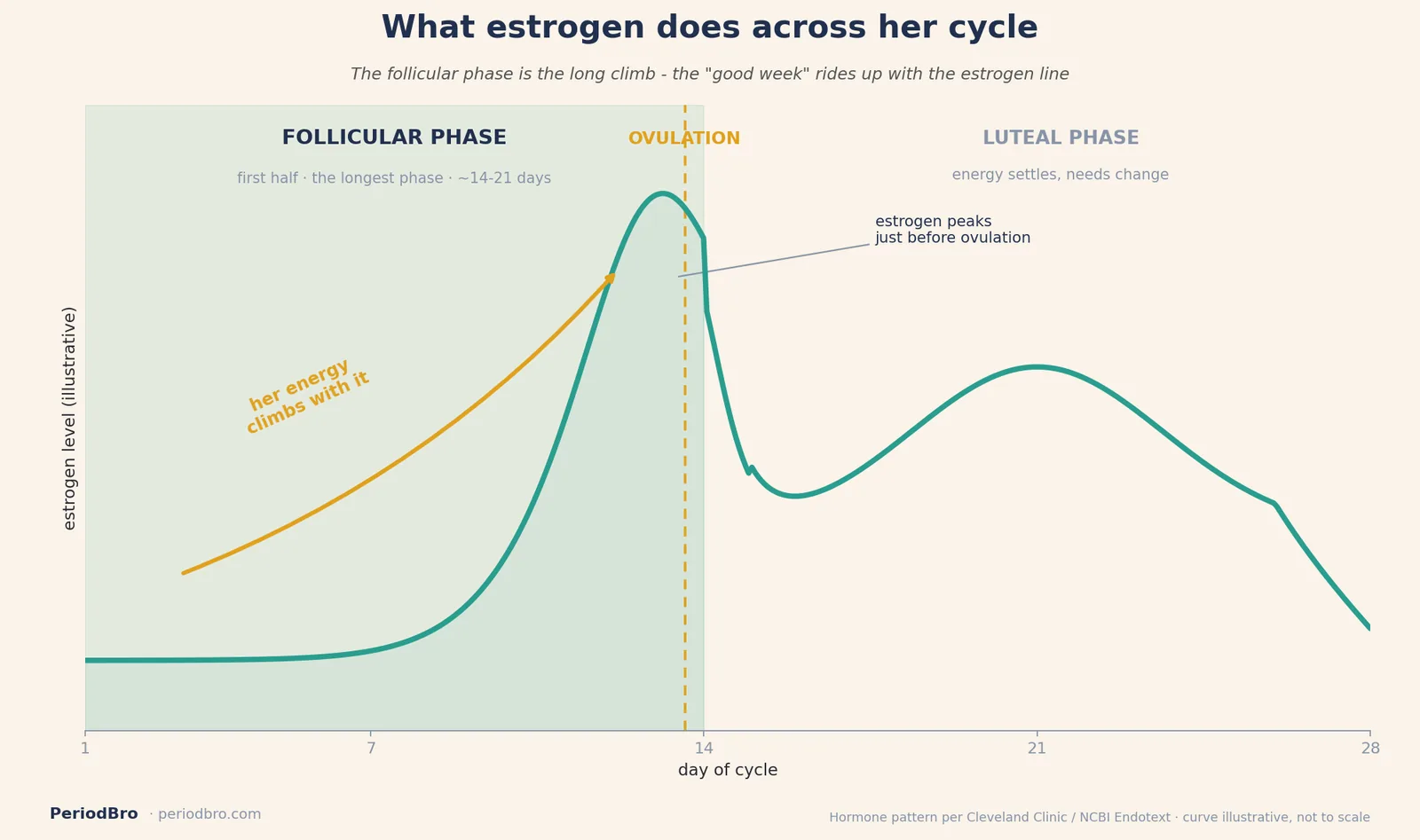
The follicular phase starts on the first day of her period and runs until ovulation – so it’s the first half of the cycle, and it’s the longest phase, often lasting anywhere from about 14 to 21 days (Cleveland Clinic). The name comes from the follicles in her ovaries: small sacs, each holding an immature egg. During this stretch, a hormone called FSH nudges a batch of them to grow, and usually one becomes the dominant follicle that will release an egg at ovulation (NCBI Endotext).
The headline hormone here is estrogen. As those follicles develop, estrogen climbs steadily and peaks just before ovulation. That rising estrogen is doing a lot of quiet work – thickening the uterine lining, sharpening her body’s preparation for a possible pregnancy – but the part you’ll actually notice is what it does to her energy and mood.
If you want the whole map of how the four phases fit together, I laid it out here: the menstrual cycle phases explained for men. The follicular phase is the “spring” of that map.

Why she’s full of energy
Rising estrogen, along with a bump in testosterone, tends to improve concentration, energy, and mood through this phase (Cleveland Clinic). Estrogen is also tied to serotonin, one of the brain’s mood-steadying chemicals, which is part of why higher-estrogen days often come with a brighter, more even baseline.
In plain terms: this is usually the week she feels most like the energetic, optimistic version of herself. More patient. More social. More willing to take something on. Her body is also generally handling fuel and exercise well in this window, which is why she might suddenly be up for the long hike or the early gym session she’d have waved off ten days earlier (Cleveland Clinic).
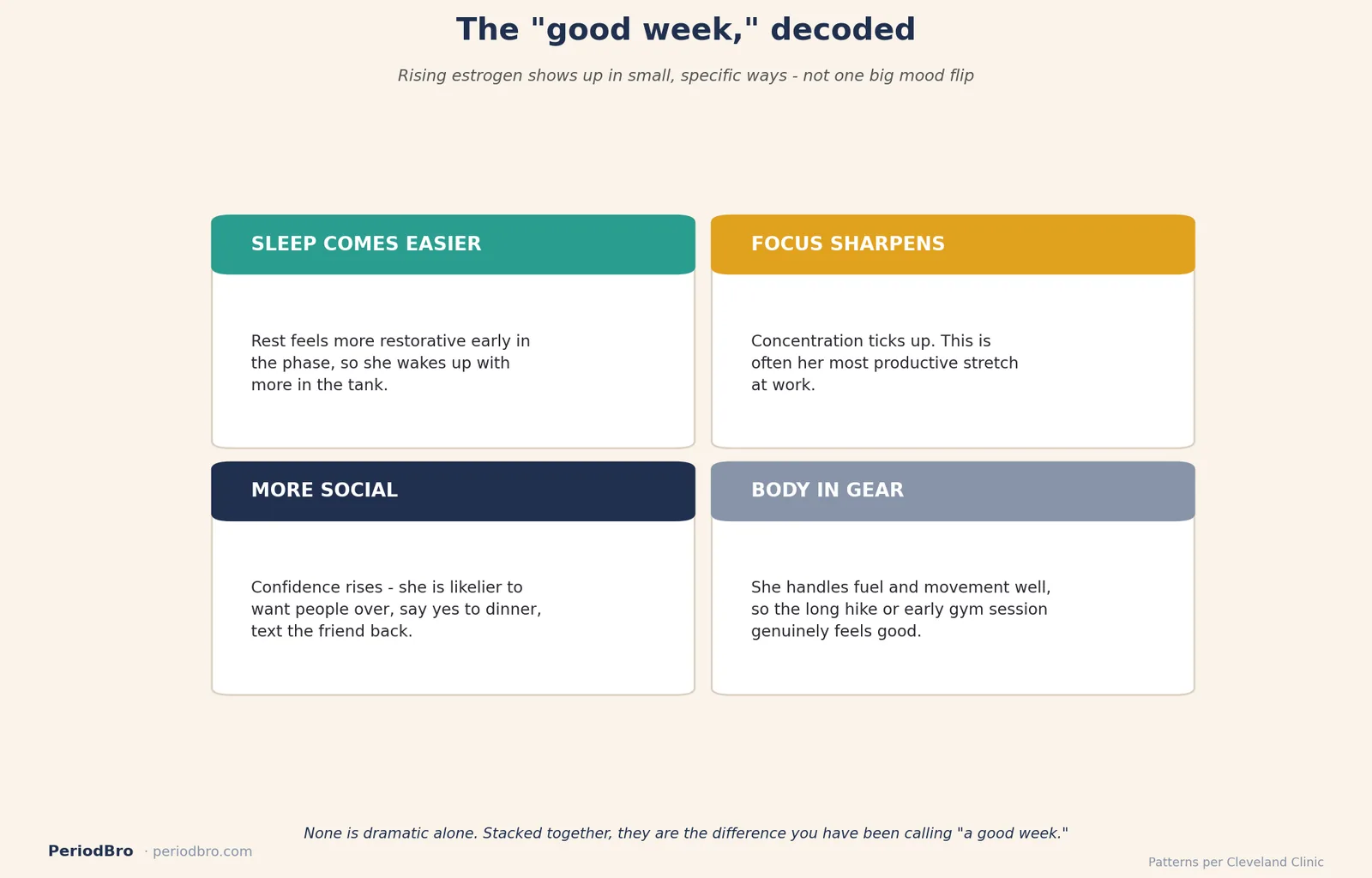
It usually shows up in small, specific ways rather than one big mood flip. Sleep tends to come easier and feel more restorative early in this phase, so she wakes up with more in the tank. Concentration sharpens, which is why this is often her most productive stretch at work. Social confidence ticks up – she’s more likely to want people over, say yes to the dinner, text the friend back. And because her body is handling food and movement efficiently right now, that gym class or long walk genuinely feels good instead of like a slog (Cleveland Clinic). None of these is dramatic on its own. Stacked together, they’re the difference you’ve been calling “a good week.”
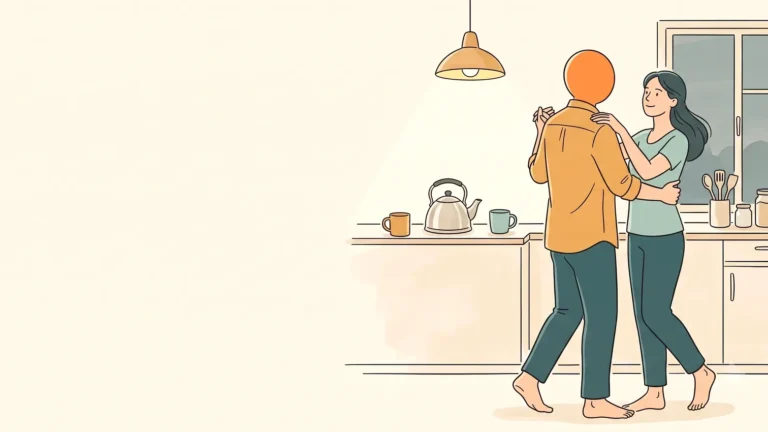
I’ll be honest about how long it took me to connect these dots. For years I just thought my partner ran hot and cold for no reason. Some weeks she’d want to plan a trip and repaint the kitchen; other weeks she wanted the couch and silence. Once I could see that the “let’s do everything” energy clustered in the same part of her cycle every month, it stopped feeling random. It wasn’t her being inconsistent. It was a rhythm I’d just never been taught to read – and seeing it is its own small relief for both of you.
It’s worth saying clearly: none of this means she’s a different person depending on the date, or that her good ideas only “count” during one week. Hormones set the weather, not the personality. A rising tide of estrogen makes the energetic version of her easier to reach – it doesn’t invent her. The point of understanding the follicular phase isn’t to explain her away. It’s to stop misreading a predictable rhythm as random turbulence.
How to actually use this week
The follicular phase is the part of the month where leaning in pays off. A few concrete moves:
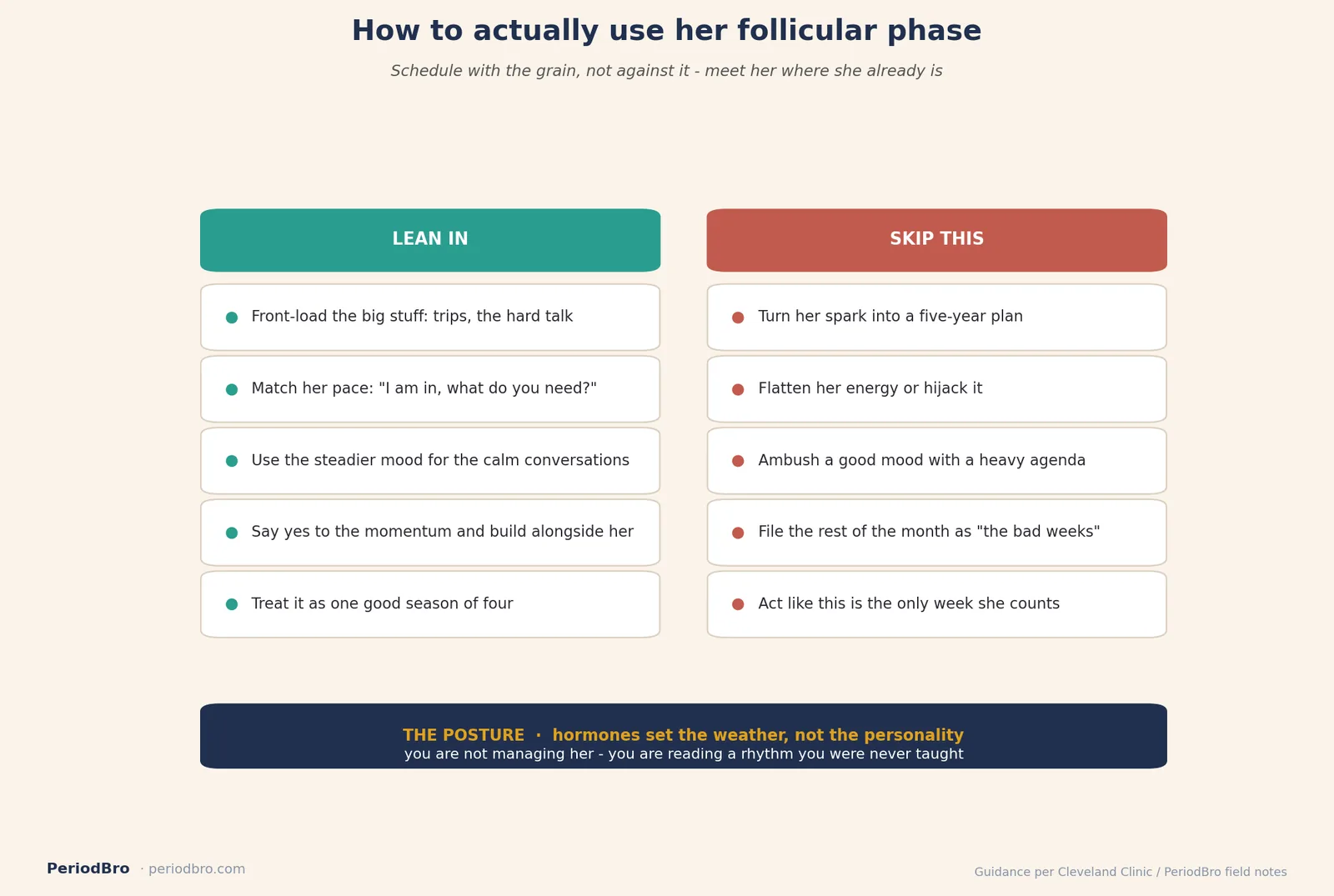
Front-load the big stuff. Trips, the hard conversation you’ve been putting off, the dinner with both sets of friends, the project that needs her at full tilt – this is the window where she’s most likely to have the bandwidth for it. You’re not manipulating anything. You’re just scheduling with the grain instead of against it.
Match her pace without taking over. If she’s fired up to start something, the worst move is to either flatten her energy or hijack it. Be the person who says “I’m in, what do you need from me,” not the one who turns her spark into a five-year plan.
Use the steadier mood as runway, not pressure. Because she’s generally more even and patient here, this is a good window for the conversations that need both of you calm – planning money, talking about family, sorting a recurring friction point. That’s not about ambushing her in a good mood. It’s about picking a moment when neither of you is running on empty, which gives the conversation a fair shot.
Don’t treat it as the only good week. Here’s the trap. Once guys learn this, some of them start mentally filing the rest of the month as “the bad weeks.” That’s the wrong read, and she’ll feel it. The follicular phase isn’t her at her best and everything else at her worst – it’s one season of four, each with its own needs. The later, lower-energy stretch isn’t a malfunction; it just asks for a different kind of showing up.
And keep your expectations human. Cycles aren’t clockwork. Stress, travel, poor sleep, and plenty of other things can shift the timing or flatten the usual energy lift in any given month (Cleveland Clinic). If the “good week” doesn’t show up on schedule, that’s normal too. You’re learning a tendency, not setting a timer.

Where it leads next
The follicular phase doesn’t just trail off – it builds to a peak. Estrogen tops out, and that surge triggers ovulation, the brief window when the egg is released and, for many people, energy and confidence hit their high point before the second half of the cycle begins (Cleveland Clinic). If you want to understand that hinge moment on its own, here’s ovulation explained for men.
After ovulation, the tone shifts. Progesterone takes over, energy settles, and the needs change. None of that is a problem to brace for – it’s just the next part of the same loop. The fuller picture of how her mood moves week to week is here: how hormones drive her mood all month long.
The one thing to take away
You don’t need to memorize hormone names. You need one habit: notice which week you’re in. When she’s bright, social, and ready to build – that’s the follicular phase, and your job is simply to meet her there and say yes to the momentum. When that energy ebbs later, you’ll know it’s a phase, not a verdict, and you’ll show up differently on purpose.
Knowing where she is in her cycle is exactly what PeriodBro is built to surface – a quiet daily heads-up so you can tell the green-light week from the rest, and stop guessing about a rhythm that’s been there the whole time.