Hair Loss and Periods: What’s Behind It and How a Partner Can Help
A friend of mine, Dan, saw it first in the shower drain. Then it was the ponytail, thinner than last spring, and the way his wife had started wearing her hair down on every video call. He didn’t say a word. He had no idea whether hair loss and periods were even connected, and he was scared of saying the wrong thing.
If you’ve noticed something similar, here’s the short version. Hair loss and periods share causes more often than most people realize, mainly iron, thyroid and hormone shifts, and the shedding is usually temporary once the cause is found. Below you’ll find what tends to be behind it, which two blood tests are worth asking about, and how to help without ever mentioning her hair.
Hair loss and periods: what’s usually going on
Everyone sheds hair. The American Academy of Dermatology says it’s normal to lose 50 to 100 hairs a day (AAD). Cleveland Clinic puts the line for true hair loss in women at more than 125 hairs a day, and says the most common cause is female-pattern hair loss, where hair thins over the top and sides of the head (Cleveland Clinic). You can’t count hairs from the couch, so the practical sign is a change: more in the brush, more in the drain, a wider part.
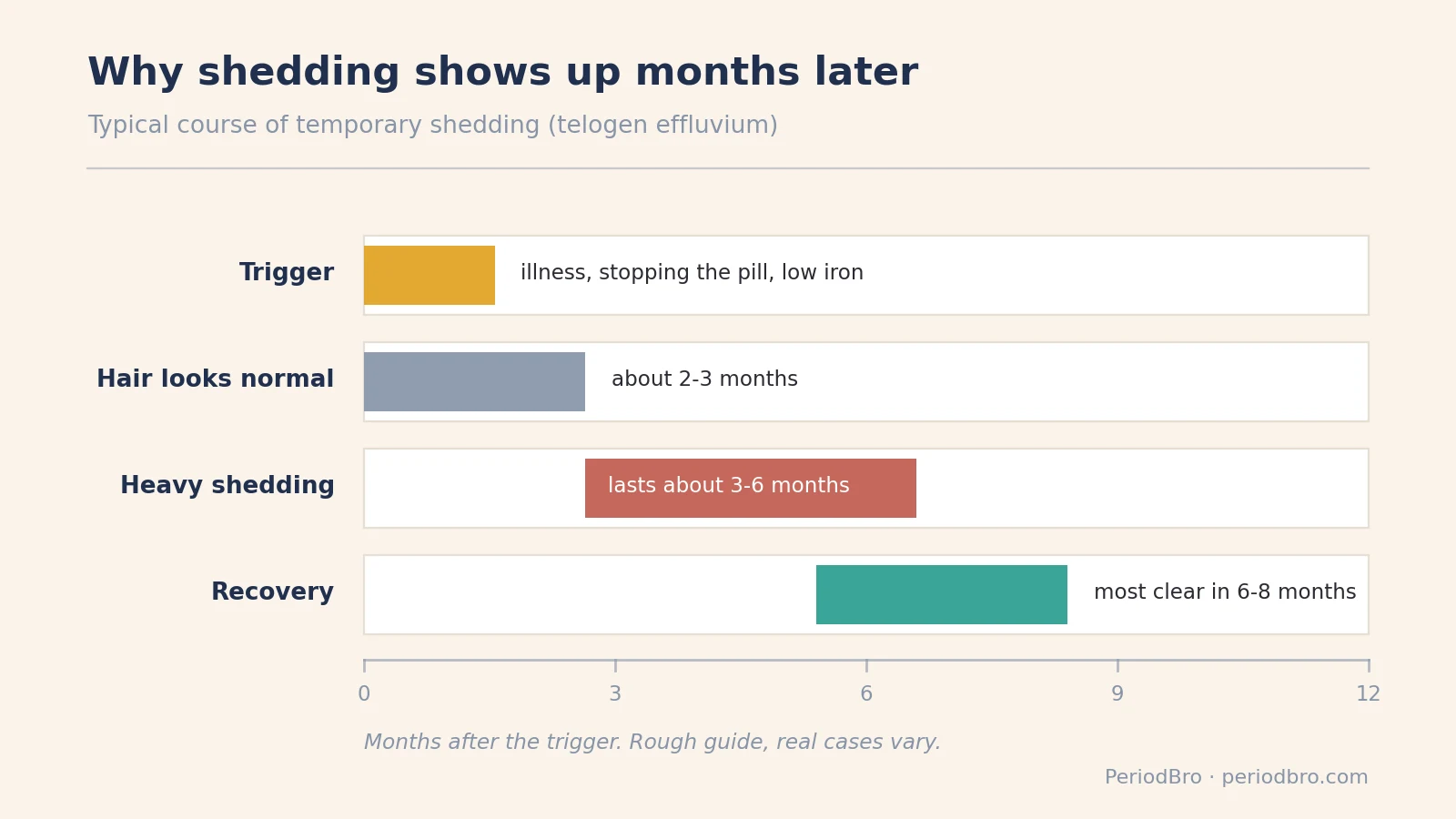
The type that overlaps most with her cycle is telogen effluvium. That’s a mouthful for temporary shedding after the body takes a hit. Cleveland Clinic lists thyroid disease, stopping birth control pills, childbirth, high fever, major surgery, psychological stress and crash diets among the triggers. The part that fools everyone is the delay. Shedding usually starts about two to three months after the trigger, so a rough spring turns into a bad autumn and nobody connects the two (Cleveland Clinic).
Heavy periods and low iron
Blood loss is the first link to check. A review in the Journal of the American Academy of Dermatology notes that menstrual blood loss and pregnancy are the most common causes of iron deficiency anemia in women before menopause, and that ferritin, the marker of iron stores, is what confirms a deficiency (JAAD review).
Does low iron cause hair loss? The evidence is mixed. A 2022 systematic review pooled 36 studies and 10,029 participants. Women with non-scarring hair loss had lower ferritin on average, and the authors concluded that women with hair loss may benefit from higher ferritin levels. The same paper admits the evidence isn’t clear-cut, and some studies found no difference (Skin Appendage Disorders). Low iron is a strong suspect that still needs a blood test to confirm.
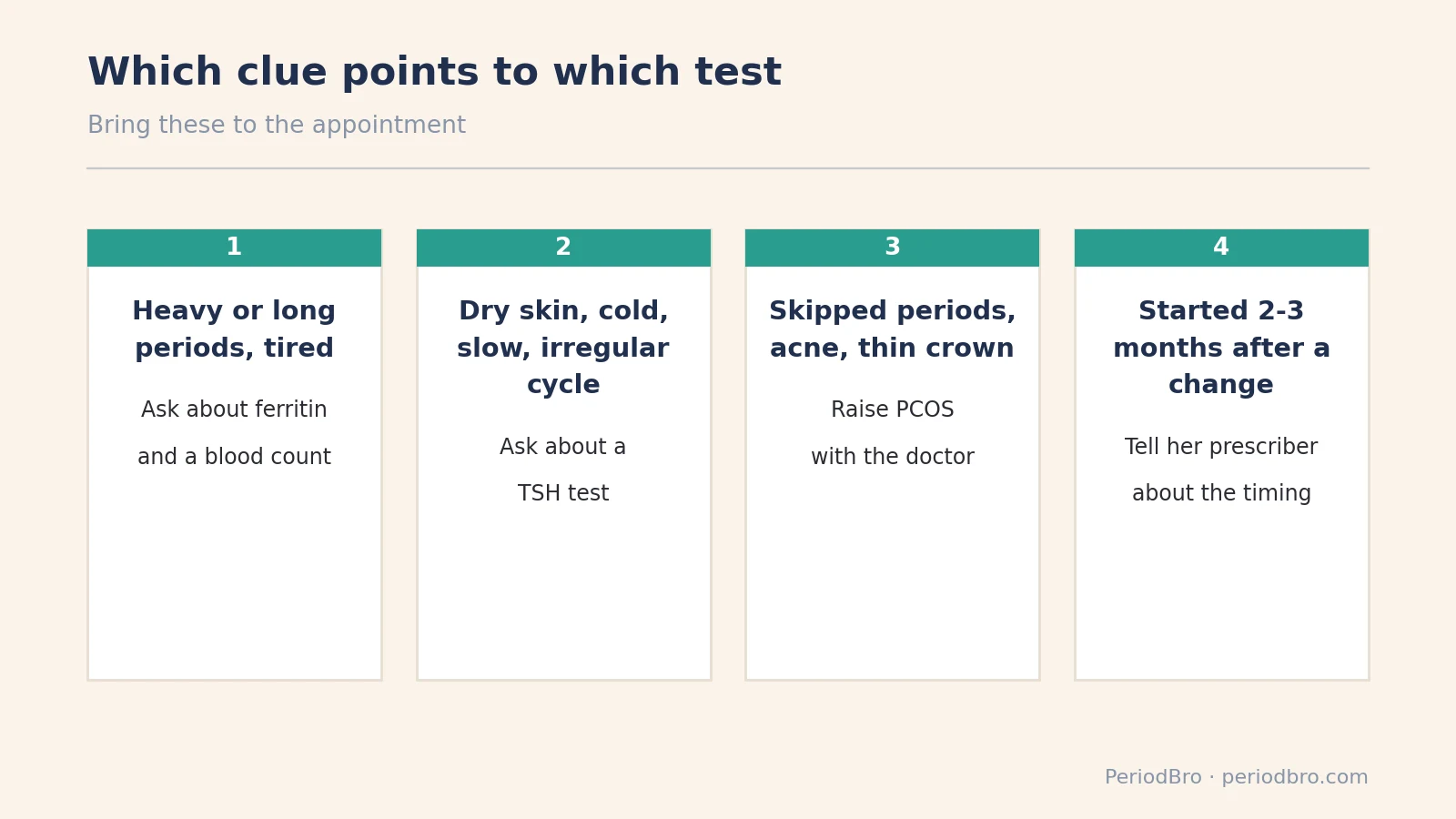
If her periods are long or heavy and she’s tired all the time, iron is the first thing to rule out. We covered the details in iron deficiency and heavy periods and how to help with heavy periods.
Thyroid, PCOS and the hormone side
The thyroid sets the pace for a lot of the body. NIDDK lists dry, thinning hair among the common signs of an underactive thyroid, and MedlinePlus adds heavy or irregular periods to the list. Both sources point out that the symptoms overlap with many other conditions, and that people often don’t notice them for months or even years (NIDDK, MedlinePlus). That’s why nobody can diagnose it by looking. A TSH blood test is usually the first thing a provider orders. Our piece on thyroid and periods goes deeper.
Polycystic ovary syndrome, or PCOS, is the other big one. The Office on Women’s Health lists thinning scalp hair and male-pattern baldness among its symptoms, alongside irregular periods (Office on Women’s Health). If thin hair comes with skipped periods, stubborn acne or extra hair on the face, it’s worth raising PCOS with a doctor. Here’s the longer read on PCOS and periods.
Childbirth is a trigger too. The AAD notes that a few months after giving birth, most women shed noticeable amounts of hair (AAD). If you’re a new parent, that’s a big reason she may feel like the mirror changed overnight. See her period after pregnancy for what else is shifting.
When birth control changes things
Starting, stopping or switching a hormonal method can shake up her cycle, and stopping birth control pills is on Cleveland Clinic’s list of triggers for temporary shedding. The pill may well be innocent here, and she shouldn’t quit it over this. The timing is just a useful clue. If the shedding began two or three months after a change, tell her prescriber, because it narrows things down fast.
Please don’t suggest she stop or switch anything on your own hunch. That decision belongs to her and her doctor. If you want the background, how birth control changes her cycle and her period after stopping birth control cover what usually happens and when.
When to see a doctor, and what to ask for
Cleveland Clinic’s advice is to see a dermatologist as soon as you notice hair loss, because treatment tends to work best when it starts early. For temporary shedding, it says diagnosis often needs only a scalp exam and a simple pull test, with blood work ordered when an underlying condition is suspected (Cleveland Clinic). With heavy periods, tiredness or irregular cycles in the picture, a suspicion is easy to justify.
Two tests are worth asking for by name: ferritin, to check iron stores, and TSH, to check the thyroid. A basic blood count alone may not tell the whole iron story. A provider may add others depending on her history.
It helps to arrive with a short list: when the shedding started, any illness, surgery, new medication or big diet change in the three or four months before that, how heavy and how long her periods have been, and any change in birth control. A partner who has quietly kept some of those dates can save her a lot of digging. If she has a family history of thinning hair, mention that too, since pattern hair loss tends to run in families.
Some signs shouldn’t wait. Rash, itching, burning, pain, flaking or sudden bald patches are not typical of temporary shedding and need prompt evaluation. And if she’s thinking about iron pills, she should check with a provider first, since the right dose depends on her results.
The encouraging part: Cleveland Clinic says shedding usually lasts three to six months, most cases clear within six to eight months once the cause is addressed, and acute cases resolve in about 95% of cases. Pattern hair loss is a different story and has its own treatments, which is exactly why a proper look matters.

How to help without mentioning her hair
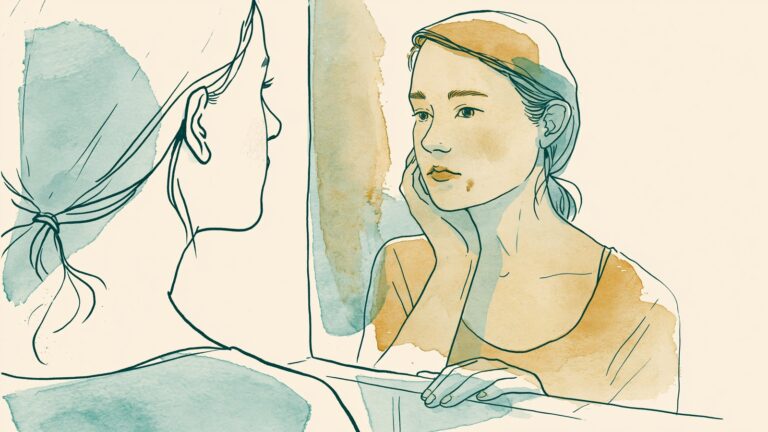
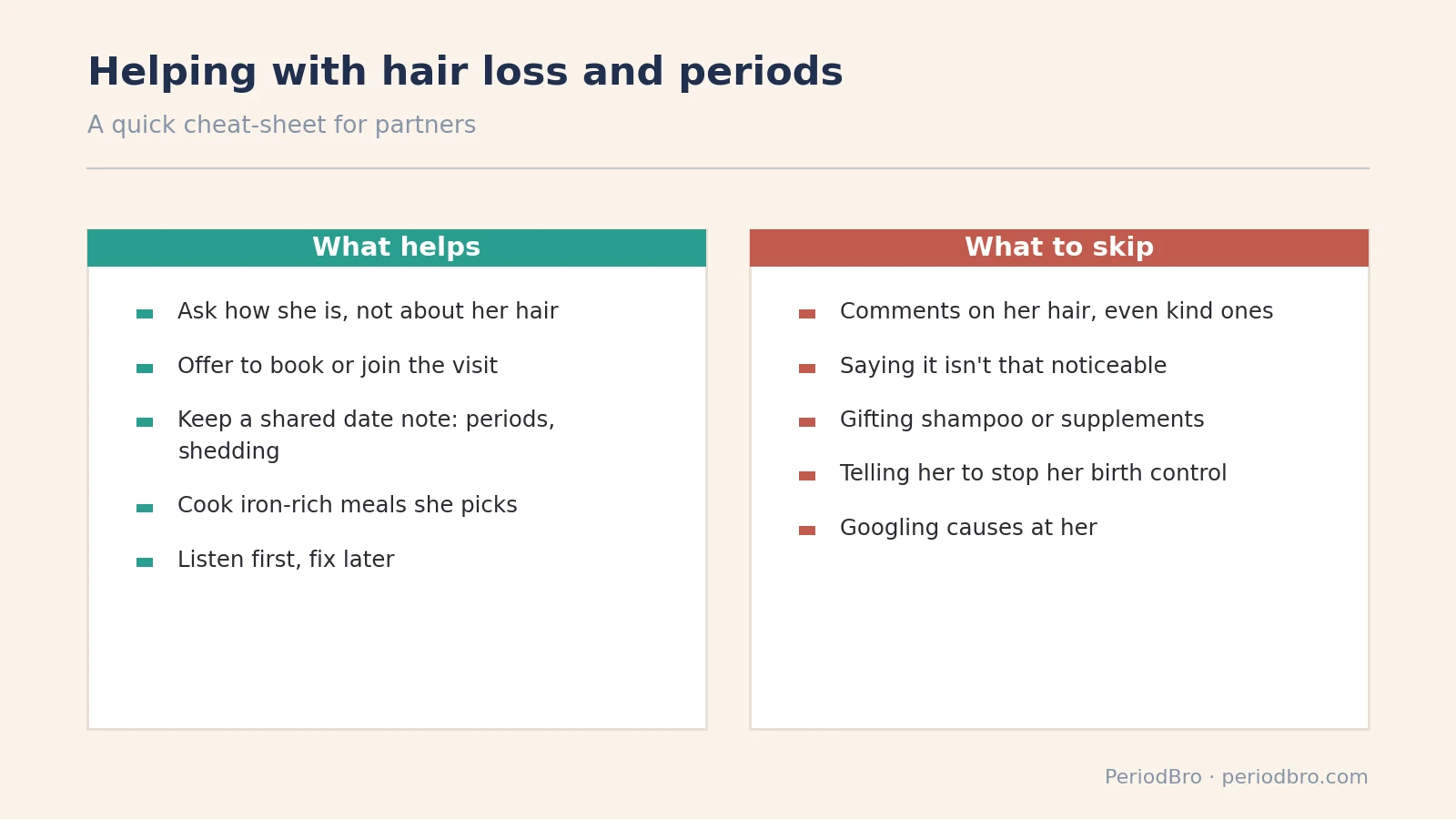
Here’s the tricky bit. She almost certainly knows. Hair is tied up with how a lot of people feel about themselves, and a comment from you, even a kind one, tells her you’ve been looking at the problem too. “It’s not that noticeable” is the classic trap. It confirms there’s something to notice. I’ve made that mistake myself, telling someone close to me that a thing “wasn’t that noticeable,” and watching the conversation end right there.
So leave the hair out of it and talk about her. One quiet opening works better than a campaign: “You’ve seemed run down lately. Anything I can take off your plate? I’m happy to come to an appointment if you want.” Then follow her lead. If she wants to talk about her hair, she will. If she doesn’t, you’ve still told her the door is open. Our piece on why her period can lower her confidence has more on this.
After that, help in ways that don’t need a conversation. Book the appointment if she asks you to. Drive. Keep a shared note of period dates, heavy days and when the shedding started, since the two to three month lag makes a written timeline very useful to a doctor. Cook iron-rich dinners and let her pick the menu. And skip the gift of shampoo unless she’s asked for one.
One more thing. If she brings it up herself, listen first. Resist the urge to fix it with a product, a supplement or a link to an article. Ask what she’s noticed and what she wants from you right now. Sometimes the answer is a plan, and sometimes it’s just company on the couch while she says it out loud.
How it went for Dan
Dan never mentioned her hair. He told his wife she’d looked worn out since spring and asked if she wanted to see someone, with him or without. She got quiet, then admitted she’d been meaning to ask for weeks and hadn’t known how. Her ferritin came back low, and her periods had been heavy for about a year. She started treatment with her doctor, and the shedding eased over the following months.
Hair loss and periods can look like a vanity problem from the outside, yet the cause is often something a blood test can find. A partner who offers practical help, without commentary, can make that first appointment a lot easier. For the wider picture of how her cycle works, start with menstrual cycle phases explained for men.
I built PeriodBro because I wanted to notice things like this earlier, without turning every month into an interrogation. If you’d like a quiet way to keep track of her cycle and spot patterns before they pile up, you can try it free here.
PeriodBro provides educational information and is not a substitute for professional medical advice. Always consult a qualified healthcare provider for personal medical decisions.