
Ozempic and Her Period: What GLP-1 Drugs Actually Change
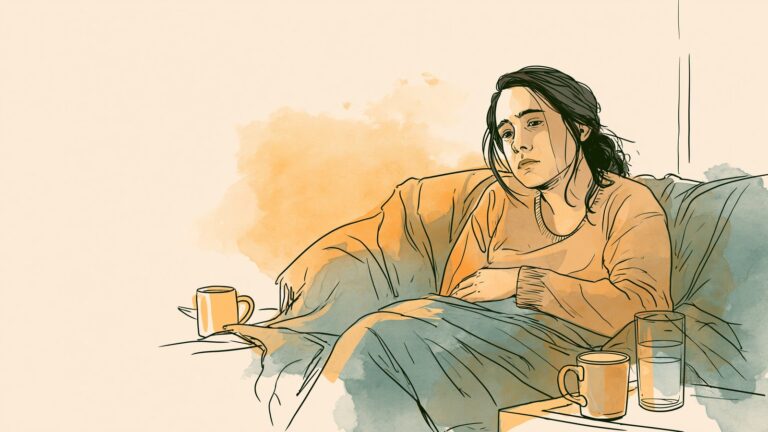
A guy in our PeriodBro community messaged me last month asking why his girlfriend’s cycle log had gone quiet for six weeks after she started Zepbound. No new period logged, no spotting, nothing. He wasn’t panicking, just confused, and he asked the question a lot of partners are quietly Googling right now: what does Ozempic do to her period, and should either of you be worried about it?
I didn’t have a clean answer for him off the top of my head, so I went and read what the research and the drug labels actually say. It turns out ozempic and her period is a more interesting question than “does it mess with her cycle,” because the honest answer is that it can move her cycle in two opposite directions depending on where she started.
Ozempic and her period: why the answer depends on her starting point
GLP-1 drugs like semaglutide (Ozempic, Wegovy) and tirzepatide (Mounjaro, Zepbound) were built to treat diabetes and obesity, not to touch reproductive hormones directly. But weight and hormones are more tangled together than most people realize. Fat tissue produces estrogen, and when someone loses a significant amount of weight quickly, that estrogen supply drops with it. The brain’s hypothalamus, which runs the whole cycle, can read that shift as a signal to dial things back, which is one plausible mechanism behind the missed or lighter periods some women report after starting these drugs (Natural Cycles research library, GLP-1 and the menstrual cycle). For a woman who started at a lower body weight, that’s often the story: her cycle gets less predictable, not more.
But for a woman whose irregular cycles were driven by PCOS, the same drug can do the opposite. Weight loss of even 5 to 10 percent can improve insulin sensitivity enough that ovulation, which had been suppressed for years, starts happening again. That mechanism is behind the wave of so-called “Ozempic babies,” unexpected pregnancies in women who assumed they were infertile (Endocrinology Advisor, GLP-1s and fertility). The drug isn’t boosting fertility directly. It’s quietly removing whatever was blocking it.

The part that actually matters for you: birth control
The two most common GLP-1 drugs are not the same here, and mixing them up matters. If she’s on semaglutide (Ozempic or Wegovy), pharmacokinetic studies haven’t found a meaningful drop in oral contraceptive levels, and there’s no specific pill-interaction warning on the label (Medical News Today, semaglutide and birth control). If she’s on tirzepatide (Mounjaro or Zepbound), it’s a different situation. The FDA label warns that oral birth control pills may not work as well, because tirzepatide slows digestion enough to reduce how much of the pill’s hormone gets absorbed, by 20 to 60 percent after a dose increase in trial data. The label recommends switching to a non-oral method, or adding a barrier method, for four weeks after starting and for four weeks after every dose increase (TGA, updated contraception advice for tirzepatide).


This is not a small print detail. If she’s relying on the pill and just started Zepbound, that’s a conversation worth having this week, not next month. It doesn’t have to be a big dramatic sit-down. It can be as simple as “hey, I read that Mounjaro can mess with how well the pill works for a few weeks, did your doctor mention a backup method?” That’s it. That’s the whole conversation, and it’s a genuinely useful thing to know instead of finding out the hard way.
What she might notice, month to month
In the first few months of starting a GLP-1, especially if the weight loss is happening fast, cycle length can shift, flow can get lighter, and periods can space out or skip entirely for a cycle or two. Most of this settles down as her weight stabilizes and her body adjusts, rather than being a permanent change (Klarity, GLP-1 medications and menstrual changes). If she has PCOS, the opposite pattern is just as plausible: cycles that used to be 45, 60, or 90 days apart start showing up more like a “normal” 28 to 35 day rhythm, sometimes for the first time in years.
Neither pattern is automatically a problem, and the same logic applies to a late period from any other cause. Missed periods that come with rapid weight loss are worth a mention to her doctor if they stretch past a few months, mostly to rule out anything else going on, but they’re a known and common side effect, not a red flag on their own. And if her cycles are suddenly regular after years of irregularity, that’s generally a sign her body is responding well, though it’s exactly the scenario where a backup birth control conversation matters most, since regular ovulation means regular fertility.


Untangling GLP-1 side effects from actual period symptoms
There’s a second layer to this that trips people up: GLP-1 drugs and periods can produce overlapping symptoms that have nothing to do with each other. Nausea, fatigue, and stomach upset are common GLP-1 side effects, especially in the first weeks or right after a dose increase, and they’re also textbook premenstrual symptoms. If she’s nauseous the week before her expected period, it’s genuinely hard to tell whether that’s the medication, PMS, or both at once, and honestly it often is both at once. The same goes for appetite changes and mood shifts, which both drugs and hormones independently affect.
The practical move here isn’t to play amateur diagnostician and decide which one is “really” causing it. It’s to notice the pattern over a couple of cycles instead of reacting to any single bad day. If nausea shows up right after a dose increase regardless of where she is in her cycle, that’s more likely the medication adjusting. If it shows up like clockwork a few days before her period, cycle after cycle, that’s more likely PMS doing what PMS does, medication or not. Logging both the dosing schedule and her cycle in the same place makes that pattern obvious instead of something you’re both guessing at from memory.

Why this is worth tracking together, not just guessing about
The guy who messaged me ended up doing the simplest possible thing: he asked her if the app looked broken or if her period was just late, and she said she’d noticed it too and had already mentioned it to her doctor at her next check-in. Nothing dramatic. But he told me afterward that not knowing whether six weeks of silence in the app was normal or something to flag had been quietly stressing him out, and understanding the mechanism took that off his plate. Knowing this stuff isn’t about diagnosing her. It’s about not panicking, and knowing when a shrug is the right response versus when a real conversation is.
If you’re both navigating a GLP-1 prescription, tracking her cycle together for a couple of months gives you both something concrete instead of a vague sense that “things feel different.” It’s the same habit that helps with any other change to her cycle, whether it’s a new medication or a new birth control method. A gap of a few weeks is usually just noise. A pattern that keeps repeating, or shows up alongside pelvic pain, unusual bleeding, or symptoms she’s worried about, is worth an actual doctor visit rather than more Googling.
A few quick answers
Should she stop the medication if her period changes? Not without talking to her prescriber first. Menstrual changes are a known, usually temporary side effect, and stopping suddenly has its own tradeoffs that her doctor is better positioned to weigh than either of you.
Does this affect fertility for someone not trying to conceive? It can, especially with PCOS, which is exactly why the birth control point above matters even if a pregnancy would be a complete surprise to both of you.
Is six weeks with no period an emergency? Usually no, especially early in treatment during active weight loss. It’s worth mentioning at her next appointment rather than an urgent call, unless it comes with pain, unusual bleeding, or she’s specifically concerned.
None of this replaces her actual doctor, especially since dosing, timing, and her personal health history all change the picture. What it does is give you enough of the real mechanism that you’re not starting from zero the next time her cycle looks different than you expected. If you’re tracking her cycle together already, a few weeks of odd data is a lot less alarming when you understand why it’s happening instead of just watching the app go quiet.
This article is educational and isn’t a substitute for professional medical advice. Talk to her prescribing doctor about any menstrual changes, birth control questions, or concerns related to GLP-1 medication.