Period on Honeymoon: A Partner’s Guide to Planning and Handling It
A guy I used to work with did everything right for his honeymoon. Flights booked a year out, a room with a view of the water, a dinner reservation that took three emails to get. Nobody checked the calendar against her cycle. Her period showed up on the second morning, along with the kind of cramps that make a snorkel trip sound like a punishment. They spent a day in the room, she felt guilty about “ruining it,” and he had no idea what to say.
A period on honeymoon is extremely common, because weddings get planned around venues and dates, not ovulation. The good news is that it’s usually either movable in advance or very manageable on the day. Below is the partner’s side of it, from the planning months to the trip itself.
Check the calendar before you book
If you’re still planning, the easiest fix is information. Most women have a rough idea of when their next few periods will land, especially if they track. Cycle length varies, and travel stress can nudge things by a few days, but looking three or four months ahead gives you a realistic window.
Bring it up the way you’d bring up flight times, as a practical planning question. “Do you want to look at where your cycle lands around the trip?” is fine. “Can you make sure you’re not on your period?” is not, and she can’t control it anyway. If you share cycle tracking already, this conversation takes ten seconds. If you don’t, traveling on her period covers the general travel side too.
Can she move her period? The options, briefly
Some women decide they’d rather not have a period on the trip at all. That’s a medical choice she makes with her doctor, ideally two or three months before the wedding. Your role is to know the options exist and to support whatever she picks. The main routes:
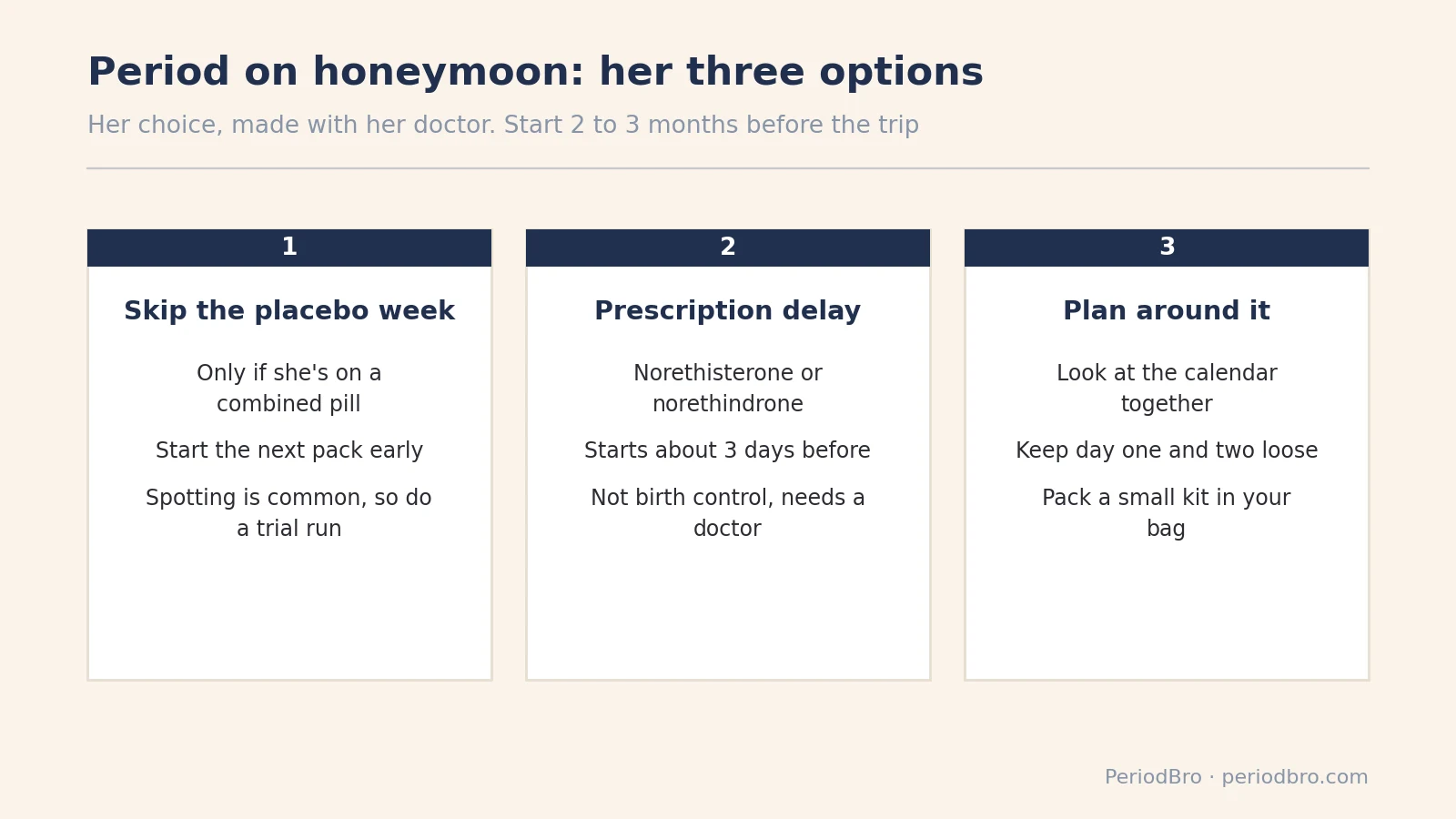
Skipping the placebo week on the pill. If she’s already on a combined birth control pill, ACOG explains that she can go straight into the active pills of a new pack instead of taking the inactive week, which skips the withdrawal bleed (ACOG). Some spotting is common when doing this, especially the first time. A practice run a month or two before the trip shows how her body reacts.
Norethisterone, sometimes called the “honeymoon pill.” This is a progestin prescribed to delay a period. UK guidance says it’s started about three days before the expected period and taken until the bleed is wanted, and it’s generally used for short delays (NHS Specialist Pharmacy Service). It isn’t birth control. It also carries a small increase in blood clot risk, which a doctor will weigh against things like long-haul flights, smoking, or her history. In the US the equivalent is norethindrone, and it also needs a prescription.
Doing nothing. That’s a perfectly good option too. Plenty of couples decide the period is just part of the trip and plan around it.
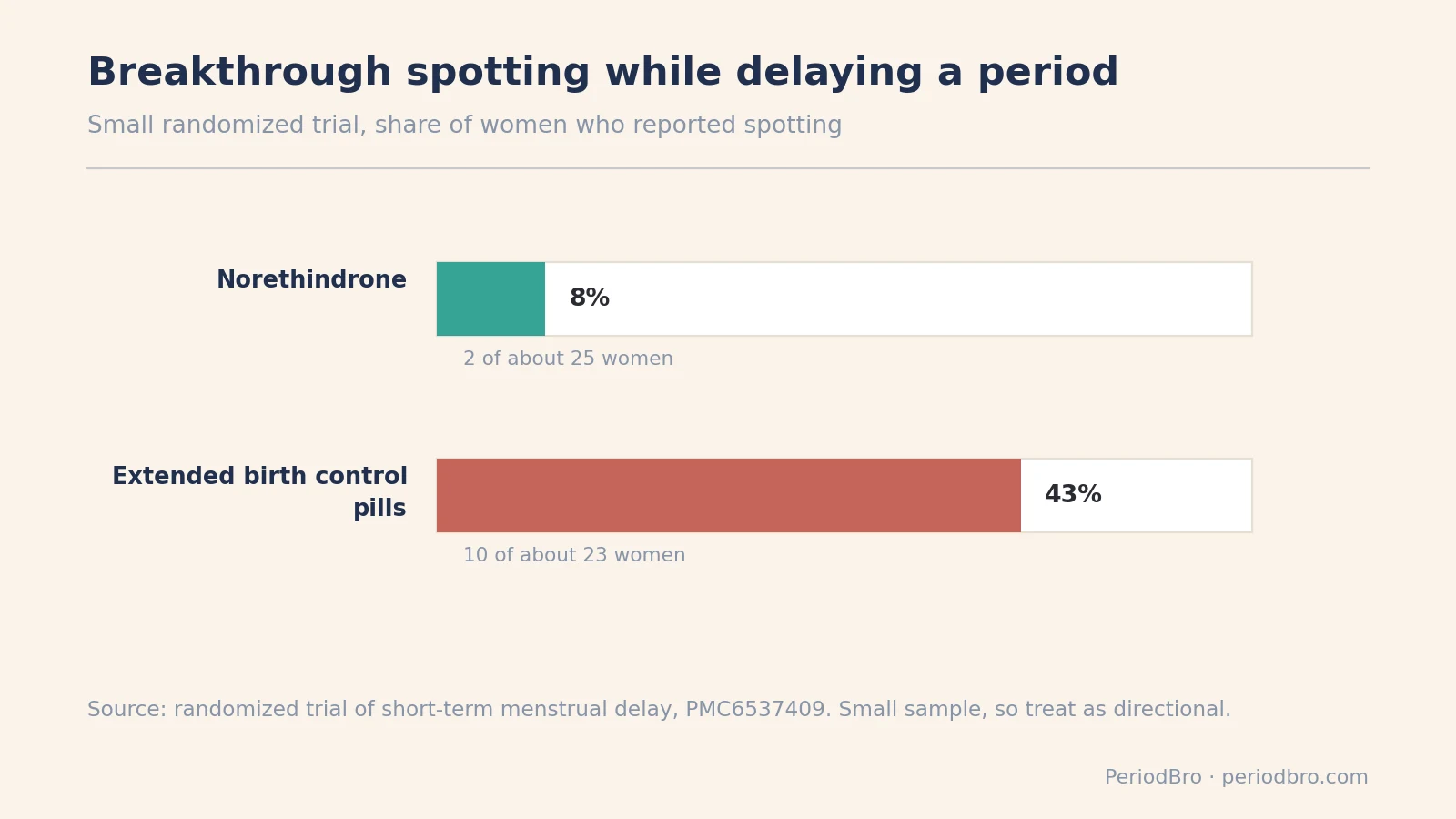
For couples who want to compare, a small randomized trial found that women using norethindrone had far less breakthrough spotting than those stretching birth control pills to delay a period (PMC).
She should raise this with her own doctor. What works depends on her health, what she’s already taking, and whether you’re hoping to get pregnant soon. If she’s thinking about changing birth control anyway, birth control and her cycle explains how different methods change periods.

Why travel can throw her timing off
Even a perfectly tracked cycle can slip around a wedding. Cleveland Clinic lists stress, changes in sleep, and shifts in exercise and eating among the common reasons periods come early or late (Cleveland Clinic). A wedding week usually brings all of them at once: late nights, a few too many drinks, a long flight, and a new time zone on top.
In practice that means her period might show up a few days before or after the date her app predicted. If you’ve planned around a narrow gap, it’s worth assuming a margin of three or four days on either side. It also means a late period on honeymoon is more likely to be stress than anything else, although if you’re not using contraception and it’s properly late, a test answers that question quickly.
Long flights are worth a thought too. Sitting for hours can make cramps and bloating feel worse, and cabin air is dry. An aisle seat so she can get up without climbing over anyone, plenty of water, and a walk up the aisle every hour or so are small things that help. If she’s using a tampon, cup or disc on a long flight, she’ll want to plan a change around the timing on the box rather than whenever the seatbelt sign happens to go off.
If she gets her period on honeymoon anyway
You control how you react, and that can shape how she remembers the trip more than the period itself.
Make it a non-event. The first thing she may feel is guilt, as if she’s let you down. Take that off the table right away. “OK, so what do you need?” beats any version of disappointment, even a joking one.
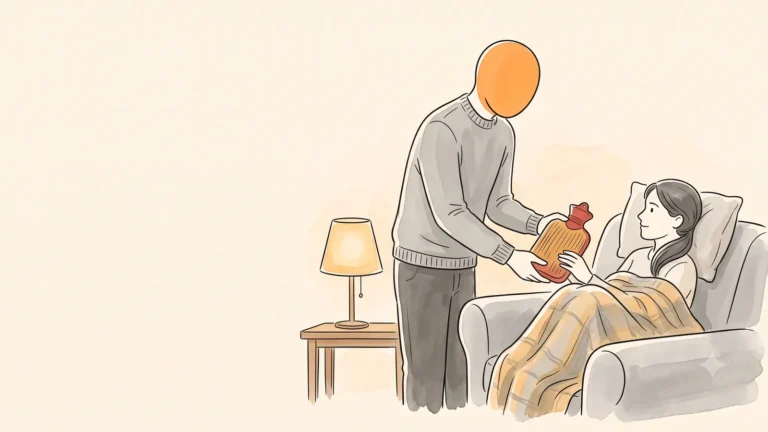
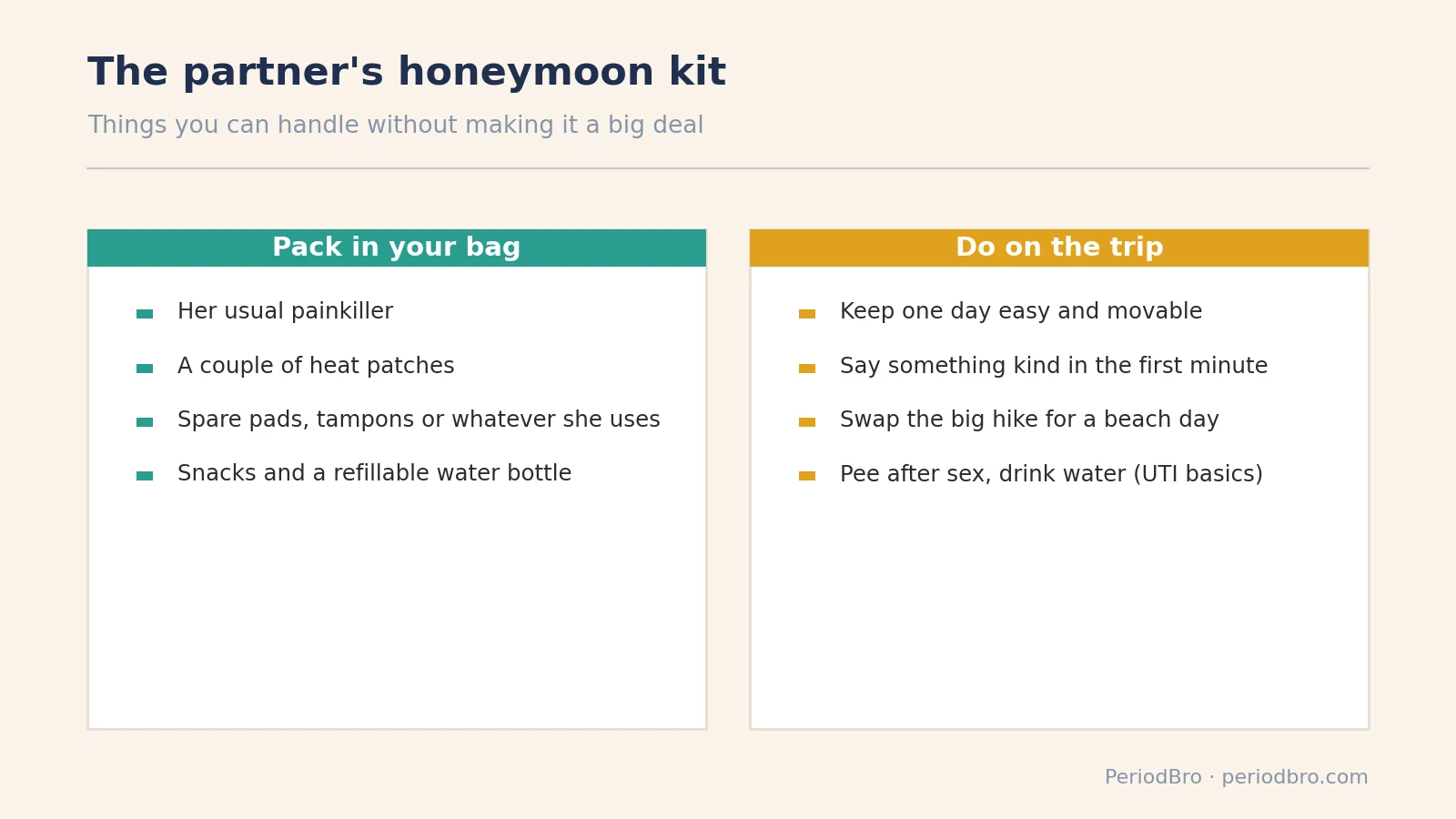
Pack like you expect it. Throw a small kit in your own bag without making a thing of it: painkillers she normally uses, a heat patch or two, a spare pouch of the products she likes, and some snacks. If you need a refresher on what helps, how to help with her cramps covers the basics.
Rework day one or two, not the whole trip. Cramps and fatigue are usually worst on the first day or two. Swap the long hike for a beach chair or a spa booking, move the big dinner to day three, and keep the plan loose. Most resort activities work fine on a period. Swimming is fine with a tampon, cup or disc.
Sex, and one honeymoon-specific issue
Period sex is a personal call for both of you. Some couples are completely fine with it and some aren’t, and neither is right or wrong. If you want the practical version, our period sex guide covers it. She sets the pace, and “not today” means not today.
There’s also a reason doctors joke about “honeymoon cystitis.” A lot more sex than usual in a short time raises the chance of a urinary tract infection, because bacteria get pushed toward the urethra. Patient.info’s guidance is the same thing most doctors will say: peeing soon after sex and staying well hydrated both help (Patient.info). If she gets burning or urgency, it’s worth finding a pharmacy or a clinic rather than hoping it passes, especially before a flight home.

A period on honeymoon: the partner checklist
- Three or four months out, look at the calendar together.
- If she wants to delay it, she books a doctor’s appointment early enough for a trial run.
- Pack a small kit in your own bag: painkillers, heat patches, spare products, snacks.
- Build one easy day into the itinerary that you can move around.
- If it arrives, say something kind in the first minute and mean it.
- Remember the UTI basics if you’re having a lot of sex.
The guy from the start of this story told me later that the “lost” day in the room was the one they still talk about. Room service, a bad movie, a heating pad borrowed from the front desk, and the first real conversation they’d had in months that wasn’t about seating charts. He said it wasn’t on any itinerary and he’d happily do it again.
If you want to stop getting surprised by her cycle, trips included, planning date nights around her cycle uses the same idea on a smaller scale, and our main guide on how to support her on her period covers the day-to-day.
PeriodBro provides educational information and is not a substitute for professional medical advice. Any medication to delay a period should be discussed with a qualified healthcare provider.