Period Tracker for Couples: How Sharing a Cycle Actually Works (2026)
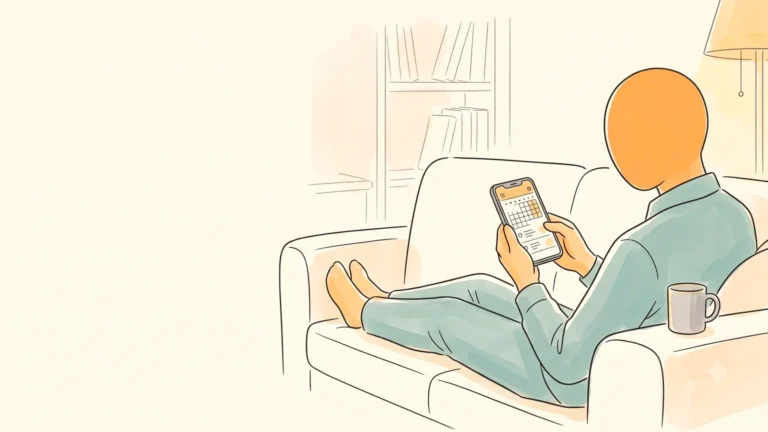
Here’s the quiet problem with almost every period tracker: it’s built for one person. She logs her symptoms, the app talks back to her, and you, the partner standing right there wanting to help, are on the outside of it. A period tracker for couples flips that. Instead of one private diary, it’s a shared window: she still owns her data, but you get enough of a heads-up to actually show up. If you’ve ever wished you knew what kind of week she was walking into before she did, this is the category you’re looking for.
I built this habit into my own relationship years ago, and the thing nobody tells you is that the tech is the easy part. Getting the sharing right, so it feels like care and not surveillance, is the whole game. Let’s walk through what “couples tracking” actually means, who does it well, and how to set it up without turning into the guy who weaponizes an app.
What a period tracker for couples actually does
A solo tracker answers one question: where is she in her cycle? A couples tracker answers a second one: what should you do about it? At the simplest level, she shares a view of her cycle, and you see the phases, the likely rough patch coming up, maybe a gentle nudge. You’re not reading her private notes. You’re getting the map, not her diary.
That distinction matters more than any feature list. Done right, shared tracking is one of the calmest upgrades you can make to a relationship, because it takes the guesswork out of “why does this week feel harder.” You can read more about that shift in our piece on how her cycle shapes the relationship. Done wrong, it’s creepy. The rest of this article is mostly about staying on the right side of that line.
Who actually lets a partner share the cycle
Most of the big-name apps were built for her, and “sharing” got bolted on later, if at all. A few added real partner features. Here’s the honest landscape.
Clue Connect lets her share a simple, read-only calendar view with someone she trusts. You see phases like period days, fertile days, and PMS, in a clean calendar, not her personal logs. Sharing is a Clue Plus (paid) feature, though viewing a cycle someone shares with you works on the free app (Clue support). It’s tasteful and privacy-forward, but it’s built around her account with sharing as an add-on.
Natural Cycles has a Partner View that shares her daily fertility status with you (Natural Cycles support). The catch: the whole app is oriented around trying to conceive, or trying not to. If that’s your season, great. If you just want to be a better partner day to day, it’s aimed somewhere else.
Flo added a companion mode, a partner-facing add-on with articles and quizzes tied to her Flo account. Cycles has a Partner Connect that links two accounts so you can follow along. Both are fine, and both share the same DNA: her app, you tagging along.
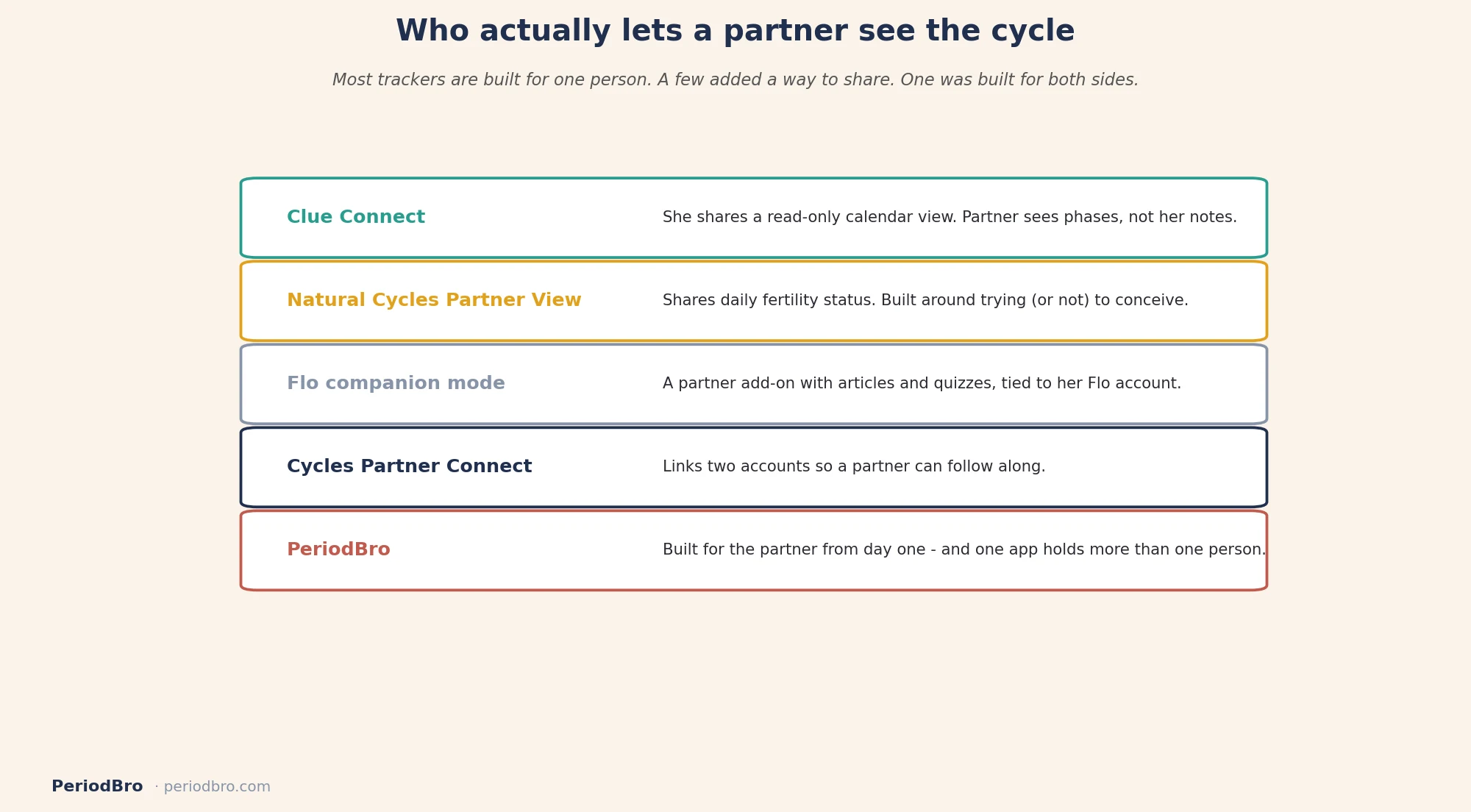
This is the gap PeriodBro was built to fill. It starts from the partner’s side of the relationship, and one app can hold more than one profile, so a guy tracking a partner and, say, keeping an eye on a teenage daughter’s cycle isn’t juggling three logins. That multi-profile design is genuinely rare, and it’s why I keep coming back to it. But whatever you choose, the questions below matter more than the logo.
What to check before you share a cycle
Not every app with a “share” button is a real couples tracker. Some just mirror her whole diary to your phone, which is exactly the overreach you want to avoid. Here’s the short checklist I’d run before committing to one.
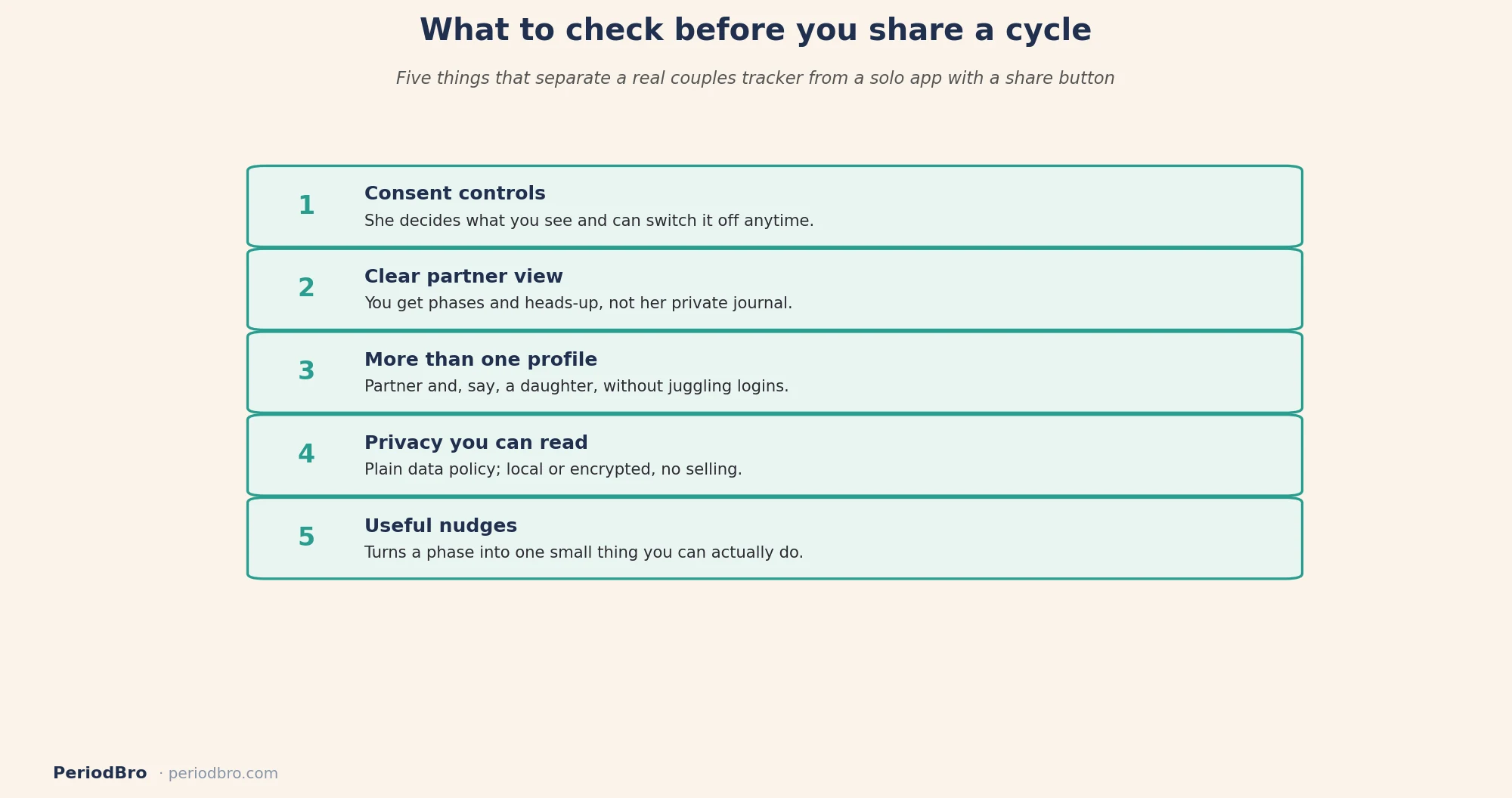
The one I’d never skip is consent controls. She should decide what you see, and she should be able to switch it off in two taps with no guilt trip. A close second is privacy you can actually read. Period data is sensitive, and not every app treats it that way; Mozilla’s reviewers have repeatedly flagged how loosely some cycle apps handle personal data (Privacy Not Included). Look for plain-language policies, local or encrypted storage, and a clear “we don’t sell your data” line. In a post-Roe world, that’s not paranoia, it’s basic hygiene.


Setting it up without being weird about it
Here’s where most guys either overthink it or botch it. The setup is simple. You ask. Out loud. Something like: “I want to be better at showing up for you around your cycle. Would you be open to sharing a basic view in an app? You control what I see, and you can turn it off anytime.” Then you let her set it up, or set it up together. She holds the switch.
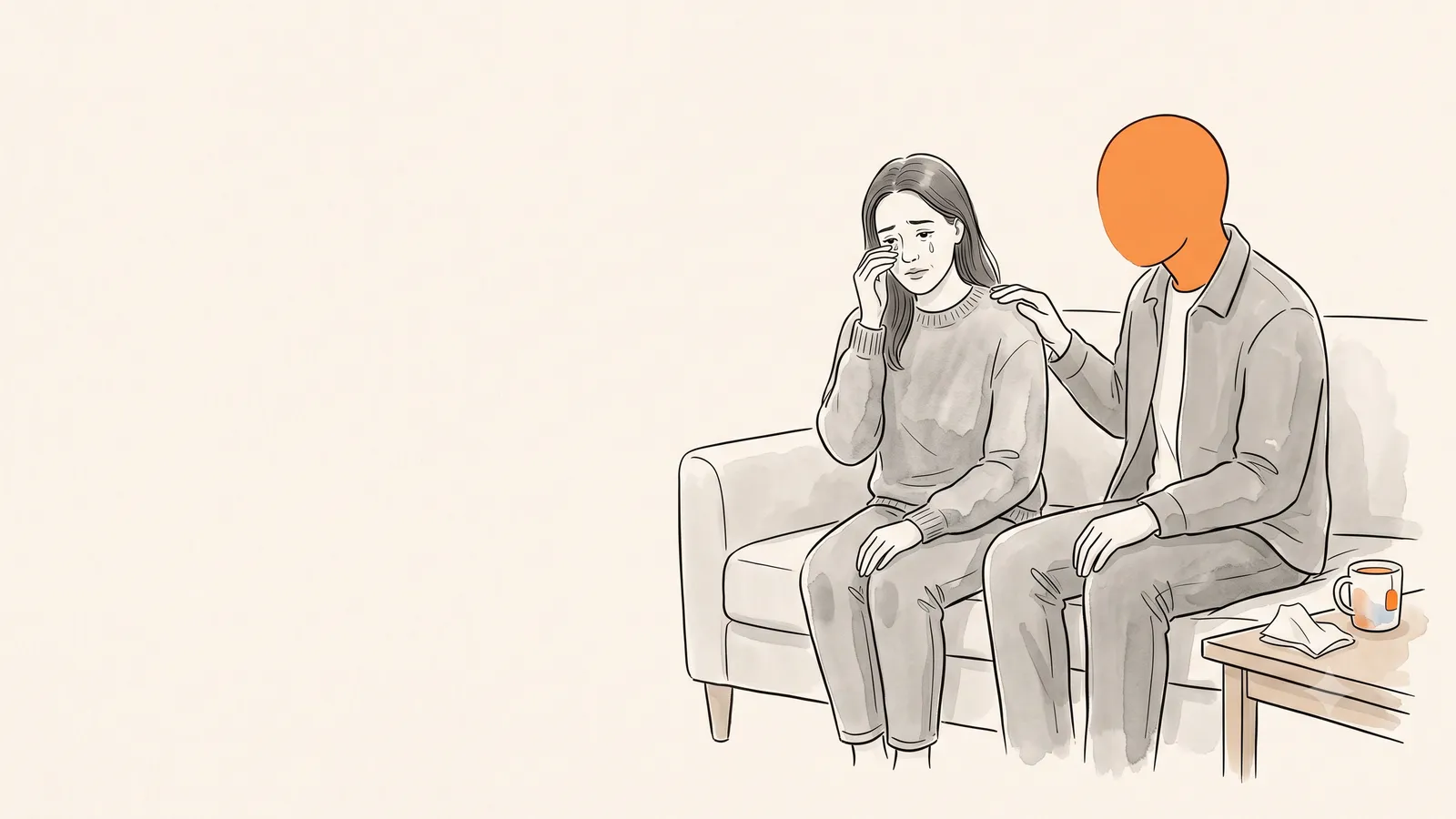
What you never do is track her without telling her. That’s not a couples tracker, that’s spying, and it will cost you more trust than any amount of well-timed tea will ever buy back. We wrote a whole guide on tracking her cycle without overstepping, and the one-line version is: shared, consented, and used to support her, not to check up on her.
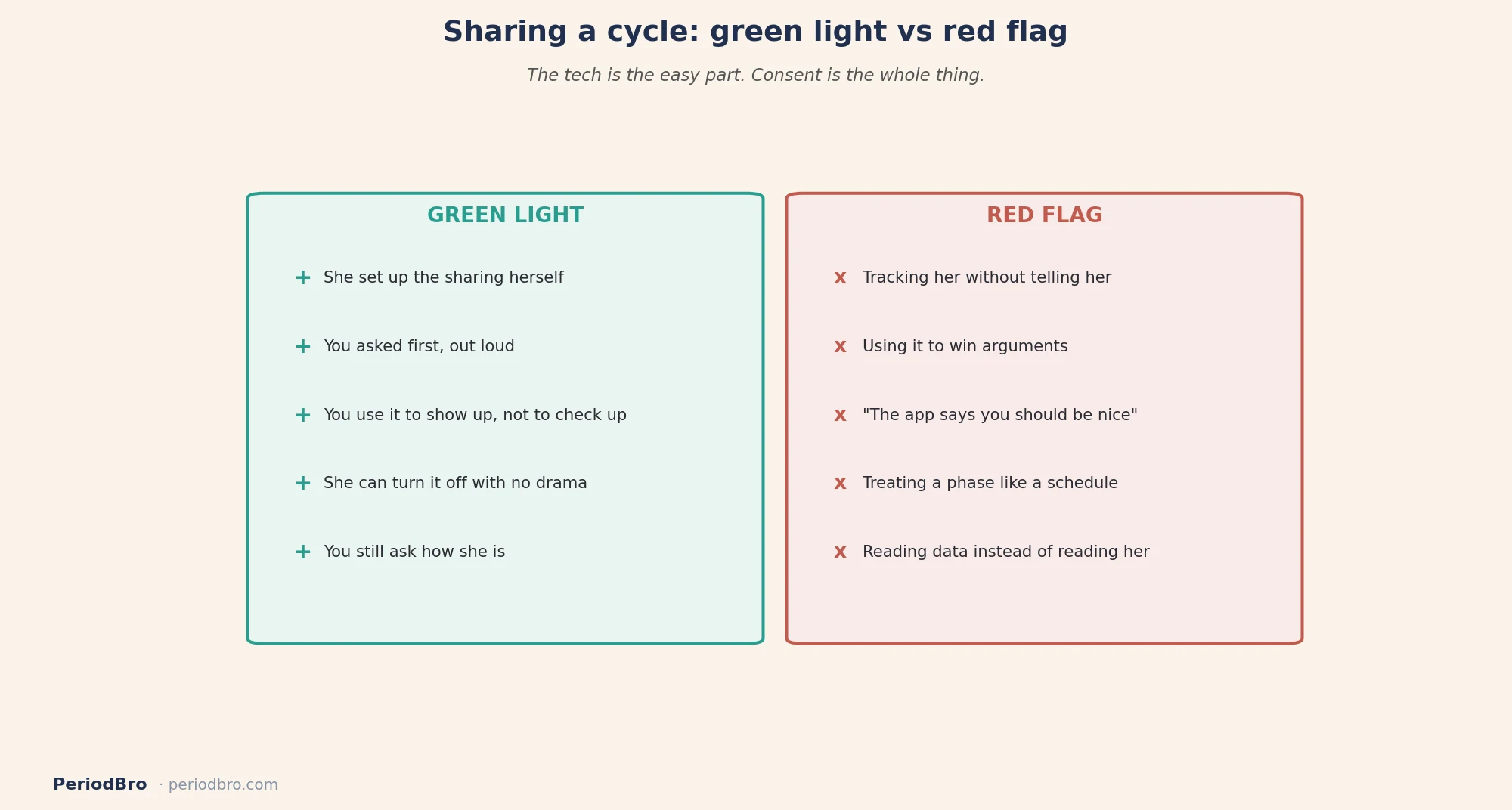
The green-light version is boring in the best way. She set it up. You asked first. You use the heads-up to lower her load on a rough week, not to say “the app told me to be nice.” The red-flag version is any place where the app replaces actually talking to her. If you find yourself reading data instead of reading her, close the app and ask how she’s doing.
Do you even need an app for this?
Fair question. Plenty of couples do this with a shared calendar and a good memory. The app earns its place in two situations. One, when the pattern isn’t obvious yet and you need a couple of cycles of data to see the shape of her month. Two, when you want the small daily nudge, the “heads up, the tougher stretch usually starts around now,” that a calendar won’t give you. If you’re the type who forgets, the nudge is the whole value.

If your goal is less “predict her” and more “sync your lives,” it’s worth reading how couples use this to plan around the month together in our piece on cycle syncing for couples. The best version of shared tracking isn’t about managing her moods. It’s about the two of you being on the same page about what week it is.
What’s in it for her
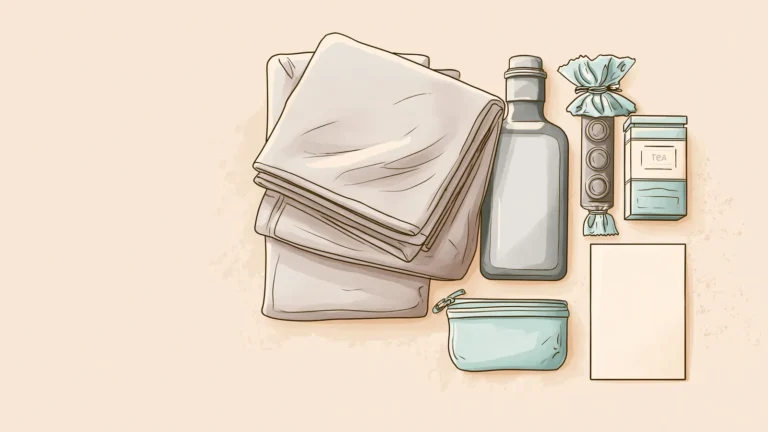
It’s worth saying plainly, because guys sometimes frame this as purely their own tool: a good couples tracker should make her life easier, not add a watcher to it. The win for her is that she stops having to explain her own body on the exact days she has the least energy to do it. No more “I already told you I feel awful, why are you asking.” The heads-up does the explaining, so she can just be human.
That’s the test of whether you’re using it right. If the app is saving her the emotional labor of narrating her cycle to you, it’s working. If it’s become one more thing she has to manage, or one more way she feels watched, it’s not, and no feature will fix that. Shared tracking earns its place by taking weight off her, not by handing you a dashboard.
The bottom line
A period tracker for couples is worth it if, and only if, it’s built on consent and used to show up rather than to surveil. Pick one that lets her control the view, treats her data like it matters, and gives you a nudge you’ll actually act on. The multi-profile, partner-first approach is what sold me, but the principle travels: share the map, not the diary, and keep asking her how she is. The app is just a reminder to be the kind of partner you already want to be.
PeriodBro is built for exactly this: a partner-first, multi-profile tracker with consent baked in. Try it free and see her next month coming before it arrives.
This article is for general information and isn’t medical advice. For questions about her health or cycle, talk to a qualified clinician.