Why Your Girlfriend Gets Angry Before Her Period
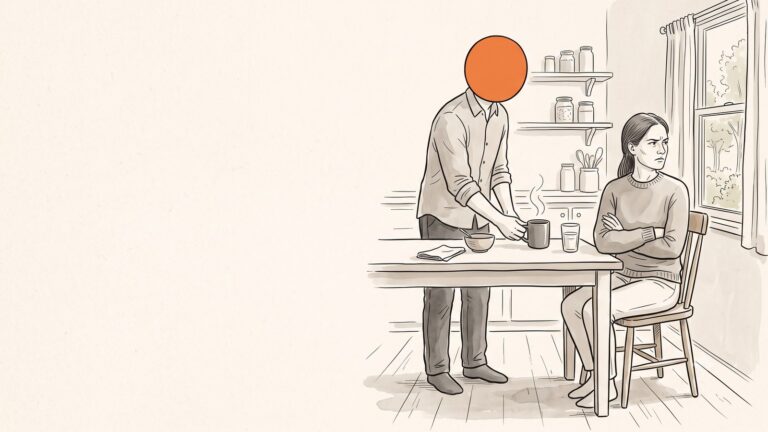
A girlfriend angry before her period can feel like it came out of nowhere. One day things are easy, and then a few days before her period she’s short with you over something that wouldn’t normally register – the dishes, a tone you didn’t know you had, a plan that changed. You’re left standing there running the tape back, trying to figure out what you did.
Here’s the short version: most of the time, you didn’t do the thing she’s reacting to. Her body is in the steepest hormonal drop of the whole month, and irritability is one of the most common ways that drop shows up. That doesn’t make her feelings fake, and it doesn’t make you a punching bag. It just means there’s a real, predictable reason underneath, and once you can see it, those days get a lot easier to handle.
The short answer: a hormone cliff, not a character flaw
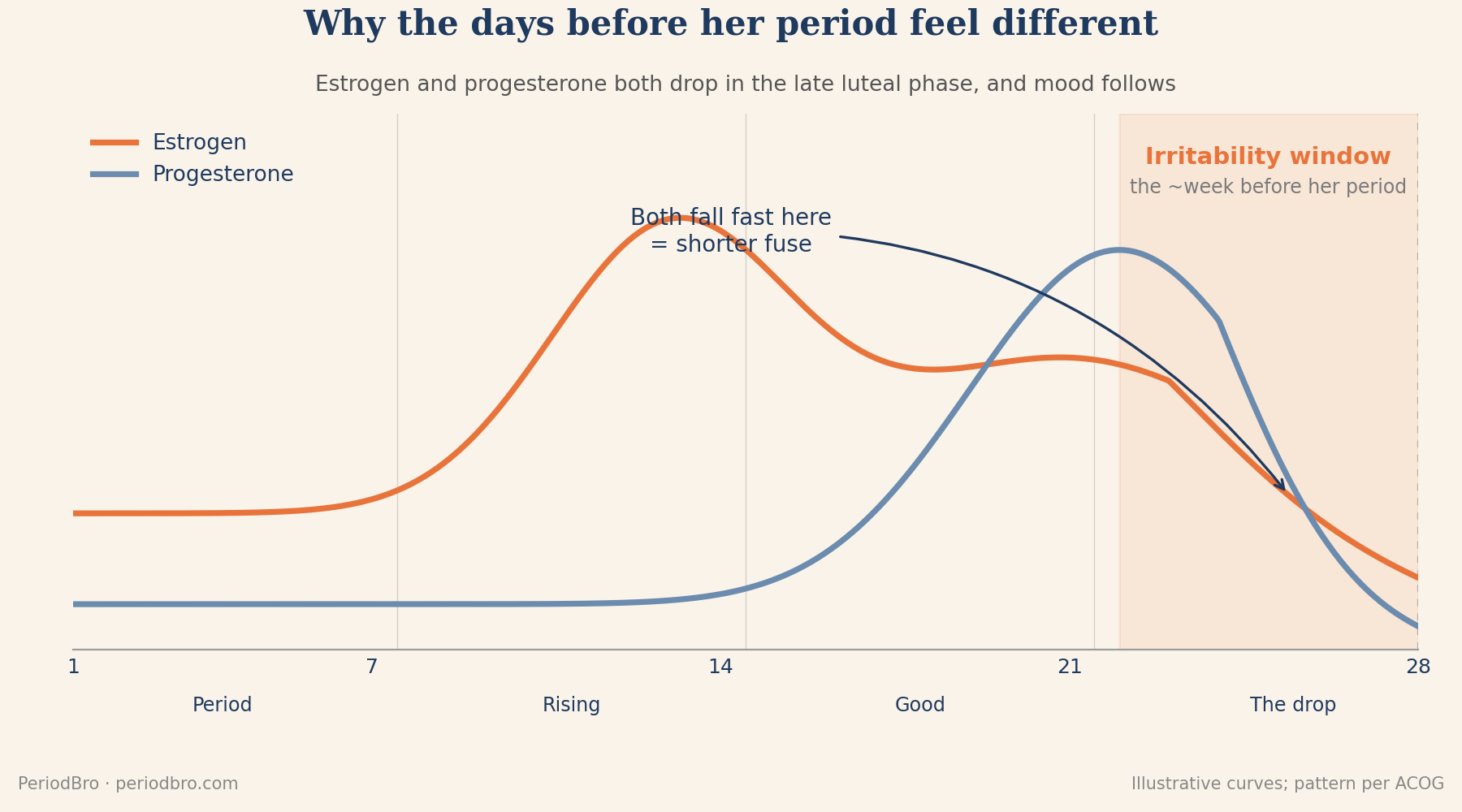
In the week or so before her period – the back half of what’s called the luteal phase – estrogen and progesterone both fall off a cliff. They’ve been high, the body got used to them, and then they drop fast right before bleeding starts.
Estrogen is tied to serotonin, the brain chemical that helps keep mood steady. When estrogen falls, serotonin is thought to dip with it. Lower serotonin means a shorter fuse, more sensitivity, and less of the buffer that normally lets small annoyances roll off. So the same comment that lands fine on day 10 of her cycle can feel genuinely irritating on day 26. Nothing about the comment changed. Her capacity to absorb it did.
This isn’t rare or dramatic. Around 9 in 10 women who menstruate get some premenstrual symptoms, and irritability and anger are near the top of the list. It’s one of the most normal things a body does. It just happens to be one of the least explained to the men around it.

It’s not “crazy,” and it’s not about you
If you search this question, a lot of what comes back frames it as women “acting crazy” and you “dealing with it.” I’d drop that framing entirely. It’s wrong on the facts and it’ll make you a worse partner.
She isn’t being irrational. She’s responding, with a more sensitive nervous system, to things that are actually happening – some real, some amplified. The hormones don’t invent problems out of thin air. They turn the volume up. If there’s a genuine issue between you, the luteal phase will make it louder, not imaginary. So “it’s just her period” is the wrong reflex too. The honest read is usually: there might be something real here, and right now she’s feeling all of it at higher volume.
And it’s not about you in the way your gut wants to make it about you. When someone you love is sharp with you, the instinct is to defend yourself or fix it fast. Both tend to backfire this week. She’s not running a case against you. Her threshold for friction is just lower than usual, and you happen to be the person standing closest.
Is a girlfriend angry before her period actually normal?
Yes – to a point, and the point matters. Premenstrual irritability that shows up in a predictable window and lifts once her period starts is one of the most common experiences there is. You can almost set a watch by it once you know her pattern.
What’s worth paying attention to is the shape of it, not just the existence of it. Normal premenstrual anger comes and goes with the cycle. It’s uncomfortable, but it passes within a day or two of bleeding starting, and life resets. When the anger is severe enough to scare her, damage the relationship every single month, or tip into real despair, that’s a different conversation – and we’ll get to it.
For most couples, though, what you’re dealing with is a normal, cyclical dip that nobody handed either of you a manual for.
What’s actually happening, week by week
It helps to stop thinking of “her period” as one thing and start seeing the month as four rough stretches:
- Week 1 (period): Bleeding starts and hormones are at their floor. The irritability from the days before usually eases here. A lot of men are surprised that the actual period is often calmer than the lead-up.
- Week 2 (rising estrogen): Estrogen climbs toward ovulation. This is often the easiest, most energetic, most open stretch.
- Week 3 (ovulation into early luteal): Things are usually still good, with a slow turn beginning at the end.
- Week 4 (late luteal, the days before her period): The drop. This is the irritability window – lower mood buffer, more sensitivity, shorter fuse. Then her period starts and the cycle resets.
When you can see which week she’s in, “out of nowhere” stops being out of nowhere. It becomes day 25, and day 25 has a reason. That single shift – from guessing to knowing the week – is most of the game.

What helps, and what makes it worse
You don’t need to become a therapist. A few moves do most of the work.
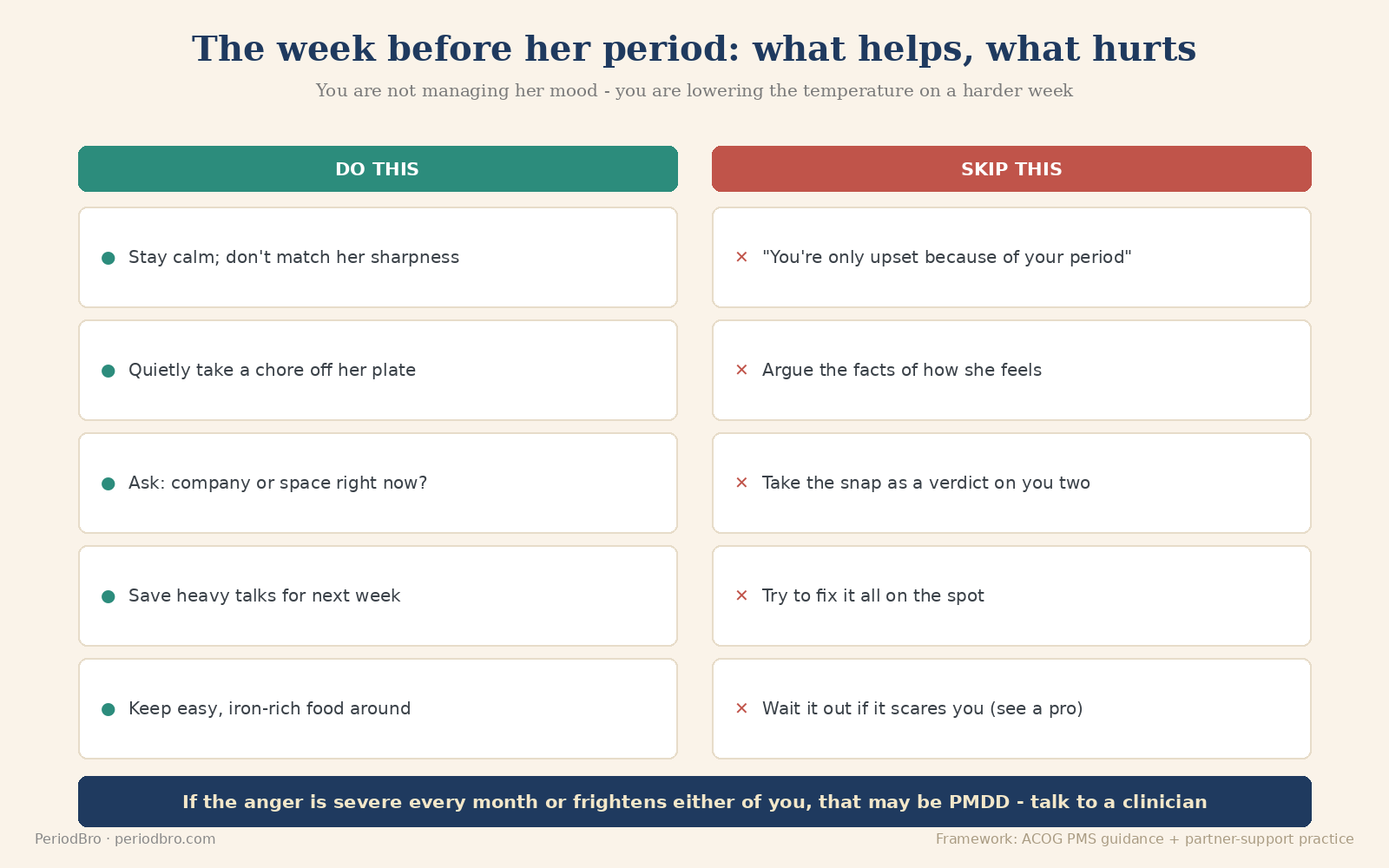
Don’t argue the facts of her mood. “You’re only upset because of your period” is true often enough and useless always. It tells her you’ve filed her feelings under “not real,” and it’ll turn a bad evening into a bad week. Even when the hormones are loud, what she’s feeling is still what she’s feeling.
Lower the temperature instead of raising it. When she’s sharp, the urge is to match it or to fix it on the spot. Try neither. A calm “I hear you, I’m not going anywhere” does more than a perfect rebuttal. You’re not conceding you were wrong. You’re refusing to add heat.
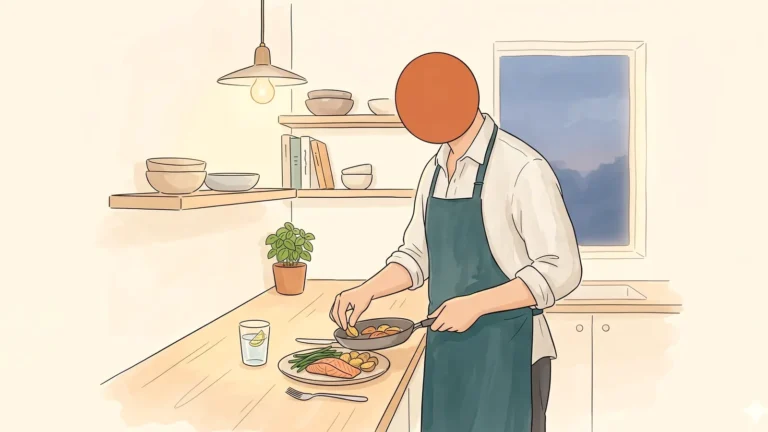
Take something off her plate without being asked. Quietly handle the dinner, the errand, the thing she’s dreading. In a week where everything feels heavier, removing one weight is worth more than any speech.
Ask, don’t assume. Some women want closeness in this window, some want space, and it can flip month to month. “Do you want company or room right now?” is a five-word question that saves you both a lot of guessing.
Come back to it later. If something real came up mid-argument, it’s still real. Note it, let the week pass, and raise it when she’s out of the late-luteal stretch and can meet you halfway. The same conversation goes completely differently on day 6 than on day 26.
When it’s more than PMS
There’s a line between ordinary premenstrual irritability and something that needs more than patience. For a smaller group of women – roughly 1 in 20 – the premenstrual week brings a severe pattern of rage, anxiety, or depression intense enough to wreck relationships and daily life every cycle. That’s premenstrual dysphoric disorder, or PMDD, and it’s a recognized medical condition, not a bad attitude.
Signs it might be worth a doctor’s input: the anger frightens her or you, it shows up hard every single month, it eases when her period starts but the damage keeps stacking, or it comes with real hopelessness. PMDD responds to treatment, so this is good news, not a verdict. If you recognize your relationship in that paragraph, it’s worth reading up on the difference between PMS and PMDD and gently raising the idea of talking to a clinician.
If there’s ever talk of self-harm, or her despair scares you, don’t treat that as a cycle issue to wait out – reach out to a professional or a crisis line the same day.
Frequently asked questions
How many days before her period does the irritability start?
Usually in the last week of her cycle, often the 4 to 7 days before bleeding begins, and it typically lifts within a day or two of her period starting. Everyone’s window is a little different, which is exactly why knowing her pattern beats memorizing an average.
Should I tell her she’s being moody because of her period?
No. Even when it’s accurate, pointing it out mid-moment reads as dismissive and tends to escalate things. Understand the cause yourself, adjust how you show up, and skip narrating it back to her.
Is it wrong to feel hurt when she snaps at me?
No. Understanding why it’s happening doesn’t mean you absorb everything without a word. It means you don’t take it as a referendum on the relationship. You can hold a boundary calmly and still give her room – the two aren’t in conflict.
Will tracking her cycle actually help?
It’s the single most useful thing you can do. Knowing she’s on day 25 turns a confusing night into an expected one, and expected is far easier to meet with patience than blindsided.
If you remember one thing
In the days before her period, assume the volume is turned up and act accordingly: stay calm, take a thing off her plate, ask what she needs instead of guessing, and save the heavy conversations for next week. You’re not fixing her and you’re not walking on eggshells. You’re just paying enough attention to know which week it is – and letting that change how you show up. Most months, that’s the whole job.