Why Is Her Period Late? A Partner’s Calm Guide to the Wait
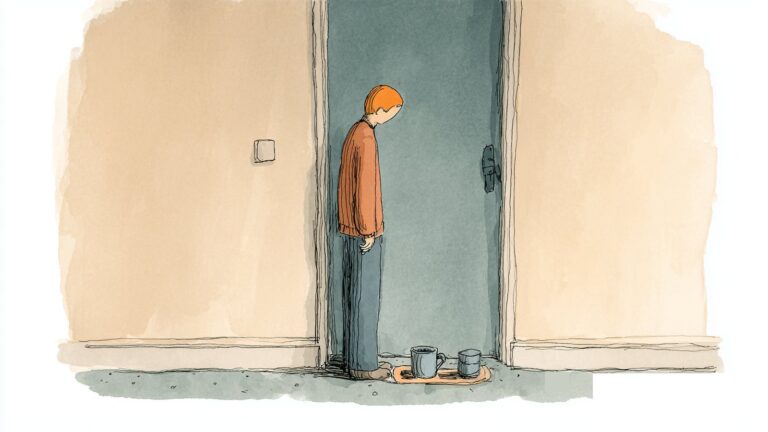
A few years ago, my partner said, almost in passing, “I think I’m a couple days late.” Then she went quiet. And I did the worst possible thing: I went quiet too, but loudly. I started doing math in my head, my face did something, and within an hour we were both sitting in a kind of tense fog that neither of us had actually chosen. Nothing had happened yet. We’d just both decided to be scared at the same time, in separate corners.
If you’ve ever wondered why is her period late and felt your stomach drop, this one’s for you. Not because you need to fix anything. Because the calmer person in the room makes the wait shorter, and that person can be you.
First, what “late” even means
Here’s something I didn’t know for an embarrassingly long time: a period isn’t a train that’s supposed to arrive on the same minute every month. A typical menstrual cycle runs anywhere from 21 to 35 days, and it can shift a little from one month to the next while still being completely normal, according to the Cleveland Clinic. So “late” is relative to her normal, not to a calendar app’s tidy 28-day average.
A day or two past her usual? That’s noise, not signal. A week with no other explanation is worth paying attention to, but even then, “paying attention” doesn’t mean “panicking.” It means staying curious instead of catastrophizing.
The single most useful thing you can do here is know roughly where she usually lands. Not to police it. Just so that when she says “I’m late,” you actually have a sense of whether that means two days off her rhythm or two weeks.

The question you’re both not saying out loud
Let’s be honest about the elephant. When a period’s late and you’re sexually active, pregnancy is the first place both your minds go. Pretending otherwise just adds a layer of performance to an already tense moment.
So name it gently, and then hand her the wheel. Something like, “Hey, I know we’re both probably thinking about it. Whatever you want to do, whenever you want to do it, I’m with you.” That’s it. You don’t schedule the test. You don’t ask three times a day if she’s tested yet. You don’t turn into a project manager. Her body, her timeline, her call.
This is also where I’ll say the quiet part plainly: tracking her cycle so you can be supportive is a good thing, but it only works with her knowledge and her buy-in. If you’ve ever felt the pull to monitor this stuff on your own to “stay ahead of it,” read how to track her cycle with consent first. Awareness is a gift when it’s shared. It’s surveillance when it’s secret, and that distinction matters more now than it ever has.
Why is her period late if she’s not pregnant?
Here’s the part that genuinely lowered my blood pressure once I learned it. There’s a whole roster of ordinary things that push a period back, and most of them are temporary. So when you ask why is her period late, the honest answer is usually one of these, not the scary one.
Stress is the big one. So is a meaningful change in weight, a stretch of intense exercise, getting sick, or even a wrecked sleep schedule from travel or a new job, per the Cleveland Clinic’s overview of irregular periods. Underlying conditions like thyroid issues or polycystic ovary syndrome (PCOS) can do it too. So can starting, stopping, or switching birth control, which throws the hormonal signal off for a cycle or two while her body recalibrates.
And if she’s in her late 30s or 40s, the rhythm naturally starts to change as she approaches perimenopause; cycles can get longer, shorter, or just less predictable, the Cleveland Clinic notes. None of that is a problem to be solved. It’s a body doing normal body things on a timeline that was never as rigid as the apps make it look.
Notice how long that list is. Any one of those can be the reason her period is late this month, and several of them can stack on top of each other. The point isn’t for you to diagnose her. You’re not the doctor, and playing one is a fast way to make her feel managed instead of supported. The point is that “late” has a dozen boring explanations for every dramatic one, and knowing that is what lets you keep your face neutral when she tells you.

What stress actually does to the clock
This one’s worth understanding because it’s so common and so fixable. When the body is under real physical or emotional strain, the part of the brain that runs the cycle, the hypothalamus, can dial things down and delay or skip ovulation. No ovulation on schedule means no period on schedule. The Cleveland Clinic describes this as hypothalamic amenorrhea, and the reassuring part is that it’s usually reversible once the stressor eases.
Here’s the loop you want to avoid: she’s stressed, her period’s late because she’s stressed, the lateness stresses her more, and you adding your own tense energy turns the dial up further. You can’t make her ovulate. But you can absolutely be the thing that takes a notch of pressure off, instead of piling more on. That’s not a small role. In a stress-delayed cycle, calm is practically functional.
When late is actually worth a doctor’s visit
Most late periods resolve on their own. But there’s a line, and it helps to know where it is so you’re neither dismissive nor alarmist.
The American College of Obstetricians and Gynecologists defines the absence of periods as amenorrhea, and a common rule of thumb from clinicians is that missing three or more cycles in a row, or going more than about three months without a period when she’s not pregnant, is a reason to check in with a provider, as outlined in this clinical review. Same goes for red flags like severe pain, big sudden changes, or other symptoms that worry her.
Your job isn’t to issue the verdict on whether she needs an appointment. It’s to be the partner who says, “If you want to get it checked, I’ll help you book it, and I’ll come if you want me there.” Offer the support and then respect whatever she decides. To understand the bigger picture of how her cycle is supposed to work, the menstrual cycle phases explained for men is a solid primer, and how hormones drive her mood all month fills in why timing and feelings are so tangled together.
How to actually show up while you both wait
So strip away the biology and here’s what being useful looks like in real time.
Don’t interrogate. One gentle “how are you feeling about it?” beats ten “any news?” texts. Don’t make her uncertainty about your anxiety; if you need to process your own nerves, do some of that with a friend rather than handing all of it back to her. Don’t weaponize the calendar later, either, in an argument or a joke. And don’t disappear into your phone researching worst cases while she sits two feet away wondering where you went.
What helps is steadiness. Be the person whose presence lowers the temperature in the room. Keep normal life going. Make the dinner, suggest the walk, put on the show you both like. Uncertainty is more bearable next to someone who isn’t unraveling.

It also helps to remember the timescale. A period that’s a few days behind is well within normal, and even a longer gap usually has one of those ordinary explanations behind it. Treat the early days as a non-event, because most of the time that’s exactly what they turn out to be. The version of me from that tense afternoon years ago didn’t know any of this, and the not-knowing is what made it worse. If I’d understood then how many quiet reasons there are for why is her period late, I’d have spent that hour being a steadying presence instead of a second source of dread.
The one thing to do today: if you don’t already have a rough sense of her cycle, ask her, openly, whether she’d want you to keep track together. Framed right, it’s not creepy and it’s not clingy. It’s “I’d like to understand your rhythm so I’m not blindsided and you’re not carrying it alone.” That conversation, more than any app, is the actual upgrade.
I built PeriodBro because I wanted to understand the women I care about without making them install one more thing or explain themselves every month. If you want to be the calm one in moments exactly like this, that’s who it’s for.