Heat Patches for Period Cramps: How They Work and How to Use Them Safely
The first time I bought heat patches for period cramps, I grabbed the box with the biggest “8 hours” on it, handed it over, and felt pretty good about myself. She thanked me, read the back, and pointed out that the patch I’d picked was meant to go over a layer of clothing, not straight on skin, and that she shouldn’t sleep in it. Fair enough. Heat patches work, but they come with a few rules most people never read.
This guide covers what the research says, how patches compare with a heating pad or a hot water bottle, how to use them without burning skin, and when cramps need more than heat.
Heat patches for period cramps: do they actually work?
Yes, for most people with ordinary cramps, and the evidence is better than you might expect for something sold next to the cough drops. ACOG lists heat on the lower belly as one of the simple home measures for painful periods, alongside exercise and over-the-counter pain relievers (ACOG).
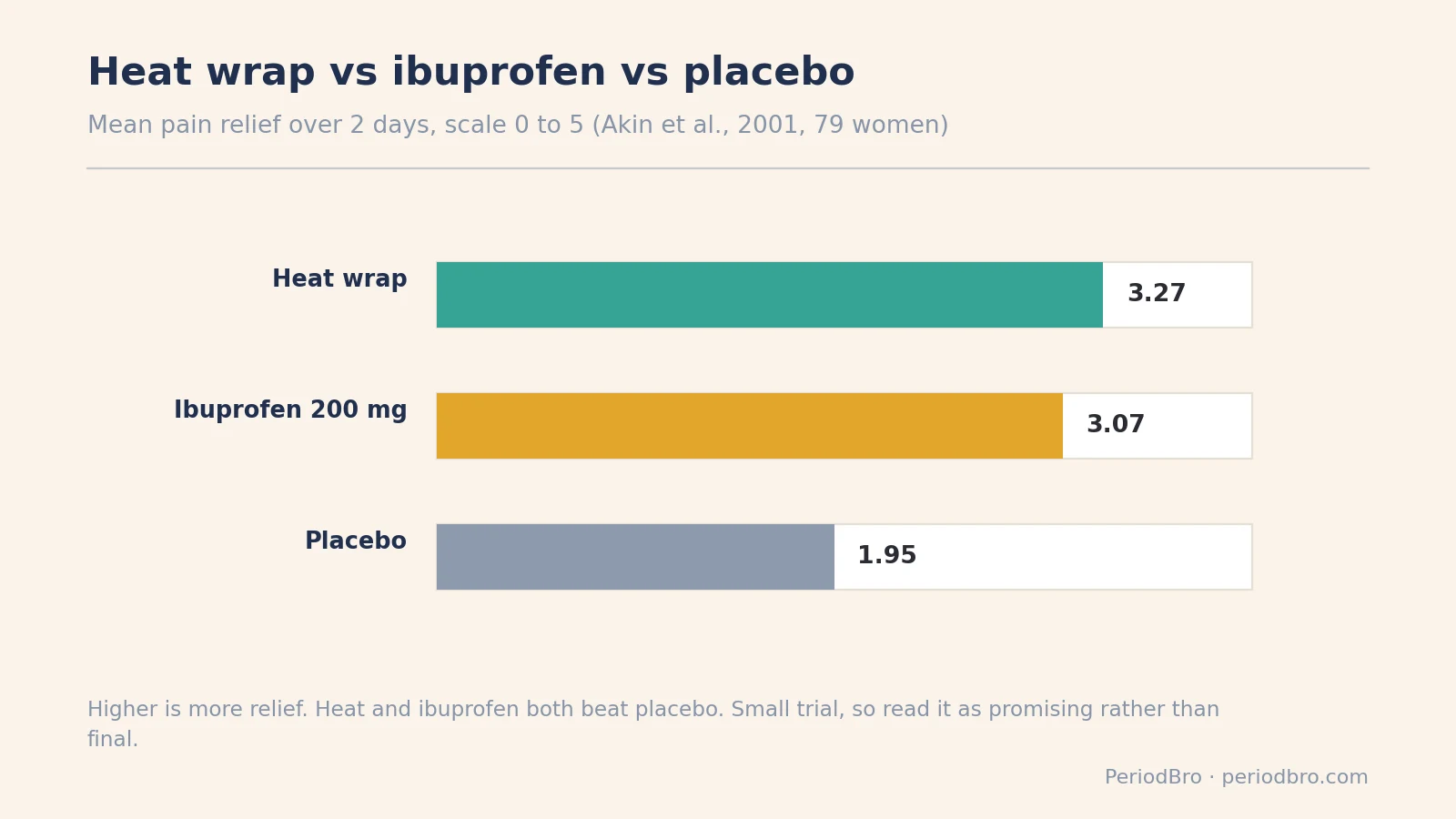
One of the best-known trials tested a low-level heat wrap worn on the abdomen for 12 hours a day over two days of a period. Women using the heat wrap reported pain relief similar to those taking ibuprofen, and both did clearly better than placebo. Heat plus ibuprofen also seemed to bring relief faster than the pills alone (Akin et al., 2001, summarized in AAFP).
A 2018 review of six randomized trials came to a similar conclusion: heat therapy reduced menstrual pain compared with no treatment and held up well against pain medication. The authors were clear that the trials were small, so the findings are promising rather than definitive (Jo and Lee, 2018).
Why heat helps isn’t fully pinned down, but the usual explanation is that warmth relaxes the uterine and abdominal muscles, improves blood flow and dampens pain signals for a while.
Patch, pad or hot water bottle?
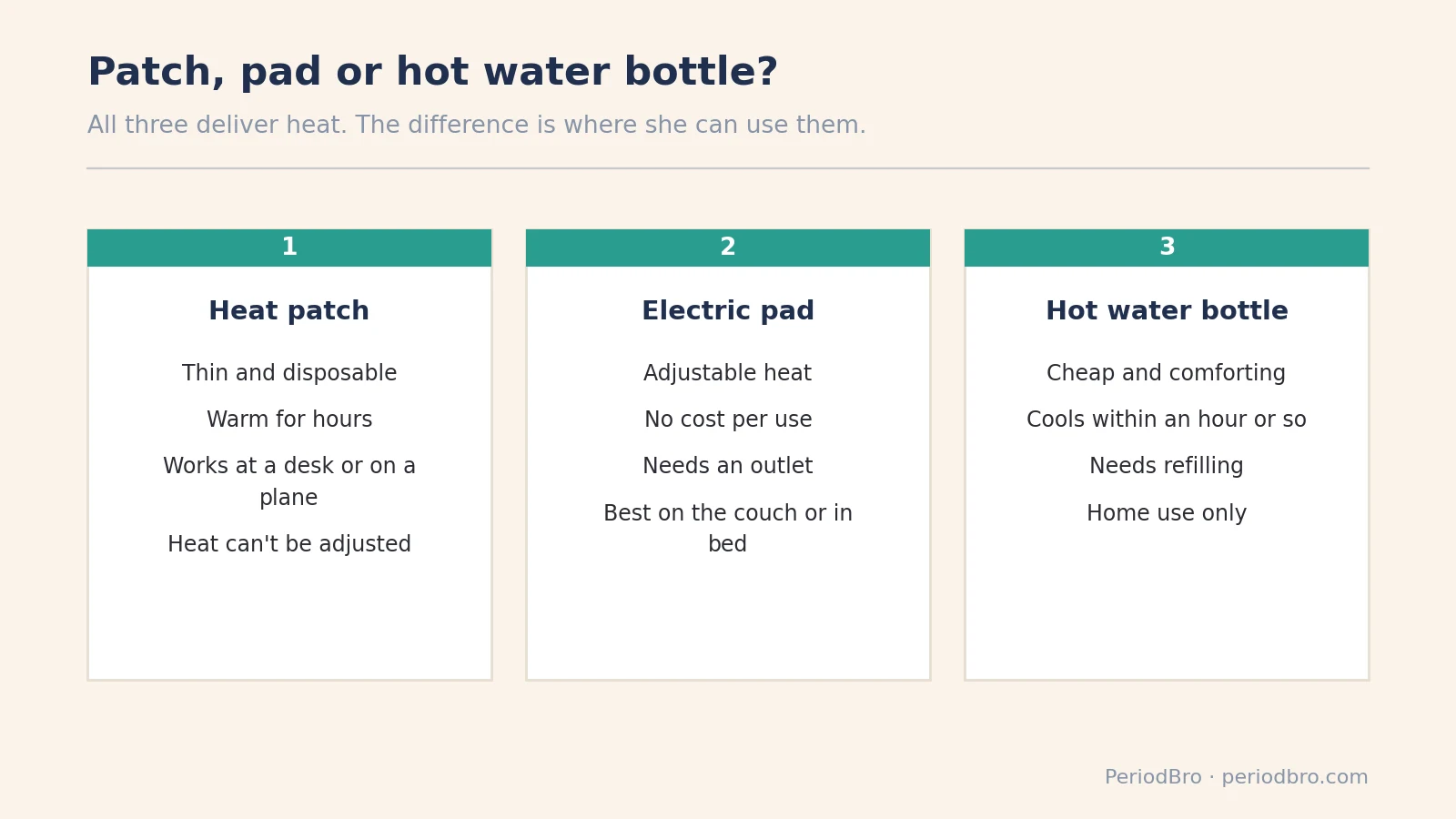
All three deliver heat. The difference is where she can use them.
- Adhesive heat patches are thin, disposable and stay warm for hours. They work at a desk, on a commute, on a plane or under a sweater at dinner. The tradeoff is cost per use and the fact that the heat can’t be turned down.
- Electric heating pads give adjustable heat and cost nothing per use, but they keep her near an outlet. We compared models in our guide to the best heating pad for period cramps.
- Hot water bottles are cheap and comforting on the couch. They cool down within an hour or so and need refilling.
A lot of people end up using a pad or bottle at home and patches for everything else. If she has cramps on workdays, patches are usually the one that changes the most, because the pad can’t come to the office. Our piece on period pain and work has more ideas for getting through those days.
What to look for on the shelf
The pharmacy aisle has more variety than it used to, and the boxes don’t always make the differences obvious. A few things are worth checking before you buy:
- Real heat or a warming feeling. Most heat patches contain iron powder that warms up when it meets air. Some “heat” products are actually creams or patches with menthol or capsaicin, which make skin feel warm without heating it. They’re a different thing, and the trials above tested actual heat.
- Shape. Menstrual patches are usually wide and flat to cover the lower belly. Back and neck wraps come with straps and work too, but they can be bulky under clothes.
- Skin or clothing. The box will say whether it sticks to skin or to underwear. Pick the one that fits how she dresses on a workday.
- Reusable packs. Gel packs you click or microwave are cheaper over time but usually stay warm for a much shorter stretch than a disposable patch.
If you’re not sure what she’d like, buy a small box of two kinds and let her pick. Unscented is the safe default, since some patches add fragrance that irritates sensitive skin.
How to use them without burning skin
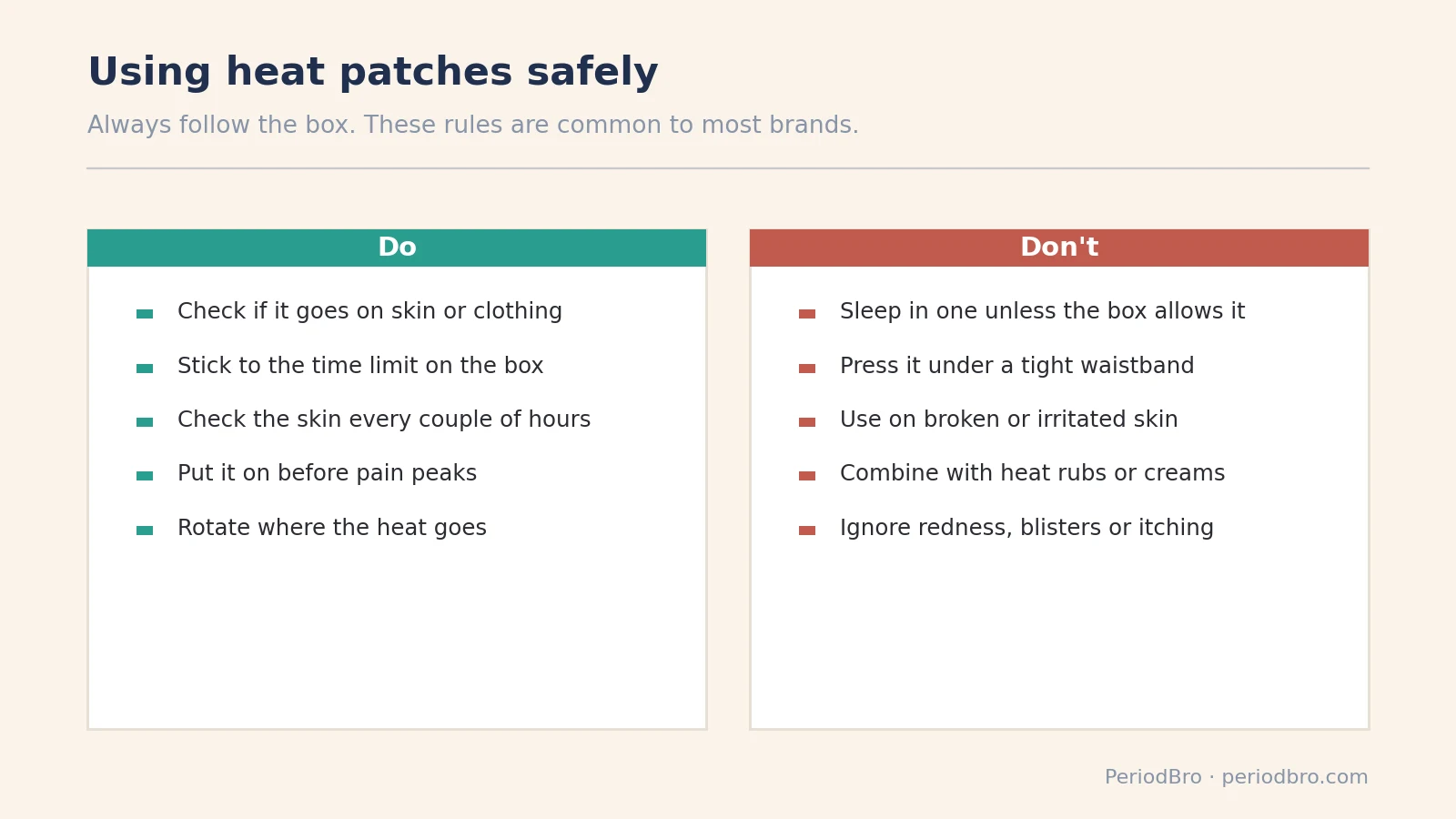
Air-activated patches heat up through a chemical reaction once the packet is opened, and the temperature isn’t adjustable. Most problems come from wearing them too long or in the wrong spot. The details vary by brand, so the box always wins, but these rules are common across most of them:
- Check whether the patch is designed for skin or for wearing over clothing. Many are meant to go on underwear or a thin layer, not directly on skin.
- Stick to the time limit on the box. Many wraps are designed for up to 8 hours, not around the clock.
- Don’t sleep in one unless the box specifically says it’s made for overnight use.
- Don’t press on it with a tight waistband or lie on top of it. Pressure plus heat increases burn risk.
- Check the skin underneath every couple of hours. Redness that doesn’t fade, blisters or itching mean take it off.
- Skip broken or irritated skin, and don’t combine with heat rubs or creams.
- Use extra caution with diabetes, poor circulation or reduced feeling in the area, because she might not notice a burn as it happens.
Long-term, frequent heat on the same patch of skin can also cause a lacy, brownish rash called toasted skin syndrome. Cleveland Clinic notes it’s usually linked to heating pads, hot water bottles and laptops, and the main fix is to stop the heat exposure and rotate where heat goes (Cleveland Clinic).
Timing makes a bigger difference than brand
Cramps usually start just before or as bleeding begins and are worst for the first day or two (Cleveland Clinic). Heat seems to work best when it’s on before the pain is at full strength, the same way pain relievers work better taken early.
That’s where a partner can actually help. If you know her period is due in a day or two, put a few patches in her bag, her desk drawer or the car. It saves her an errand on a bad morning. If she’s traveling or you’re apart, our guide on helping with cramps when you’re away has a few long-distance tricks, and patches fit in an envelope.
Placement is simple. Most people put the patch on the lower belly, a few inches below the navel. If the pain is mainly in her lower back, a second patch there helps, and our article on period back pain explains why cramps spread there.
Combining heat with other relief
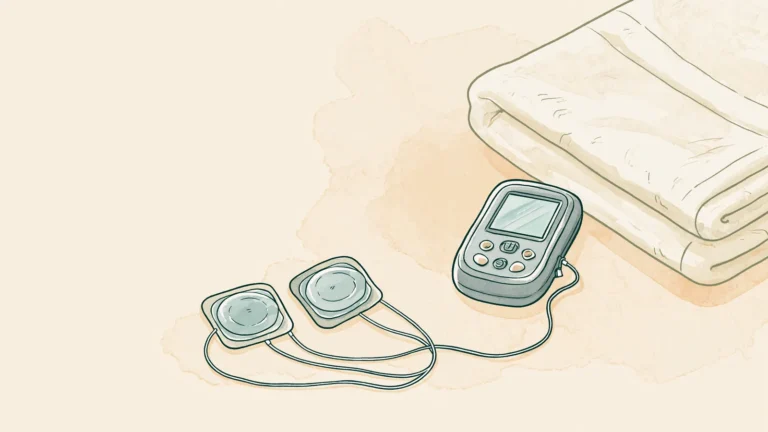
Heat stacks well with other things. In the Akin trial, heat plus ibuprofen worked faster than ibuprofen alone (AAFP). Gentle movement, a warm drink and lying in a comfortable position all help too. Our roundup of the best pain relief for period cramps covers the medication side, and if she likes gadgets, a TENS unit is another drug-free option that pairs well with heat.

Keep it low-key. Leaving a box on the counter with a note works better than a lecture about what she should be using.
When heat isn’t enough
Heat is for ordinary period cramps. It shouldn’t be covering up pain that’s telling you something. It’s time to see a doctor if:
- Cramps regularly keep her home from work, school or plans, even with pain relievers and heat.
- Pain is getting worse over the years instead of staying the same.
- Cramps last beyond the first few days of bleeding or show up at other times of the month.
- She has very heavy bleeding, pain during sex or pain with bowel movements.
Those can be signs of conditions like endometriosis or fibroids, which ACOG lists among the causes of secondary dysmenorrhea (ACOG). Sudden severe pain with fever, fainting or pain on one side needs urgent care. Our guide on whether her period pain is normal walks through the red flags.
The box that lives in the drawer now
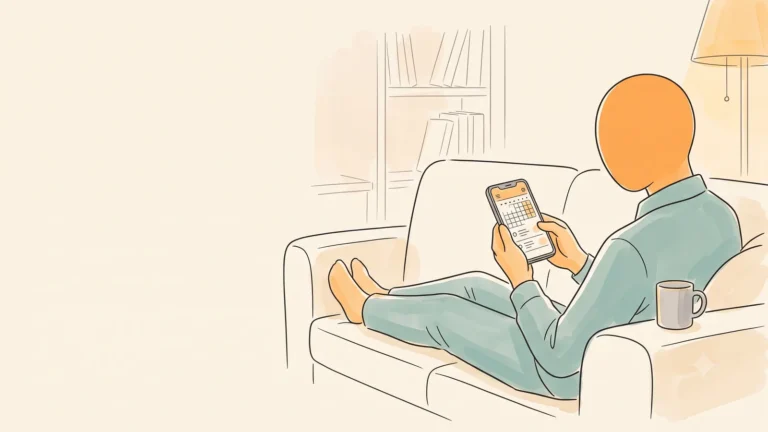
After that first slightly clumsy purchase, I started keeping a box in the drawer by the door. When the app tells me her period is a couple of days out, I drop two patches in her bag without saying much. She mentioned once that it’s the small stuff like that she notices most, more than any big gesture.
Heat patches won’t fix every cramp. They’re cheap and portable, the evidence behind them is decent, and once you’ve read the rules on the box they’re one of the easier things to get right.
I built PeriodBro so partners can see when her period is coming and get a reminder to stock things like this before the rough days. If that sounds useful, you can try it free here.
PeriodBro provides educational information and is not a substitute for professional medical advice. Always follow the instructions on the product and consult a qualified healthcare provider for personal medical decisions.