Why Her Period Lowers Her Confidence, and What Helps
I told my girlfriend she looked tired once, three days before her period, standing in a kitchen that suddenly got very quiet. I meant it as concern. She heard it as “you look bad.” I didn’t understand why a throwaway comment landed like a gut punch until I actually looked into why her period lowers her confidence in ways that have nothing to do with mood swings.
Most of what men learn about periods is the mood part. Is she mad at me, is it hormones, should I bring chocolate. Almost nobody talks about the other thing happening at the same time: her body is doing things that make her feel less like herself, and she’s doing all of it while also managing whatever you’re bringing to the room.
Why her period lowers her confidence, and it’s not just about mood
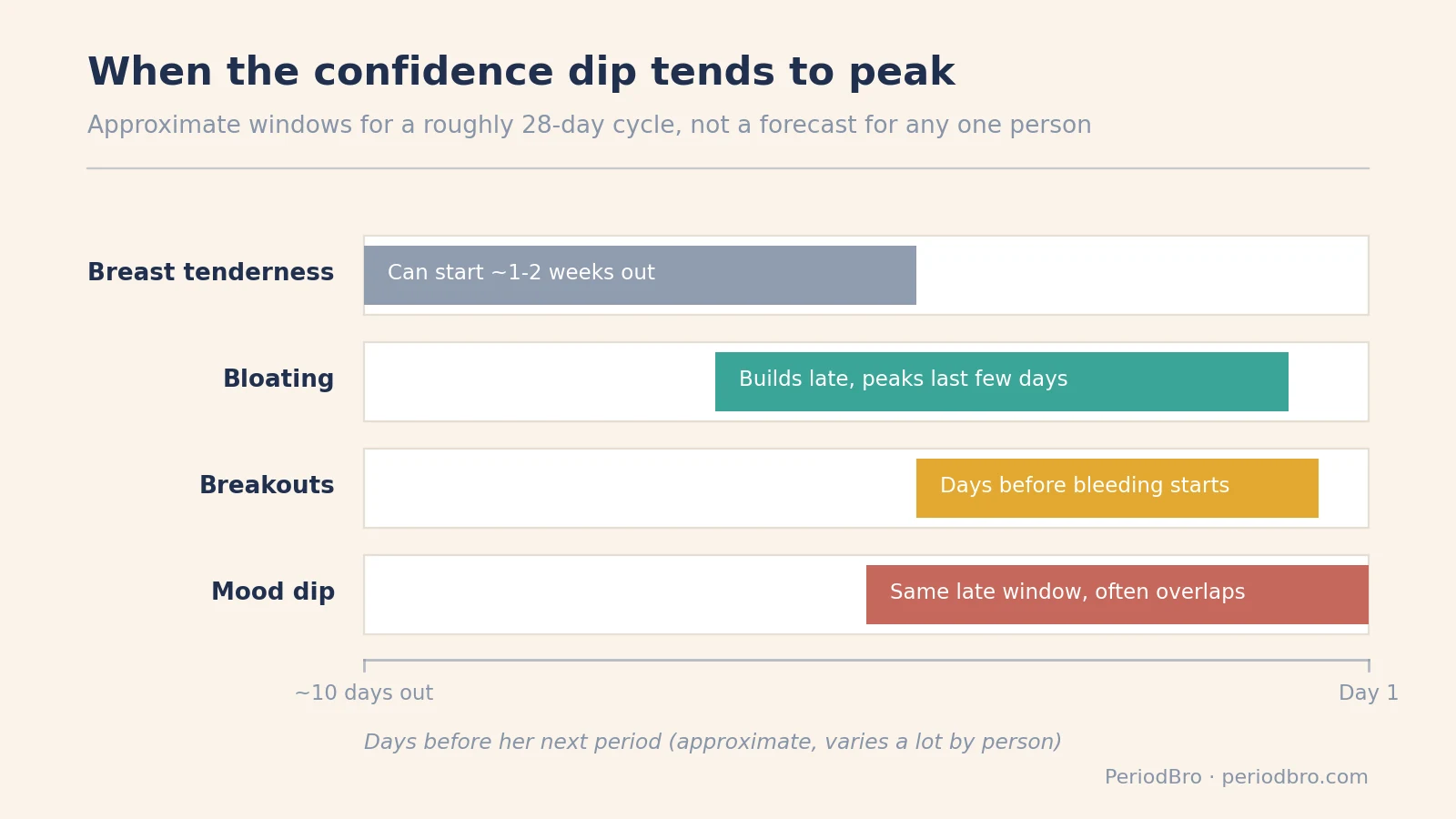
The physical mechanics are well documented. In the days before her period, progesterone causes the body to hold onto more water and salt, and estrogen swings add to that fluid retention, according to the Mayo Clinic. That’s the bloating. It typically builds over the week before her period and eases once bleeding starts, per Cleveland Clinic.
At the same time, estrogen and progesterone drop while androgen hormones rise slightly, which stimulates the skin’s oil glands. That’s the breakout most women get along the jawline in the same window, and it’s common enough that most women notice some flare-up before their period, per Cleveland Clinic’s dermatology team. Add breast tenderness and the general heaviness that comes with fluid shifts, and you’ve got a body that feels foreign to the person living in it, days before anyone even mentions PMS.
None of this is news to her. What’s news to a lot of partners is that this isn’t a mood problem you can fix with distraction or reassurance. It’s a body-image problem, and those run on different rules.
The research backs up what she’s already told you
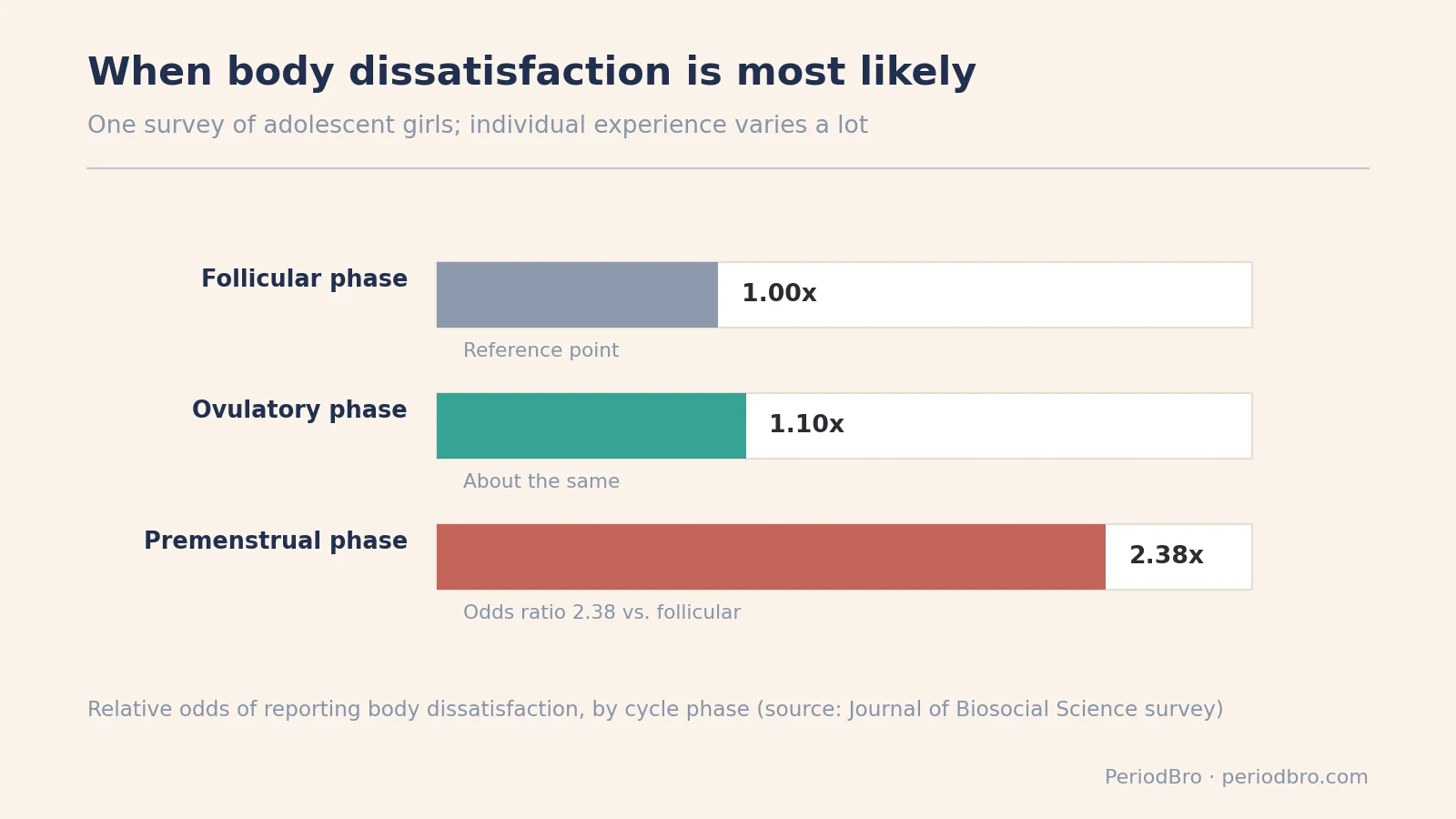
Researchers who study this call it premenstrual body dissatisfaction, and it’s a documented pattern, not an exaggeration. A cross-sectional survey of adolescent girls published in the Journal of Biosocial Science found the odds of reporting body dissatisfaction were about 2.4 times higher during the premenstrual phase than during the follicular phase. One study, one age group, and it won’t map onto every adult relationship exactly. But it lines up with something researchers Jane Ussher and Janette Perz found in their qualitative work: women in their studies described their premenstrual bodies using words like “fat,” “ugly,” and “unattractive,” language tied directly to lower self-worth and self-criticism, in research published through Sage journals.
That’s not vanity. According to the American College of Obstetricians and Gynecologists, physical PMS symptoms like bloating and breast tenderness typically run alongside the mood symptoms, starting one to two weeks before her period and easing within a few days of it starting. The body-image hit and the mood dip are running on the same clock, which is exactly why they get confused with each other. You notice she’s quieter or more sensitive, and you assume it’s “just hormones” in the mood sense, when part of what’s happening is that she caught her reflection in a changing-room mirror an hour earlier.
There’s a knock-on effect too. Body-mapping research on how women navigate premenstrual food cravings and exercise, published in the Journal of Eating Disorders, found that women often described guilt and shame around giving in to cravings or skipping a workout during this window, on top of the body-image hit itself. That’s a second layer most partners never see: she’s not just feeling less confident, she may be quietly judging herself for how she’s coping with feeling less confident. It’s worth knowing that loop exists before you say anything about what she’s eating or whether she made it to the gym this week.
Where I got it wrong, and what actually changed
Here’s the part I’m not proud of. For a while after that kitchen comment, I overcorrected. I started telling her she looked great every single day that week, on a loop, like I was trying to talk her out of a feeling. It didn’t land any better. If anything it felt worse, because now it seemed like I was managing her instead of just being there. I didn’t know that reassurance you didn’t ask for can feel like being handled. Took me an actual conversation, the boring kind where you just ask instead of guess, to learn that what she wanted wasn’t a compliment. She wanted me to not make a thing of it either way.
Most guides skip that shift entirely. The job was never talking her out of how she feels about her body that week. It was just not adding to it.
What actually helps, in practice
Small, specific moves beat grand gestures here. A few things that changed how this actually goes in my own relationship:
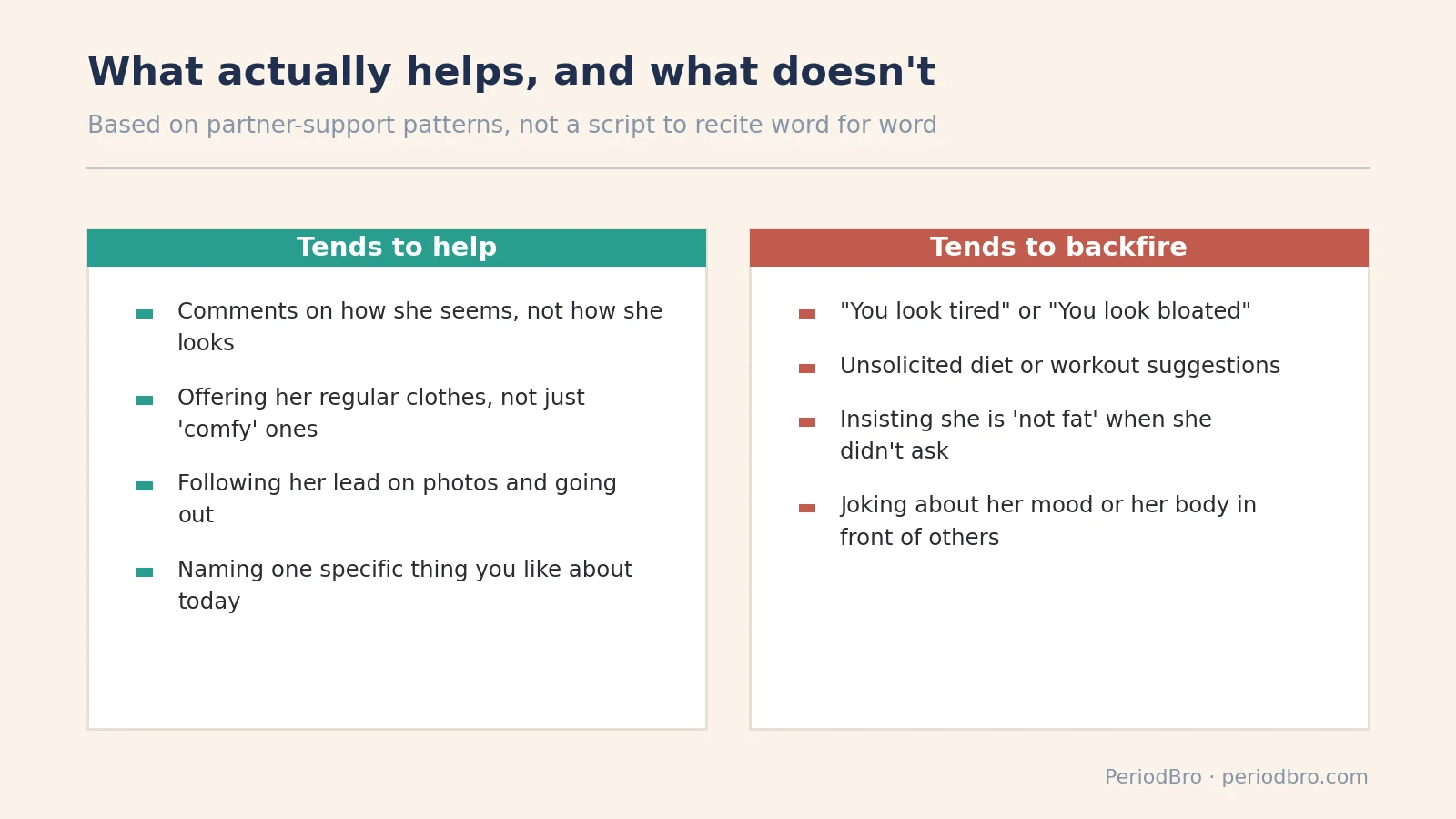
Comment on how she seems, not how she looks. “You’ve had a long day, want to sit down” lands completely differently than any sentence with the word “tired” or “puffy” in it, even when you mean it kindly. If period bloating already has her feeling like her clothes don’t fit right, the last thing she needs is a body-focused observation from you, however gentle.
Keep offering her actual clothes, not just the stretchy ones. Reaching straight for “comfy” clothes on her behalf can read as “I’ve noticed you look different,” even when your intention is pure comfort. Let her choose.
Follow her lead on photos and on going out. If she wants to skip the group photo this week or bail on plans, that’s not you failing to convince her she looks fine. It’s her call to make.
If breakouts are part of it, skip the skincare advice unless she asks. Period acne is common enough that she already knows what it is and probably already has a routine. Unsolicited product recommendations tend to read as “I noticed and I have a fix,” which is the opposite of helpful.
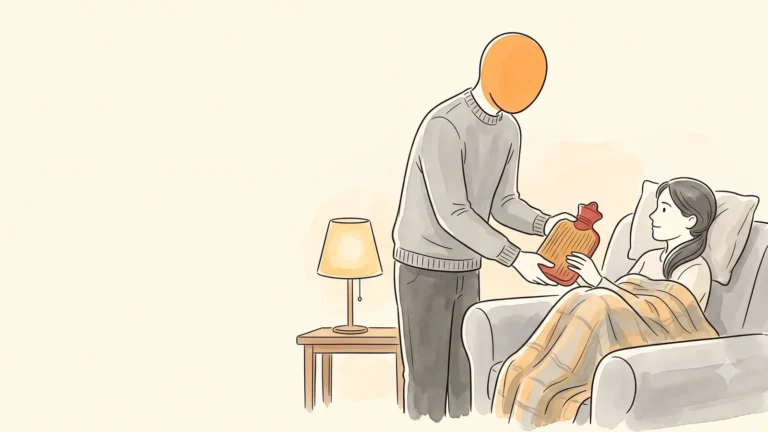
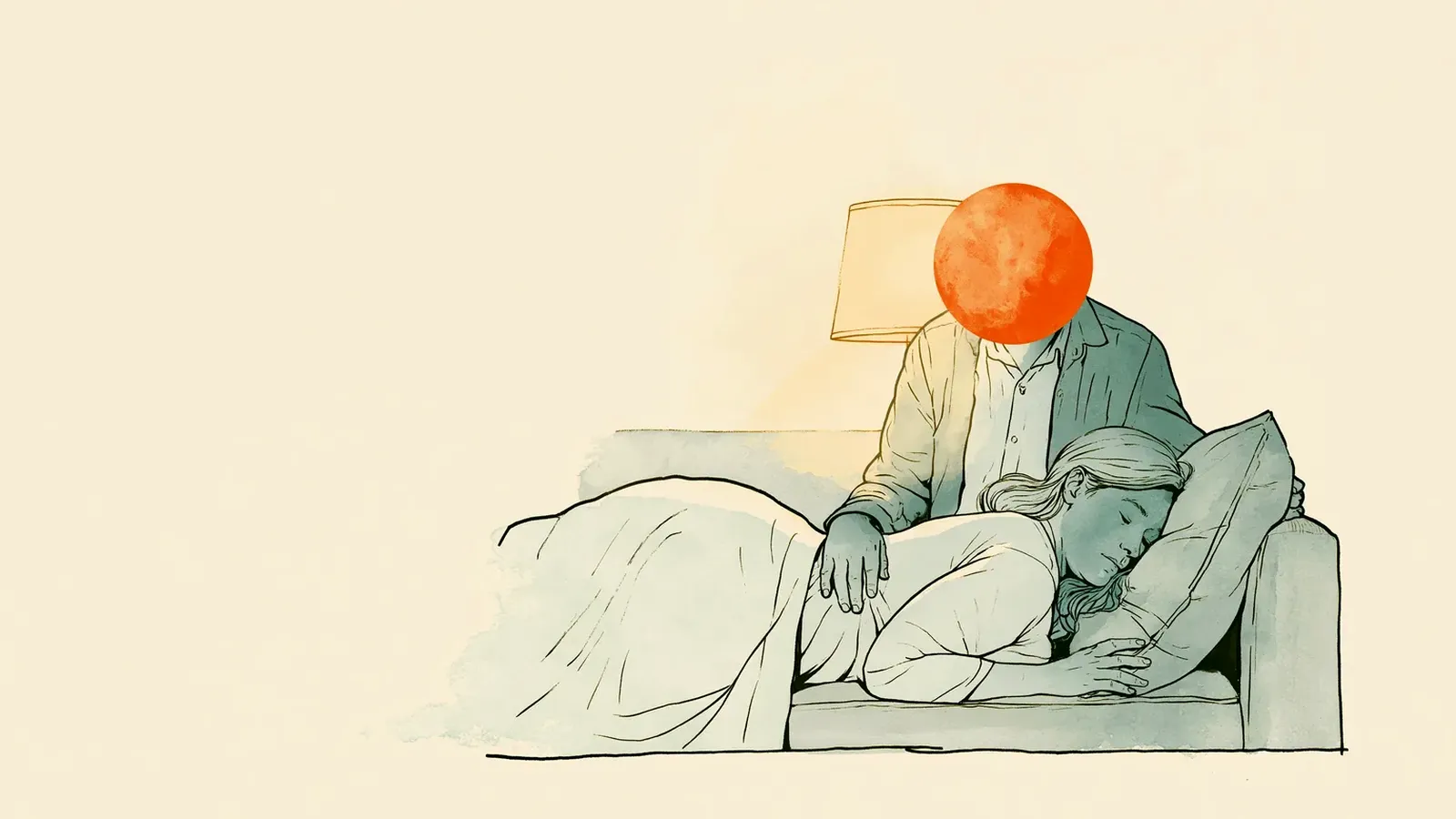
Don’t disappear physically either. It’s tempting to give her space by pulling back on affection when she seems self-conscious, as if touch is one more thing she has to manage right now. Ask instead of guessing. A normal, non-loaded “still good to cuddle tonight?” tells you what she actually wants without you deciding for her that her body is off-limits this week, which can land as confirmation that something’s wrong with it.

When it’s more than a rough week
Feeling less confident for a few days a month is common and, per the research above, expected. It’s worth paying closer attention if the self-criticism is constant rather than cyclical, if it comes with real changes in eating, or if she talks about her body in ways that sound like more than a bad week. That’s not something you diagnose from the sidelines or fix with the right comment. It’s something worth naming gently and, if it persists, something a doctor or therapist should be part of.
If you genuinely can’t tell whether what you’re seeing is a normal premenstrual dip or something that needs more support, that uncertainty is itself a reason to ask her directly, and to loop in a professional if either of you isn’t sure. You don’t have to be the one who solves it. You just have to be the one who notices and says something instead of staying quiet.
Most of this isn’t complicated once you know what’s happening underneath it. Her body is running a hormonal cycle that predictably dents how she sees herself for a few days a month, and your job in that window is smaller than you think: don’t make it harder. I built PeriodBro partly because I wanted a way to see that window coming instead of walking into it blind, the way I did in that kitchen. If you’ve ever said the wrong thing at the wrong moment without meaning to, that’s exactly who this is for.
PeriodBro provides educational information and is not a substitute for professional medical advice. Always consult a qualified healthcare provider for personal medical decisions.