PMDD in Teenage Girls: When It Is More Than Teenage Moods
Your daughter has been a different person for about five days. Not moody, not stroppy, but genuinely somewhere else, and then it lifts and she’s back. If it’s happening on the same schedule every month and it’s taking real damage with it, PMDD in teenage girls is a specific thing with a name, and it’s worth knowing the name before you spend two years calling it adolescence.
A dad I know spent most of a school year thinking his daughter had fallen in with a bad crowd. Same story every month: a few days where nothing landed right, a fight that ended with a slammed door, and then a week later a kid who was cheerful and doing her homework and had no real explanation for any of it. He only spotted the shape of it because he’d started noting the arguments in his phone for a completely different reason.
Where the line actually sits
Premenstrual symptoms are ordinary. Somewhere between 20 and 40 percent of menstruating people get a recognisable premenstrual syndrome, with the familiar list of fatigue, irritability, low mood, bloating, sore breasts, and appetite changes. That’s PMS, and it’s common.
Premenstrual dysphoric disorder is a smaller and more severe category, and since DSM-5 it’s classified as a depressive disorder rather than a footnote to a period. Estimates put it at roughly 2 to 5 percent of premenopausal women, and the expert group that reviewed it for DSM-5 argued the evidence had matured enough to make it a full diagnostic category in its own right.
The useful thing about that number is what it does to the odds in your house. Two to five percent is uncommon but not exotic. In a school year group it’s a couple of kids. If your daughter’s premenstrual week has stopped looking like a rough patch and started looking like a different personality, you’re not reaching for something rare.

How PMDD in teenage girls gets sorted from an ordinary bad week
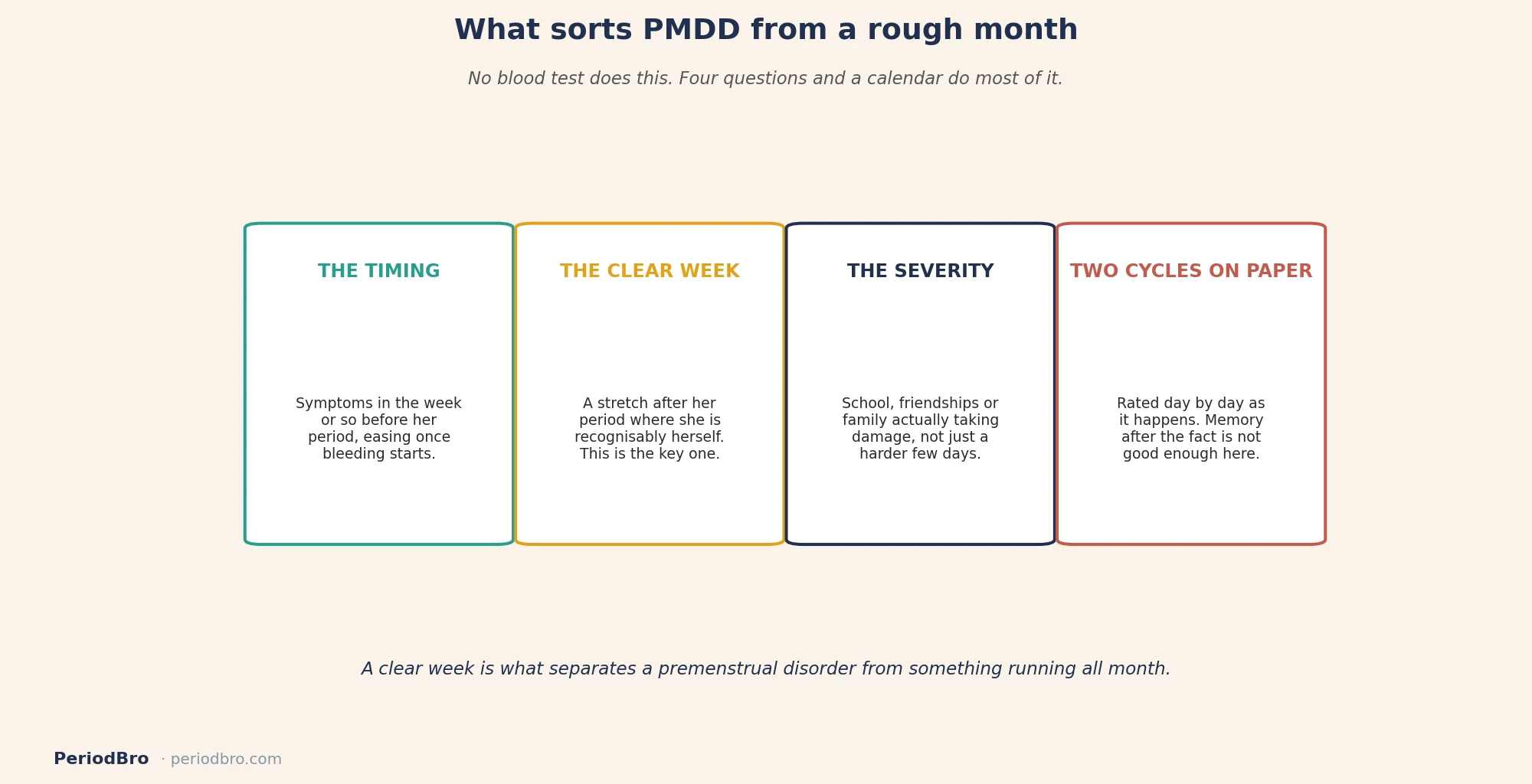
There’s no test. No scan, no bloodwork, nothing to send off. The diagnosis is made on pattern, which is why it gets missed for years and why the thing you can contribute is unglamorous but genuinely load-bearing.
Four things do most of the sorting. The timing, meaning symptoms arrive in the week or so before her period and ease once bleeding starts. The clear stretch afterwards, where she’s recognisably herself again. The severity, meaning school, friendships or home life actually take damage rather than just having a harder few days. And the record, meaning symptoms rated day by day as they happen across two cycles rather than reconstructed from memory afterwards.
That third one, the clear stretch, is the hinge. It’s what separates a premenstrual disorder from depression or anxiety that runs all month and happens to get worse before a period. Both are real and both deserve help, but they’re different problems with different treatments, and the calendar is what tells them apart.
The fourth one is where most families lose. Memory after the fact is unreliable in both directions, and a clinician who asks her to chart two cycles prospectively is not stalling, they’re doing the actual diagnostic step. If she’ll do it herself, that’s better than you doing it for her, for reasons the next section gets into.
The part that needs saying plainly
PMDD carries a genuine risk that separates it from a bad mood, and softening it would be doing you no favours.
A systematic review and meta-analysis on suicidal risk in premenstrual disorders found people with PMDD were around four times more likely to report suicidal ideation than those without. That’s the reason this diagnosis sits where it does in the manual, and the reason a monthly pattern is not something to watch for another six months to be sure.
The rule is simple. If she says anything about self-harm or about not wanting to be here, that goes to a professional now, not at the next available appointment and not after you’ve finished charting two cycles. In the US that’s 988 for the Suicide and Crisis Lifeline, and it takes calls from parents who are worried about their kid, not only from the person in crisis.
Everything else in this article can move at the pace of a normal appointment. That part can’t.
What ordinary looks like, so you’re not chasing ghosts
Teenagers are moody. That’s not a joke about teenagers, it’s a description of a nervous system rebuilding itself alongside a new hormonal cycle, and the ordinary version of that covers a lot of ground.
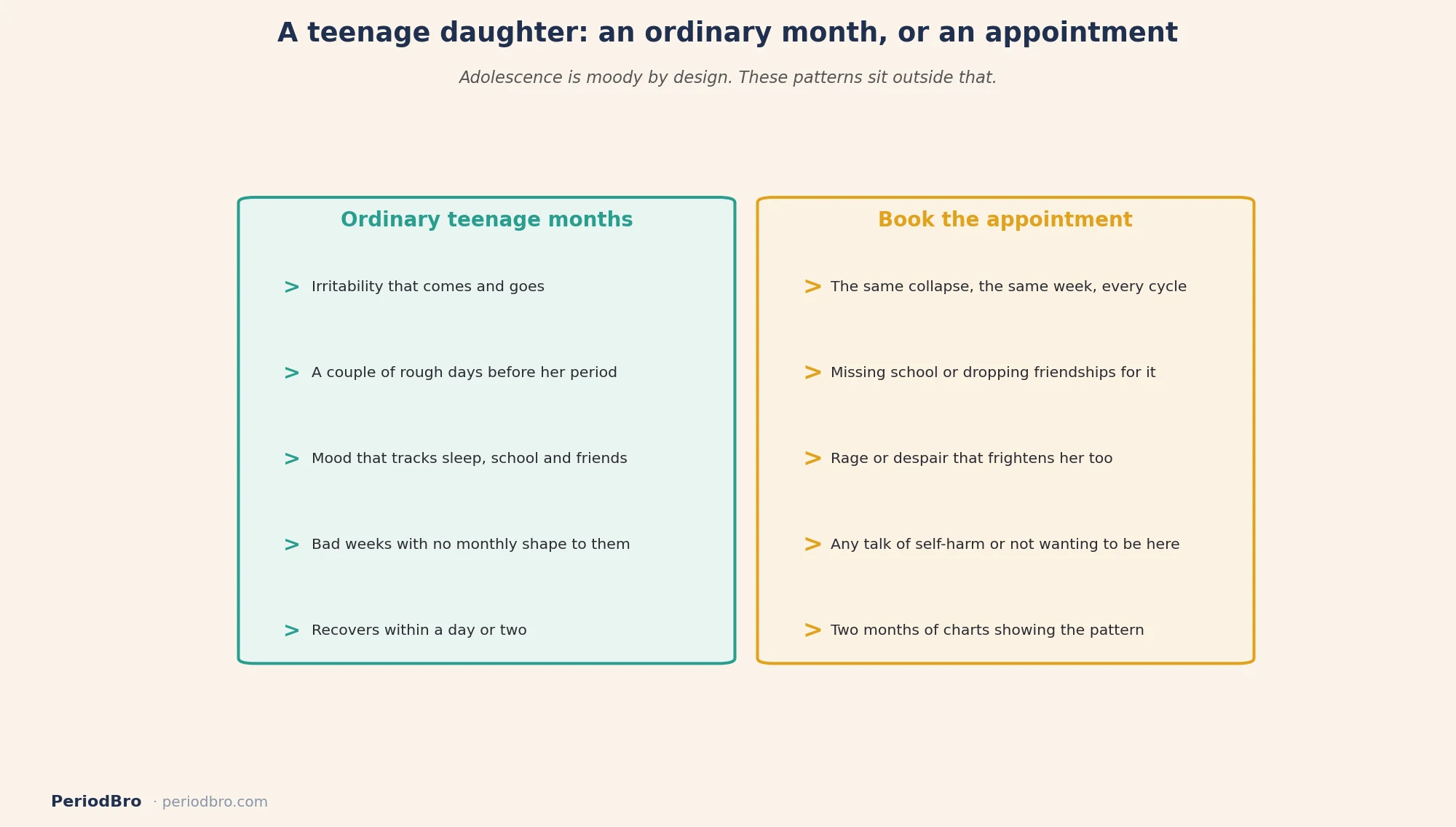
Ordinary looks like irritability that comes and goes, a couple of rough days before her period, and mood that tracks sleep and school and whatever happened in the group chat. Rough weeks with no monthly shape to them are usually not this. Neither is a bad fortnight after something bad actually happened.
The early years are also genuinely uneven on the cycle side, which muddies the timing question. Irregular periods in the first years are normal, and if her cycles are all over the place the premenstrual timing is harder to see. That’s an argument for charting rather than against it.
What sits outside ordinary is repetition with damage. The same collapse in the same week every cycle. Missing school for it. Friendships taking hits she can’t undo. Rage or despair that frightens her as much as it frightens you. Any of that, plus a couple of months of notes showing it lines up, is an appointment.
How to raise it without making it worse
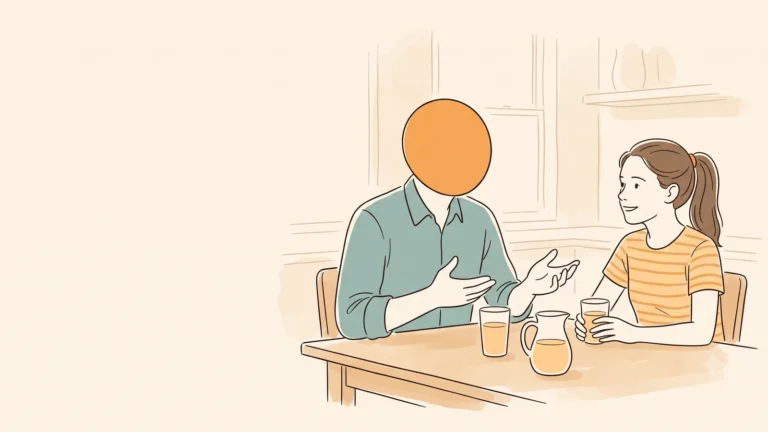
Lead with the pattern, not the diagnosis. “I think there’s a shape to the bad weeks and I want to check whether I’m right” is a sentence she can push back on. “I think you have PMDD” is a diagnosis from her dad, which is both outside your job and a fast way to end the conversation.
Don’t chart her behind her back. A dad keeping a secret log of his daughter’s moods is a bad discovery, and it will cost you more than the data is worth. Show her what you’ve noticed, ask if she wants to track it herself, and let the record be hers. That’s the same consent principle that runs through everything in this territory.
Offer the appointment as logistics rather than a verdict. Booking it, driving her, and sitting in the waiting room is a real contribution. How these appointments actually run is worth reading first, including the part where they ask you to step out, which is standard and not a comment on you.
Know roughly what’s on the table so you’re not blindsided. Treatment for PMDD typically starts with SSRIs, sometimes hormonal contraception, alongside non-drug approaches like CBT, exercise and sleep. If the pill comes up in a conversation that started about mood, the piece on birth control for teen period problems covers why that’s a legitimate clinical route rather than a shortcut. And how a PMDD diagnosis actually gets made is the same process for a 15-year-old as for an adult.

What to do in the bad week itself
Diagnosis takes months. The bad week is next week, so it’s worth having a position on it.
Lower the stakes rather than the standards. The arguments in that stretch tend to be about small things and tend to escalate faster than either of you intends. Not litigating the dishes on day three of a known bad week isn’t letting her off, it’s declining to spend the one bit of goodwill you’ve got on something that doesn’t matter.
Don’t tell her it’s her hormones. Even when it’s accurate, it lands as a dismissal, and she’ll hear it as her feelings being explained away by a man holding a calendar. If she’s the one who names the timing, agree with her. If she isn’t there yet, leave it.
Keep the boring infrastructure going. Food at normal times, an earlier night, less scheduled. Sleep is one of the few things that reliably makes the week worse when it slips, and it’s the one you can actually influence from the outside.
And hold onto the fact that she isn’t enjoying it either. From the inside, PMDD looks like reacting wildly to things you know aren’t that bad and being unable to stop. The kid who slammed the door usually feels worse about it afterwards than anyone in the house realises, which is most of why a dad who understands the cycle is worth having around.
The short version
Most teenage moodiness is teenage moodiness. A monthly pattern with a clear week in between and real damage in the bad one is a different thing, and PMDD in teenage girls has a name, a diagnostic route, and treatment that works.
Your part is small and it matters: notice the shape, say it out loud once without diagnosing anything, get two cycles on paper with her cooperation rather than without it, and book the appointment. And if self-harm ever enters the conversation, none of the above applies and you make the call that day.

PeriodBro keeps a simple private log she controls, which is the format a clinician asks for and the one a teenager will actually keep. Try it free.
This article is general information, not medical advice. PMDD is diagnosed by a clinician, and any concern about self-harm needs professional help straight away.