How to Help Your Daughter With Period Cramps
When your daughter is curled up on the sofa with cramps and you are standing in the doorway feeling useless, here is the reassuring part: the things that actually help are simple, cheap, and well within a dad’s reach. You do not need to say the perfect thing or understand every detail of her cycle. You need a heat pad, the right painkiller at the right time, and the steadiness to not make it weird.
Cramps are one of the most common reasons a teenage girl feels wretched once a month, so this is not a rare crisis you have to solve alone. It is a routine part of growing up that you can quietly get good at supporting.
First, know what her cramps actually are
Within a year or two of a first period, somewhere between half and three quarters of teens start getting painful cramps, known medically as dysmenorrhea (HealthyChildren.org, the AAP’s guide to menstrual disorders in teens). For most of them the cause is simple biology: the uterus releases chemicals called prostaglandins that make it contract to shed its lining, and those contractions are what she feels as cramping. It is not a sign anything is wrong. It is her body doing an ordinary job, a bit too enthusiastically.
Knowing that helps you stay calm, and calm is half of what she needs from you. This is not an emergency and she is not fragile. She is uncomfortable, and discomfort is something you can meet with practical help rather than panic. If the whole topic still feels like foreign territory, it is worth grounding yourself in the basics first with our take on a father’s role in menstrual education.
How to help your daughter with period cramps, step by step
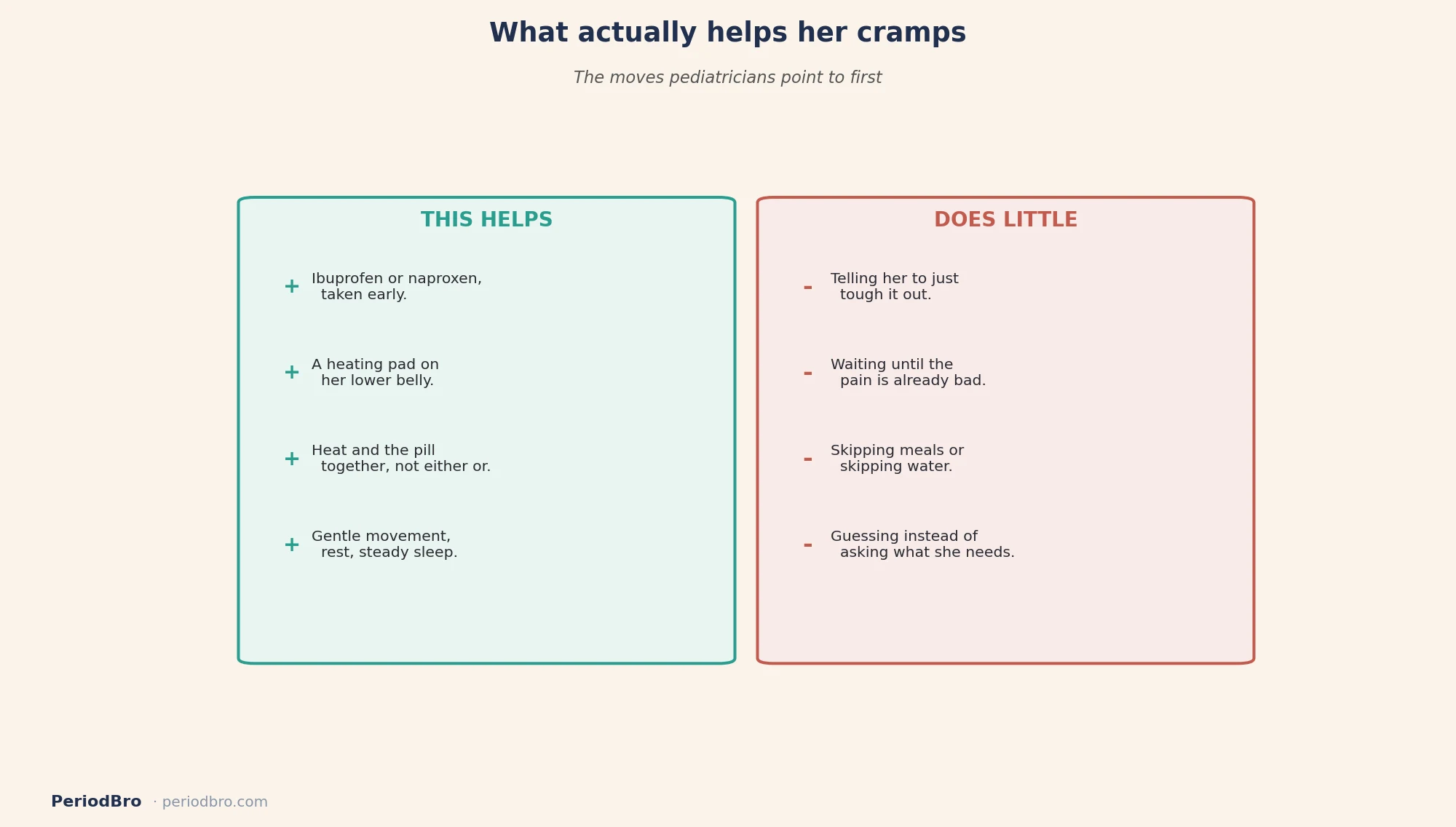
The two workhorses are heat and an over-the-counter painkiller, and they are even better together. Pediatric guidance points to ibuprofen or naproxen as the go-to medicines, paired with a heating pad on the lower belly, which combination provides significant relief for a lot of girls (HealthyChildren.org). Heat is not just a comfort blanket, either: in studies, steady low-level heat on the lower abdomen eased period pain about as well as ibuprofen did (topical heat for period pain, PubMed). A heating pad, a hot water bottle, or a stick-on heat patch all do the job.
Round it out with the boring basics that stack the odds in her favour: enough water, a proper meal rather than a skipped one, some gentle movement if she is up for it, and a decent night’s sleep. None of it is dramatic, and that is the point.
Timing beats everything
The detail most people miss is that the painkiller works far better taken early. The advice from specialists is to start ibuprofen or naproxen right before or at the very beginning of her period, rather than waiting until the pain is already bad (HealthyChildren.org). ACOG makes the same point for adolescents, noting relief is strongest when medicine is begun a day or two before the expected start and carried through the first couple of days of bleeding (ACOG Committee Opinion 760 on dysmenorrhea in the adolescent).
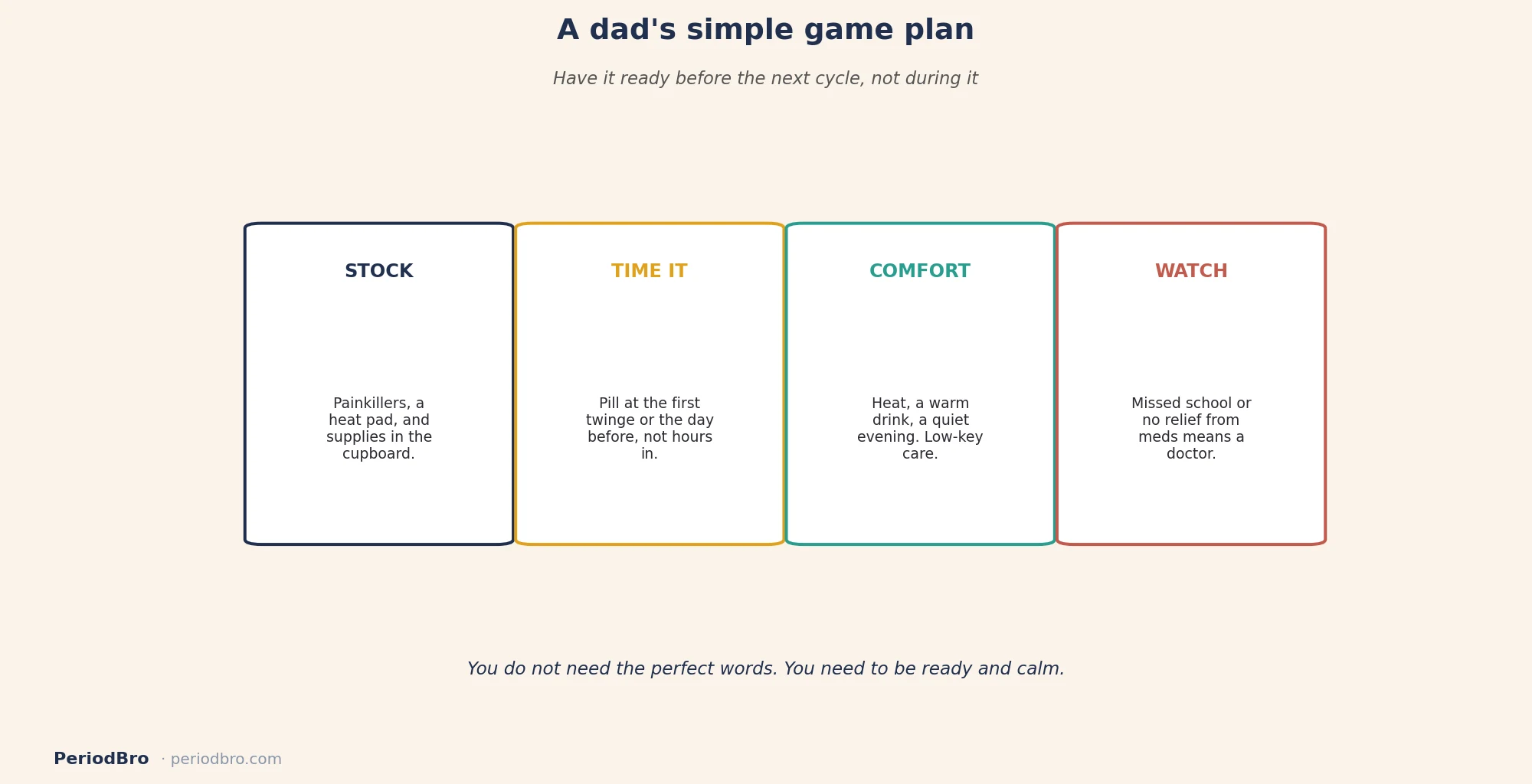
This is exactly where a dad can be quietly useful without hovering. If you have a rough sense of when her period is due, you can make sure the painkillers are stocked and gently flag that now is the time to take one, rather than her toughing it out until she is in real pain and playing catch-up. Follow the dosing on the packet, and check with a pharmacist or doctor if she has any condition that affects which medicines she can take.
The comfort layer
Once the medical basics are handled, the rest is presence. A heating pad delivered without a fuss, a warm drink, a hot water bottle refilled, her favourite blanket, a quiet evening with the pressure to be productive lifted off her. You do not have to hold a big conversation about it. Often the most reassuring thing is simply acting like this is normal and manageable, because to her it is a bit frightening and new, and your calm sets the tone.
Have the kit ready before you need it, so you are not rummaging through cupboards while she is in pain. A small stash of painkillers, a heat source, and her supplies in a known spot turns a scramble into a two-minute job. If you have not built that yet, here is what to stock before your daughter’s period.
There is a longer game here as well. Regular gentle exercise, a decent diet, and enough sleep genuinely take the edge off cramps over time, so it is worth encouraging without turning it into a health lecture (HealthyChildren.org). And if cramps are a recurring problem month after month, a doctor can talk her through options that go beyond painkillers, including hormonal methods that reduce period pain, which ACOG lists as a first-line choice alongside anti-inflammatory medicine (ACOG Committee Opinion 760). That is a conversation for her and a clinician, but knowing it exists means you are not stuck offering only a heat pad and a shrug.

When her cramps need a doctor
Ordinary cramps respond to heat and a painkiller and fade after a day or two. Some things, though, mean it is time to book a doctor rather than keep managing at home. Pediatricians say to make the call if her cramps are severe enough to make her miss school or drop out of normal activities, if ibuprofen or naproxen taken properly does not touch the pain, or if her periods are very heavy, meaning she is changing a pad or tampon every hour or two, or lasting longer than seven days (HealthyChildren.org).
Cramps that keep getting worse over time, or pain that hangs around outside her period, are also worth checking, because occasionally severe period pain points to something like endometriosis that deserves proper attention (ACOG Committee Opinion 760). Taking her seriously and helping her get seen is not overreacting. It is the opposite of the old habit of telling girls that bad period pain is just something to put up with. For where the wider line between normal and worth-checking sits, we wrote a full guide to easing period cramps and spotting the red flags.
What not to do
Skip the two classic mistakes. The first is minimising it, the “it’s just a bit of cramp, you’ll be fine” reflex, which lands as being told her pain does not count. The second is making it so awkward that she stops telling you anything, which leaves you blind next month. You do not need to be an expert or emotionally fluent about it. Handing her a heat pad and a glass of water and saying “tell me if it gets worse” covers most of it. If talking about any of this still feels stiff, our guide on how to talk to your daughter about periods takes the edge off.
The whole thing comes down to being ready and being steady. Cramps are common and mostly manageable, the fixes are simple, and your daughter mainly needs a dad who treats a rough monthly day as normal and has the heat pad already warm. Keeping a loose eye on when that week is coming is the easiest way to be one step ahead, which is the entire idea behind what we build.
This article is general information, not medical advice. Follow the dosing on any medicine, and speak to a pharmacist or doctor about what is right for your daughter, especially if her pain is severe, worsening, or not helped by over-the-counter painkillers.