How to Support Her Through the Worst Day of Her Period
There’s usually one day. Not the whole period, one day, where the cramps peak, her energy bottoms out, and everything you say lands wrong. If you’ve ever stood in the kitchen on the worst day of her period holding a mug of tea you’re not sure she wants, this is for you. The good news: the worst day has a shape, and once you know the shape, you stop guessing and start being useful.
You can’t take the pain away. Let’s get that out of the way, because a lot of guys freeze up precisely because they can’t fix it. You don’t have to. Your job that day isn’t to solve it. It’s to make the day around the pain smaller, quieter, and easier to get through.
What the worst day actually is
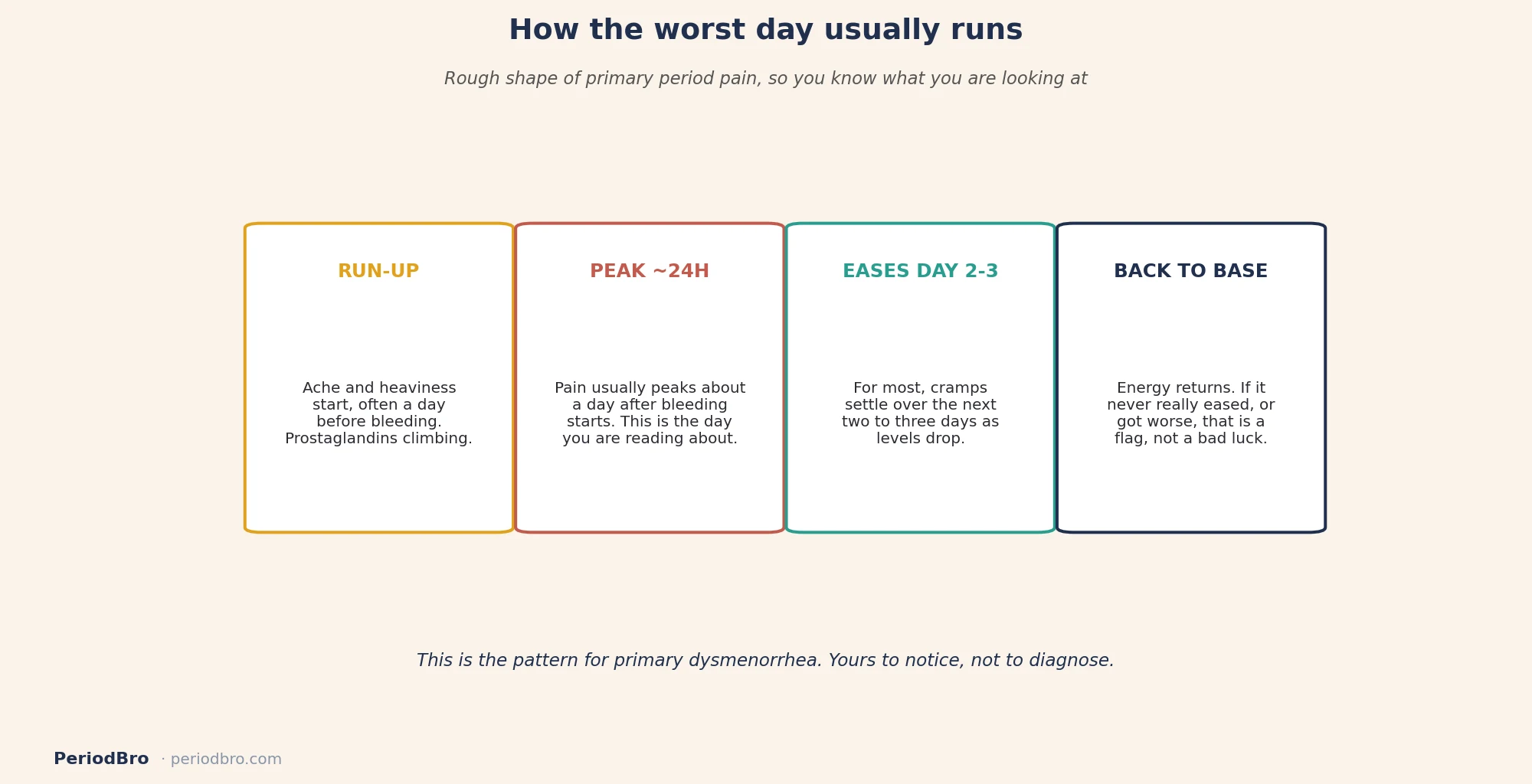
Period cramps, the medical name is dysmenorrhea, are driven mostly by prostaglandins, compounds that make the uterus contract to shed its lining. More prostaglandins, stronger contractions, more pain. That’s why it’s not “in her head” and not something she can push through by willpower. The ache often starts a day before bleeding, and the pain typically peaks about 24 hours after her period starts, then eases over the next two to three days. So the worst day is usually early. Knowing that helps you plan: the day she says “it’s starting” is often the day before you need to bring your A game.

What actually helps on the worst day of her period
Small and quiet beats big and loud. Nobody in real pain wants a production. Here’s what tends to land.
Heat, first
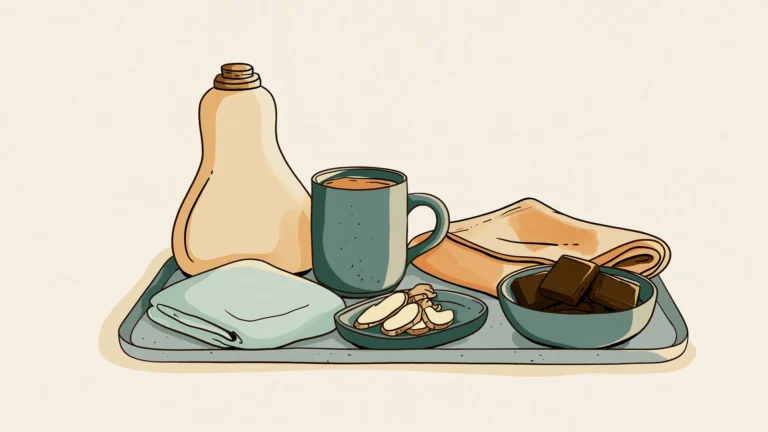
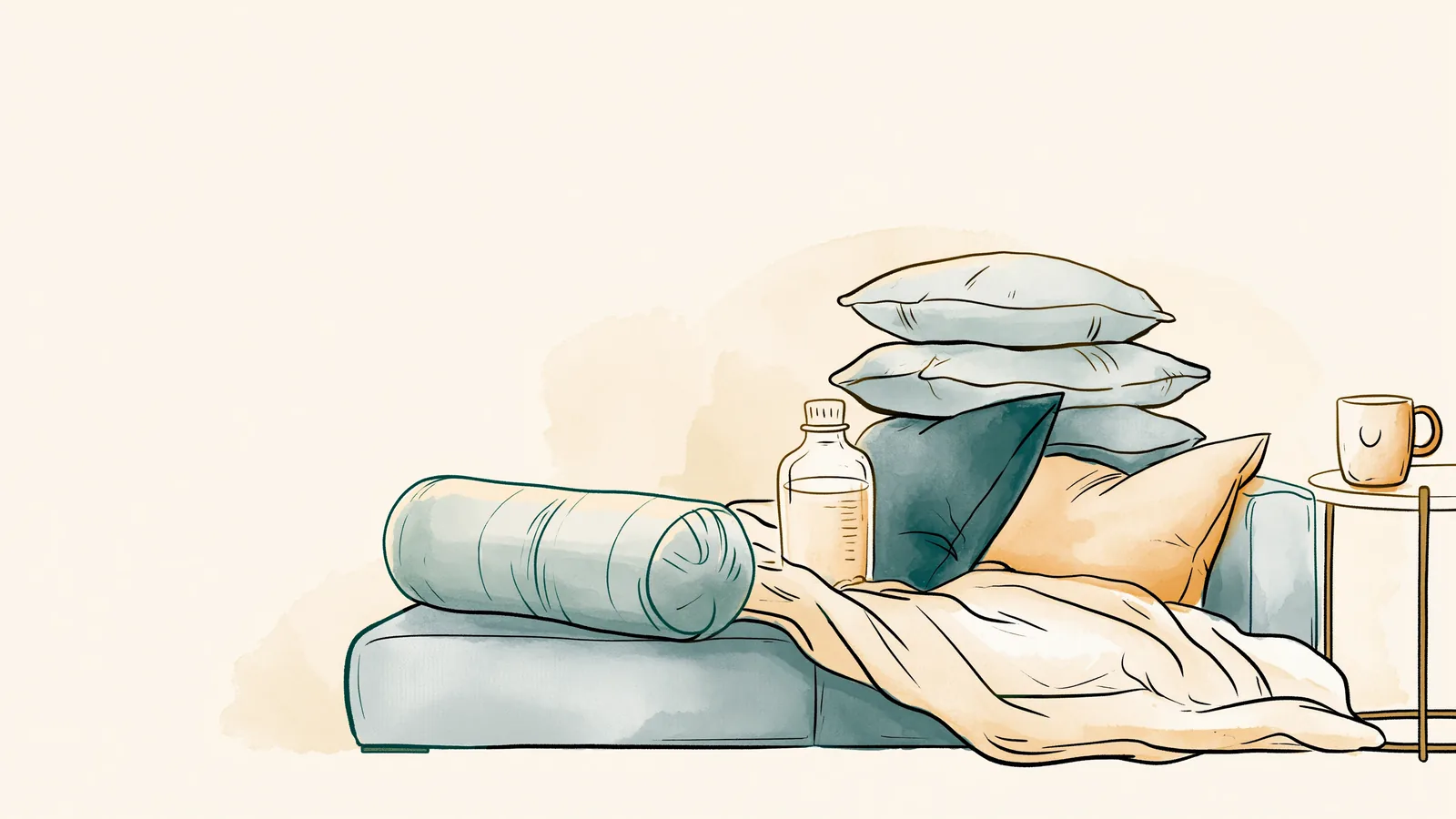
A heating pad or hot water bottle on her lower belly or back is one of the most useful things you can hand her, and it isn’t a folk remedy. Studies put continuous low-level heat therapy on par with pain medication for cramps, and it’s something you can just do, no permission needed. Warm it up and set it beside her before she has to ask.
Medicine, and the timing nobody mentions
Over-the-counter anti-inflammatories like ibuprofen or naproxen work on cramps because they cut prostaglandin production. The trick most people miss is timing. They work best when started a day or so before the pain really hits and taken on schedule through the first couple of days, not swallowed once she’s already curled up. You’re not her doctor, so don’t push pills, but if she’s tried nothing yet, a low-key “want me to grab you something?” beats twenty minutes of watching her tough it out.
Take one thing off her plate
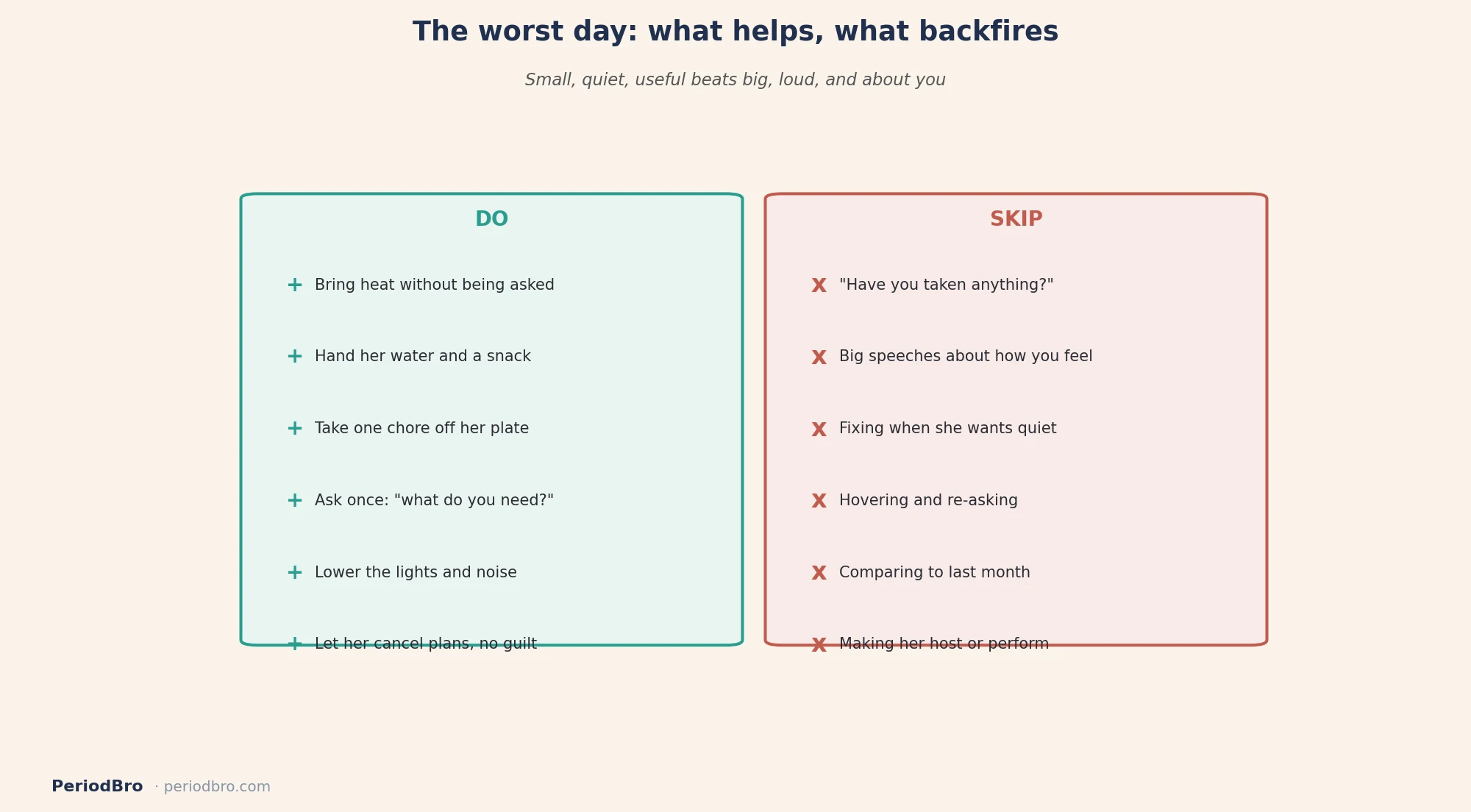
Pick a chore and just handle it. Dinner, the dishes, walking the dog, the thing she was dreading doing. Don’t announce it and don’t wait to be asked. Taking a load off quietly says “I’ve got this” better than any words do.
The one question, asked once
Ask “what do you need?” one time, early, and then act on the answer. What you want to avoid is hovering and re-asking every ten minutes, which turns your help into one more thing she has to manage. Ask once, deliver, then give her space.

What to skip
A few things backfire even when your heart’s in the right place. Skip “have you taken anything?” as your opener, it reads like a test. Skip the big speech about how much you wish you could help, because that quietly makes her manage your feelings on her worst day. Skip fixing when she’s told you she just wants quiet. And skip comparing this month to last month, or asking her to host, cook, or perform for anyone. On the worst day, let her cancel plans without a hint of guilt from you. For more on the wording that stings, here’s a rundown of how to be supportive when you can’t fix the pain.
When it’s more than a bad day
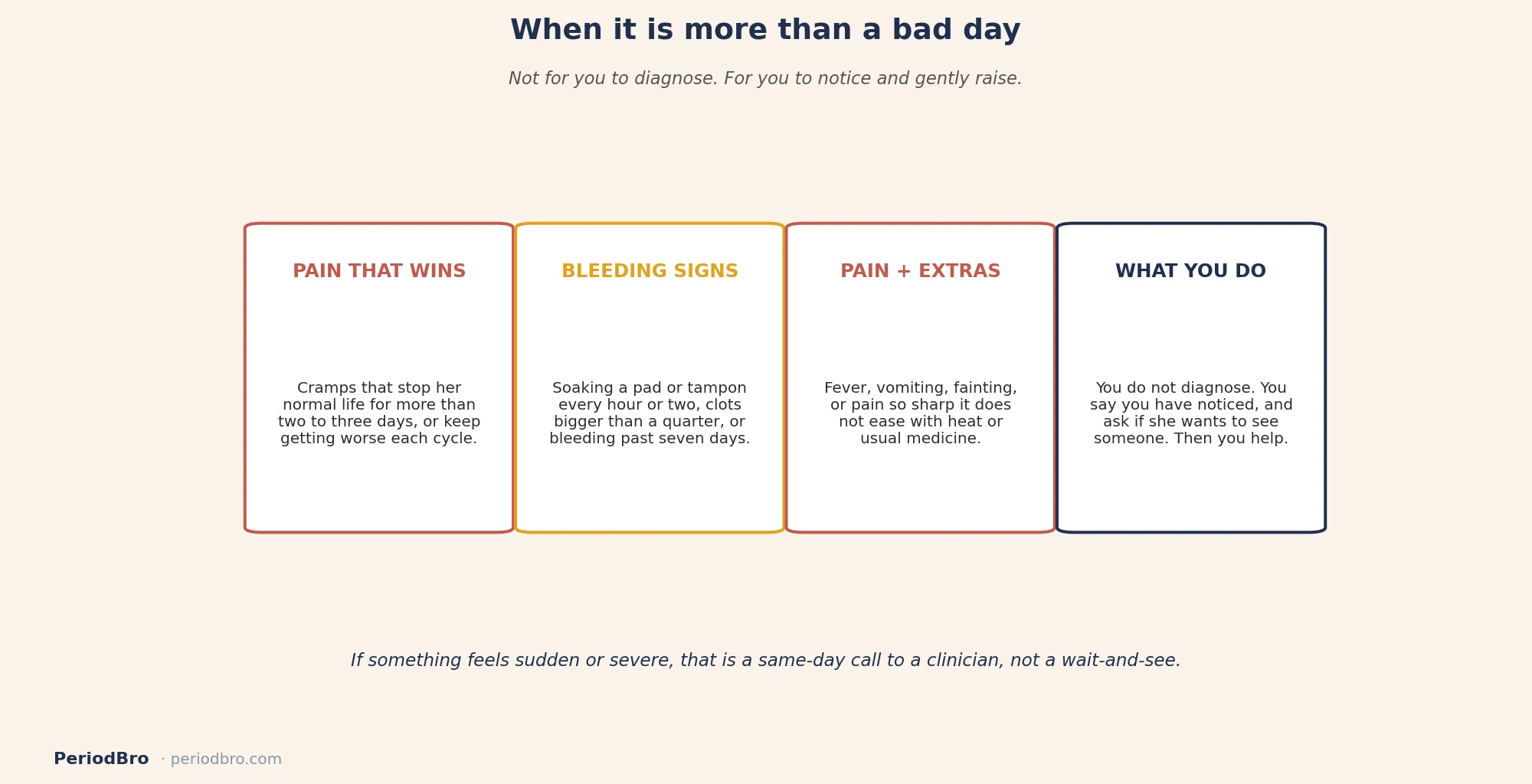
Most period pain is rough but normal. Sometimes it isn’t, and part of showing up is noticing when to gently raise it. The Cleveland Clinic notes that pain severe enough to interrupt daily life for more than a couple of days, or that keeps getting worse cycle after cycle, is worth a doctor’s look. So is soaking a pad or tampon every hour or two, passing clots bigger than a quarter, bleeding longer than seven days, or pain that comes with fever, vomiting, or fainting. Those can point to things like endometriosis or fibroids, which are treatable but need a professional. You don’t diagnose anything. You just say you’ve noticed, ask if she’d want to see someone, and offer to help make it happen. Our guide on whether her period pain is normal walks through the signals in more detail.
If you don’t live together
You can still carry the day from a distance. A grocery order dropped at her door, a “no need to reply, just resting my thumbs on the good-day button for you” text, or arranging her a quiet evening all count. The point isn’t proximity, it’s that she isn’t handling the worst day alone. If texting is your main line, here’s what to actually send her when she’s on her period.
Common questions
She snapped at me on her worst day. Do I bring it up? Not that day. Pain and low energy shorten everyone’s fuse. Let it go in the moment; if it genuinely needs a conversation, have it when she’s feeling better.
She says she’s fine but clearly isn’t. Take the answer at face value and stay useful anyway. Keep the heat topped up and the space quiet. “Fine” often means “I don’t have energy to explain,” not “go away.”
How do I know when her worst day is coming? Once you loosely know her cycle, the pattern gets predictable, and you can be ready a day early instead of reacting. That’s the whole reason to learn her cycle in the first place.
You can’t take the cramps away. But you can make the worst day smaller, and she’ll remember who showed up when it counted.
This is general information, not medical advice. If her pain is sudden, severe, or comes with fever, fainting, or very heavy bleeding, that’s a same-day call to a clinician. And if her worst symptoms are more about mood, rage, or despair than cramps, that can point to PMDD, which is real and treatable, and worth raising with a doctor.