
Magnesium for Period Cramps: A Partner’s Buying Guide
I almost bought the wrong kind of magnesium, which I didn’t even know was a thing until I stood in the vitamin aisle reading four different labels that all just said “magnesium” like that settled it. My partner had mentioned, half-joking, that a TikTok told her magnesium for period cramps might be worth trying. I said “sure, I’ll grab some” like a guy who knew what he was talking about. I did not know what I was talking about.
This article exists because of that gap. Supplements aren’t magic, but the distance between “magnesium helps with cramps” and “which magnesium, how much, and is it actually safe” is exactly where a well-meaning partner wastes twenty bucks or, worse, hands over something that gives her diarrhea for a week instead of relief.

What the research on magnesium for period cramps actually shows
A handful of small randomized trials have tested magnesium against a placebo for dysmenorrhea, which is the clinical name for period pain (a 2017 literature review in Magnesium Research rounds up most of them). The trials that show a benefit are modest in size, and the effect they find is real but not dramatic: less cramp intensity, not a pain-free week. Cleveland Clinic puts it plainly, saying magnesium can help, though the effect may be small, and there aren’t large studies confirming an exact dose (Cleveland Clinic, Magnesium Supplements for Period Cramps).
The mechanism is plausible, which is part of why researchers keep testing it. Magnesium relaxes smooth muscle, including the uterine muscle that’s contracting hard enough to cause the pain, and it dials down prostaglandins, the compounds your body produces that drive both the cramping and the inflammation around it. One older but frequently-cited trial found 250 mg of magnesium daily over three menstrual cycles reduced cramp severity compared to placebo. A separate study found magnesium paired with vitamin B6 outperformed magnesium alone.
Give her the honest pitch: it’s a low-risk thing worth trying for a couple of cycles, stacked on top of whatever already helps rather than swapped in for it. If the best pain relief for period cramps she’s already using is working fine, magnesium is a “why not add it” rather than a replacement.
Not all magnesium is the same
This is the part I got wrong at the store. I figured magnesium was magnesium, the way salt is salt. It isn’t. The form on the label changes how much of it her body actually absorbs and how her stomach handles it.
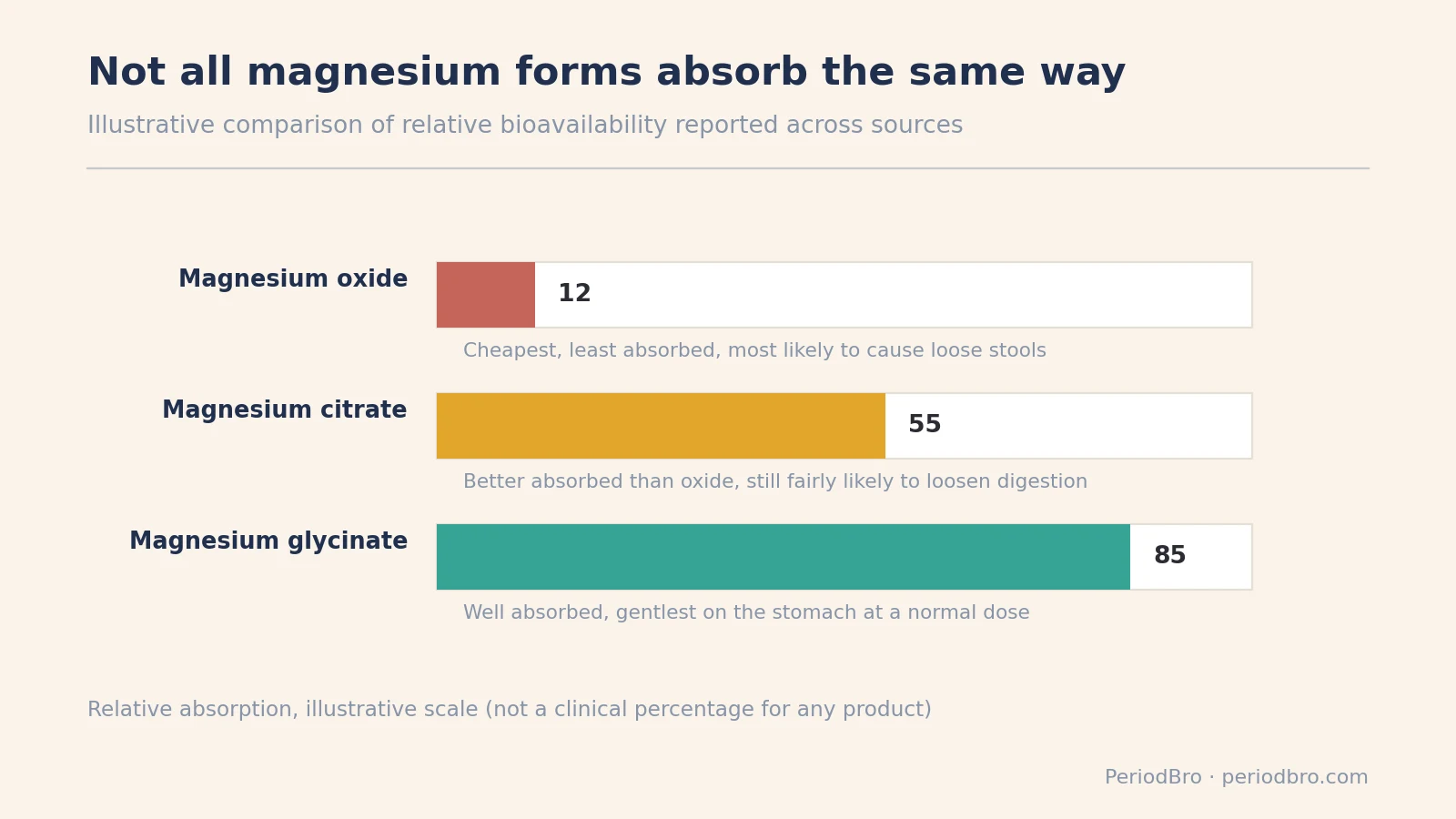
Magnesium oxide is the cheapest and most common form on drugstore shelves, and it’s also the least absorbed, with some sources citing figures as low as single digits for what the body actually takes up. The rest moves through the gut and pulls water with it, which is why oxide (and, to a lesser degree, citrate) is the form used in over-the-counter laxatives. Mayo Clinic Press breaks down the different forms and their uses, and the pattern holds across sources: the forms that are cheapest to manufacture tend to be the ones your gut absorbs the least of (Mayo Clinic Press, Types of Magnesium Supplements). Magnesium citrate absorbs better than oxide but is still fairly likely to loosen things up at a real dose. Magnesium glycinate, magnesium bound to the amino acid glycine, absorbs well and is gentler on digestion, which is why a Cleveland Clinic OB/GYN specifically recommends it for period cramps over other forms (Cleveland Clinic).
Grab the cheapest bottle because it’s cheapest, and there’s a decent chance you’ve bought her a mild laxative and called it cramp relief. I didn’t know this a week ago. Now I check the second word on the label before the price.
I also didn’t know you could overthink this in the other direction. I spent twenty minutes in an aisle comparing “chelated” versus “buffered” versus a brand claiming “triple absorption” on the front of the bottle, which is marketing language, not a clinical term. The actual decision only has two real inputs: does the label say glycinate (good default for cramps, gentle on the stomach), and does it list a real elemental magnesium amount per serving rather than just a compound weight that sounds bigger than it is. Everything else on the label is noise designed to make one $14 bottle look different from the $11 bottle next to it.
How much to actually take (and what “too much” looks like)
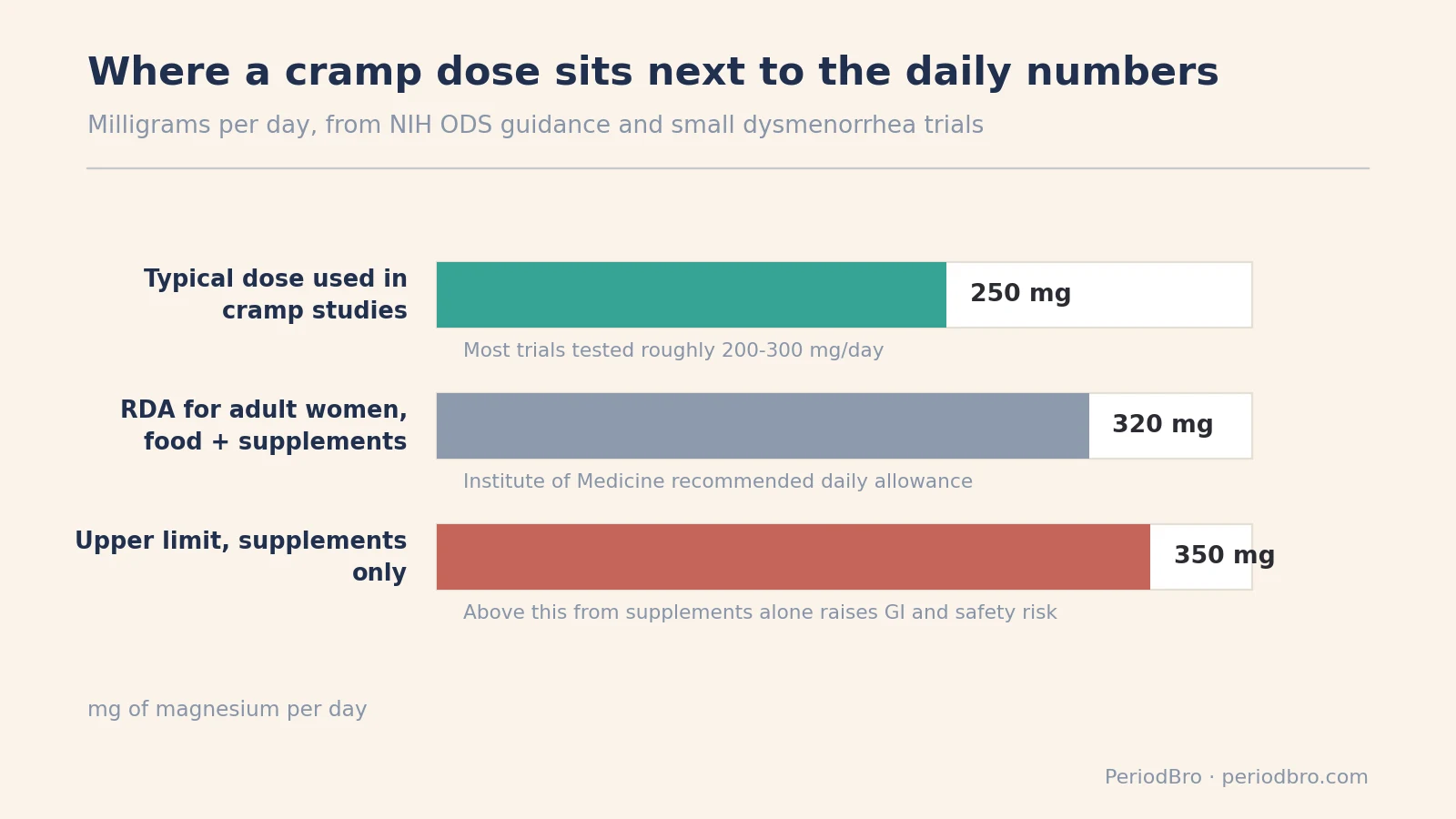
Small trials for cramps generally land in the 200 to 300 mg per day range, and the daily recommended intake for adult women from food and supplements combined sits around 310 to 320 mg depending on age (NIH Office of Dietary Supplements, Magnesium fact sheet). That’s the target, not a floor to blow past because more must be better.
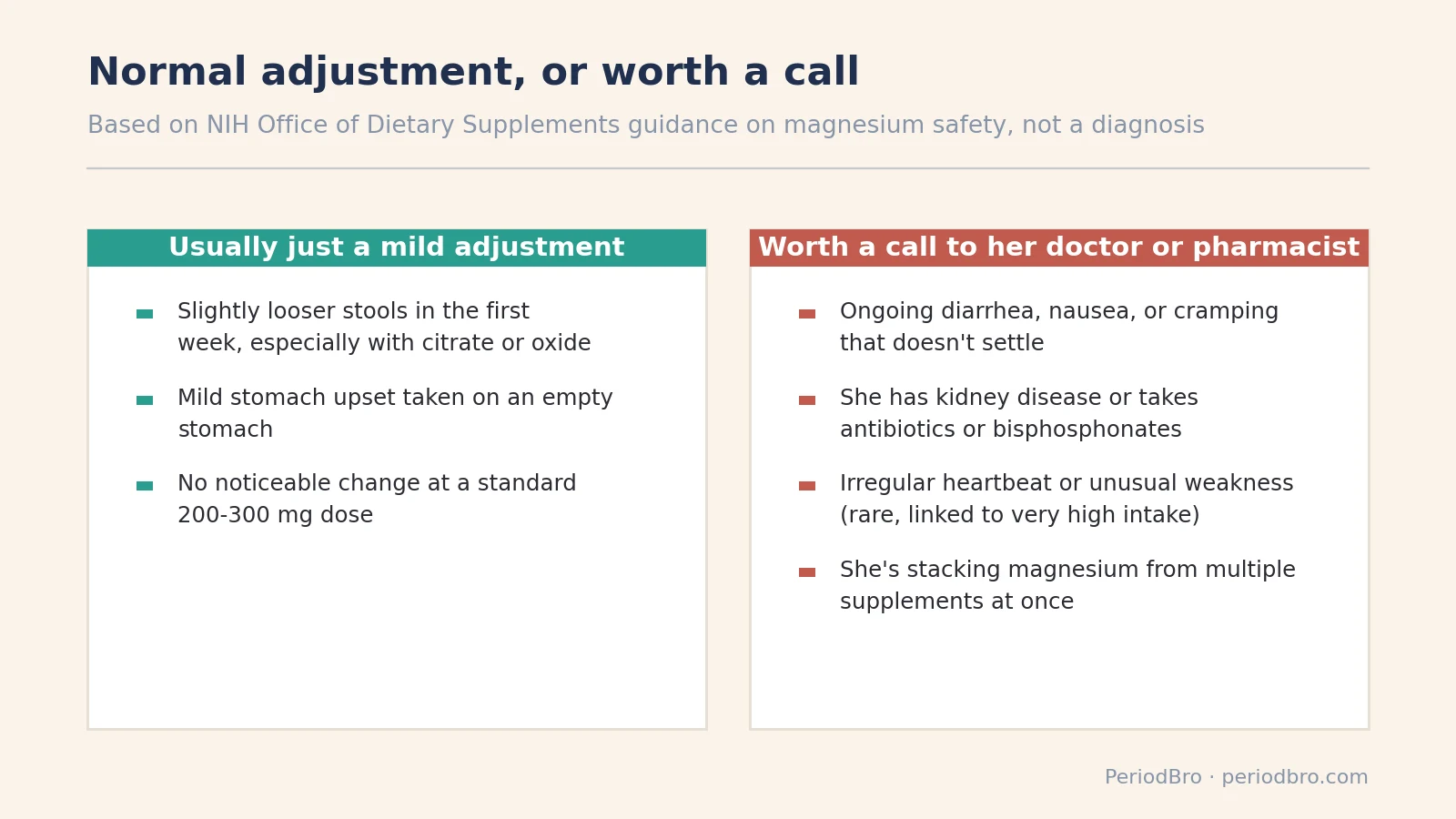
More is not better here, and this is the one section in this whole guide I’d call a genuine safety note rather than a buying tip. The Institute of Medicine sets a tolerable upper limit of 350 mg per day from supplements alone, separate from magnesium already coming through food, because higher supplemental intake is linked to diarrhea, nausea, and cramping, and extreme excess (usually from a medical or laxative-dose scenario, not a normal supplement bottle) has been linked to irregular heartbeat (NIH ODS, Health Professional fact sheet). Magnesium can also interact with certain antibiotics and osteoporosis medications, and anyone with kidney disease should talk to a doctor before adding a supplement at all, since impaired kidneys can’t clear excess magnesium the way healthy ones do.
A standard over-the-counter magnesium supplement taken as directed is low-risk for most healthy adults. The caution above matters most for anyone stacking multiple magnesium sources, anyone with kidney disease, or anyone on medications like certain antibiotics or bisphosphonates. A five-minute call to her pharmacist or doctor before she starts anything new covers those cases without turning this into a bigger deal than it is.

What I’d actually buy for her
Skip the multivitamin-with-everything bottles marketed straight at “period support,” which usually bury a small magnesium dose under a dozen other ingredients at unclear amounts. Look for a standalone magnesium glycinate supplement, 200 to 300 mg per serving, from a brand that lists the actual elemental magnesium amount on the label rather than just the compound weight (some labels list the total glycinate weight, which overstates how much magnesium is actually in there). Start a cycle or two before her period is expected, since most of the research measures benefit after sustained use, not a same-day dose the way ibuprofen works.
If she’s already got a system that works, like a heating pad or a product she trusts for the physical side of her period, magnesium sits alongside that rather than replacing it. It’s a quiet, cheap thing to try with real, if modest, research behind it, which is more than I can say for half of what shows up in her Instagram ads.
A decent 90-day bottle of magnesium glycinate runs somewhere in the $12 to $20 range at most pharmacies, well below what most couples spend on heating pads, painkillers, and takeout during a bad cycle over the same three months. That math is why “try it for two cycles and see” stays a low-stakes ask, financially and otherwise, next to most of what’s marketed at her during that week.
Where this fits with everything else you’re doing
I built a way to track her cycle without being creepy about it because I kept missing the window where something small, like remembering magnesium two days before her period instead of on the day of, actually mattered. A supplement only works if someone remembers to hand it over before the cramps start, not during them.
None of this replaces paying attention to her. Noticing that she’s a few days out and asking if she wants tea, quiet, or the heating pad does more for the relationship than any pill on a shelf, and magnesium only earns a place as a small addition to that habit.
I’m not a doctor, and I checked every number in this piece against sources a doctor would actually trust before I put my name on it. If she’s dealing with pain bad enough that a supplement feels like a shot in the dark, that’s worth a real conversation with her doctor, not just a new bottle from me. Cycle awareness changes how you show up for that conversation too, which is a big part of why I started paying attention to any of this in the first place.
PeriodBro provides educational information and is not a substitute for professional medical advice. Always consult a qualified healthcare provider for personal medical decisions.