

Period Brain Fog: Why She Can’t Focus Before Her Period (and How to Help)
She read the same paragraph out loud three times and still couldn’t tell me what it said. This is someone who normally runs circles around me, who keeps three projects in her head without writing anything down. And there she was, blanking on a word she uses every day, then getting quietly frustrated at herself for it.
My first instinct, the one I’m not proud of, was to wonder if she just wasn’t paying attention. It took me embarrassingly long to connect it to where she was in her cycle. Once I did, the pattern was obvious. The fuzzy, scattered, “where did I put my keys and also my train of thought” days clustered in the week before her period, every month. She wasn’t checked out. Her brain was running on a different setting that week, and nobody had ever explained to either of us why.
What period brain fog actually is
Period brain fog is the everyday name for a cluster of mental symptoms a lot of people notice in the days before their period: trouble concentrating, forgetfulness, a slower-than-usual mental gear, losing words mid-sentence, walking into a room and forgetting why. It isn’t a formal diagnosis, but the underlying experience is well recognized. The American College of Obstetricians and Gynecologists lists “trouble concentrating” right alongside mood swings and fatigue as a common symptom of PMS, and difficulty concentrating shows up in the clinical criteria for its more severe form, PMDD.
So if she tells you she feels foggy or stupid that week, she’s not imagining it, and she’s not making an excuse. She’s describing one of the most commonly reported premenstrual symptoms there is.
The important reframe for a partner: this is a temporary state tied to a phase, not a statement about her intelligence or her interest in what you’re saying. It shows up, it peaks, and it lifts. Treat it like weather, not climate.

What’s actually happening in her brain
The leading explanation points to her two main reproductive hormones, estrogen and progesterone. Both rise and fall across the cycle, and both have receptors in exactly the brain regions that handle memory, focus, and emotional processing, the hippocampus, the prefrontal cortex, and the amygdala. A review of menstrual cycle effects on cognition and emotion lays out how the presence of those receptors gives the hormones a direct line into thinking and memory circuits.
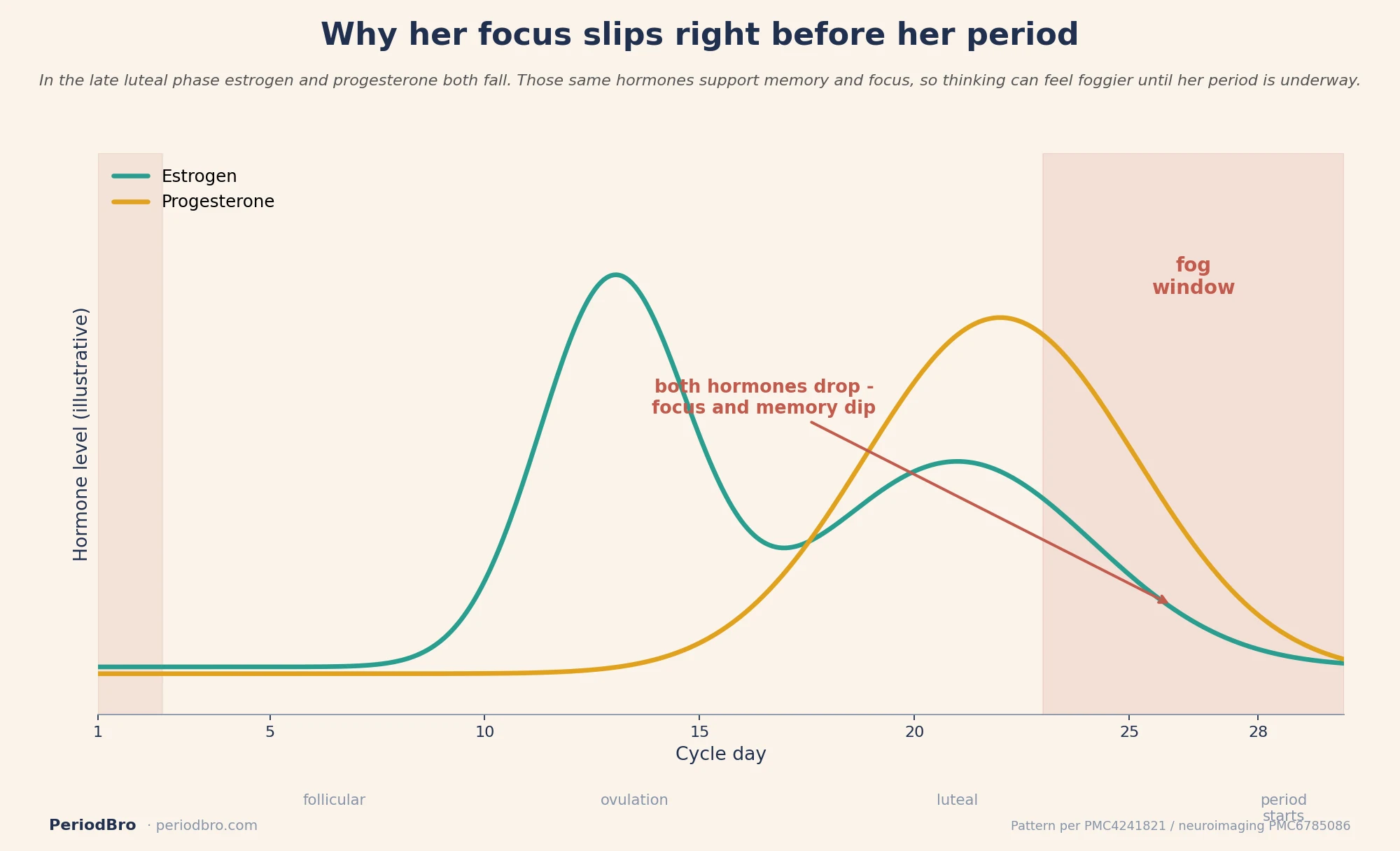
Estrogen in particular helps support the brain systems behind working memory and focus. In the late luteal phase, the stretch of roughly five to seven days before her period, estrogen and progesterone both drop off. That drop also nudges neurotransmitters like serotonin and dopamine, the chemicals tied to mood, motivation, and concentration. Brain imaging research backs up that something measurable is going on: a study aptly titled “the cycling brain” found cycle-related shifts in activation and connectivity across hippocampal and fronto-striatal regions during cognitive tasks.
This is the same hormonal drop that drives the mood changes of the premenstrual window, which is why fog and irritability so often travel together. If you want the fuller picture of how those hormone shifts move her mood week by week, we mapped it out in how hormones drive her mood all month long.
The honest part: the science is messier than the experience
Here’s where I have to be straight with you, because half the internet will tell you period brain fog is a proven, measurable cognitive deficit. It’s more complicated than that.
When researchers actually sit people down and run cognitive tests across the cycle, the results are surprisingly mixed. A large meta-analysis pooling 102 studies and nearly 4,000 participants found no significant differences in cognitive performance across menstrual phases. Reviews in this area tend to conclude that whatever cognitive changes exist are small and inconsistent, and far less pronounced than the emotional changes that come with the cycle.
So how do you square that with the fact that she genuinely feels foggy? A few ways. The subjective experience of effort can rise even when test scores hold steady, meaning thinking feels harder even when she’s still getting things done. Poor sleep, cramps, and a higher stress response that week all tax concentration on their own. And clinical sources note that the worse someone’s premenstrual symptoms are overall, the more likely they are to report brain fog, which suggests it travels with the whole premenstrual package rather than being a standalone glitch.

The takeaway for you isn’t “it’s all in her head, so ignore it.” It’s the opposite. Her lived experience is real and worth taking seriously, and you don’t need a lab result to justify being decent about it. You just need to believe her.
Why bad sleep makes the fog worse
If there’s one lever that turns ordinary fogginess into a rough week, it’s sleep. The premenstrual phase can wreck sleep quality, and poor sleep is one of the most reliable concentration-killers there is. Research on PMDD specifically links the disorder with insomnia, inattention, and fatigue, a trio that feeds directly into feeling mentally underwater.

It’s worth understanding that her sleep architecture genuinely shifts across the month, not just on bad nights. We went deep on that in how sleep changes through her cycle. The practical version: a foggy day that follows a broken night is partly a sleep problem wearing a hormone costume. Anything you can do to protect her rest that week, taking the early alarm, handling the kid wake-ups, keeping the room dark and cool, pays off in sharper days.

How to actually help
You can’t fix her hormones, and you shouldn’t try to. What you can do is lower the cognitive load she’s carrying that week so her foggy brain has less to track. Here’s what actually moves the needle.
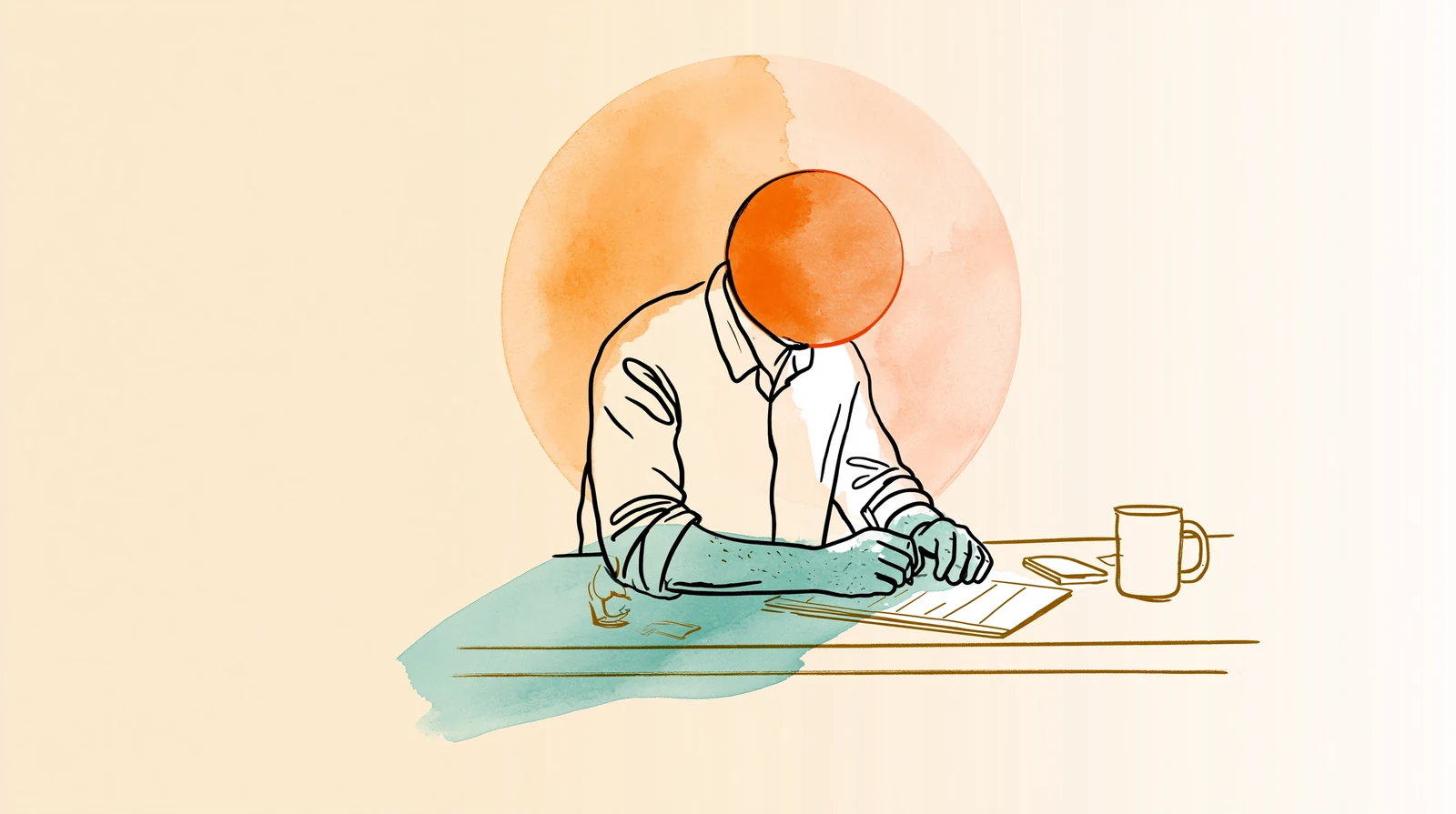
Carry more of the mental list. Brain fog is mostly an executive-function tax: remembering, planning, juggling. So quietly take some of those balls. Be the one who remembers the appointment, orders the groceries, knows what’s for dinner. You’re not babysitting her, you’re spotting her.
Don’t read forgetfulness as not caring. If she forgets something you told her, the kind move is to assume the fog, not a slight. “No worries, I’ll text you the address” lands a thousand times better than “I literally just told you this.”
Externalize, don’t quiz. This is the week to put things in shared calendars, sticky notes, and reminders instead of relying on her to hold it all in her head. And avoid testing her memory in the moment (“what was that thing you said yesterday?”) when she’s already feeling slippery.
Lower the stakes on the hard stuff. If a decision can wait a week, let it wait. Tax returns, big planning conversations, anything that needs her at full mental throttle tends to go better in the first half of her cycle, when energy and clarity are usually up.
Name it gently, if she wants you to. Some people find it a relief when a partner says “this might be a foggy week, want me to take point on logistics?” Others find it patronizing. Ask once how she’d like you to handle it, then follow her lead. This is also a good moment to flag what brain fog is not: it’s mental, not the systemic, flu-like wipeout some people get premenstrually, which we covered in what is period flu.
The throughline is simple. You’re not managing her. You’re reducing friction so a normal monthly dip costs her less.
When it’s worth a doctor’s look
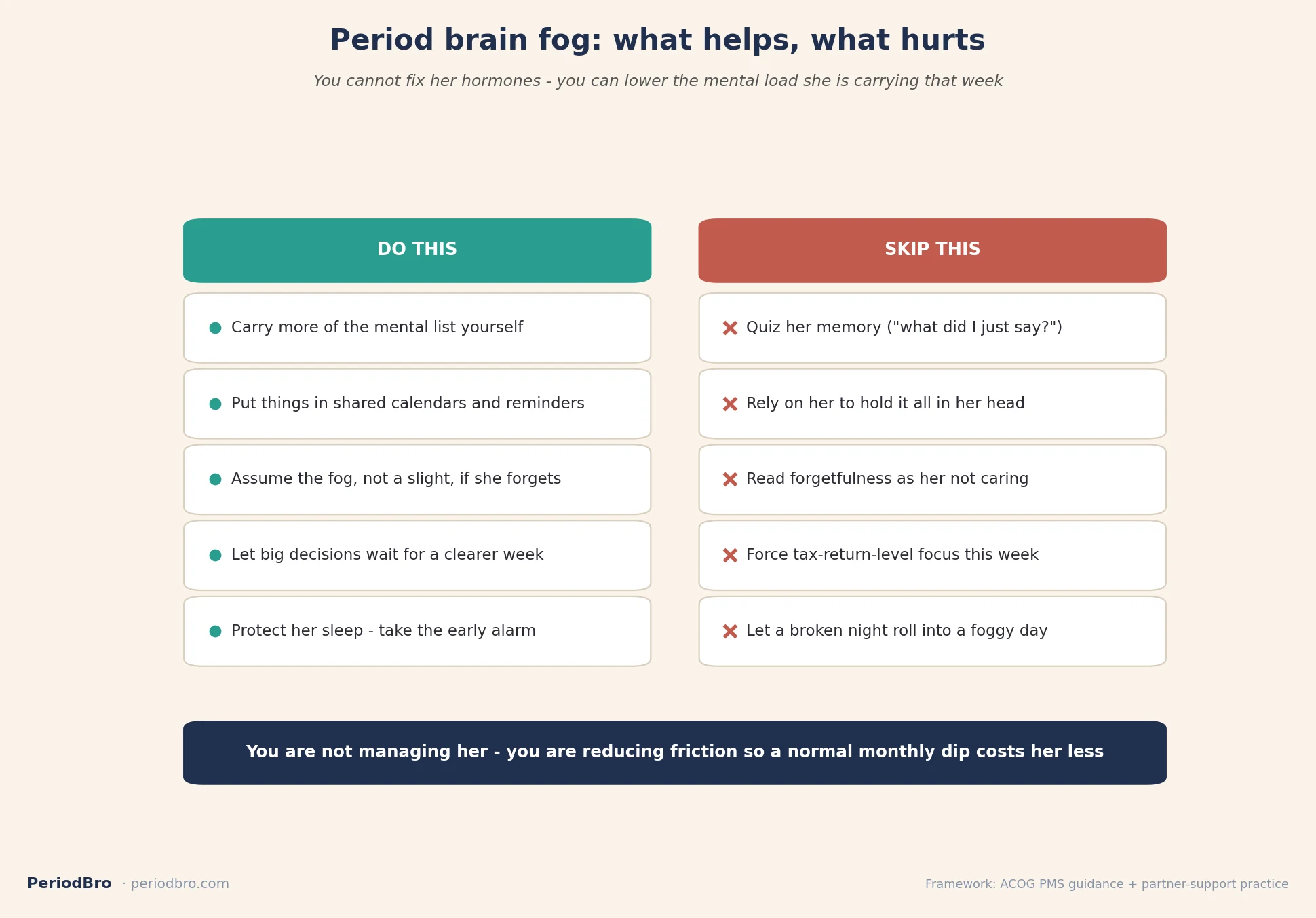
Cyclical fog that shows up before her period and clears once it arrives is part of the normal premenstrual range. But fog isn’t always about the cycle, and a few patterns are worth a conversation with a clinician rather than a partner playbook.
Flag it if the fog is there most days regardless of where she is in her cycle, if it’s getting steadily worse over months, or if it comes with other persistent symptoms like heavy fatigue, weight changes, hair thinning, or low mood, since thyroid problems and other conditions can masquerade as period brain fog. It’s also worth professional support if the premenstrual symptoms, foggy or otherwise, are severe enough to disrupt her work or relationships, which can point to PMDD, a treatable condition that nobody should just white-knuckle through. Encouraging her to track the pattern, what shows up and when, gives a doctor something concrete to work with.
None of that is about alarm. It’s about being thorough, the same way you’d want her to be if the roles were flipped.
The one thing to do this month
Learn the timing. Know roughly when her foggy week tends to land, the stretch before her period, and lighten her mental load before it hits instead of reacting once she’s already underwater. That’s the whole move: anticipate, then quietly absorb a little more of the planning that week. PeriodBro exists to make that timing easy to see, so you’re showing up the day before the hard week, not figuring it out after.

She’ll remember that you made the foggy days lighter long after she’s forgotten where she put her keys.
This article is for general education and isn’t medical advice. Brain fog that’s constant, worsening, or paired with symptoms like fatigue, weight changes, or low mood can have causes beyond the menstrual cycle, and severe premenstrual symptoms deserve real care, so encourage her to talk with a qualified clinician about anything that worries either of you.